
500-Day Campaign: Hope of Reunion Through DNA Evidence
 | Quang Tri Provincial Authority Widen Scope For Search of Fallen Soldiers’ Remain Amidst Limited Information |
| New Advances in DNA Technology for Identifying Fallen Soldiers |
Following the campaign's launch, alongside the excavation and collection of DNA samples from the remains of unidentified fallen soldiers at cemeteries, many localities across Hanoi have also begun collecting biological samples from relatives of fallen soldiers. These samples will be matched against archived records to accurately determine the identity of each fallen soldier.
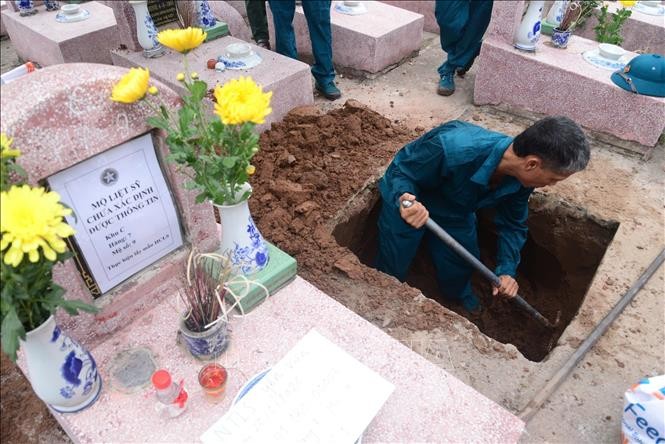 |
| Excavation and collection of DNA samples from unidentified fallen soldiers' graves at Yen Vien Fallen Soldiers Cemetery (Phu Dong Commune, Hanoi). (Photo: VNA) |
Urgent DNA Sample Collection
In Cua Nam Ward, the intensive phase of collecting DNA samples from relatives of unidentified fallen soldiers officially began on July 2.
Trinh Ngoc Tram, Vice Chairwoman of the Cua Nam Ward People's Committee, said the "500-Day Campaign to Accelerate the Search, Recovery, and Identification of Fallen Soldiers' Remains" carries profound political and humanitarian significance, reflecting Vietnam's tradition of remembering those who sacrificed for the nation. Cua Nam Ward will coordinate the search, recovery, and identification of fallen soldiers' remains; survey unidentified graves in city cemeteries for DNA analysis; collect, transfer, and digitize DNA samples from fallen soldiers' remains.
According to Major Ha Trung Kien of the Cua Nam Ward Police, authorities have identified 141 cases requiring verification. One elderly relative, unable to travel due to poor health, was visited at home by officials for sample collection. At least two maternal-line relatives of each unidentified fallen soldier are required to provide DNA samples. The samples are uploaded to the national system, where DNA extracted from recovered remains is compared with relatives' genetic profiles. DNA results are then cross-checked with recovery information, including burial location, personal belongings, and military unit records, to ensure maximum accuracy.
Neighborhood officials in Cua Nam Ward have been working closely with police and military personnel to verify local records of fallen soldiers and encourage eligible families to participate. Participants undergo fingerprint registration before blood samples are collected for DNA testing. The entire process is conducted scientifically and securely, ensuring convenience, accuracy, safety, and strict protection of personal information.
The same day, Giang Vo Ward also launched DNA sample collection for relatives of unidentified fallen soldiers. Approximately 400 relatives are expected to participate.
From early morning, hundreds of relatives gathered at Thanh Cong Secondary School to provide DNA samples. Police officers, Youth Union members, and mass organizations assisted families throughout the process, including identity verification and document registration.
In Dong Anh Commune, the local People's Committee is also implementing the DNA collection program. Beyond honoring fallen soldiers, the initiative offers families the possibility of ending decades-long searches for their loved ones. Around 453 relatives of unidentified fallen soldiers are expected to provide DNA samples this year. Blood or oral mucosal cell samples are collected using standardized procedures before being stored in the national DNA database for long-term comparison with recovered remains nationwide.
Lai Duy Bao, whose uncle was killed during the war, said his family has spent more than 50 years searching for his grave through former comrades and local residents who once lived near the battlefield, but without success.
"This humanitarian campaign is deeply meaningful. It gives me and many other families across the country renewed hope of finally bringing our loved ones home to their families, relatives, and hometowns," Bao said.
For Truong Quang Dinh, 79, from Huong Village, Dong Anh Commune, the hope of finding his older brother's grave has never faded.
Dinh said his brother, fallen soldier Truong Quang Dung, enlisted in 1965 and was killed while still very young. "When my brother joined the army, I was just a child. During his training in Thai Nguyen, we still received letters from him. Later, our family received notice of his death. Decades have passed, but we still have not found his grave. We sought help from his former comrades and local residents, yet we still do not know where he rests. This time, our family is filled with hope that we can finally bring him home," Dinh said.
Overcoming Challenges to Restore Their Names
Major General Nguyen Khac Nhan, Deputy Political Commissar of the Hanoi Capital Command and Deputy Head of the Hanoi Steering Committee for the Search, Recovery, and Identification of Fallen Soldiers' Remains, said that following the campaign's launch at Yen Vien Fallen Soldiers Cemetery in Phu Dong Commune, the city has instructed all wards and communes to simultaneously collect DNA samples from unidentified graves based on practical experience gained during the initial phase.
The campaign aims to complete this task three months ahead of schedule, by around April 2027, in time for the 80th anniversary of War Invalids and Martyrs Day.
Major General Nguyen Khac Nhan acknowledged that the campaign faces significant challenges. Most unidentified graves in Hanoi date back to the resistance war against French colonial rule. Over decades, cemeteries have undergone repeated renovation and reconstruction, leaving many graves buried deep underground and making excavation and DNA sampling extremely difficult. Correcting incomplete grave records is already challenging, while identifying graves with no information at all is even more demanding.
"This campaign carries profound humanitarian value. The Hanoi Steering Committee is determined to achieve its core mission of restoring the names of these fallen soldiers and fulfilling the long-held wishes of their families. Every participating force is fully committed to carrying out this important mission as effectively as possible," Major General Nguyen Khac Nhan emphasized.
Under Plan No. 03/KH-BCD for implementing the "500-Day Campaign to Accelerate the Search, Recovery, and Identification of Fallen Soldiers' Remains" in preparation for the 80th anniversary of War Invalids and Martyrs Day, issued by the Hanoi Steering Committee, the campaign officially began on May 15, 2026, and all objectives must be completed before July 27, 2027. Activities are being carried out across field sites and fallen soldiers' cemeteries throughout Hanoi.
The campaign focuses on three key tasks: conducting searches, recovery, and identification of fallen soldiers' remains within Hanoi; surveying unidentified graves at approximately 340 fallen soldiers' cemeteries for DNA testing; and collecting, transferring, and digitizing DNA samples from recovered remains.
To ensure coordinated implementation, the Hanoi Steering Committee has assigned clear responsibilities to each agency. The Hanoi Capital Command serves as the committee's standing body, responsible for overall planning, coordination, and establishing inter-agency task forces, support teams, and DNA sampling and digitization teams. It will also oversee pilot DNA sampling and digitization at one cemetery before citywide implementation and update all collected data into the Ministry of National Defence's database.
The Hanoi Department of Home Affairs is responsible for guiding local authorities in reviewing and standardizing data on fallen soldiers and their graves to ensure consistency. It will also coordinate the processing of all previously collected DNA samples from remains and relatives, with completion scheduled by July 2027.
 | Overseas Vietnamese Commemorate Fallen Soldiers in Gac Ma Battle Nguyen Thai Hong, head of the Liaison Committee for Overseas Vietnamese in Laos-Thailand said the sacrifices of the martyrs are those of the people who ... |
 | Vietnam Accelerates DNA Collection from Families of Unidentified Fallen Soldiers Localities across Vietnam are accelerating the review, registration, and collection of DNA samples from relatives of fallen soldiers whose identities have yet to be confirmed, ... |



Most read

Related Stories
 National
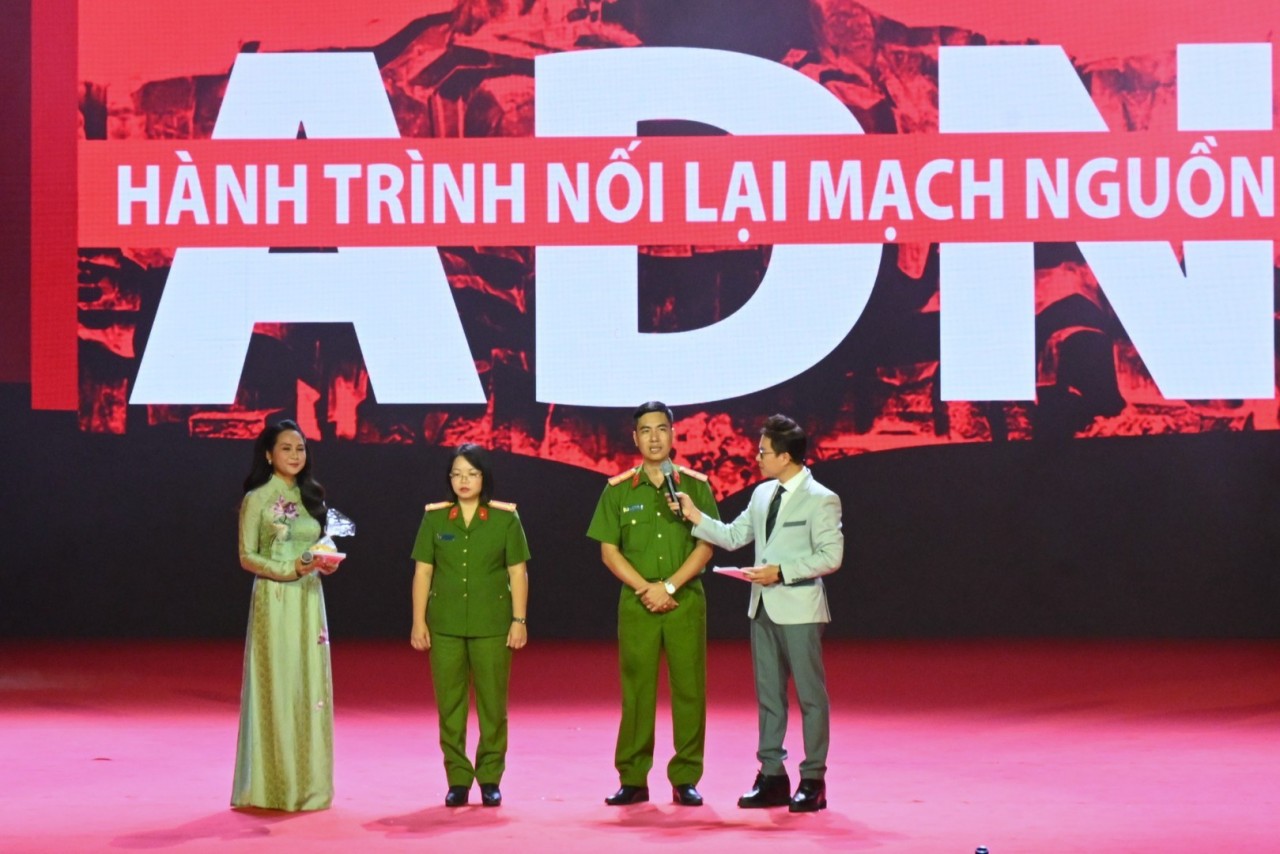
New Advances in DNA Technology for Identifying Fallen Soldiers
 Handbook
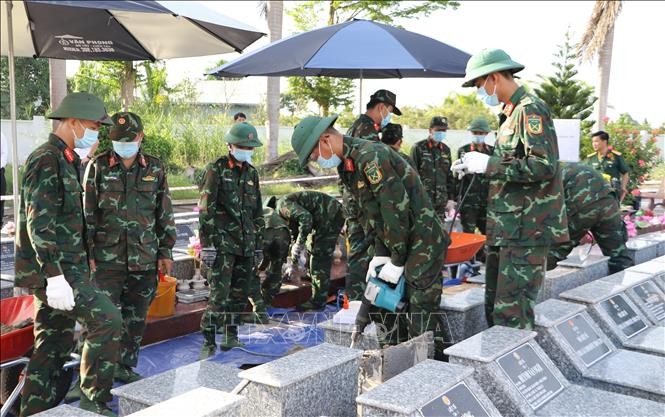
Conclusion No. 57-KL/TW: Highest Priority to the Search, Recovery, and Identification of Fallen Soldiers' Remains
 Viet's Home
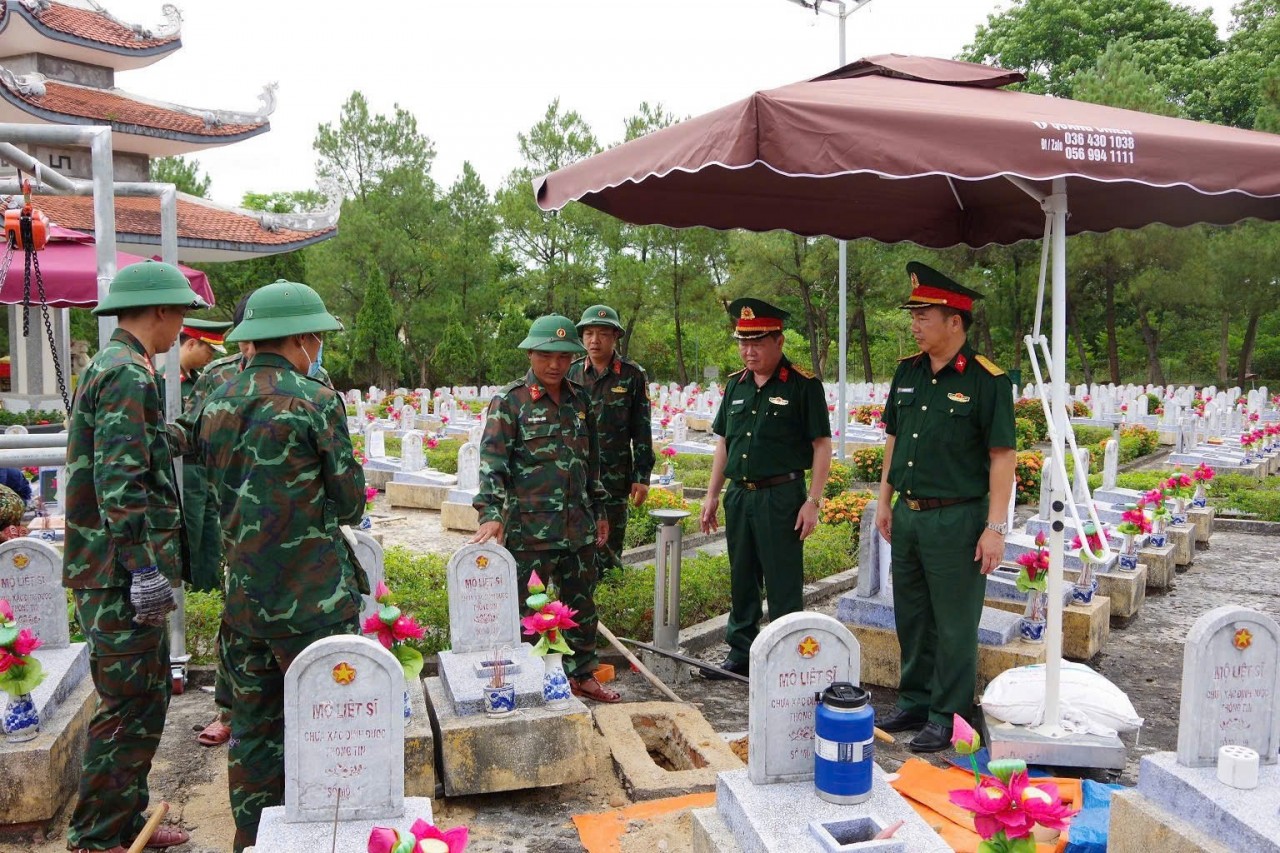
Quang Tri Provincial Authority Widen Scope For Search of Fallen Soldiers’ Remain Amidst Limited Information
 Viet's Home
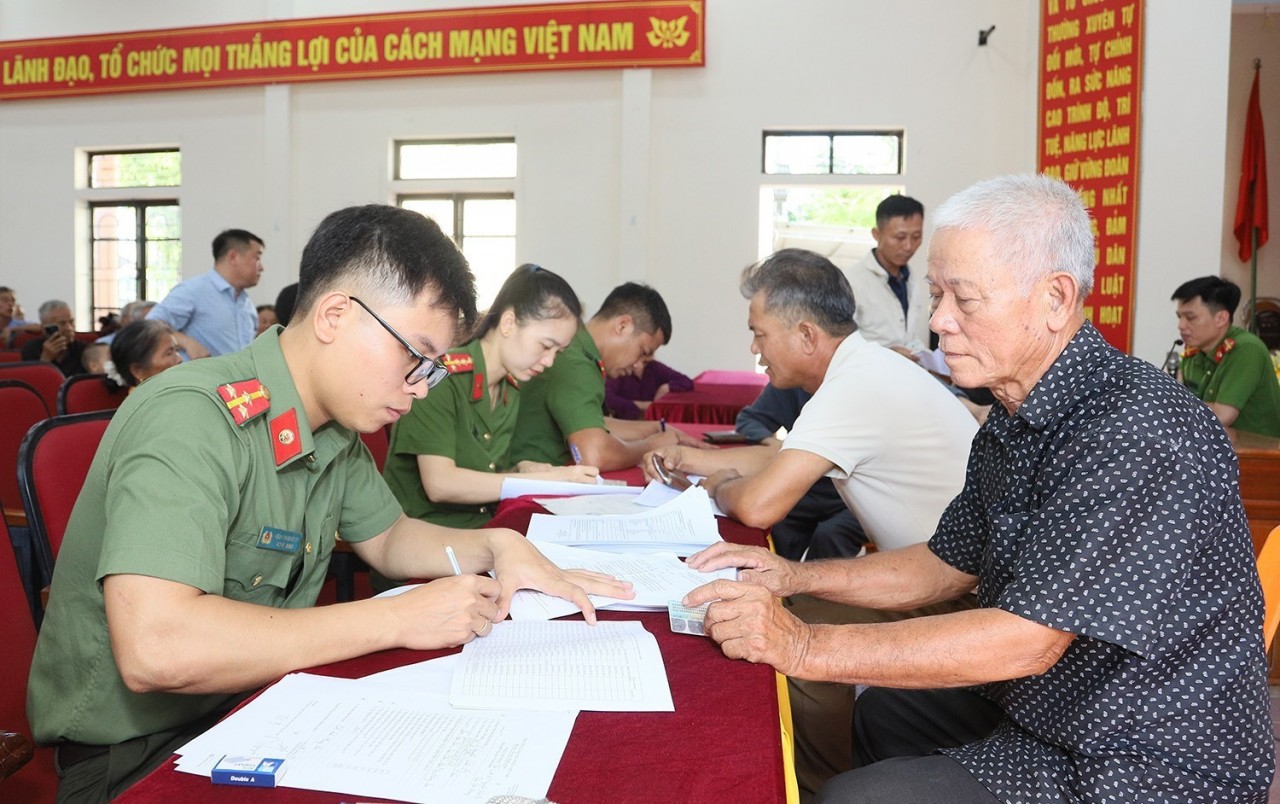
Vietnam Accelerates DNA Collection from Families of Unidentified Fallen Soldiers
Recommended
National
500-Day Campaign: Hope of Reunion Through DNA Evidence
Popular article
 National
Ho Chi Minh City Marks 50 Years with 3D Mapping Light Show
 National
Full Remarks by General Secretary, President To Lam at 50th Anniversary of Sai Gon-Gia Dinh Named After President Ho Chi Minh
 National
Foreign Affairs Should Better Serve National Development: Top Leader
 National