Vietnam, United States seek to deepen comprehensive strategic partnership
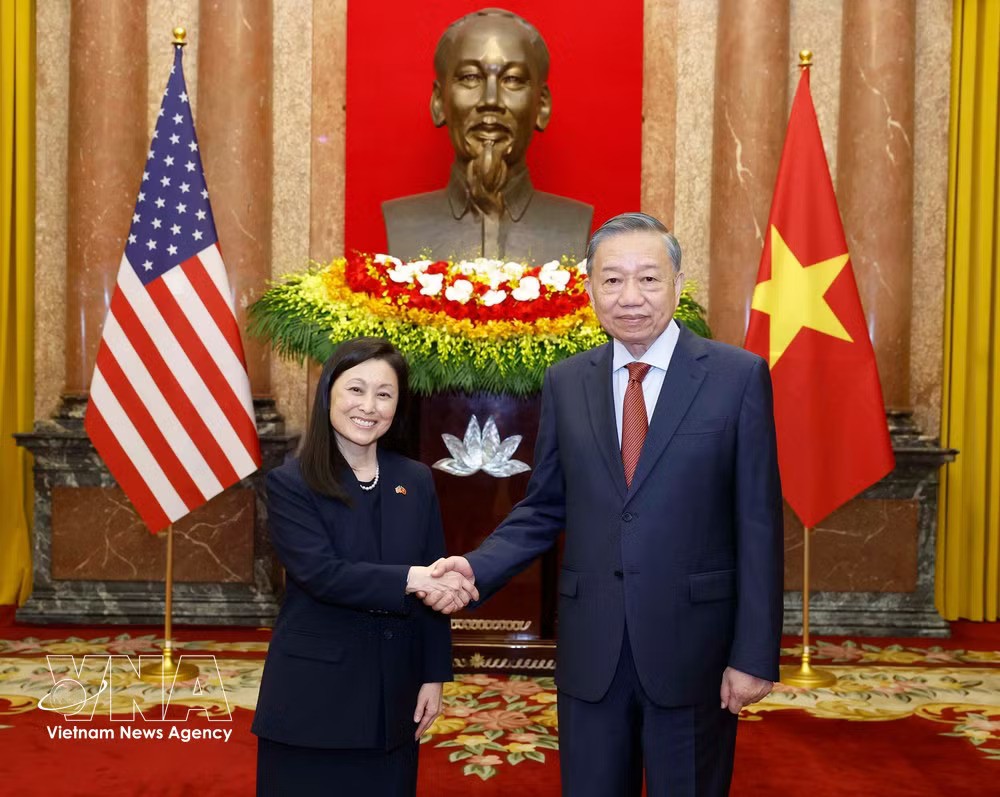
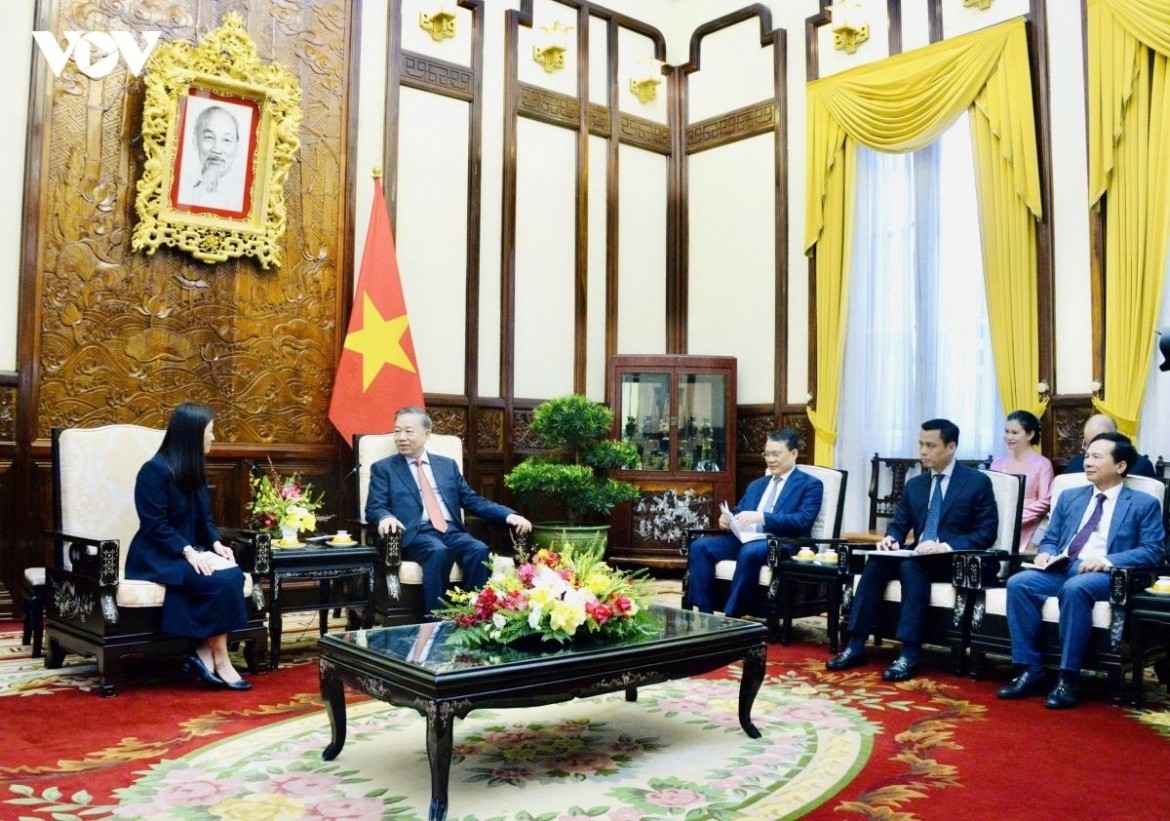
Vietnam and the United States will continue to advance their Comprehensive Strategic Partnership through stronger cooperation in trade, investment, high technology and post-war recovery, Party General Secretary and State President To Lam said while receiving newly appointed US Ambassador Jennifer Wicks.
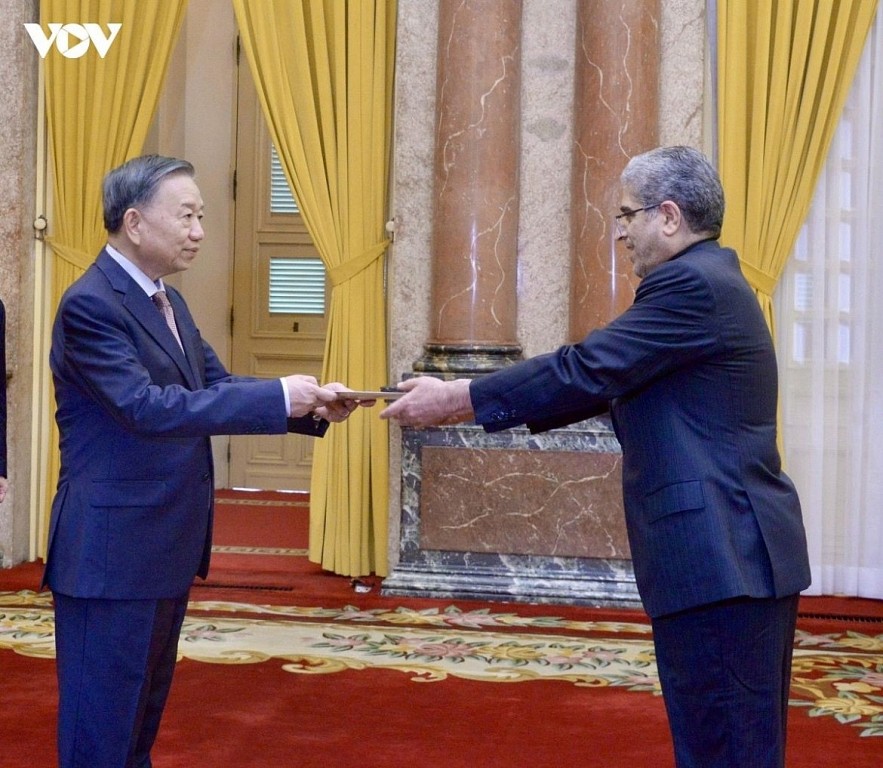
Welcoming Wicks who presented her credentials at the Presidential Palace on July 6, he expressed confidence that the diplomat’s extensive experience in the US Government would contribute to strengthening mutual trust, enhancing mutual understanding and further promoting the Vietnam–US Comprehensive Strategic Partnership.
On the occasion of the 250th anniversary of the Independence of the United States, the Vietnamese leader extended his congratulations to President Donald Trump and the American people.
Reaffirming the United States as one of Vietnam's leading strategic partners, the leader stressed that Vietnam wishes to work closely with the US to effectively implement the Comprehensive Strategic Partnership for Peace, Cooperation and Sustainable Development on the basis of respect for each other's independence, sovereignty, territorial integrity and political systems, equality, mutual benefit, and for the interests of the two peoples as well as peace, stability, cooperation and development in the region and the world at large.
Highlighting the positive momentum in bilateral ties since the relationship was elevated to a Comprehensive Strategic Partnership, he said the two countries still have significant potential to further expand practical and effective cooperation.
He called for continued exchanges and high-level contacts, the effective use of existing dialogue mechanisms, and the early conclusion and signing of the Agreement on Reciprocal, Fair and Balanced Trade (ART), describing economic, trade and investment cooperation as a key driver of bilateral relations.
The Party and State leader also proposed expanding cooperation in science and technology, innovation, semiconductors, artificial intelligence, digital transformation, education and training, healthcare, energy, and people-to-people exchanges.
For her part, Ambassador Wicks said she was honored to begin her tenure in Vietnam at a time when bilateral relations are enjoying strong momentum, according to VOV.
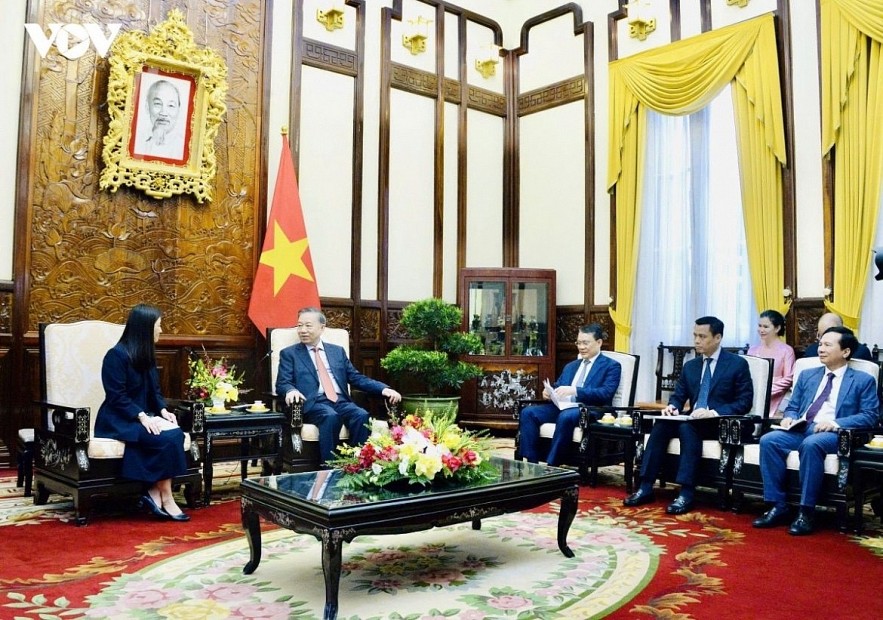 |
| Vietnamese Party General Secretary and State President To Lam receives newly appointed US Ambassador Jennifer Wicks in Hanoi on July 6. |
She reaffirmed that the United States highly values its relationship with Vietnam and supports a strong, independent, self-reliant and prosperous Vietnam. She pledged to work closely with Vietnamese ministries, agencies, localities and partners to effectively implement the important agreements reached by the two countries' senior leaders and to further promote cooperation across areas of mutual interest.
The ambassador said she was impressed by Vietnam's socio-economic achievements and its growing role and standing in the region and internationally, adding that the guidance and priorities outlined by the host would provide an important foundation for her work during her tenure.
She underscored the importance of building strategic trust, saying it would create fresh momentum for expanding bilateral cooperation across other sectors.
Wicks also reaffirmed the United States' continued commitment to cooperating with Vietnam in addressing the consequences of war, including dioxin remediation, unexploded ordnance clearance, assistance for persons with disabilities, and efforts to search for and identify Vietnamese personnel still missing from the war.
She added that the United States would continue coordinating closely with Vietnam at regional and international forums, contributing to peace, stability, cooperation and sustainable development in the region and beyond.
Vietnam to host two key ASEAN occupational safety and health meetings
Vietnam is scheduled to host two major meetings of the ASEAN Occupational Safety and Health Network (ASEAN-OSHNET) in the central city of Da Nang from July 7 to 9, reaffirming its active role in promoting regional cooperation on safer and healthier workplaces.
Organized by the Ministry of Home Affairs, the events comprise the 13th ASEAN-OSHNET Conference (AOC-13) and the 27th ASEAN-OSHNET Coordinating Board Meeting (CBM-27), looking to advance digital transformation in occupational safety and health management in ASEAN towards the ASEAN Vision 2045.
Around 130 delegates are expected to attend, including representatives from ASEAN member states, the ASEAN Secretariat, China, Japan, the International Labor Organization (ILO), the International Association of Labor Inspection (IALI), as well as business associations and enterprises from across the region. Leaders of the Ministry of Home Affairs will deliver opening remarks at both events.
The year 2026 marks an important milestone for Vietnam within ASEAN-OSHNET. The country has officially assumed the network's chairmanship for the 2026–2027 term from Thailand while handing over its role as the ASEAN-OSHNET Secretariat, which it held from 2023 to 2026, to Brunei – Vice Chair for the new term.
The AOC-13 on July 7 will feature four discussion sessions focusing on regional policy and governance frameworks, national experiences in digital transformation, business best practices, and the adoption of joint recommendations. Delegates will exchange experiences in applying big data, artificial intelligence, computer vision, electronic health records, virtual reality-based training and digital platforms to occupational safety and health management. Representatives of Vietnamese and ASEAN businesses will also participate in a dedicated business dialogue, reported VNA.
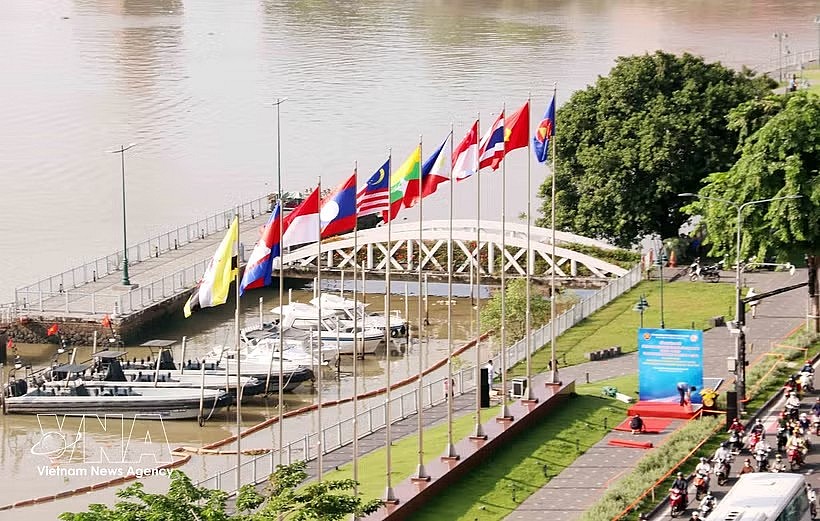 |
| Flags of ASEAN countries fly at Bach Dang Park in Sai Gon ward, Ho Chi Minh City, on the occasion of the 58th founding anniversary of ASEAN (August 8, 1967–2025). (Photo: VNA) |
The CBM-27, scheduled for July 8–9, will review the implementation of the ASEAN-OSHNET Action Plan for 2021–2025 and finalise a new action plan for 2026–2030. Participants will also discuss cooperation under the ASEAN Business Coalition on HIV/AIDS (ASEAN-BCA) and hold an open session with international partners to mobilise technical assistance and resources for the new action plan.
On the sidelines of the meetings, delegates will take part in a city tour showcasing the land, culture and people of Vietnam.
Hosting the two events reflects Vietnam's strong commitment to ASEAN's specialised cooperation mechanisms. It provides an opportunity to share the country's experience in developing a national occupational safety and health database and an online workplace accident reporting system as part of its broader digital transformation efforts, contributing to safer, healthier and more sustainable workplaces across ASEAN.
Vietnam’s economic momentum reflected in new income status
The World Bank’s decision to classify Vietnam as an upper-middle-income country after its gross national income (GNI) per capita reached 4,970 USD in 2025 stands as a significant milestone in the country’s development journey, reflecting sustained economic progress while also highlighting the need for deeper reforms to achieve high-income status.
Between 2021 and 2025, Vietnam’s GNI recorded average annual growth of around 10%, underscoring the economy’s strong momentum.
According to the WB, this performance was driven primarily by a robust recovery in exports, which expanded by more than 15% during 2024–2025, and by the country’s ability to sustain strong GDP growth of 7% and 8% in two consecutive years.
Dr. Le Duy Binh, an economist and Managing Director of Economica Vietnam, said the WB’s reclassification represents both recognition of Vietnam’s achievements and a call for more ambitious reforms as the country pursues the high-income status.
A key distinction, he noted, lies in the indicator used by the World Bank. While GDP measures the total value of goods and services within a country’s borders, GNI provides a broader assessment by capturing the income earned by a nation’s citizens and businesses regardless of where that income is generated.
The relationship between the two indicators is reflected in the formula: GNI equals GDP plus net factor income from abroad.
Vietnam’s GNI surpassing the World Bank threshold of 4,636 USD per capita therefore suggests that the country is no longer merely a manufacturing base with a GDP of 514.7 billion USD, but is increasingly capturing a greater share of value within global supply chains.
According to Binh, the achievement reflects nearly two decades of persistent efforts. Since joining the lower-middle-income group in 2009, Vietnam has spent 17 years advancing to this new development stage. However, he cautioned that the new classification should not be viewed as an end goal.
Moving into the upper-middle-income group is a stepping stone rather than a destination, he said, stressing that economic expansion alone is insufficient. Vietnam must simultaneously strengthen the foundations of long-term growth, including scientific and technological capabilities, innovation capacity, workforce quality, and its position in higher-value segments of global production networks.
The next phase of development will present more complex challenges, requiring fundamental changes in governance and policymaking to avoid the so-called middle-income trap, cited VNA.
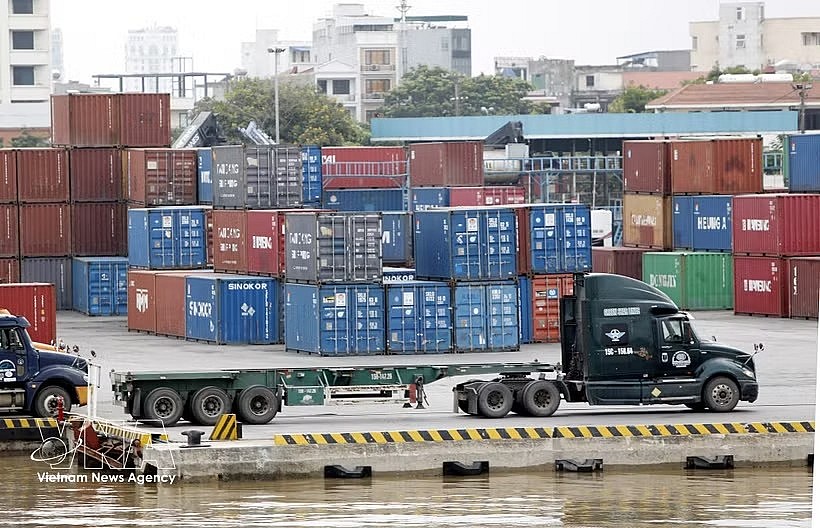 |
| Exports are one of the key drivers of Vietnam’s economic growth. (Photo: VNA) |
Among the challenges are population ageing, rising social welfare demands, inequality and widening income gaps that can accompany rapid growth. At the same time, a larger economy will require greater energy consumption and resource use.
To ensure sustainable development and meet increasingly demanding global standards, Vietnam will need to accelerate green growth, improve resource efficiency and reduce emissions, he said.
Nguyen Thi Mai Hanh, head of the National Accounts Department under the National Statistics Office of the Ministry of Finance, emphasized that the WB’s reclassification is primarily a change in economic categorisation and does not mean Vietnam has become a developed country or significantly narrowed its income gap with advanced economies.
She noted that labor productivity, innovation capacity and overall economic competitiveness still require substantial improvement in the coming years.
Hanh also stressed that rising income rankings should translate into tangible improvements in people’s living standards rather than remain statistical achievements. She cited the National Statistics Office as saying that average monthly income of workers reaches nearly 9 million VND (342 USD) in the second quarter of 2026, slightly down by 53,000 VND from the previous quarter.
Meanwhile, household survey data showed that more than 96% of households reported stable or higher incomes compared with the same period last year. Nearly 31% said their incomes have increased, while more than 65% reported no change.
Economists agree that the latest milestone demonstrates Vietnam’s success in moving beyond the initial stage of economic accumulation. The next chapter, however, will require a different development model focused on productivity, innovation and sustainability.
The new income classification is also expected to enhance Vietnam’s international standing. As the country’s economic scale and market size expand, its influence in international economic affairs is likely to grow accordingly.
Experts noted that larger economies generally possess greater negotiating leverage and stronger soft power in trade and economic relations. This could enable Vietnam to play a more proactive role in shaping next-generation free trade agreements and securing more favorable terms in international economic negotiations.
Vietnam monitors Super Typhoon Bavi as Maysak weakens
As Tropical Storm Maysak weakens after crossing southern China, attention has shifted to Super Typhoon Bavi, whose powerful circulation could influence weather over the East Sea.
Vietnam's National Center for Hydro-Meteorological Forecasting (NCHMF) is closely monitoring Super Typhoon Bavi, warning that although the storm is currently not expected to enter the East Sea, its extensive circulation could generate strong winds, high waves and rough seas across much of the region later this week.
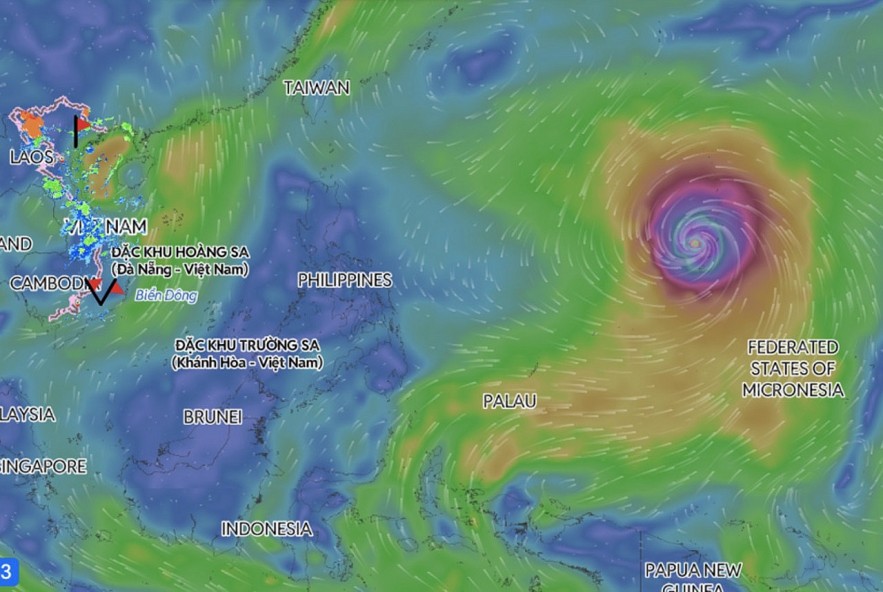 |
| Super Typhoon Bavi over the northwestern Pacific Ocean. Source: Vietnam National Center for Hydro-Meteorological Forecasting (NCHMF). |
As of the morning of July 6, the center of Super Typhoon Bavi was located more than 2,000 kilometers east of the central Philippines. The storm had maintained Category 17 intensity, the highest level on Vietnam's Beaufort wind scale, with gusts exceeding Category 17.
Forecast models and assessments from international meteorological agencies indicate that over the next 24 hours the storm will continue moving west-northwest at an average speed of about 20 kilometers per hour.
Between July 6 and July 9, Bavi is forecast to retain super typhoon strength while maintaining its west-northwest track. Around July 10, the storm is expected to gradually turn northwest toward the area north of Taiwan (China).
Based on current forecasts, meteorologists say there are no indications that Bavi will move into the East Sea. Current forecast scenarios estimate the probability of such a track at below 10 percent.
Despite the low likelihood of direct entry, the storm's enormous circulation is expected to influence weather over the East Sea. Forecasters warn that the storm's circulation and its wind-enhancing effect could strengthen the southwest monsoon beginning around July 9.
From July 9 to July 11, strong southwesterly winds of Force 6-7 are forecast across the northern, central and southern parts of the East Sea, including waters surrounding the Hoang Sa (Paracel) and Truong Sa (Spratly) archipelagos.
Wave heights are expected to reach 3-5 meters, creating very rough sea conditions that could pose risks to vessels operating across the region.
Bavi is the third super typhoon to develop over the northwestern Pacific this year, following Sinlaku and Mekkhala.
Satellite imagery shows a well-defined circular eye surrounded by highly symmetrical and dense cloud bands, indicating an exceptionally powerful tropical cyclone.
According to climate and disaster risk expert Dr. Nguyen Ngoc Huy, forecast models including GFS and ICON currently indicate that Bavi is more likely to approach Taiwan (China) around July 10-11 before moving into mainland China between July 12 and July 14.
However, experts caution that the storm's track remains subject to change. Should the subtropical high over the Sea of Japan shift farther south, Bavi's trajectory could alter, potentially bringing it closer to the East Sea.
The National Center for Hydro-Meteorological Forecasting said it will continue closely monitoring the development of Super Typhoon Bavi and provide updated forecasts and warnings as the situation evolves.
Maysak weakens after affecting northern Vietnam
While attention has shifted to Bavi, Tropical Storm Maysak, designated as Storm No. 1 in Vietnam's 2026 typhoon season, weakened into a tropical depression after moving inland over southern Guangxi Province, China.
Before weakening, Maysak lingered for several hours near Mong Cai in Quang Ninh Province, bringing sustained winds of Force 9 with gusts reaching Force 12.
The system is forecast to continue weakening into a low-pressure area and is no longer expected to directly affect Vietnam, VNN reported.
Nevertheless, strong winds and high waves continued over the northern Gulf of Tonkin immediately after the storm, prompting authorities to advise fishermen and maritime operators to closely monitor official weather warnings.
Heavy rain and flooding continue across northern Vietnam
Although Maysak has weakened, its residual circulation has continued to bring heavy rainfall across parts of northern Vietnam.
Rainfall exceeding 70 millimeters was recorded in several locations, with some mountainous areas forecast to receive more than 130 millimeters within a short period, raising the risk of flash floods and landslides.
From the evening of July 5 through July 6, moderate to heavy rain was forecast for Lai Chau, Dien Bien, Son La, Lao Cai and Tuyen Quang provinces. Elsewhere across northern Vietnam, Thanh Hoa, Nghe An, the Central Highlands and southern Vietnam, scattered thunderstorms with locally heavy rain were expected.
Authorities warned of possible tornadoes, lightning, hail and strong wind gusts during thunderstorms.
River levels across northern Vietnam are also expected to rise sharply. Water levels on smaller rivers and the upper reaches of major river systems could increase by 2-4 meters, with flood warnings reaching Alert Levels 1 and 2 in some locations.
Vietnam's National Civil Defense Steering Committee instructed authorities in Tuyen Quang, Phu Tho, Cao Bang, Lang Son, Quang Ninh, Thai Nguyen, Hanoi and Bac Ninh to prepare flood response measures, monitor river levels, relocate residents if necessary and strengthen embankment protection.
Quang Ninh accelerates recovery after Maysak
In Quang Ninh Province, local authorities continued recovery operations after Maysak caused widespread damage in Mong Cai.
Numerous trees were uprooted, roofing sheets were blown onto roads and floodwaters from the Ka Long River inundated riverside walkways.
Provincial Party Secretary Quan Minh Cuong ordered authorities to verify reports that three fishermen remained missing after the storm and instructed military forces to mobilize boats and equipment to search affected waters.
He also directed emergency crews to recover drifting fishing vessels, restore electricity, clear roads blocked by fallen trees and help residents resume normal activities as quickly as possible.
Local police are also working to identify the body of a man found drifting near Mong Cai's coastline on July 5.
Provincial officials stressed that protecting lives remains the highest priority while emergency response teams continue monitoring weather conditions and carrying out recovery work.
 | Vietnam News Today (July 1): Vietnam and UAE Sign Defense Industry Cooperation Memorandum Vietnam News Today (July 1): Vietnam and UAE sign defense industry cooperation memorandum; Vietnam, RoK seek to strengthen scientific research cooperation; Vietnam shifts FDI strategy ... |
 | Vietnam News Today (July 4): International Tourist Arrivals to Vietnam Rise Nearly 15% in First Half of 2026 Vietnam News Today (July 4): Timor-Leste, Vietnam augment legal and judicial cooperation; Greece seeks stronger labor cooperation with Vietnam, ASEAN; FDI inflows to Vietnam surge ... |