| Vietnam News Today (Jun. 28) notable headlines Vietnam, Cambodia advance together towards the future Cultural events in France celebrate President Ho Chi Minh's legacy Vietnam defines coffee value, brand, culture in Singapore Vietnam to launch domestic carbon exchange on June 29 Cham cultural festival celebrates heritage, unity and diversity Tay Ninh secures over US$2.1bln in investment commitments in Germany Vietnamese families adapt to external changes, preserve enduring values How three generations are keeping M'nong culture alive Vietnamese students earn honors at ROBOG Asia Cup 2026 |
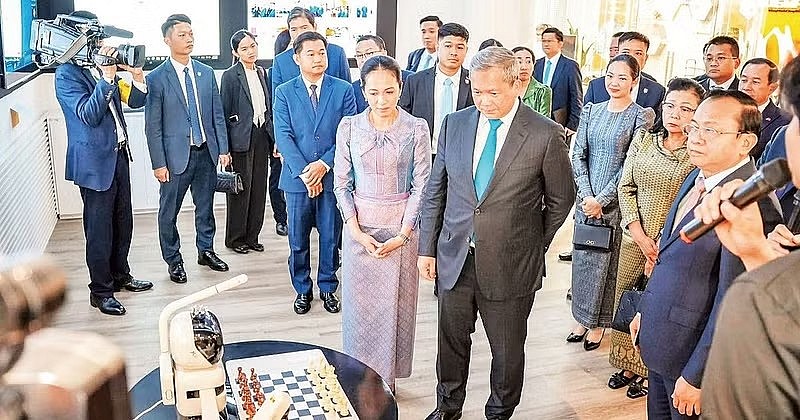 |
| Cambodian Prime Minister Hun Manet visits the Vietnam National Innovation Centre. (Photo: Ministry of Foreign Affairs and International Cooperation of Cambodia) |
Vietnam, Cambodia advance together towards the future
June 28, 2026, marks the 75th anniversary of the Cambodian People's Party (CPP) — a significant milestone in the party's development and an occasion of great importance for the Kingdom of Cambodia.
Throughout this journey, Vietnam has remained a steadfast partner, working closely with Cambodia while continuously nurturing the long-standing friendship between the two countries, with the shared determination to transform this close relationship into a driving force as they confidently enter a new stage of development together.
Situated in the south-west of the Indochinese Peninsula, Cambodia is renowned for its ancient temples, most notably the magnificent Angkor Archaeological Park, as well as spectacular natural attractions such as Tonlé Sap Lake — Southeast Asia's largest freshwater lake, which has been designated a UNESCO Biosphere Reserve. Blessed with a rich cultural heritage and outstanding natural beauty, Cambodia has become a favourite destination for international visitors, including those from Vietnam. In 2025, 1.22 million Vietnamese tourists visited Cambodia, making Vietnam the country's largest source of international visitors.
Under the leadership of the Cambodian People's Party, Cambodia has achieved significant progress in national development, improving living standards and enhancing its standing both regionally and internationally. Since 2012, the country's gross domestic product has recorded average annual growth of more than 7%.
Following the severe impact of the COVID-19 pandemic, Cambodia's economy has steadily regained momentum. In 2025, the country's total trade turnover reached 65.25 billion USD, an increase of 18% compared with 2024. Cambodia is currently pursuing wide-ranging socio-economic reforms and deeper international integration, with the aim of achieving upper-middle-income status by 2030 and high-income status by 2050.
The government led by Prime Minister Hun Manet is actively implementing the Pentagonal Strategy, which focuses on five key priorities: human resource development; economic diversification and competitiveness; private sector and employment development; sustainable development; and digital socio-economic development.
As part of its commitment to regional and global integration, Cambodia has established diplomatic relations with more than 170 countries, maintains diplomatic missions in over 60 countries, and enjoys trade relations with around 150 countries and territories. It is an active member of numerous multilateral organizations, including the United Nations, the Association of Southeast Asian Nations (ASEAN), and the World Trade Organization (WTO), and it also participates in a wide range of regional cooperation mechanisms.
The relationship between the Communist Party of Vietnam and the Cambodian People's Party is one of traditional solidarity and comprehensive cooperation, serving as the cornerstone of bilateral relations, cited NDO.
Throughout their respective histories, the peoples of Vietnam and Cambodia have shared many common values and consistently supported one another, particularly during times of hardship. The victory of January 7, 1979, which brought an end to the genocidal Pol Pot regime in Cambodia, stands as a powerful testament to the profound solidarity and friendship between the two nations.
Built upon decades of mutual trust and tested through changing historical circumstances, Vietnam–Cambodia relations have continued to develop and have yielded substantial achievements across a broad range of fields.
Regular high-level meetings and exchanges between the leaders of the two parties and the two countries have played an especially important role in providing firm political guidance for bilateral relations while helping to address specific issues of mutual concern.
In February 2026, Party General Secretary To Lam, leading a high-level delegation of the Communist Party of Vietnam, co-chaired a meeting in Cambodia with the Standing Committee of the Central Committee of the Cambodian People's Party. During the meeting, both sides reaffirmed that relations between the two parties provide the strategic foundation for the overall Vietnam–Cambodia relationship. They agreed that the rapid, complex, and unpredictable changes in the regional and international environment are affecting all countries, including Vietnam and Cambodia, making it imperative for the two parties and the two nations to strengthen solidarity, coordination, and mutual support.
The CPP's 75-year journey of growth has been marked by milestones closely intertwined with Cambodia's modern history, from the struggle for national independence and the defence of sovereignty and territorial integrity, to liberating the country from the genocidal regime, rebuilding the nation, and promoting peace and socio-economic development.
CPP President Hun Sen has reaffirmed the party's commitment to continued renewal, advancing national development policies, strengthening international cooperation, and safeguarding the nation's core values. Vietnam, for its part, will continue to stand alongside Cambodia on its development path while working together to nurture the traditional friendship between the two countries — an invaluable shared asset of both peoples.
Cultural events in France celebrate President Ho Chi Minh's legacy
A series of cultural events honoring Vietnamese President Ho Chi Minh has been held in Montreuil, France, highlighting his enduring legacy while strengthening cultural ties and friendship between Vietnam and France.
The programme, held on June 26, commemorated the 115th anniversary of the leader’s departure in search of a path for national salvation and the 80th anniversary of his official visit to France as a guest of the French Government.
The events were jointly organized by the President Ho Chi Minh Memorial Site at the Presidential Palace in Hanoi, the Embassy of Vietnam in France, and the Vietnamese Cultural Centre in France. Montreuil was chosen as the venue because of its historical significance as a place closely associated with President Ho Chi Minh's revolutionary activities during his years in France.
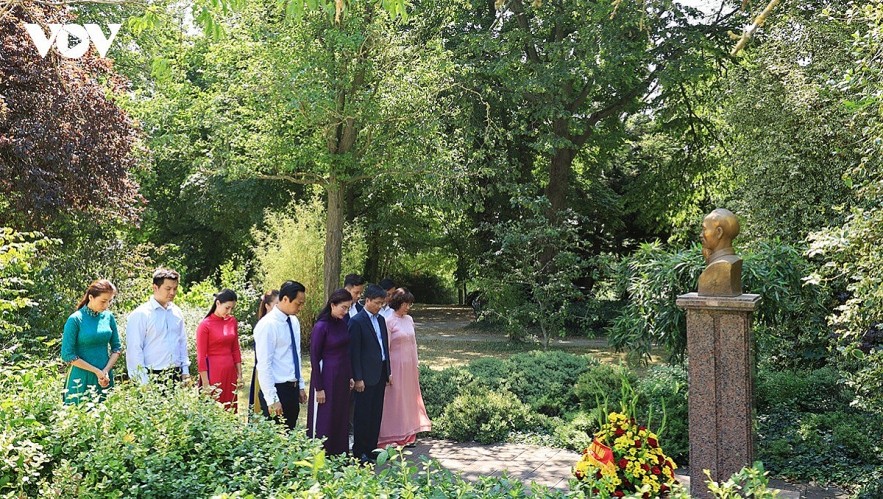 |
| Delegates pay tribute to President Ho Chi Minh at Montreuil Park, France. |
One of the highlights was the opening of the thematic exhibition titled ‘The President Ho Chi Minh Memorial Site at the Presidential Palace – A Space of Vietnam-France Friendship and Peace,’ alongside the enhancement of the Ho Chi Minh Exhibition Space at the Living History Museum (Musée de l'Histoire Vivante), which preserves valuable documents and artifacts relating to the Vietnamese leader.
The exhibition presented photographs and archival materials tracing President Ho Chi Minh's life and revolutionary career, and introducing the President Ho Chi Minh Memorial Site at the Presidential Palace in Hanoi where he lived and worked during the final 15 years of his life, from 1954 to 1969.
Through these exhibits, visitors gained deeper insight into Vietnam's modern history and the enduring friendship between Vietnam and France, helping foster greater mutual understanding between the peoples of the two countries.
Speaking at the event, Le Thi Phuong, director of the President Ho Chi Minh Memorial Site at the Presidential Palace, stressed President Ho Chi Minh played a pioneering role in laying the foundation for friendship between Vietnam and France.
President Ho Chi Minh was a historic figure whose vision helped build the first bridge of friendship between Vietnam and France, laying the foundation for mutual understanding and respect between the two peoples, she said.
According to her, the exhibition, the enhancement of the Ho Chi Minh Exhibition Space and commemorative activities not only honor President Ho Chi Minh's legacy but also inspire patriotism and strengthen cultural identity among overseas Vietnamese.
The exhibition has attracted not only the Vietnamese community in France but also many international visitors.
Among them was Hugo Liao, who said the photographs and historical accounts have given him a deeper understanding of President Ho Chi Minh and Vietnam's struggle for national independence.
“These photographs have helped me learn much more about President Ho Chi Minh and Vietnam's history. It is meaningful that his legacy is being preserved so future generations can continue to discover and appreciate it,” he told Paris-based VOV correspondents.
During the working visit, the Vietnamese delegation also offered incense in tribute to President Ho Chi Minh at the Embassy of Vietnam in France and held discussions with the Vietnamese Ambassador on preserving and promoting his legacy overseas.
Vietnam defines coffee value, brand, culture in Singapore
The Vietnam Coffee Festival 2026 opened at the Vietnamese Embassy in Singapore on June 26, bringing together producers, importers, distributors and industry associations from both nations, including the Vietnam Coffee-Cocoa Association and the Singapore Coffee Association.
Hosted by the Vietnamese Embassy and the Vietnam Trade Office in Singapore, the event aimed to help Vietnamese coffee companies connect directly with importers, distribution networks and partners in Singapore and globally.
In his address, Vietnamese Ambassador to Singapore Tran Phuoc Anh spotlighted Vietnam's expanding coffee industry and Singapore's important role in the global coffee supply chain. He called for closer bilateral trade cooperation and pledged that the embassy and trade office will continue accompanying Vietnamese firms in their journey to integrate deeply into the world.
“Vietnamese coffee companies can go global by proactively building brand value and showcasing the unique character, quality and added value of their products”, Anh said.
The event’s headline moment came with the signing of memorandum of understanding between TNI King Coffee and the International Business Federation (IBF), signaling broader collaboration between the two sides in particular and between Vietnam and Singapore in general.
Le Hoang Diep Thao, founder and CEO of TNI King Coffee and Chairwoman of the Global Coffee Alliance (GCA), said her company set up its Singapore office 18 years ago as the city functions as a global trading hub. The new partnership, she added, fits into a wider strategy to elevate Vietnam’s standing in the global coffee industry by showcasing the country’s long growing tradition and distinctive coffee culture, reported VNA.
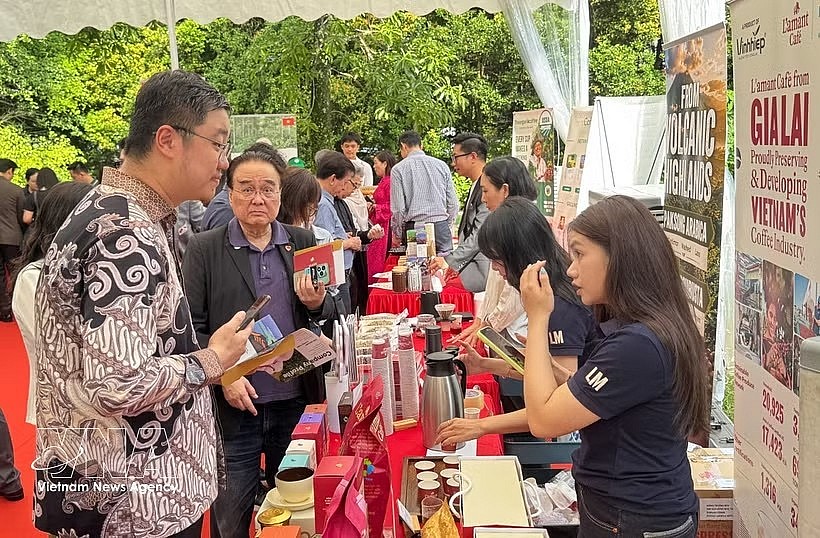 |
| Vietnamese firms connect with importers, distribution networks and partners in Singapore and beyond (Photo: VNA) |
The collaboration was on full display during the festival through a live culinary show. Chef Pung Lu Tin unveiled a new creation “Vietnam Coffee Pork Chop” while guests watched coffee brewing demonstrations, coffee painting and sampled Vietnamese street food favourites, from banh mi (baguette) and fresh spring rolls to fried rice, fried chicken and tropical fruits.
Brazilian Ambassador to Singapore Luciano Mazza de Andrade expressed strong admiration for the wide range of Vietnamese coffees and brewing methods. He noted that Vietnam has significant potential to increase its coffee exports to Singapore and expressed hope that the selection available will expand rapidly.
Vietnam to launch domestic carbon exchange on June 29
Vietnam is scheduled to launch its domestic carbon exchange on June 29, marking an important step toward developing the country’s carbon market after completing the necessary legal framework, trading infrastructure and operational systems.
The launch ceremony will be jointly organised by the Ministry of Finance, the Ministry of Agriculture and Environment and relevant agencies in accordance with the roadmap set out in Government Decree No. 29 governing the domestic carbon exchange.
From emission limits to emissions trading
Unlike traditional administrative approaches to emissions control, a carbon market places an economic value on greenhouse gas emissions by allowing the trading of emission allowances and carbon credits.
Under the mechanism, the government allocates greenhouse gas emission allowances to facilities subject to mandatory emissions inventories. Companies that emit less than their allocated quotas can sell surplus allowances, while those exceeding their limits may purchase additional allowances or carbon credits to meet regulatory requirements.
The market-based approach is widely used around the world to encourage businesses to invest in cleaner technologies, improve energy efficiency and reduce emissions through economic incentives rather than administrative measures.
In addition to emission allowances, carbon credits generated from eligible emission reduction or carbon removal projects will also be traded on the exchange.
Why Vietnam needs a carbon market
The launch of the domestic carbon exchange represents the next step in implementing Vietnam’s carbon market roadmap under the 2020 Law on Environmental Protection, further detailed in Government Decree No. 06 and later strengthened by Government Decree No. 29.
Under the roadmap, Vietnam will initially operate the market on a pilot basis before expanding it nationwide in the coming years.
According to the Ministry of Agriculture and Environment, the carbon market will not only help the country reduce greenhouse gas emissions but also mobilise financial resources for clean energy, emissions reduction projects and environmental protection.
As major export markets continue tightening carbon-related regulations, establishing a domestic carbon market is also expected to help Vietnamese businesses adapt to international carbon pricing mechanisms, improve competitiveness and reduce trade-related risks.
The first tradable assets
During the initial phase, the exchange will trade two types of assets: greenhouse gas emission allowances and carbon credits.
Under Prime Ministerial Decision No. 263, emission allowances for the 2025-2026 pilot phase have been approved and allocated to 110 facilities required to conduct greenhouse gas emissions inventories.
These facilities will become the first participants in Vietnam's domestic carbon market. Focusing initially on major emitters is expected to help regulators evaluate the effectiveness of the trading system before expanding the scale of the market, cited VOV.
 |
| Vietnam will officially launch its domestic carbon exchange on June 29, marking a major step in the development of the country's carbon market. (Illustrative image) |
Under current regulations, all emission allowances and carbon credits must be registered in the National Registry System for Greenhouse Gas Emission Allowances and Carbon Credits before trading to ensure transparency, prevent double counting and verify ownership.
Trading systems ready for launch
According to the State Securities Commission of Vietnam, the trading system operated by the Hanoi Stock Exchange (HNX), the clearing and settlement system managed by the Vietnam Securities Depository and Clearing Corporation (VSDC), and the National Registry System have been fully integrated and tested.
Extensive internal and market-wide testing conducted in May and June 2026 confirmed that the systems are capable of supporting trading, clearing, settlement and data exchange.
A settlement bank has also been designated in accordance with regulations, while training programmes and technical workshops have been organised to familiarise businesses and market participants with trading procedures.
Supporting Vietnam's green transition
The launch of the domestic carbon exchange will not only support Vietnam's international climate commitments but also introduce an important market mechanism to promote green growth.
By allowing companies to trade emission allowances and carbon credits, the system enables businesses to choose the most cost-effective pathways for reducing emissions while creating opportunities to generate revenue from qualified emissions reduction and carbon removal projects.
Over the longer term, Vietnam’s carbon market is expected to support the development of a low-carbon economy, encourage technological innovation, improve energy efficiency and strengthen the competitiveness of Vietnamese businesses as the global economy accelerates its transition toward greener development.
Cham cultural festival celebrates heritage, unity and diversity
The sixth Cham Ethnic Culture Festival officially opened in the south-central province of Khanh Hoa on June 26, bringing together hundreds of artisans, performers and members of the Cham community from seven localities to celebrate one of Vietnam's most distinctive cultural traditions.
Jointly organised by the Ministry of Culture, Sports and Tourism and the provincial People's Committee, the festival features participants from Khanh Hoa, Gia Lai, Dak Lak, Lam Dong, An Giang, Tay Ninh and Ho Chi Minh City.
Addressing the opening ceremony, Vice State President Vo Thi Anh Xuan highlighted Vietnam's rich cultural diversity, noting that the country's ethnic groups have different languages, scripts, beliefs and customs, yet all contribute to the nation's shared values of patriotism, solidarity, compassion, diligence, creativity, and aspiration for rising up.
She said the Cham people, with their long history and rich cultural heritage, have made significant contributions to the formation and development of Vietnamese culture.
The Vice State President described Cham culture as a unique treasure, encompassing nationally recognised religious architecture, national treasures, ancient manuscripts, traditional festivals, music and handicrafts. One of its defining characteristics, she noted, is its unity despite regional cultural differences.
While Cham communities in the south-central region have preserved a wide range of traditional festivals, rituals, customs and handicrafts, those in southern Vietnam have developed a distinctive cultural space that harmoniously blends religious life with community identity and civic responsibility. Together, these traditions reflect the richness, openness and unity in diversity of Vietnamese culture, cited VNA.
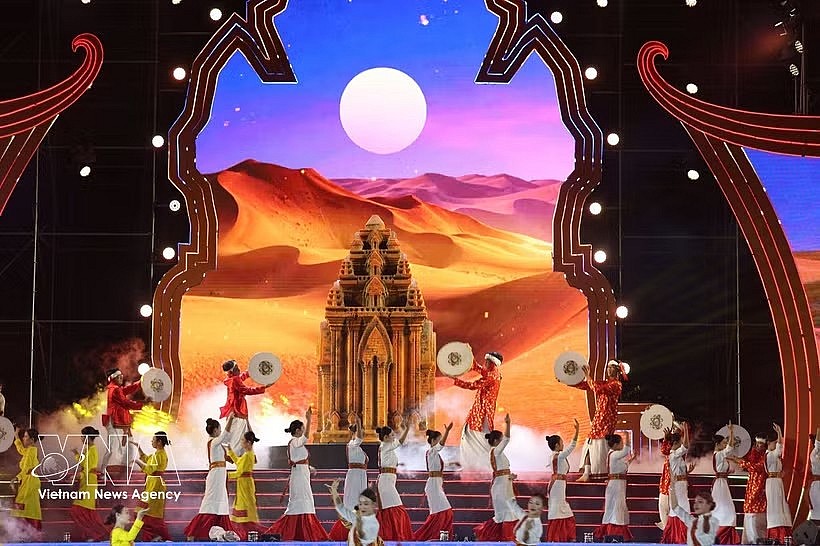 |
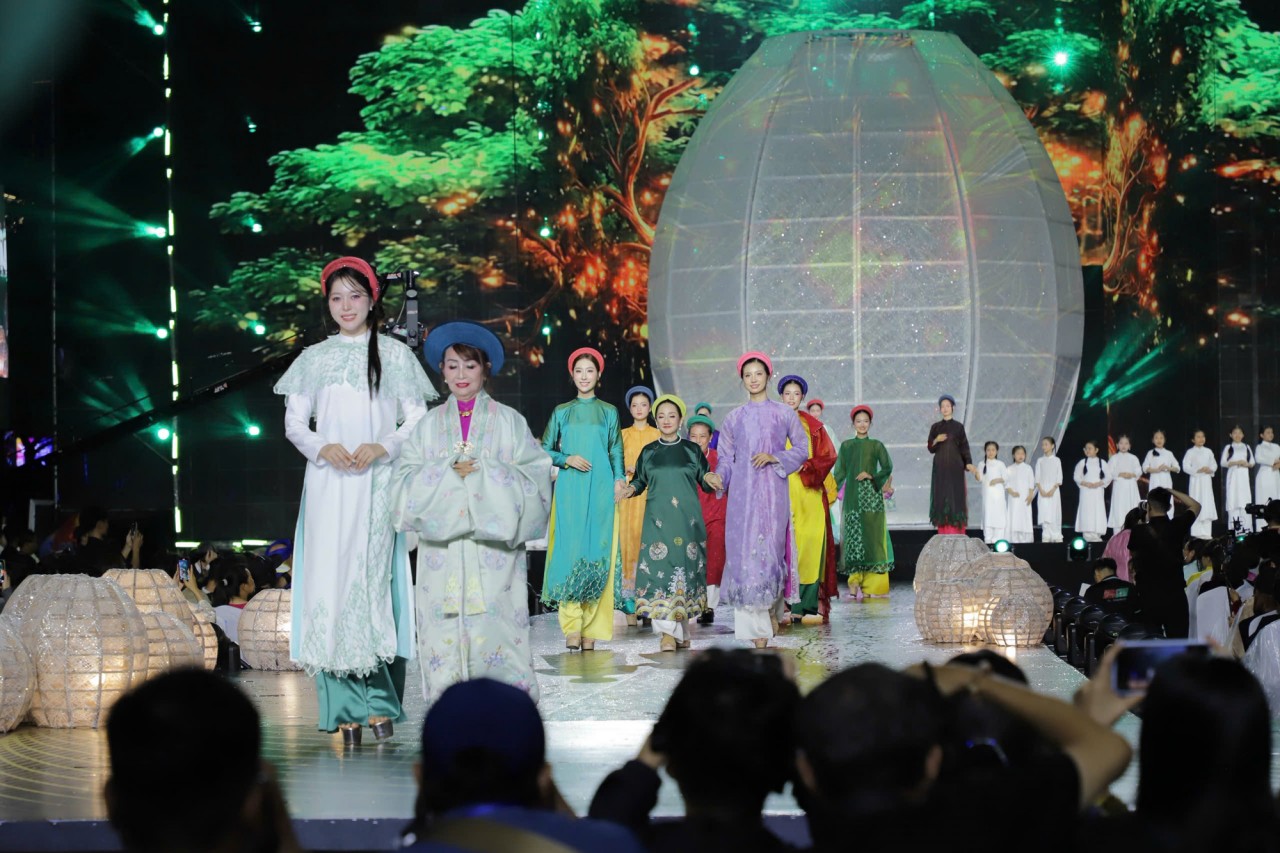
| Cham artists perform at the festival. (Photo: VNA) |
Xuan reaffirmed that great national unity remains a core policy of the Party and is rooted in the principle that the people are the foundation, the driving force and the beneficiaries of national development.
She stressed that policies on ethnic affairs and culture must be people-centred, ensuring that ethnic minority communities can participate in, contribute to and benefit from the country's development. Supporting ethnic minorities, including the Cham people, is not only a political responsibility but also a humanitarian commitment, she said.
She called on ministries, sectors and localities to continue implementing the Party's policies on cultural development by preserving cultural heritage, applying science and technology to conservation efforts, promoting international cooperation, and empowering artisans, community leaders and other cultural custodians. She also emphasized the importance of linking cultural preservation with socio-economic development to improve the material and spiritual well-being of ethnic minority communities.
Chairman of the Khanh Hoa provincial People's Committee Nguyen Viet Hung said the festival, themed "Preserving and Promoting Cham Cultural Identity in the New Era," reflects the province's commitment to safeguarding cultural heritage while promoting tourism and cultural industries.
He added that the event also provides an opportunity to strengthen tourism links among localities with Cham communities, develop distinctive cultural tourism products and enhance the competitiveness of Vietnam's tourism industry in the international arena.
 | Vietnam News Today (Jun. 23): Vietnam, US Seek Stronger Defense Cooperation Vietnam News Today (Jun. 23): Vietnam, US seek stronger defense cooperation; Vietnam promotes overseas workers as ambassadors of skills and national image; Vietnam is key ... |
 | Vietnam News Today (Jun. 24): Vietnam, Cuba Push for Stronger Ties in New Development Period Vietnam News Today (Jun. 24): Vietnam attaches high importance to ties with India: Top NA leader; Vietnam, Palestine seek to strengthen traditional friendship, cooperation; Vietnam, ... |