Vietnam News Today (Jun. 29): Vietnam Joins World's Top 30 Most Competitive Economies

Vietnam News Today (Jun. 29): Vietnam, Singapore eye stronger cooperation to build ASEAN Halal value chain; Vietnam joins world's top 30 most competitive economies, eyes further reforms; Vietnam moves beyond production hub to higher-value link in global value chain: French expert; Lower airfares give Vietnam's summer tourism a timely boost.
June 29, 2026 | 07:00
Vietnam News Today (Jun. 26): Vietnam Making Greater Contributions to International Law
Vietnam News Today (Jun. 27): Vietnam Proposes Hosting 14th ICAPP General Assembly in 2028

Vietnam News Today (Jun. 29) notable headlines

Vietnam, Singapore eye stronger cooperation to build ASEAN Halal value chain

Vietnam joins world's top 30 most competitive economies, eyes further reforms

Vietnam moves beyond production hub to higher-value link in global value chain: French expert

Lower airfares give Vietnam's summer tourism a timely boost

Northern Vietnam braces for flooding as tropical depression forms

Ho Chi Minh City targets global service hub status with high-value growth strategy

Heritage walk marks 50 years of city bearing President Ho Chi Minh’s name

Vietnam People's Army ready to support earthquake relief efforts in Venezuela

Young generation helps Vietnam’s Xam singing reach the world

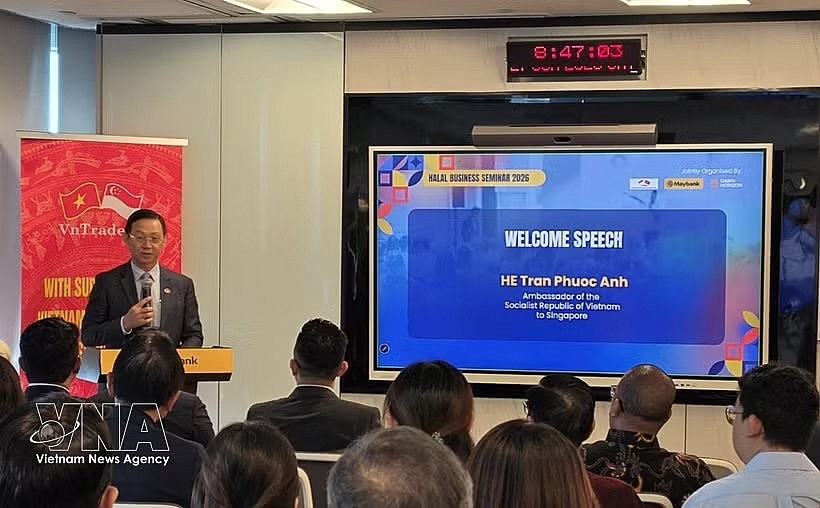
Vietnamese Ambassador to Singapore Tran Phuoc Anh speaks at the Halal Business Seminar 2026 in Singapore on June 27 (Photo: VNA)

Vietnam, Singapore eye stronger cooperation to build ASEAN Halal value chain

Vietnam and Singapore have significant opportunities to jointly develop a regional Halal value chain by combining their complementary strengths to help ASEAN expand access to global markets as the multi-trillion-USD Halal economy continues to rapidly grow, speakers said at a business seminar in Singapore on June 27.

The Halal Business Seminar 2026 themed “Singapore – Vietnam and Beyond: Building the Regional Halal Value Chain ” was jointly organised by the Vietnam Trade Office in Singapore, Maybank and Dawn Horizon, bringing together policymakers, certification bodies, financial institutions and businesses from across Southeast Asia.

In his opening speech, Vietnamese Ambassador to Singapore Tran Phuoc Anh said the bilateral economic ties between the two countries have continued to grow stronger, with two-way trade reaching nearly 40 billion SGD (30.9 billion USD) in 2025, while Singapore remained the largest foreign investor in Vietnam.

The Halal economy is opening up a new area of cooperation, further fostering the Comprehensive Strategic Partnership between the two countries, he noted.

Serving nearly two billion Muslim consumers worldwide, the global Halal market is estimated to exceed 7 trillion USD annually, covering sectors ranging from food and beverages to pharmaceuticals, cosmetics, tourism, logistics, finance and digital services, the diplomat stressed adding that demand for certified Halal products is also rising steadily across Southeast Asia, the Middle East, Europe, Africa and North America.

According to the diplomat, Vietnam sees Halal industry as a strategic opportunity to diversify export markets and strengthen supply chain resilience. The Government has adopted a national strategy on enhancing international cooperation for developing Halal industry through 2030, while encouraging ministries, localities and businesses to improve certification capacity, upgrade production systems and expand international partnerships.

He noted that Vietnam’s strengths in agriculture, seafood, food processing and production complement Singapore’s advantages in finance, logistics, innovation and internationally recognised certification systems. Combining these capabilities, he said, will help establish a competitive regional Halal value chain linking ASEAN producers with global markets.

The ambassador also revealed that Vietnam will host the Halal Tourism Conference 2026, themed “Vietnam – A new destination for Muslim tourism,” in Khanh Hoa province on July 8-9 to promote the country's Halal tourism potential.

Tan Teck Lee, Country Head for Thailand, Malaysia and the Philippines at the Singapore Business Federation (SBF), said Vietnam is emerging as a key regional manufacturing hub and attracting increasing international investment. He noted said the SBF aims to strengthen business connectivity between the two countries and support the development of regional Halal value chains, cited VNA.

Tan identified differences in Halal certification systems across Southeast Asia as a major obstacle. Greater harmonisation or mutual recognition of certification standards, he said, will facilitate regulation, inspection and movement of goods, helping boost regional trade.

According to Tan, Vietnamese firms should invest more in innovation, and research and development (R&D) while leveraging Singapore’s role as a logistics, distribution and transshipment hub to reach wider international markets.

Sharing this view, Dewi Suratty, founder and CEO of Dawn Horizon, said Vietnam is well positioned to expand its Halal industry thanks to its government’s strong support and the country’s strengths in agricultural, seafood and food production.

With food security becoming an increasing priority from the Middle East to Southeast Asia, demand for high-quality raw materials is rising, creating new export opportunities for Vietnam’s Halal-certified products.

She said ASEAN could build a complementary Halal value chain in which raw materials are sourced from Vietnam, processed in Singapore and exported to major consumer markets. Such cooperation will allow each country to capitalise on its comparative advantages while enhancing ASEAN’s overall competitiveness in the global Halal market.

The delegates said the workshop not only opened up opportunities for business connectivity between Vietnam and Singapore, but also contributed to promoting ASEAN-wide cooperation in building a sustainable Halal value chain. With Vietnam’s production capacity, Singapore’s financial and logistics ecosystem, and the regional trend toward harmonised standards, ASEAN is expected to strengthen its position on the global Halal economic map.

Vietnam joins world's top 30 most competitive economies, eyes further reforms

Vietnam has entered the world's top 30 most competitive economies for the first time, ranking 27th out of 70 economies in the 2026 World Competitiveness Ranking published by the International Institute for Management Development (IMD).

The milestone reflects years of economic reforms, deeper global integration and an improving business environment, although experts say productivity, innovation and technology adoption are key challenges.

Vietnam ranks 27th in its IMD debut

According to IMD's 2026 World Competitiveness Ranking, Vietnam placed 27th among 70 economies assessed worldwide.

The Swiss-based institute evaluates economies using 264 indicators that combine statistical data with business surveys across four pillars - economic performance, government efficiency, business efficiency and infrastructure.

Despite making its debut in the ranking, Vietnam posted strong performances in several categories. It ranked 19th for economic performance and business efficiency, 16th for domestic economy, sixth for international trade and 11th for employment.

The result follows Vietnam's consistent performance in other global innovation benchmarks. In the 2025 Global Innovation Index published by the World Intellectual Property Organization (WIPO), Vietnam ranked 44th among 139 economies and was one of the countries that have consistently outperformed their level of development in innovation over the past 15 years.

Together, these international rankings suggest that Vietnam's competitiveness is improving on a structural basis rather than through short-term gains.

Factors behind stronger competitiveness

Economists said the improvement reflects years of accumulated reforms. According to Dr. Nguyen Van Dien, head of the Faculty of Political Economy at the Ho Chi Minh National Academy of Politics – Region II, macroeconomic stability and a stable political and social environment are Vietnam's greatest competitive advantages. These conditions provide businesses with greater confidence to invest while enhancing Vietnam's appeal to international investors.

Another important factor is the country’s expanding network of 17 free trade agreements (FTAs), which has significantly broadened market access for Vietnamese exporters. With total trade reaching approximately US$930 billion, equivalent to nearly 200% of GDP, Vietnam is now among the world's most open economies, according to VOV.

Vietnam breaks into global Top 30 for competitiveness, but challenges remain. Photo: VOV

Institutional reforms have also contributed substantially. In recent years, the government has continued simplifying administrative procedures, reducing business conditions, expanding digital public services and improving the legal framework to support economic development.

With regard to business performance, small and medium-sized enterprises (SMEs) and household businesses have demonstrated considerable resilience in adapting to global economic uncertainties, helping sustain the economy through periods of geopolitical volatility.

Better rankings could strengthen investment appeal

Vietnam's strong performance in international trade will further enhance its attractiveness to foreign investors, Dr. Dien told thanhnien.vn.

Global competitiveness rankings serve not only as indicators of business conditions but also as important references for multinational corporations when selecting investment destinations. Higher rankings help strengthen a country's reputation, reinforce investor confidence and improve its position within global supply chains.

However, he noted that Vietnam continues to rank relatively low in international investment indicators, suggesting that its capacity to absorb high-quality foreign direct investment (FDI), particularly technology-intensive projects, is limited.

To maximise future opportunities, he suggested Vietnam further develop its high-skilled workforce by expanding education and training in STEM disciplines, semiconductors, artificial intelligence and software engineering, while encouraging foreign investors to transfer technology and invest in research and development (R&D).

Structural bottlenecks remain

Despite its progress, the IMD report also highlights several structural weaknesses. Labour productivity, technological capability and innovation capacity continue to lag behind Vietnam's economic potential. Energy infrastructure is also facing mounting pressure as demand from manufacturing and consumption continues to grow.

Dr. Dien attributed these challenges largely to the structure of Vietnam's business sector, where most enterprises are small or micro-sized with limited financial resources, making it difficult to invest in research, technological upgrading and workforce development.

He said stronger policies supporting innovation, technology transfer and science and technology development could help businesses improve productivity and competitiveness.

Sharing a similar view, Dinh Tuan Minh of the Market Solutions Research Centre for Socio-Economic Issues (MASSEI) told thanhnien.vn Vietnam has made notable progress in institutional reform, trade liberalisation and improving the investment climate. The next priority, he said, is to translate policies on innovation, digital transformation and science and technology into tangible results.

In his view, Vietnam should provide greater space for universities, research institutes and businesses to undertake breakthrough research projects while creating regulatory frameworks that encourage innovation without compromising effective risk management.

Beyond rankings

Vietnam’s entry into IMD's global top 30 marks an important milestone after years of reform and international integration. However, experts stressed that rankings alone are not the ultimate goal. Their real value lies in translating stronger competitiveness into higher productivity, greater innovation and increased capacity to attract high-quality investment.

As global competition intensifies, continued institutional reforms, investment in human capital, technological advancement and stronger innovation capabilities will be essential for Vietnam not only to maintain its current position but also to climb higher in future international competitiveness rankings.

Vietnam moves beyond production hub to higher-value link in global value chain: French expert

Speaking to French business and financial news channel BFM Business, Mickaël Driol, CEO of Mekong Partners, noted that amid global trade tensions and geopolitical uncertainty, multinational companies are increasingly diversifying their supply chains, with Vietnam emerging as a key beneficiary of this trend.

Vietnam is steadily moving beyond its role as a simple production base to become a higher-value link in global industrial value chains, driven by strong economic growth, political stability, a skilled workforce and deeper integration into international supply networks, a French expert has said.

Speaking to French business and financial news channel BFM Business, Mickaël Driol, CEO of Mekong Partners, noted that amid global trade tensions and geopolitical uncertainty, multinational companies are increasingly diversifying their supply chains, with Vietnam emerging as a key beneficiary of this trend.

In the first five months of 2026, Vietnam attracted around 25 billion USD in registered foreign direct investment (FDI), with nearly 10 billion USD already disbursed. These figures, the expert stressed, reflect not only commitments on paper but also concrete projects involving factory construction, production line installation, labour recruitment, and the formation of supplier networks, VNA reported.
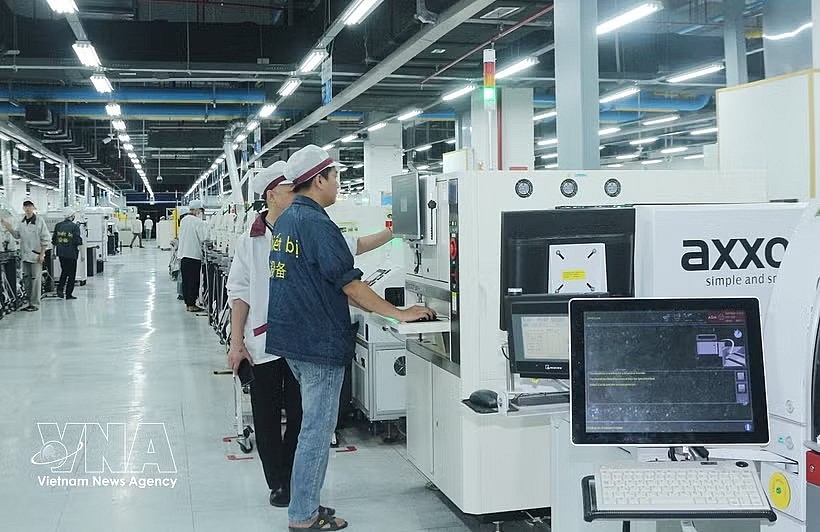
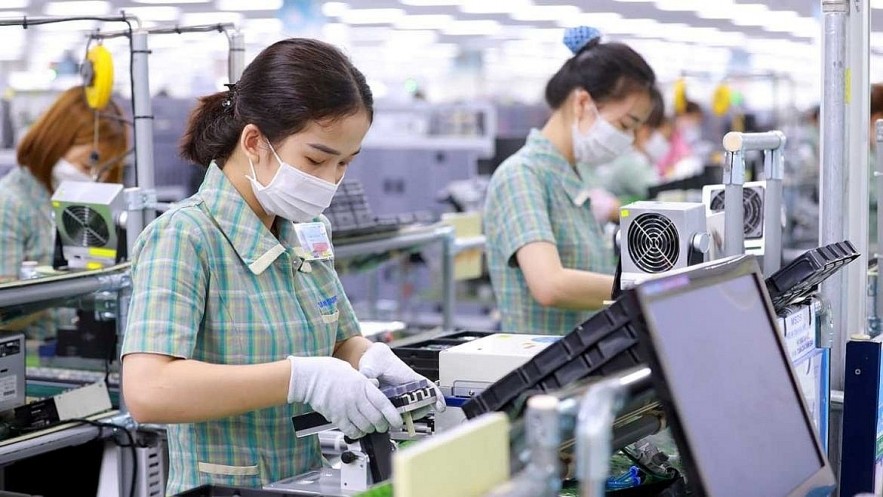
Wistron Infocomm Vietnam Co., Ltd., has operated at the Dong Van III Industrial Park in Ninh Binh province since 2021 (Photo: VNA)

He noted that Vietnam’s advantages go beyond competitive labour costs, highlighting its political stability, increasingly well-trained young workforce, deep international economic integration, and strong connectivity with major markets such as the US, the European Union, Japan and the Republic of Korea.

Vietnam has already established a solid position in key sectors, including electronics, components, high-tech assembly and industrial equipment manufacturing, he said.

According to Driol, Vietnam’s foreign investment landscape is undergoing a clear shift. Instead of being focused mainly on labour-intensive manufacturing as in the past, investment is increasingly shifting toward higher value-added sectors, including high-tech electronics, semiconductors, automation, energy transition and digital transformation.

He pointed to the growing presence of French companies such as Air Liquide and Schneider Electric, which are expanding their operations in Vietnam through advanced technologies, engineering solutions and modern industrial projects.

Against this backdrop, he said that Vietnam is no longer simply a manufacturing hub, but is gradually becoming a destination for engineering development, production automation, smart factory transformation and the development of long-term industrial capabilities.

Comparing Vietnam with other regional economies, the expert said Vietnam stands out for export-oriented industrial production and its ability to integrate rapidly into global value chains.

He added that investment trends in Asia are shifting away from single-country strategies toward diversified portfolios, with Vietnam playing a key role as a regional production and export hub.

According to the expert, Vietnam should continue strengthening its domestic industrial capacity. He stressed that future challenges extend beyond administrative reform to ensuring more consistent policy implementation across key areas, including land clearance, investment licensing, customs procedures and energy infrastructure. He noted that progress in these areas will be crucial for Vietnam to sustain its competitiveness in attracting high-tech investment projects.

Lower airfares give Vietnam's summer tourism a timely boost

After months of elevated prices, domestic airfares in Vietnam have begun to ease ahead of the peak summer travel season, making holidays more affordable for families and providing fresh momentum for the country’s tourism industry.

According to travel companies, ticket prices on many domestic routes have fallen by around 10-15% compared with levels seen earlier this year and during the April 30-May 1 holiday period.

Flights from Hanoi and Ho Chi Minh City to popular destinations such as Da Nang, Nha Trang, Phu Quoc and Quy Nhon are now available at more affordable fares, particularly on early morning and late evening departures, cited VOV.
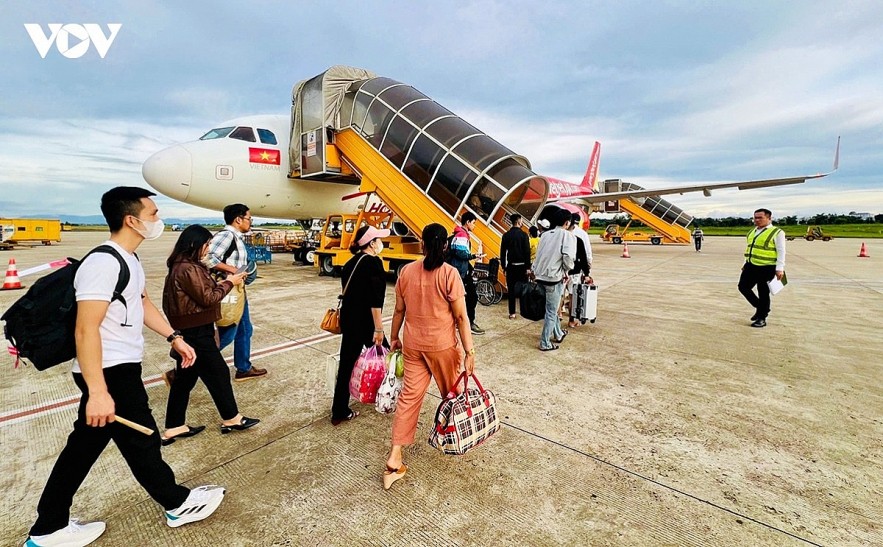
Lower ticket prices are already shaping the travel decisions of many Vietnamese families.

The decline comes as airlines increase flight frequencies to meet seasonal demand while expanding seat capacity, helping improve supply ahead of one of Vietnam’s busiest travel periods.

Lower fares encourage holiday plans

More affordable tickets are already influencing travel decisions for many Vietnamese families.

Nguyen Thi Mai Phuong, a resident of Ho Chi Minh City, told VOV her family had planned to combine a summer holiday in Phu Quoc with a visit to relatives in Thanh Hoa province, but repeatedly postponed booking because of high airfare.

One-way fares between Ho Chi Minh City and Thanh Hoa, which had previously exceeded VND2.1 million (about US$80), have recently fallen to around VND1.6-1.7 million dong, with some departures priced at roughly VND1.5 million dong.

Flights from Ho Chi Minh City to Phu Quoc are also available for less than VND1.1 million dong one way.

“The lower fares make it much easier for us to manage our travel budget and finally move ahead with our holiday plans,” she said.

Tourism experts said transportation is one of the biggest cost factors influencing family travel decisions, particularly during the summer holiday when demand typically peaks.

With airfares becoming more affordable, more travelers are expected to choose domestic destinations instead of postponing trips or switching to other forms of travel.

Travel companies see stronger demand

For tour operators, airfare usually accounts for 35-50% of a package tour's total cost, making ticket prices a key factor in purchasing decisions.

According to BestPrice Travel, high airfares earlier this year prompted many budget-conscious families to delay holidays, travel by road instead or even consider short overseas trips offering similar overall costs.

Since fares began declining, however, the company has seen stronger customer interest and higher booking conversion rates, particularly for flight-and-hotel packages and beach holidays, which are among the most popular summer products.

Pham Anh Vu, deputy general director of Viet Tourism Media JSC, described current airfare levels as ‘much more reasonable than in previous months.

“When transportation costs decline, travel companies gain greater flexibility to keep tour prices stable while enhancing service quality, adding new experiences or launching promotional programmes, especially for families traveling with children during the summer,” he told VOV.

Positive outlook for domestic tourism

Tran Phuong Linh, marketing and information technology director at BenThanh Tourist, said lower airfare has yet to affect the prices of summer tours that were launched months ago.

She noted that the company had managed to keep package prices relatively stable even during periods of high fuel costs by securing airline seat allocations early and negotiating favourable rates with suppliers.

Nevertheless, she expected the recent drop in airfare to benefit independent travel products and flight-and-hotel combinations, which appeal to travelers seeking greater flexibility while keeping costs under control.

Industry representatives agreed airfare is not the only factor shaping tourism demand, but it remains one of the largest expenses for domestic travelers.

As prices ease just before the peak holiday season, the decline is expected to stimulate domestic tourism, support tour operators and encourage destinations across Vietnam to roll out additional promotional campaigns.

In Ho Chi Minh City, travel businesses also see new opportunities to expand regional tourism products, promote urban experiences and capitalize on improved connectivity through Tan Son Nhat International Airport during the busy summer season.

Northern Vietnam braces for flooding as tropical depression forms

Northern Vietnam is expected to face two rounds of heavy rain over the coming week, while a tropical depression has a 70% chance of entering the East Sea from July 1, weather authorities said.

Northern Vietnam is forecast to experience two consecutive spells of heavy rain between June 29 and July 5, with some mountainous and midland areas expected to receive more than 300mm of rainfall, raising the risk of flash floods and landslides, according to the National Center for Hydro-Meteorological Forecasting.

Speaking on June 28, Nguyen Van Huong, head of the center's Weather Forecast Department, said the first round of rain will affect northern Vietnam from the night of June 28 through June 30.

Rainfall will be widespread, with showers concentrated mainly overnight and during the morning.

The heaviest rainfall is expected in eight provinces - Thai Nguyen, Cao Bang, Tuyen Quang, Lao Cai, Lai Chau, Dien Bien, Son La and Phu Tho - where accumulated rainfall is forecast to range from 70mm to 150mm, with isolated areas exceeding 300mm, VNN reported.
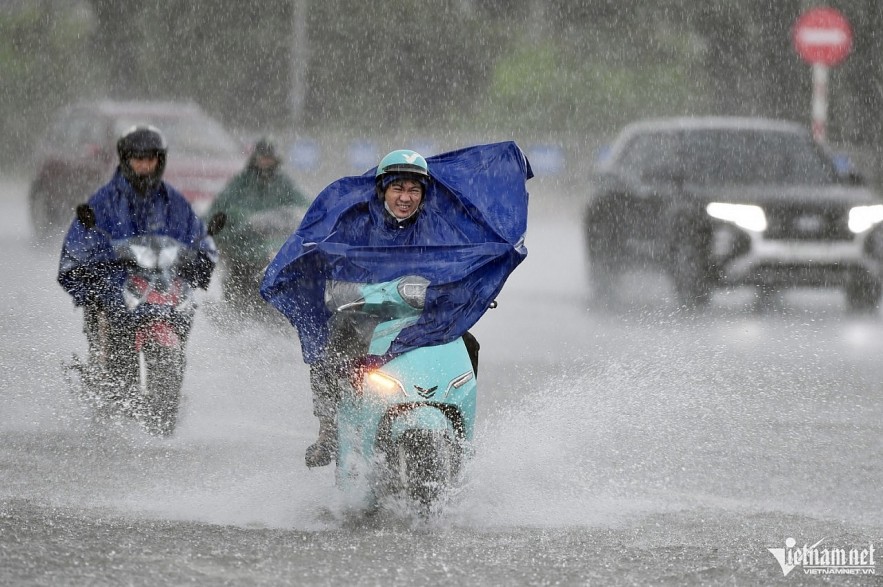
Northern Vietnam is forecast to experience another spell of heavy rain, with the heaviest rainfall expected in eight northern provinces. Photo: Hoang Minh.
Northern Vietnam is forecast to experience another spell of heavy rain, with the heaviest rainfall expected in eight northern provinces. Photo: Hoang Minh

A second round of showers and thunderstorms is forecast from July 1 to July 5, mainly during the night and early morning. Each rainfall event is expected to bring 50-100mm of rain, with isolated locations receiving more than 250mm.

Authorities have warned that Lang Son, Cao Bang, Thai Nguyen, Tuyen Quang, Lao Cai, Lai Chau, Dien Bien, Son La and Phu Tho face an elevated risk of flash floods and landslides over the coming days.

Meanwhile, the Red River Delta is expected to see scattered rain and thunderstorms from the evening of June 28 through June 29, with rainfall generally ranging from 15-30mm and isolated totals exceeding 70mm.

Central Vietnam remains under intense heat

While northern Vietnam braces for heavy rain, central provinces will continue to endure hot weather.

Temperatures of 36-38 degrees Celsius are forecast across Nghe An, Da Nang and eastern parts of Quang Ngai, Gia Lai and Dak Lak on June 29 and 30. The heat is expected to gradually ease from July 1.

In the Central Highlands and southern Vietnam, a strengthening southwest monsoon is forecast to bring moderate to heavy rain and thunderstorms between June 28 and July 5.

Tropical depression may enter the East Sea

Weather authorities are also closely monitoring a low-pressure area east of the Philippines.

As of June 28, the system was located near 10 degrees north latitude and 132 degrees east longitude and moving west-northwest. It is expected to strengthen into a tropical depression within the next 24 hours.

Forecasters estimate there is around a 70% chance that the tropical depression will enter the East Sea by around July 1.

The National Center for Hydro-Meteorological Forecasting said it is continuing to monitor the system closely and will issue updated forecasts and warnings as necessary.

Experts advised residents, particularly those living in northern mountainous provinces and coastal areas, to closely follow official weather bulletins and prepare appropriate response measures in the coming days.
Vietnam News Today (Jun. 23): Vietnam, US Seek Stronger Defense Cooperation

Vietnam News Today (Jun. 23): Vietnam, US Seek Stronger Defense Cooperation

Vietnam News Today (Jun. 23): Vietnam, US seek stronger defense cooperation; Vietnam promotes overseas workers as ambassadors of skills and national image; Vietnam is key ...

Vietnam News Today (Jun. 24): Vietnam, Cuba Push for Stronger Ties in New Development Period

Vietnam News Today (Jun. 24): Vietnam, Cuba Push for Stronger Ties in New Development Period

Vietnam News Today (Jun. 24): Vietnam attaches high importance to ties with India: Top NA leader; Vietnam, Palestine seek to strengthen traditional friendship, cooperation; Vietnam, ...

Rosie Nguyen