| Vietnam News Today (May 12) notable headlines Vietnam seeks deeper fintech, innovation ties with Switzerland Vietnam and Japan’s Yamanashi shift local ties toward green energy, agri-tech Prime Minister’s presence at ASEAN Summit conveys message of a dynamic and strongly rising Vietnam Vietnam maintains people-centered approach to migration governance Vietnamese firms urged to sharpen competitiveness in UK market Security preparations reviewed for APEC 2027 in Phu Quoc PM applauds Yamanashi's enhancement of ties with Vietnamese localities Vietnamese UAV firms showcase capabilities at world’s largest autonomy expo in US Southeast Asia’s largest multisport event week concludes in Da Nang |
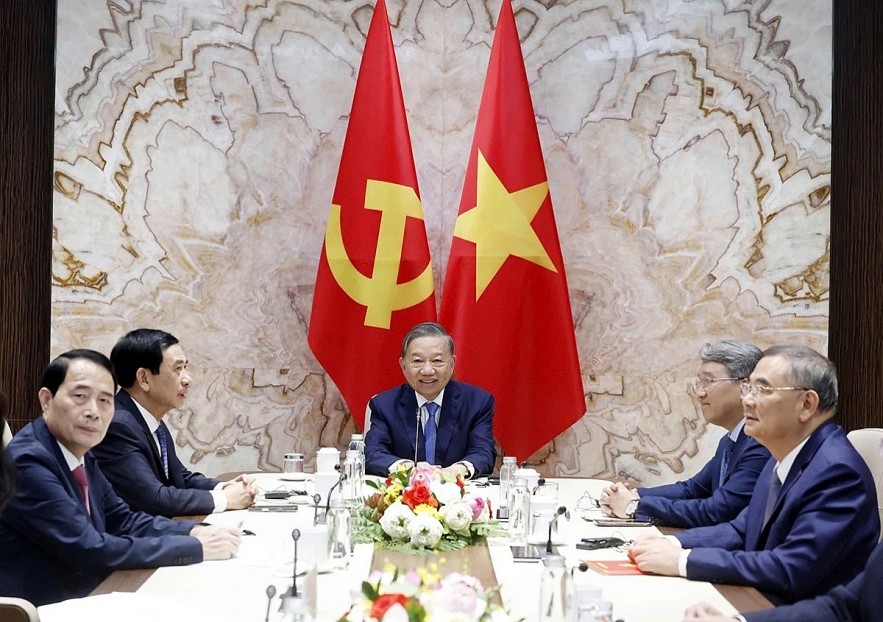 |
| Vietnamese Party General Secretary and State President To Lam (C) and other senior Party and State officials during phone talks with Swiss President Guy Parmelin, from Hanoi on May 11. (Photo: VNA) |
Vietnam seeks deeper fintech, innovation ties with Switzerland
Vietnam is seeking deeper cooperation with Switzerland in fintech, innovation and high-value investment as the country accelerates efforts to build new growth drivers for its next development phase.
The direction emerged during online talks on May 11 between Vietnamese Party General Secretary and State President To Lam and Swiss President Guy Parmelin, held as the two countries mark the 55th anniversary of diplomatic relations (October 11, 1971-2026).
During the talks, the Vietnamese leader To Lam described Switzerland as one of Vietnam’s leading partners in Europe and expressed hope that the country would continue serving as a trusted partner in Vietnam’s next stage of development.
He outlined Vietnam’s ambition to become a developed, high-income country by 2045 while maintaining growth of more than 10% and accelerating economic transformation through science, technology and innovation.
Against that backdrop, both sides placed particular emphasis on expanding cooperation in areas linked to the digital economy and emerging technologies.
According to the Vietnamese side, science and technology are expected to become a new pillar of bilateral cooperation, with priority areas including biotechnology, green energy, digital transformation and innovation-driven industries.
Party chief and President To Lam also proposed stronger collaboration in financial technology and sustainable finance, calling on Switzerland to share expertise in developing the international financial center and fintech ecosystems, particularly in digital finance, blockchain, digital assets and sustainable financial models.
Swiss President Guy Parmelin, for his part, congratulated the Vietnamese leader on his election as State President and praised Vietnam’s rapid and comprehensive development achievements, saying they had made “a strong impression on the world.”
He reaffirmed Switzerland’s commitment to strengthening cooperation with Vietnam in support of the country’s reform process and long-term development goals, cited VOV.
Switzerland is widely recognized as one of the world’s leading financial and innovation hubs, with strengths in banking, wealth management, fintech, precision manufacturing and high-tech research.
Beyond technology and finance, the two leaders agreed to deepen political trust and maintain regular high-level exchanges while further implementing the Comprehensive Partnership framework established in January 2025.
Trade and investment cooperation also featured prominently in the talks. Both sides stressed the importance of accelerating negotiations for a free trade agreement between Vietnam and the European Free Trade Association (EFTA), of which Switzerland is a member, describing the deal as a potential new driver for bilateral economic ties.
The leaders also discussed the expansion of cooperation in security and defense, while agreeing to strengthen coordination at international forums and within the United Nations framework on issues related to peace, stability and international law.
Party General Secretary and President To Lam also expressed hope that Switzerland would continue creating favourable conditions for the Vietnamese community living in the country to integrate and contribute to bilateral relations.
At the end of the talks, the Vietnamese leader invited President Guy Parmelin to visit Vietnam, and the Swiss President accepted the invitation with pleasure.
Vietnam and Japan’s Yamanashi shift local ties toward green energy, agri-tech
Vietnam and Japan’s Yamanashi prefecture are looking to expand cooperation beyond traditional local exchanges into strategic sectors such as hydrogen, renewable energy, smart agriculture and high-quality workforce development.
The view was shared during a meeting in Hanoi on May 11 between Vietnamese Prime Minister Le Minh Hung and Yamanashi Governor Nagasaki Kotaro, as both sides looked to translate the Vietnam–Japan Comprehensive Strategic Partnership into more practical economic cooperation at the local level.
Japan remains one of Vietnam’s most important economic partners, serving as the country’s largest provider of official development assistance (ODA), a major labor partner and one of its top foreign investors and trading partners.
Against that backdrop, Vietnam is increasingly positioning local-level cooperation as a platform for advancing broader priorities tied to green growth, food security and technological transformation.
Prime Minister Le Minh Hung said Vietnam consistently views Japan as a long-term and trusted partner, while describing cooperation between localities as an increasingly important pillar in bilateral relations.
He voiced support for Yamanashi in expanding cooperation with Vietnamese provinces including Quang Tri, Lao Cai and Tay Ninh, where partnership frameworks have already been established.
A major focus of the discussions centered on agriculture and food technology. The PM welcomed Japan’s support for Vietnam’s one-million-hectare high-quality, low-emission rice project, saying the initiative could strengthen food security cooperation while supporting Vietnam’s push toward greener agricultural production.
He also called for deeper collaboration in agricultural technology transfer, workforce training and supply-chain development, while encouraging Japan to accelerate market access procedures for Japanese grapes and Vietnamese pomelos.
The issue reflects broader efforts by both countries to diversify high-value agricultural trade and strengthen supply-chain connectivity.
Yamanashi, Japan’s largest producer of grapes and peaches, is also seeking closer cooperation with Vietnam in fruit cultivation and processing technologies, according to VOV.
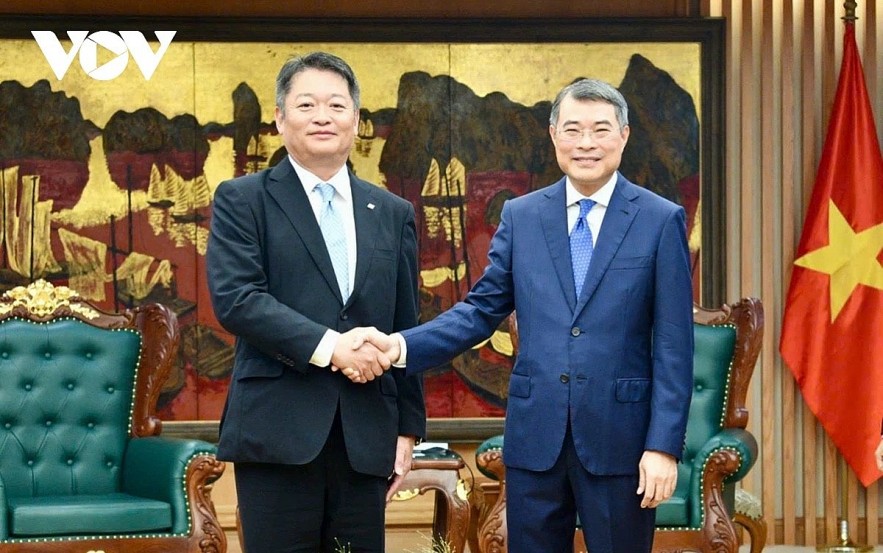 |
| Vietnamese Prime Minister Le Minh Hung (R) receives Yamanashi Governor Nagasaki Kotaro in Hanoi on May 11. |
Governor Nagasaki Kotaro said the prefecture hopes to contribute more actively to the development of Vietnam’s fruit industry through technology sharing, business exchanges and practical cooperation projects.
Beyond agriculture, renewable energy and hydrogen emerged as another key pillar of future cooperation. Vietnam is currently accelerating its energy transition and looking for international partners in areas such as green hydrogen, clean technologies and sustainable industrial development.
Prime Minister Hung encouraged Yamanashi to strengthen cooperation with Vietnam’s Ministry of Industry and Trade and domestic firms in renewable energy and hydrogen-related industries.
Governor Nagasaki said Yamanashi is ready to share expertise and practical experience in renewable energy and hydrogen development, while promoting business connectivity and study exchanges between the two sides.
The talks also highlighted growing cooperation in workforce development. As Vietnam seeks to move toward more technology-intensive industries and Japan faces labor shortages driven by demographic pressures, both sides agreed on the importance of expanding training cooperation in science and technology, high-tech agriculture and technical services.
Prime Minister Hung thanked Yamanashi authorities for supporting the Vietnamese community living and working in the prefecture, expressing hope for continued policies related to healthcare, labor protection and social welfare.
According to the Vietnamese government, around 5,000 Vietnamese people currently live in Yamanashi, while about 40 Yamanashi-based companies are operating in Vietnam.
Governor Nagasaki said the prefecture is developing a healthcare insurance system designed to better support Vietnamese families and help them integrate more comfortably into local society.
During the meeting, Prime Minister Hung invited leaders and businesses from Yamanashi to attend the second Vietnam–Japan local cooperation forum, scheduled to take place in Hue in the third quarter of 2026.
Prime Minister’s presence at ASEAN Summit conveys message of a dynamic and strongly rising Vietnam
Speaking to the press after the 48th ASEAN Summit in Cebu, the Philippines, from May 7–8, Deputy Foreign Minister Dang Hoang Giang said ASEAN leaders stressed the need to strengthen solidarity and mutual support, improve coordination and emergency response mechanisms, and boost cooperation in energy connectivity, food security and consular assistance, particularly for migrant workers in affected areas.
ASEAN leaders agreed that while addressing immediate challenges remains an urgent task, the bloc must continue pursuing its long-term agenda in a consistent and effective manner. Political-security cooperation will continue to play a central role in safeguarding regional peace, security and stability by reinforcing solidarity, deepening political trust and promoting ASEAN-led mechanisms based on international law and multilateralism.
On the sidelines of the summit, Prime Minister Le Minh Hung also held a series of bilateral meetings with ASEAN leaders, ASEAN Secretary-General Kao Kim Hourn and President of the Asian Development Bank Masato Kanda. These meetings were described as productive and substantive, focusing on removing obstacles and advancing practical cooperation.
Deputy Foreign Minister Dang Hoang Giang highlighted three key outcomes from these engagements. First, the meetings helped foster personal connections between Prime Minister Le Minh Hung and regional leaders, thereby strengthening political trust between Vietnam and ASEAN partners. Regional leaders expressed their readiness to work closely with Vietnam, describing the country as an important and reliable partner amid rapidly evolving regional and global dynamics.
Second, the meetings reaffirmed a shared commitment to deepening bilateral cooperation through concrete actions. Discussions centered on enhancing political trust and expanding collaboration in trade, investment, defense-security, education, tourism and culture, while also prioritizing emerging areas such as infrastructure connectivity, green transition, circular economy, semiconductors and artificial intelligence.
During a trilateral exchange involving Laos and Cambodia, the three Prime Ministers agreed to instruct relevant agencies to effectively implement the outcomes of the February 2026 meeting among the leaders of the three ruling parties, with the aim of creating new momentum for development and elevating trilateral cooperation in a more substantive manner.
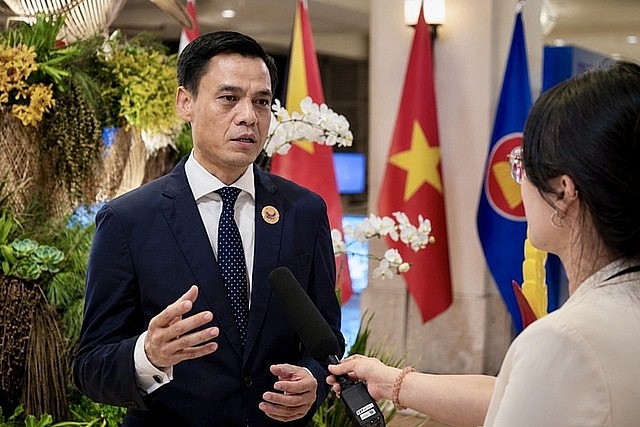 |
| Deputy Foreign Minister Dang Hoang Giang. |
The ADB also reaffirmed its commitment to remaining a trusted development partner of Vietnam and supporting the country's resource needs during its new stage of development.
Third, ASEAN partners highly appreciated Vietnam's increasingly important role within the bloc and the wider international community. In discussions on regional and global developments, particularly the Middle East situation, leaders agreed on the need for closer coordination within ASEAN and the United Nations framework to uphold ASEAN centrality in addressing regional and international issues, reported VGP.
ASEAN Secretary-General Kao Kim Hourn affirmed that after more than three decades of membership, Vietnam has emerged as one of ASEAN's key members, adding that a strong and prosperous Việt Nam would make significant contributions to ASEAN Community-building efforts.
Within just over 30 hours, Prime Minister Le took part in nearly 20 bilateral and multilateral activities, achieving substantive and practical outcomes while projecting the image of a dynamic, innovative, deeply integrating and strongly rising Vietnam — a proactive and responsible member of the ASEAN Community.
The visit also laid favorable groundwork and generated fresh momentum for further deepening and expanding Vietnam's relations with partners in both scope and substance in the coming period.
Vietnam maintains people-centered approach to migration governance
Phan Thi Minh Giang, Deputy Director General of the Consular Department under the Ministry of Foreign Affairs, has affirmed that Vietnam maintains a balanced and people-centered approach to migration governance at the second International Migration Review Forum (IMRF) recently held at the United Nations headquarters in New York.
Vietnam remains committed to a balanced and people-centered approach to migration governance, according to Phan Thi Minh Giang, Deputy Director General of the Consular Department under the Ministry of Foreign Affairs, speaking at the second International Migration Review Forum (IMRF) recently held at the United Nations headquarters in New York.
Giang noted that global migration trends continue to evolve in increasingly complex ways. Gaps in migration governance and the lack of regular migration pathways have left migrants more vulnerable, while human trafficking and migrant smuggling have become increasingly sophisticated, including new forms of exploitation linked to digital technology and coercion into criminal activities at online scam centers.
In this context, Vietnam affirmed that the Global Compact for Safe, Orderly and Regular Migration (GCM) remains an important framework for promoting dialogue and practical cooperation on migration, in line with the conditions and priorities of each country.
She said Vietnam has been actively implementing its national plan for the GCM, issued in 2020, with notable progress in improving policies and legislation, promoting safe and regular migration pathways through bilateral labour cooperation, fair recruitment practices and measures to reduce migration costs. Vietnam has also accelerated digital transformation in migration management, including the development of migration databases to support evidence-based policymaking.
The Vietnamese representative stressed the importance of expanding safe and sustainable legal migration channels, strengthening cooperation along migration routes, and promoting a victim-centered approach in combating human trafficking and migrant smuggling. Vietnam also reaffirmed its commitment to constructive cooperation with partners in advancing the GCM implementation.
The IMRF attracted broad participation from nearly 130 countries, international organisations and other stakeholders. The forum reviewed progress made in implementing the GCM since the first IMRF in 2022, while also discussing opportunities, challenges and future priorities for international migration cooperation.
In her opening remarks, Annalena Baerbock, President of the United Nations General Assembly, emphasised the role of governments in ensuring that migration becomes a triple-win model benefiting migrants, countries of origin and destination countries alike.
She stressed the need for effective migration management based on a people-centered approach to migration agreements, while encouraging member states to engage in frank and substantive discussions so that the outcomes could be translated into national policies and bilateral and regional agreements, VNA reported.
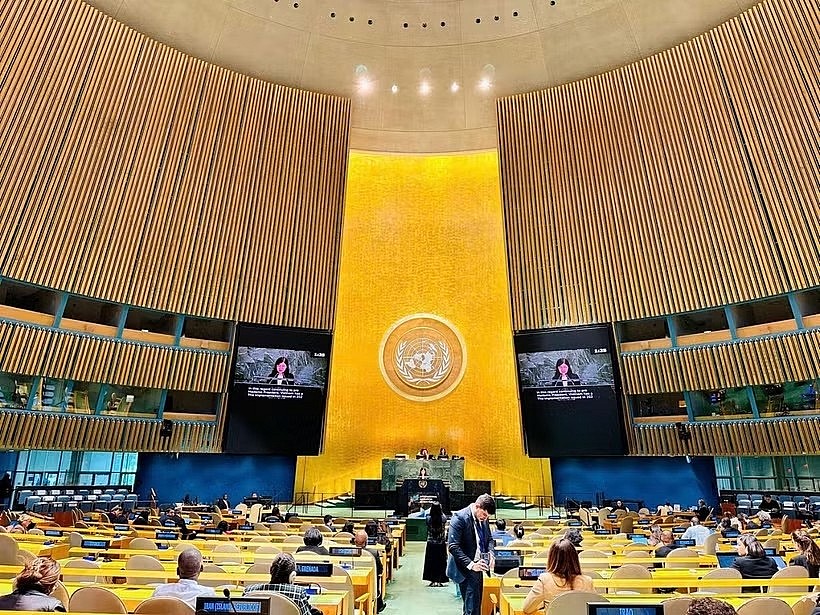 |
| The second International Migration Review Forum (IMRF) is held at the United Nations headquarters in New York. (Photo courtesy of the Ministry of Foreign Affairs) |
The four-day forum featured roundtable discussions, policy debates and plenary sessions. More than 90 countries submitted voluntary review reports on the implementation of the GCM, representing an increase of around 30% compared with 2022.
During the forum, the Vietnamese delegation shared the country’s achievements in implementing the GCM since the first IMRF, and proposed areas for enhanced cooperation in the years to come. Vietnam also submitted its voluntary national review report on the implementation of the GCM.
At the conclusion of the four-day meeting, participating countries adopted a progress declaration assessing achievements to date, identifying remaining challenges and setting priorities for the next phase of efforts to promote safe, orderly and people-centered migration governance. The third IMRF is expected to take place in 2030.
Vietnamese firms urged to sharpen competitiveness in UK market
Vietnamese businesses need to move beyond traditional export approaches and strengthen their competitiveness to better tap opportunities in the UK market, heard a seminar in Hanoi on May 11.
The hybrid event on cooperation opportunities and challenges in the UK market was organized by the Trade and Investment Promotion Support Centre under the Ministry of Industry and Trade (MoIT)’s Vietnam Trade Promotion Agency (Vietrade).
Speaking at the seminar, Vietrade Deputy Director Le Hoang Tai said the programme reflected practical efforts by Vietnamese and international partners to deepen economic and trade ties between Vietnam and the UK.
He noted that bilateral relations have continued to flourish under the Comprehensive Strategic Partnership between the two countries. Their trade reached about 9.3 billion USD in 2025, up roughly 10% year-on-year, while turnover in the first quarter of 2026 stood at around 2.36 billion USD.
The countries' trade structures are clearly complementary, he said, elaborating that Vietnam’s major exports to the UK include garments and textiles, footwear, electronic components, and agro-forestry-aquatic products while imports mainly comprise pharmaceuticals and production materials.
Tai stressed that the UK – Vietnam Free Trade Agreement (UKVFTA) remains an important stepping stone for improving the competitiveness of Vietnamese goods through tariff preferences and trade facilitation.
However, he added that increasingly stringent requirements on quality standards, traceability, sustainability and payment methods are becoming decisive factors for market access.
To gain a stronger foothold in the UK, businesses must improve their capacity to meet market standards, diversify payment methods and strengthen links with local partners, the official recommended.
At the seminar, experts, trade representatives and businesses operating in the UK shared updates on consumer trends, the business environment, branding strategies, marketing and access to distribution networks.
Vu Viet Thanh from the MoIT’s Department of Foreign Market Development said the UK is a familiar market for many Vietnamese exporters but also one requiring a new approach mindset.
He said that after Brexit, the COVID-19 pandemic and amid ongoing global economic volatility, the UK has been gradually redefining its role in international trade, supply chains, financial services, the digital economy, clean energy and sustainable development standards.
Thanh noted that the UK is not only a consumer goods market but also a major centre for finance, services, technology, standards and distribution. Therefore, for Vietnamese businesses, entering this market is no longer simply about selling products, but about meeting standards, ensuring stable supply capacity and enhancing product value, cited VNA.
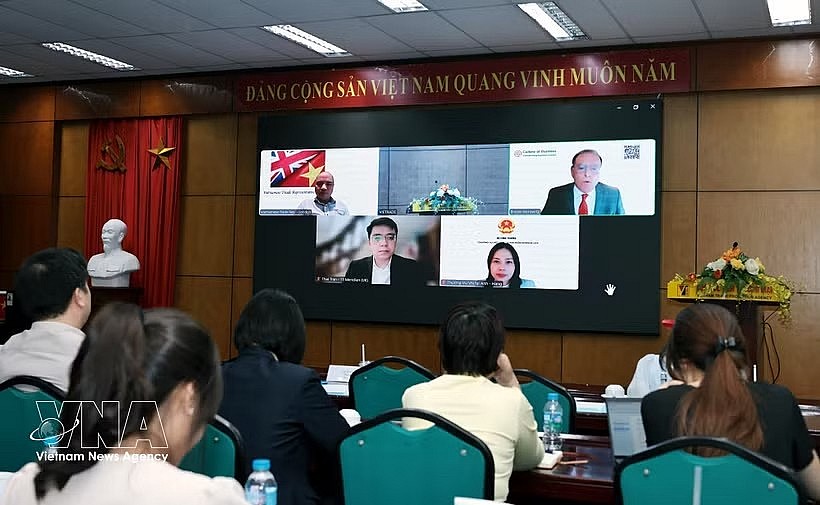 |
| Participants in the hybrid seminar on May 11. (Photo: VNA) |
Vietnam's exports to the UK not only include traditional product groups such as apparel, footwear, aquatic products, wood, coffee, cashew nuts, and pepper, but also see an increasing presence of industrial and technological goods such as telephones, electronics, machinery, and components. This reflects a shift in Vietnam's export structure towards products with higher industrial, technological, and supply chain content.
Beyond trade in goods, bilateral cooperation is also expanding into many high value-added sectors. The UK has strengths in finance, energy, technology, pharmaceuticals, education, aviation, professional services, and the green economy, which are also areas where Vietnam has great demand as it transitions its growth model and develops its industry towards greener, more modern, and higher value-added products, he went on.
Thanh added that frameworks such as the UKVFTA, the Comprehensive and Progressive Agreement for Trans-Pacific Partnership (CPTPP), the Joint Economic and Trade Committee (JETCO), and the Comprehensive Strategic Partnership are creating favourable conditions for broader cooperation in trade, services, investment, clean energy, green finance, technology and innovation.
In other words, the UK is not a place where businesses can compete by cheap prices or short-term approaches. It's a market of standards, trust, and sustainable supply capabilities. Therefore, businesses wishing to tap into this market need thorough preparation, from product development and documentation to production processes, branding, and partner networking, he suggested.
As part of the event, Vietrade also announced plans to organize a trade delegation to the UK from July 5 to 14, 2026, with a trip to Manchester, London and Edinburgh on the sidelines of major trade fairs.
 | Vietnam News Today (May 7): Vietnam Commits to ASEAN Community-Building Process Vietnam News Today (May 7): Vietnam, India agree to elevate ties to “Enhanced Comprehensive Strategic Partnership; Vietnam commits to ASEAN community-building process; Philippines looks to ... |
 | Vietnam News Today (May 8): Prime Minister Arrives in Cebu for ASEAN Summit Vietnam News Today (May 8): Prime Minister arrives in Cebu for ASEAN Summit; Vietnam proposes elevating India cooperation in emerging global value chains; Vietnam, Japan ... |