
Strengthening Cooperation for Sustainable Development of Mekong River Basin
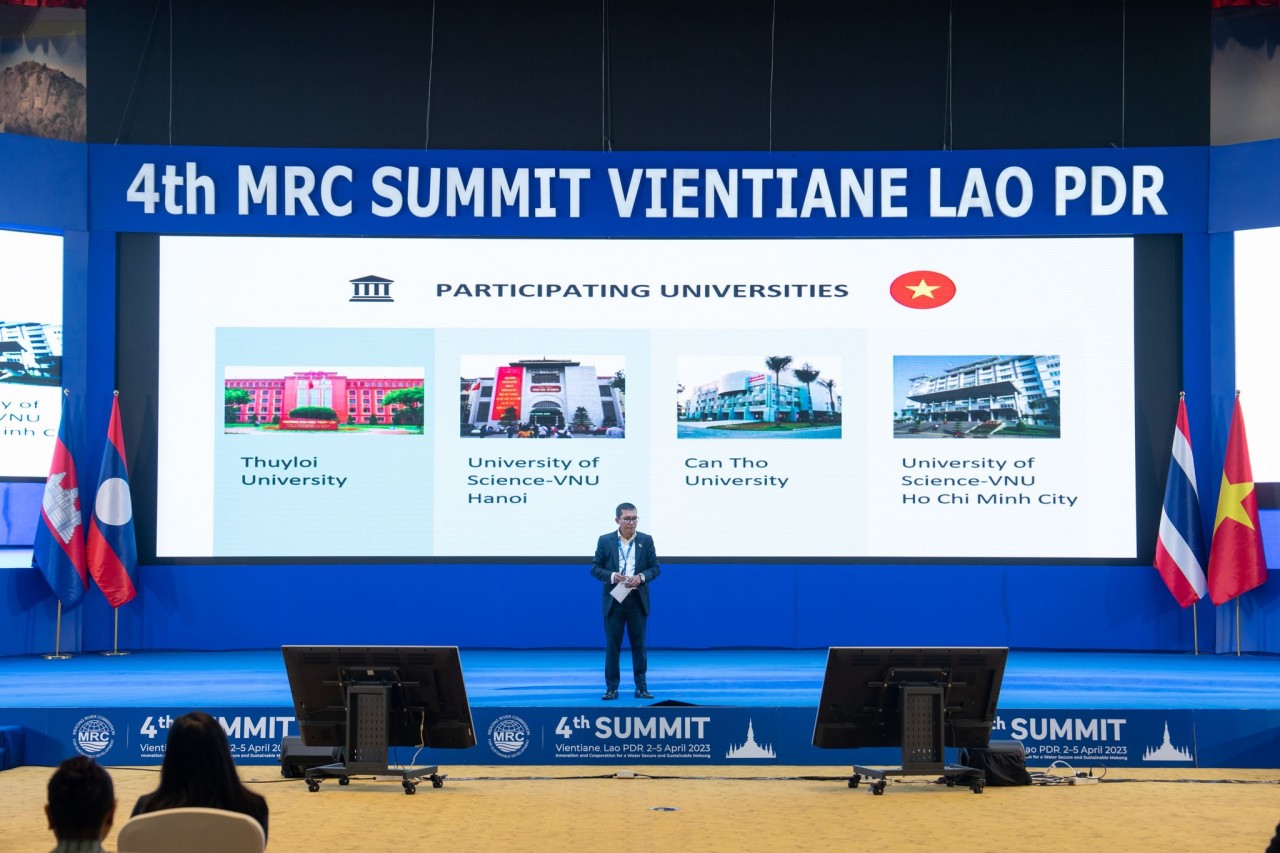 |
| At one meeting for the 4th MRC Summit. Photo: Mekong River Commission/FB |
Deputy Minister of Natural Resources and Environment Le Cong Thanh suggested the Mekong River Commission (MRC) focus on practical measures to protect the legitimate rights and interests of residents who live on the river’s water resources, while addressing a ministers’ meeting in Vientiane on April 4, VNA reported.
The meeting took place in preparation for the 4th MRC Summit with the attendance of representatives from member countries, namely Cambodia, Laos, Thailand and Vietnam, the dialogue partners of China and Myanmar, development partners, and regional and international organisations.
Thanh proposed the commission take measures to help people effectively respond to emergencies caused by natural disasters and pandemics, and ensure that water use, both in the mainstream and tributaries of the Mekong River, is put under thorough consideration, not impacting its natural flow as well as development towards stability, safety, and security for riverside communities, regardless of their nations.
He also urged the commission to reform its operational methods, turning itself into a regional centre of knowledge, and provide information, data, and knowledge about the basin, along with consultations for stakeholders and sub-regional cooperation mechanisms in a timely manner.
The commission should build a real-time data sharing system for water facilities, and improve the quality of flood and drought forecasting and warning services, he continued.
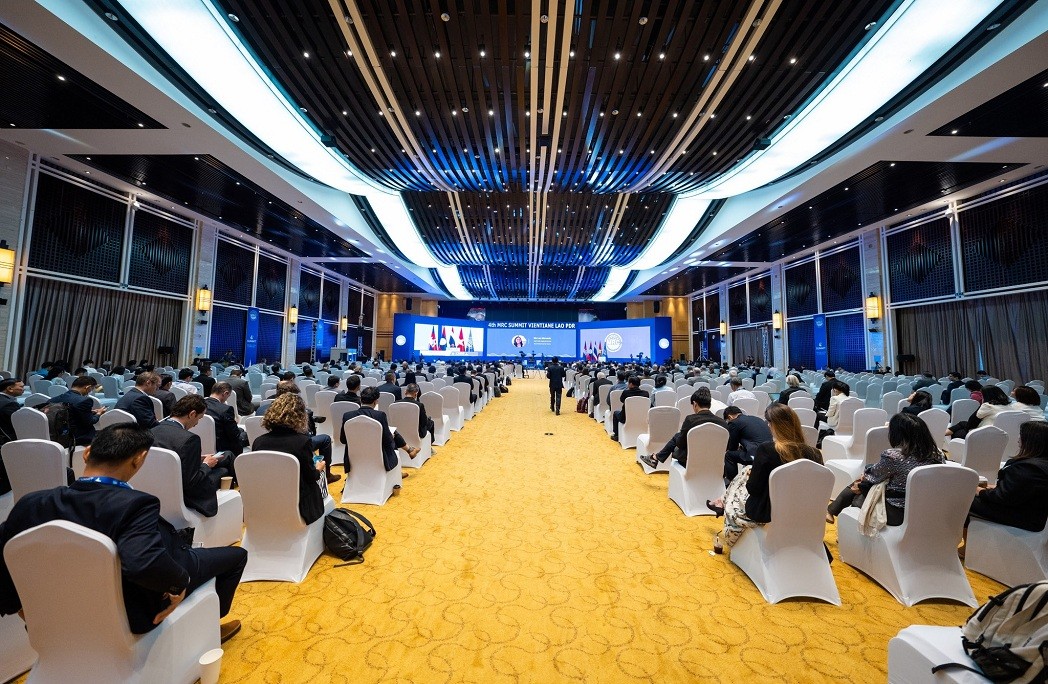 |
| At one meeting for the 4th MRC Summit. Photo: Mekong River Commission/FB |
The member countries agreed on the Vientiane Declaration, to be submitted to the MRC Summit on April 5. They highly valued the implementation of the Siem Reap Declaration adopted in 2018. It identified challenges, opportunities, orientations and solutions to fruitfully materialise the 1995 Mekong agreement in the coming time.
They suggested the commission revamp methods of cross-border cooperation, information and data sharing, consultancy and monitoring over the Mekong River.
Ambassador Ke Yousheng, Permanent Representative of China to the Economic and Social Commission for Asia and the Pacific (ESCAP), highlighted cooperation between the commission and the Mekong-Lancang Cooperation in joint research on the Mekong River’s flow and sharing hydrological information, affirming China’s commitment to continuing its cooperation with the commission in the future.
The participating development partners also pledged to continue working with the commission to successfully achieve strategic goals, enabling the commission to carry out key activities by 2030.
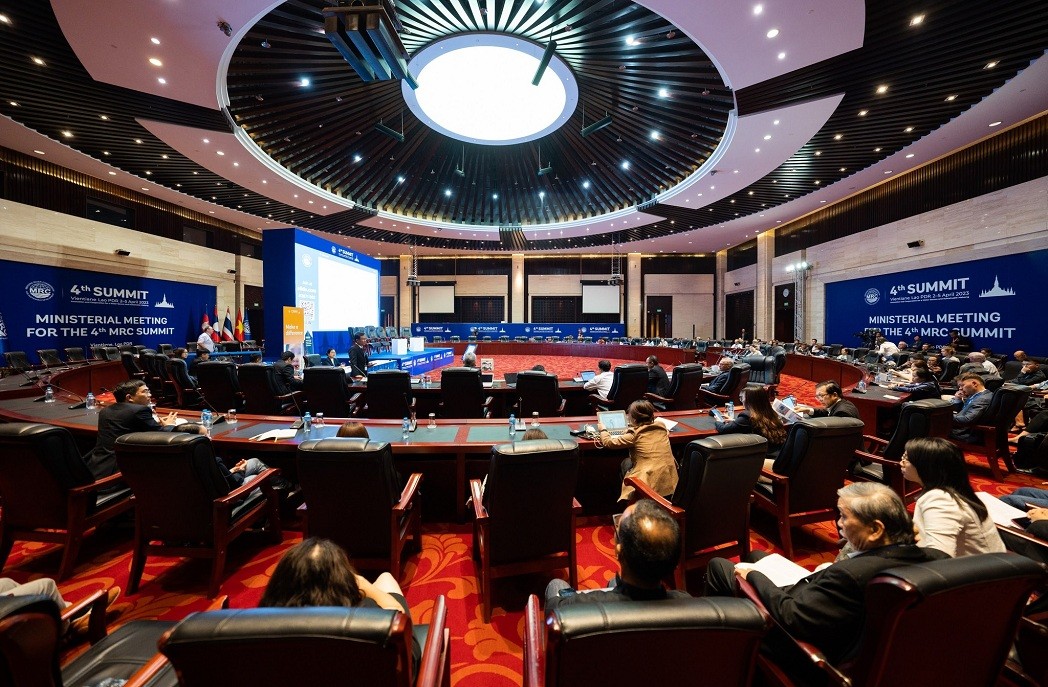 |
| At the ministerial meeting for the 4th MRC Summit. Photo: Mekong River Commission/FB |
Prime Minister Pham Minh Chinh and a high-ranking Government delegation of Vietnam arrived in Vientiane on April 4 evening to attend the fourth MRC Summit. His attendance is made at the invitation of Lao PM Sonexay Siphandone.
The Vietnamese PM’s entourage includes Minister of Planning and Investment Nguyen Chi Dung, Minister of Agriculture and Rural Development Le Minh Hoan, Deputy Minister of Public Securities Nguyen Duy Ngoc, Deputy Minister of Foreign Affairs Do Hung Viet, and Deputy Minister of Natural Resources and Environment Le Cong Thanh, among other officials.
The summit, themed “'Innovation and Cooperation for a Water Secure and Sustainable Mekong”, will be attended by the Prime Ministers of the MRC member countries – Cambodia, Laos, Thailand and Vietnam, and representatives of the MRC’s dialogue partners – China and Myanmar, its 12 development partners, and international organisations within and outside the Mekong region.
The event aims at affirming the four member countries’ highest political commitment to enhancing the effective implementation of the 1995 Agreement on the Cooperation for the Sustainable Development of the Mekong River basin. Orientations for the development and management of the Mekong River basin will be put forth and plans adopted for the implementation of the Basin Development Strategy for the Lower Mekong Basin 2021–2030.
PM Chinh’s attendance at the summit demonstrates Vietnam’s political commitment and role to the MRC’s activities. The country has actively participated in MRC’s activities at all levels and forums across all fields.
Vietnam successfully hosted the second MRC Summit in Ho Chi Minh City in April 2014, helping devise directions for the Commission’s cooperation activities. Besides, it has also helped enhance the MRC’s cooperation with dialogue and development partners, as well as partnerships with countries in other river basins, including the Ganges, the Danube, the Nile, the Amazon, and the Mississippi, according to the Ambassador.
 | Sustainable Rice Project Improves Incomes of 10.000 Smallholder Farmers 10,000 farmers on the Mekong Delta see incomes increase by 17% through successful public-private partnership between Olam Agri Vietnam, GIZ and Vietnam’s Ministry of Agriculture ... |
 | Vietnamese Photographers Captures the Magic of the Mekong via Photography When the Tet holiday comes close, the farmers in the Mekong River Delta are busy taking care of the beautiful and colorful flower gardens to ... |
 | Vietnam Pledges to Cooperate with Int'l Partners in Management, Use of Cross-Border Water Source Deputy Prime Minister Tran Hong Ha called for strengthening the global and regional legal framework for the management and use of cross-border water resources. |

Most read


Recommended
 World
World
China's Xi likely to visit India for first time in seven years
 World
World
Vietnam’s Rise Draws Praise from Venezuelan Scholars
 World
World
Argentine Media Highlights Historic Significance of Vietnam’s August Revolution
 World
World
Vietnam-Thailand Art Exhibition Strengthens Cultural Bonds
Popular article
 World
World
Venezuelan Scholars Celebrate Vietnam’s Journey of National Rise
 World
World
NASA Invites ISRO to Join Moon Base Programme as India-US Space Ties Deepen
 World
World
India at 80: Young, progressive, and forging a special partnership with countries
 World
World