
Discovery history of Japan’s martial arts in Hanoi
 |
For over a millennium, Japan’s unique martial culture of bujutsu and budō continued to evolve from battlefield combat techniques to “take life,” to ways of “giving life.” They changed from “jutsu” to “dō” in which practitioners are encouraged to temper their bodies and spirits. After World War II, the budō arts were reassessed, and have spread throughout the world as popular sports to the extent that they are even part of the Olympic Games. Budō will continue to be loved by countless people as exciting competitive sports, as well as life-long pursuits for physical and mental well-being. As such, budō will undoubtedly make a significant contribution to peace throughout the world.
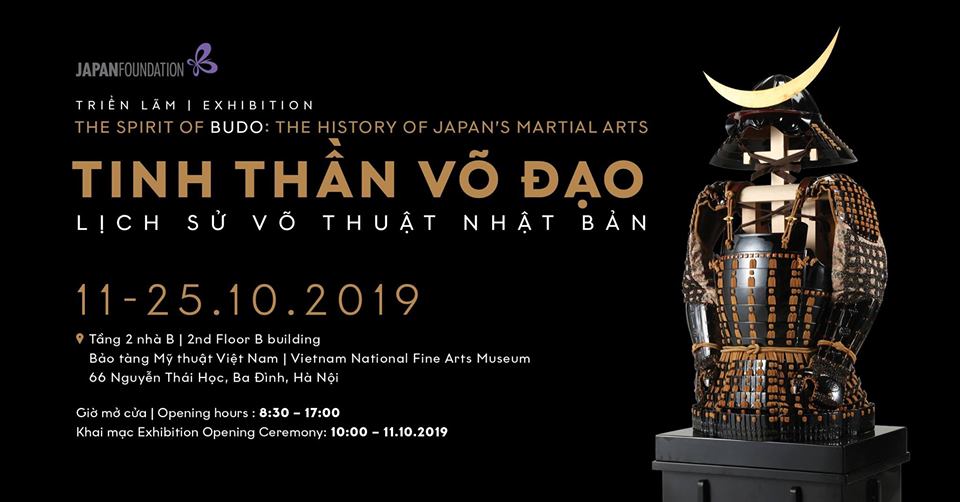
"The Spirit of Budō: The History of Japan’s Martial Arts" was planned and produced against a background of strong overseas interest in Japan's martial-arts culture. In this exhibition, we seek the understanding of viewers about the brief history of Japanese martial arts—from battlefield combat techniques (bujutsu) to popular sports or physical exercise tempering body and spirit (budō).
This exhibition consists of two parts: in the first part, reproductions/originals of historical weapons such as bows and arrows, suits of armor, helmets, and so on are shown, and the development and changes of Japanese martial arts from 8th century to 19th century are explained. Many of ancient types of armor and weapons have not survived to the present or are too fragile for international transport. That is why we decided to include reproductions, which would give the appearance of suits of armor and helmets at the time of original production even more vividly.
The second part deals with the reorganisation of bujutsu to budō in the 19th and 20th centuries, and how spirit of martial arts is still inherent in the daily life of Japanese people today. Nine budō associations are also introduced and the clothes and implements such as bamboo swords, protectors, bows and arrows, and so on, which are used by players and students in the present day, are also to be seen.
The organisers hope that through this exhibition the viewers will become aware of not only the history of Japanese martial arts, but also of people's aesthetic awareness and creativity, and Japan's social history and the Japanese way of thinking from a new angle./.




Recommended
 Handbook
Bringing European Cinema Closer to Vietnamese Audiences
 Handbook
Viet Nam Among Countries Making Significant Progress in Quality Infrastructure
 Handbook
Storytellers of Andersen’s Fairy Tales
 Handbook
“Anna Karenina” Translated Directly from Russian into Vietnamese For the First Time
Popular article
 Handbook
Viet Nam Unveils Its First Secure Semiconductor Chip and Platform
 Handbook
Viet Nam, US Strengthen Technological Cooperation and Use of Archival Records to Search for Fallen Soldiers’ Remains
 Handbook
Hanoi Audiences to Enjoy Six Italian Films for Free
 Handbook