
Expanding Opportunities for Vietnamese Businesses in US Market
 | Quang Ngai Expands Cooperation with France on Green Industry and Clean Energy |
| Australia-India Partnership on Cyber, Critical Technologies and Supply Chains |
Recently, in Ho Chi Minh City, the Ho Chi Minh City Investment and Trade Promotion Centre (ITPC), the US-Vietnam Business Council, and the Association of Vietnamese Scientists and Experts (AVSE Global) co-organized the seminar "Vietnam-US Business Connectivity."
The seminar provided updates on bilateral trade and investment relations, opportunities for establishing and operating businesses in the US, and legal, financial, and business culture issues that Vietnamese enterprises should consider when expanding into the US market.
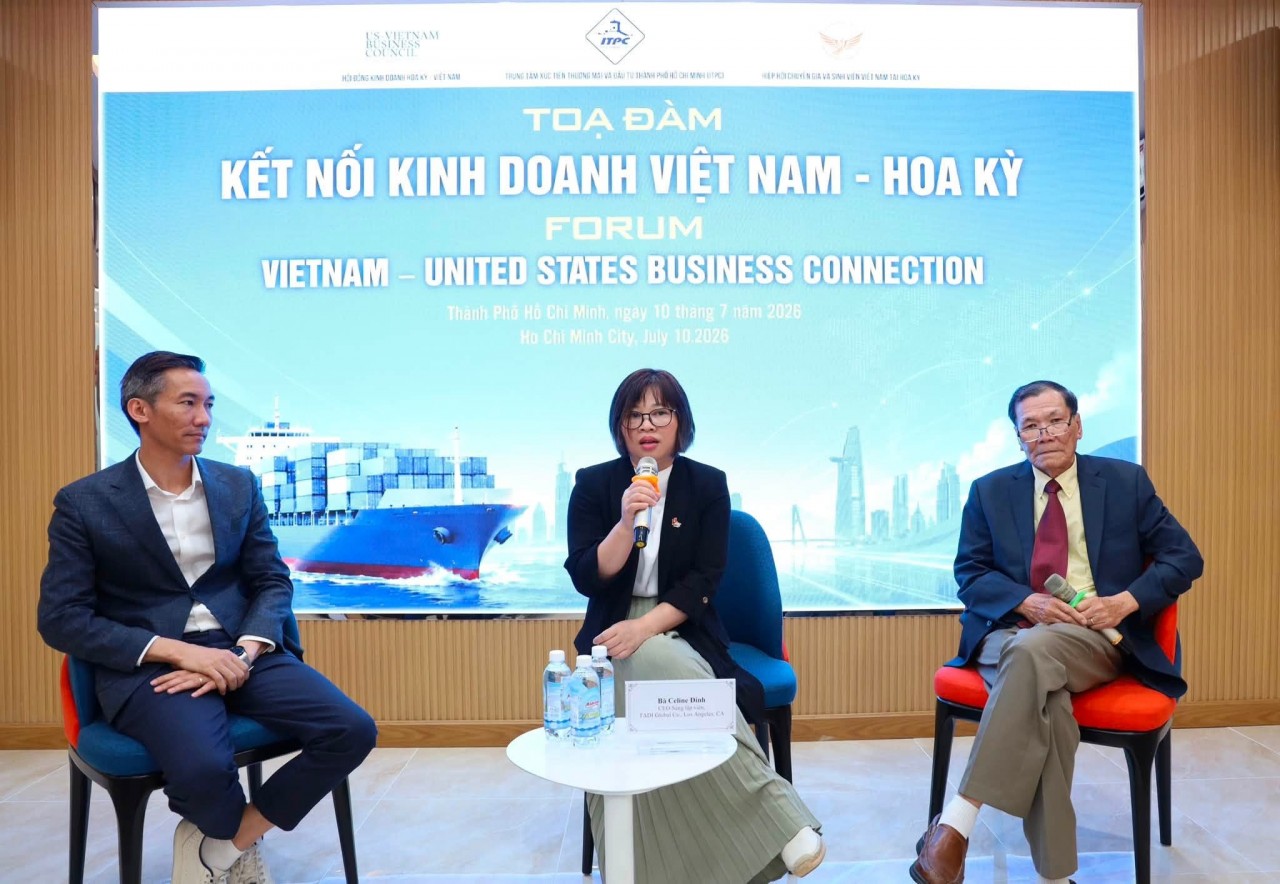 |
| Experts discuss business and investment opportunities in the United States at the seminar. (Photo: ITPC) |
Market opportunities come with compliance pressures
According to VnEconomy, Cao Thi Phi Van, Deputy Director of ITPC, stated at the seminar that Vietnam-US bilateral trade reached US$170 billion in 2025. In the first half of 2026, Vietnam’s exports to the United States totaled US$86.5 billion, reaffirming the US as Vietnam’s largest export destination.
US investment in Ho Chi Minh City has also maintained positive momentum. During the first half of 2026, the city recorded more than US$80 million in newly registered and additional investment capital from US investors.
However, Cao Thi Phi Van noted that US trade policies are undergoing significant adjustments, particularly regarding import tariffs and technical barriers. Trade remedy measures targeting Vietnamese exports have been increasing, especially for products such as steel, timber, agricultural products, and seafood.
In response to these changes, businesses need to strengthen their capacity to adapt by ensuring transparency in product origin, complying with import market regulations, and diversifying export markets to mitigate risks. Exploring appropriate cooperation mechanisms and business models is also essential to sustaining long-term economic ties between businesses in both countries.
According to the Vietnam News Agency (VNA), speaking from a strategic perspective, Dr. Huynh The Du, Lecturer at Indiana University and Chairman of the Board of the Association of Vietnamese Scientists and Experts (AVSE Global), said that the Vietnam-US trade structure is highly complementary. Vietnam primarily exports manufactured industrial goods, while the United States supplies technology, equipment, and high-value agricultural products.
He noted that ongoing supply chain shifts are creating opportunities for Vietnam to attract additional high-tech investment projects, particularly in the semiconductor and clean energy sectors. To translate these opportunities into tangible investment outcomes, Vietnam needs to continue improving its business environment, upgrading logistics, energy, and digital infrastructure, and preparing a workforce capable of meeting the demands of emerging technology industries.
For businesses, Dr. Huynh The Du emphasized the need to enhance supply chain transparency, comply with US technical and environmental standards, diversify products, and increase value-added content. These are critical factors directly affecting their ability to remain competitive in the US market.
Validate market demand before expanding investment
Vietnamese businesses have multiple pathways to enter the US market, including direct exports, partnerships with distributors, e-commerce platforms, franchising, joint ventures, and company establishment.
According to Ionah Hang Nguyen, Director of the VUS Advisory Network under the Association of Vietnamese Scientists and Experts (AVSE Global), the choice of market entry model should depend on each company's scale, resources, and strategic objectives. Businesses should avoid making large investments before validating actual market demand.
For business-to-consumer operations, companies can begin by targeting niche markets or serving the approximately 4.5 million Vietnamese people living in the US. This customer base can help businesses test products, messaging, and marketing approaches before expanding into broader market segments.
Ionah Hang Nguyen also identified e-commerce platforms such as Amazon, Shopify, Walmart Marketplace, TikTok Shop, Etsy, and Weee! as cost-effective channels for reaching consumers. Beyond product quality, businesses should invest in brand building, customer service, the shopping experience, and after-sales support.
In business-to-business transactions, corporate profiles, company websites, completed projects, client references, and participation in industry trade fairs are key factors that partners use to assess a company's capabilities. Businesses should also clearly identify their target customer segments instead of attempting to cover an overly broad market from the outset.
For companies wishing to employ staff in the US without establishing a legal entity, Ionah Hang Nguyen introduced the Employer of Record (EOR) model. Under this arrangement, a third-party provider handles recruitment and employment management in compliance with local regulations, enabling businesses to explore the market while reducing operating costs during the initial stage.
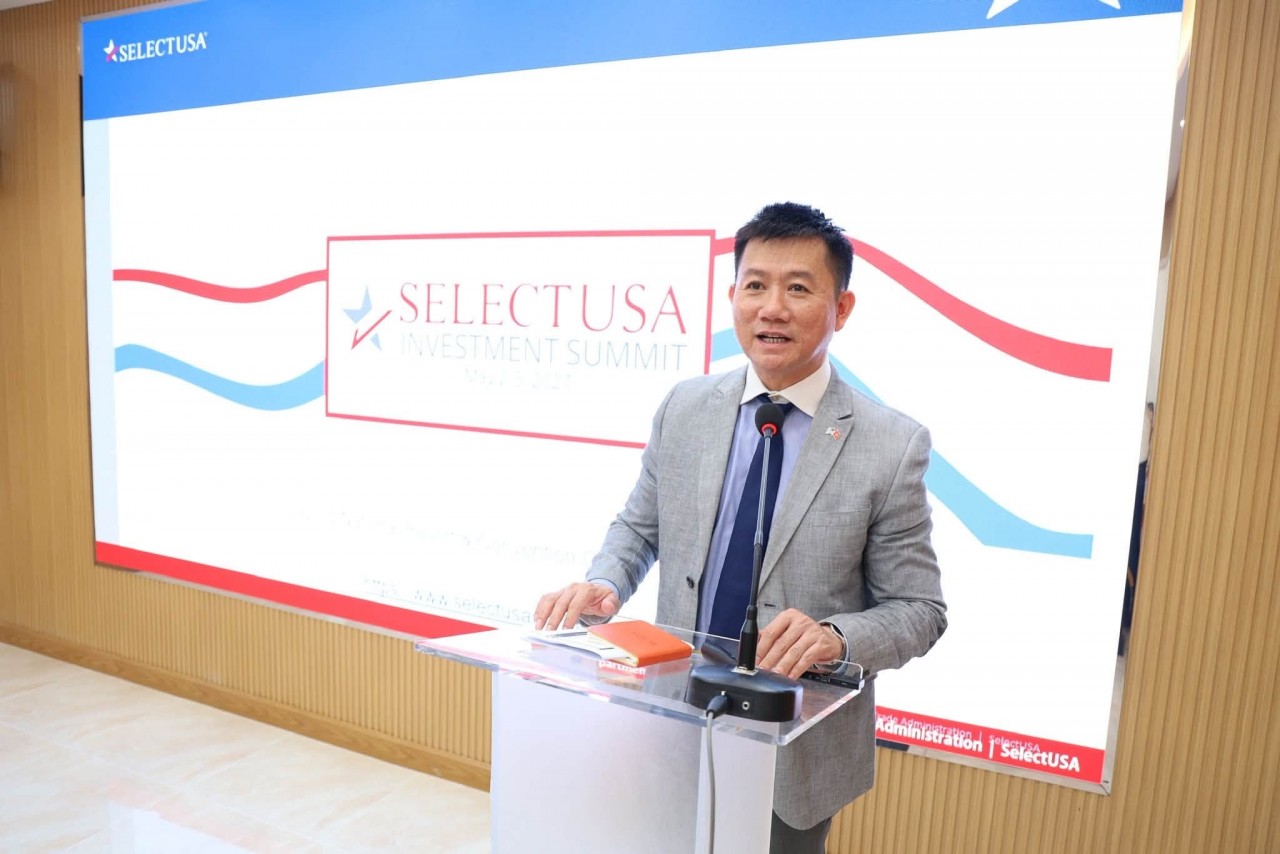 |
| Huynh Triet, Trade and Investment Specialist at the US Commercial Service in Ho Chi Minh City, presents information on US investment promotion policies at the seminar. (Photo: ITPC) |
Regarding investment support, Huynh Triet, Trade and Investment Specialist at the US Commercial Service in Ho Chi Minh City, said that SelectUSA is the US government's foreign direct investment promotion program administered by the US Department of Commerce.
Through the program, foreign businesses receive information on the business environment and legal framework, while also being connected with state and local economic development organizations to identify investment locations, business partners, and available support resources.
Discussions at the seminar highlighted three key requirements for Vietnamese businesses seeking to expand into the US: proactively monitor US trade policies while ensuring compliance with standards and supply chain transparency; choose business models that align with available resources; and validate products and market demand before scaling up investment.
 | US Market Sees Robust Demand For Vietnamese Goods Over the past seven months, US importers have spent an average of nearly $9.5 billion per month on Vietnamese goods, with the highest spending on ... |
 | Vietnam Holds Opportunities to Export Aluminum and Steel to US Market Vietnam still has many opportunities to export aluminum and steel to the US market, as domestic production capacity in the US has yet to fully ... |


Most read


Related Stories
 Economy
Vietnam, Brazil Review Economic and Trade Cooperation in First Half of 2026
 Viet's Home
Over 50 Calls and Messages Help Search for Fallen Soldiers at Tan Son Nhat Airport
 National
Vietnam Looks Forward to New Breakthroughs in Cooperation with the US
 National
Celebrating French National Day in Ho Chi Minh City
Recommended
Economy
Expanding Opportunities for Vietnamese Businesses in US Market
Popular article
 Economy
CUHK Achieves Top 20 Global Ranking in QS World University Rankings 2027
 Economy
World Bank Supports India’s Solar Rooftop Program
 Economy
Vietnam, Armenia Promote Air Connectivity to Expand Access to New Markets
 Economy