
From Memory to the Future: Nurturing Peace, Friendship and Cooperation
| Remembering Onaka Shinichi - A Great Friend of Viet Nam-Japan Peace and Friendship Lighting Way: Bringing Peace of Mind to A Tuc Highland Village |
This event was part of the 2026 Peace Festival, held to mark the International Day of Peace on September 21 and the 45th anniversary of the first International Day of Peace, observed in 1981.
The event was attended by Uong Chu Luu, President of the Viet Nam Peace Committee and former Vice Chairman of the National Assembly; Dong Huy Cuong, Vice President of the Viet Nam Union of Friendship Organizations; Nguyen Dang Quang, Deputy Secretary of the Quang Tri Provincial Party Committee and Chairman of the Quang Tri Provincial People’s Council; Ha Hung Cuong, Chairman of the Vietnam Peace and Development Council and former Minister of Justice; Ambassador Nguyen Phuong Nga, former President of the Viet Nam Union of Friendship Organizations; as well as diplomats, scholars, representatives of international organizations and humanitarian organizations, and international friends.
The seminar featured two discussion sessions focusing on the value of peace in a changing world and peacebuilding for a sustainable development future. The seminar also supported Vietnam’s initiative, adopted by UNESCO, on the “International decade of culture for sustainable development” for the 2026-2036 period, highlighting the role of culture as a spiritual foundation that contributes to promoting peace, dialogue and mutual understanding among countries and peoples.
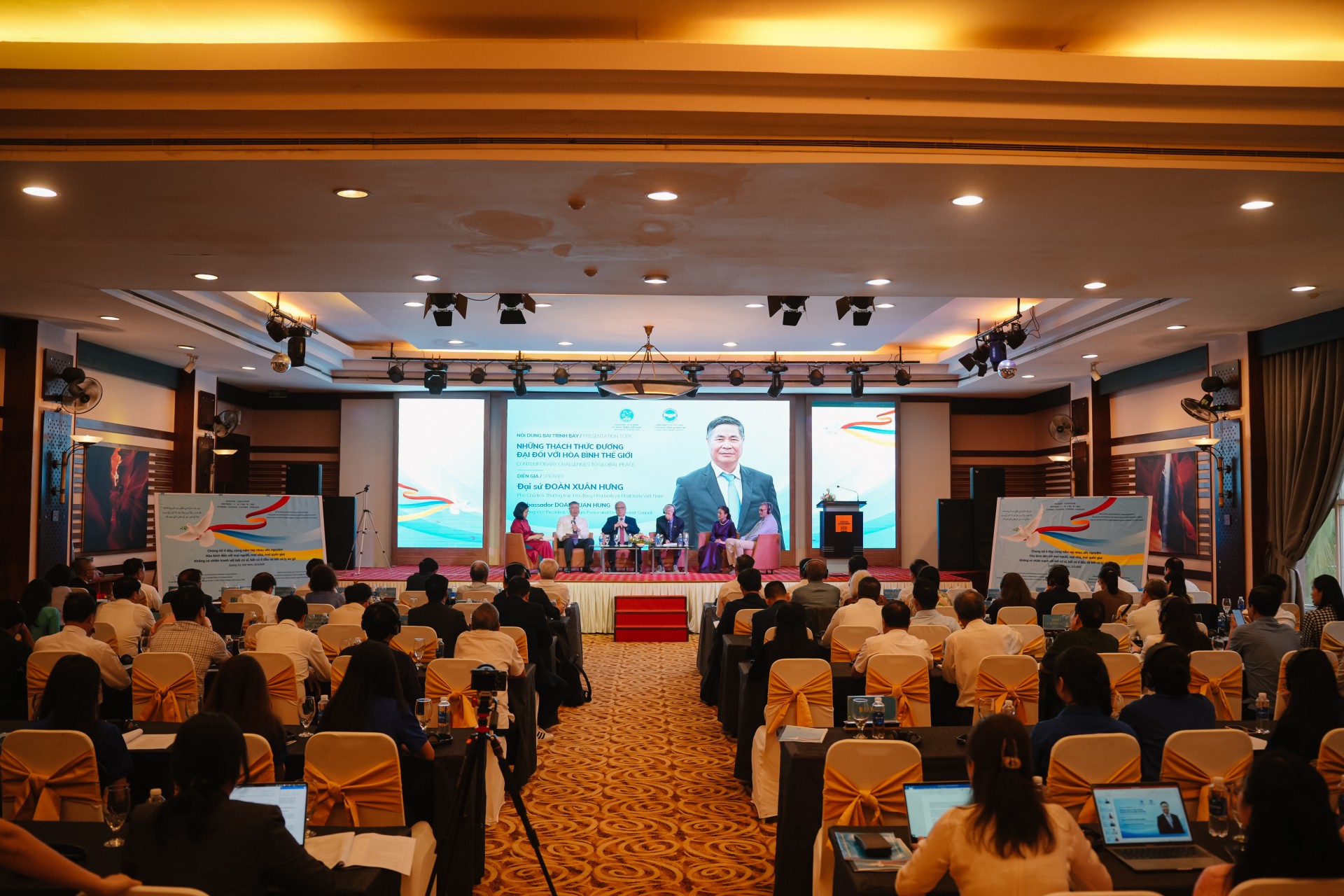 |
| The international seminar titled “From memory to the future: The value of peace.” (Photo: Bao Ngoc) |
Peace is not something that comes naturally
In his opening remarks, Ha Hung Cuong said that preserving peace is an issue of significance to every country, every people and every generation, as peace is a fundamental foundation for sustainable development.
According to him, peace is not something abstract, but is measured by ordinary lives lived in safety; families being reunited; opportunities for every individual to learn and develop; and the ability to resolve differences through peaceful means.
The deeper meaning of the theme “From memory to the future,” according to Ha Hung Cuong, lies in how people deal with the past. Memories should not be used to rekindle hatred or divide peoples, but to understand and appreciate peace, foster empathy and mutual understanding, and lay the foundation for reconciliation and cooperation.
“Peace does not come naturally,” he emphasized. Peace must be nurtured every day “through dialogue instead of confrontation, cooperation instead of division, trust instead of suspicion, and mutual respect among peoples.”
In a message sent to the seminar, Nguyen Thi Binh, former Vice President of Viet Nam and Honorary President of the Viet Nam Peace and Development Council, emphasized that Viet Nam has endured immense suffering and loss as a result of war and therefore has an even deeper understanding and appreciation of the value of peace.
According to her, memories of war serve as a reminder that peace does not come naturally, but must be preserved through the efforts of every country and every citizen. Looking back on the past is “not to nurture hatred,” but to better understand the losses that have been suffered, appreciate what we have today, and work together toward the future. She expressed her hope that the voice from Quang Tri would help spread the message of peace and promote understanding, friendship and cooperation among peoples.
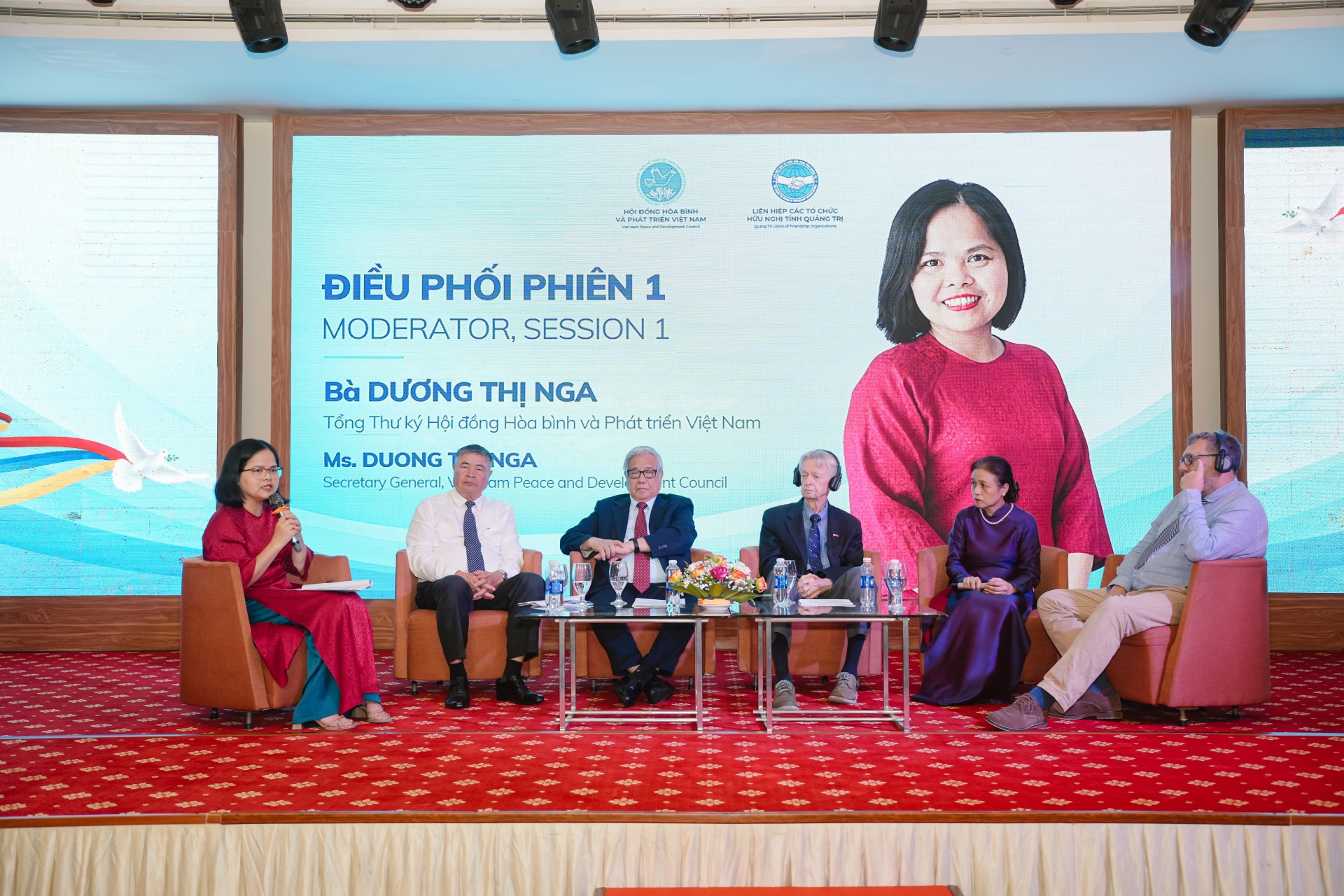 |
| The first discussion session themed “The value of peace in today’s changing world.” (Photo: Bao Ngoc) |
Ambassador Doan Xuan Hung, Standing Vice President of the Viet Nam Peace and Development Council, said that peace is neither a natural state nor an achievement that can be taken for granted. Rather, it is the result of continuous efforts in dialogue, cooperation, trust-building and mutual respect.
According to him, while wars may end on the battlefield, their consequences can persist through unexploded ordnance, the effects of chemical agents, missing persons, separated families and painful memories. Therefore, peacebuilding is not simply about ending the sound of gunfire, but also involves healing, addressing the consequences of war, reconstruction, reconciliation and rebuilding trust.
From a cultural perspective, Prof. Dr. Vu Minh Giang said that peace is not merely the absence of war or armed conflict, but also a cultural state in which people respect one another, resolve differences through dialogue, and share responsibility for their communities, nations and humanity as a whole.
He used the image of “building a bridge across the divide” to describe how history should be approached. Memories of the past, when viewed from a humanitarian perspective, can become a basis for empathy and reconciliation. “Do not fill in the divide, but do not widen it either; instead, build a bridge across it,” he said, so that history can always serve as a lesson without becoming an obstacle to exchanges and the journey toward the future.
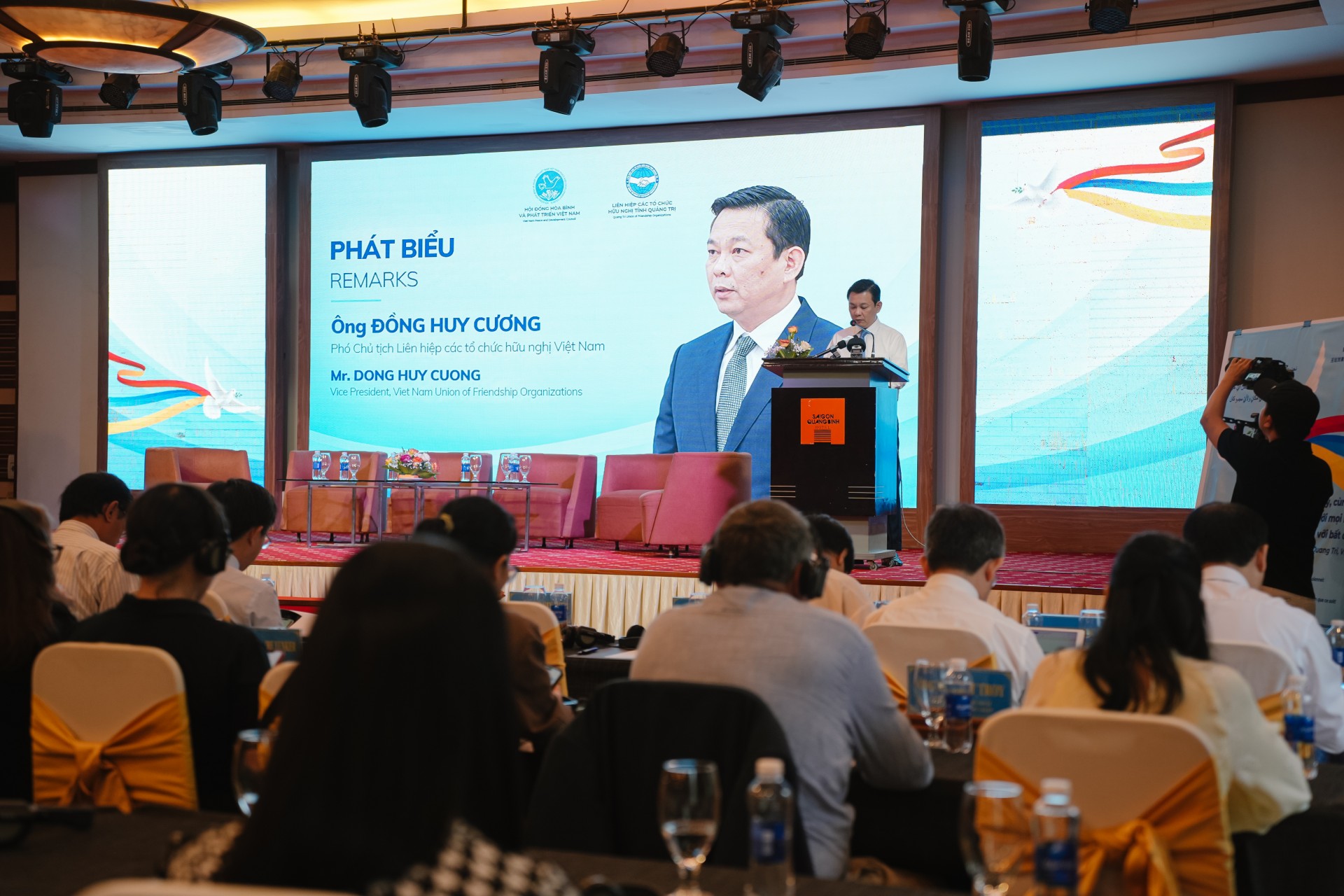 |
| Dong Huy Cuong, Vice President of the Viet Nam Union of Friendship Organizations, speaks at the seminar. (Photo: Bao Ngoc) |
Turning memory into action
Building on the theme “From memory to the future: The value of peace,” Dong Huy Cuong, Vice President of the Viet Nam Union of Friendship Organizations, posed the question: What is our responsibility after remembering?
According to him, it is the responsibility to build peace, “not through words, but through concrete, persistent actions every day,” particularly amid a rapidly changing and increasingly complex international environment, where challenges to peace, cooperation and development are becoming more pronounced.
Dong Huy Cuong emphasized: “People-to-people diplomacy must be where historical memories are transformed into practical cooperation.”
He spoke highly of the role of the Viet Nam Peace and Development Council in research, dialogue and international connectivity on peace and development, while also recognizing the proactive and active role of the Quang Tri Union of Friendship Organizations in linking people-to-people diplomacy activities with the province’s history, culture, people and development orientation.
According to him, there remains considerable room for cooperation between member organizations at the central and local levels, including the Viet Nam Peace and Development Council and the Quang Tri Union of Friendship Organizations. Such cooperation should extend beyond organizing international seminars and conferences to research, expert networking, expanding international friendship and partnership networks, and participating in people-to-people forums and multilateral mechanisms on peace and sustainable development.
The Viet Nam Union of Friendship Organizations is ready to accompany and facilitate the two organizations in leveraging their respective strengths and turning their shared responsibilities into concrete and far-reaching external relations initiatives. Dong Huy Cuong also expressed his hope that international guests would learn more about history in order to better understand the consequences of war, appreciate the value of peace, and work together to build peace for future generations.
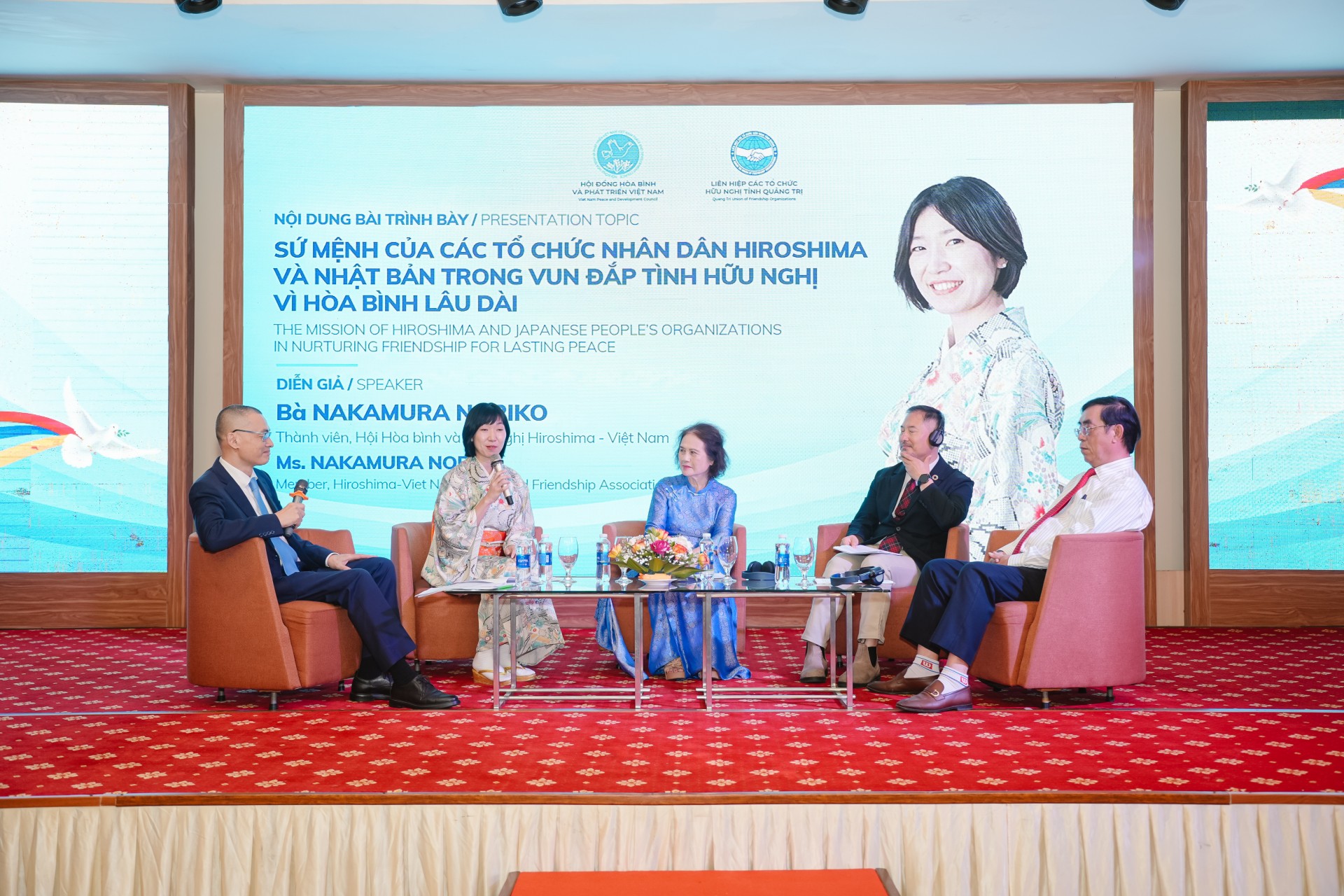 |
| The discussion session “Building a culture of peace for a future of sustainable development” was held as part of the seminar. (Photo: Bao Ngoc) |
Jonathan Wallace Baker, UNESCO Representative to Vietnam, said that culture can serve as a form of “shared memory,” helping a society that has experienced division recognize its common identity after conflict. Reconstruction, therefore, is not only about restoring infrastructure but also about rebuilding social trust.
According to him, forums such as “From memory to the future: The value of peace” create a space to transform historical memories into a driving force for reconciliation, sustainable development and community prosperity.
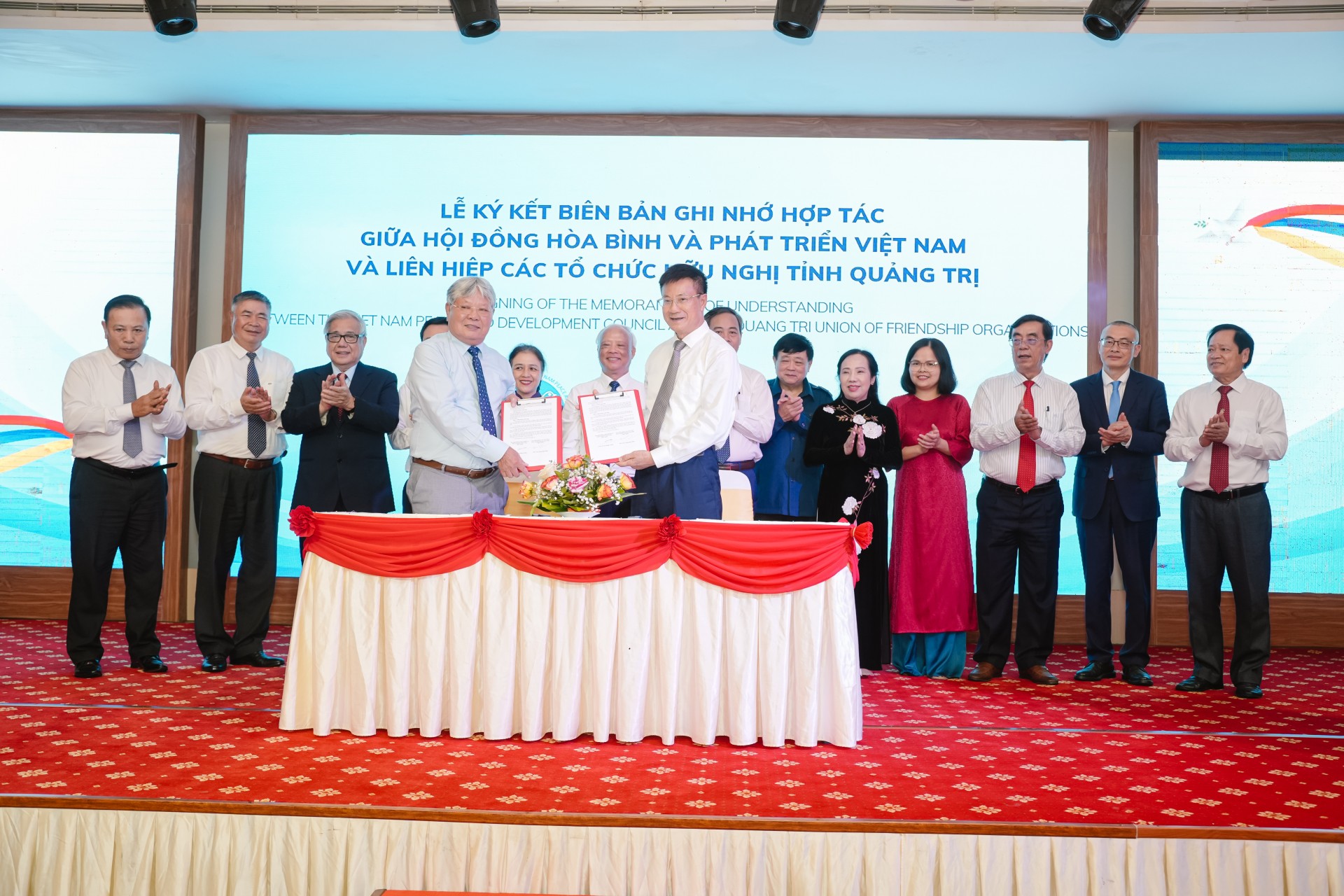 |
| The Viet Nam Peace and Development Council and the Quang Tri Union of Friendship Organizations sign a cooperation agreement. (Photo: Bao Ngoc) |
Education also plays an important role in this process. Heritage sites and stories associated with conflict can become spaces where society reflects on history and draws practical lessons. Through peace education, global citizenship education and intercultural learning, young people can develop the ability to listen, empathize, engage in dialogue and resolve differences through peaceful means, contributing to building “fortresses of peace” in people’s minds.
On this occasion, the Viet Nam Peace and Development Council and the Quang Tri Union of Friendship Organizations signed a cooperation agreement and awarded scholarships to 100 disadvantaged students who are victims of war and have achieved good academic results.
The delegates also took part in a ceremony to sign a peace message and release doves at the Mother Suot Monument along the Nhat Le River.
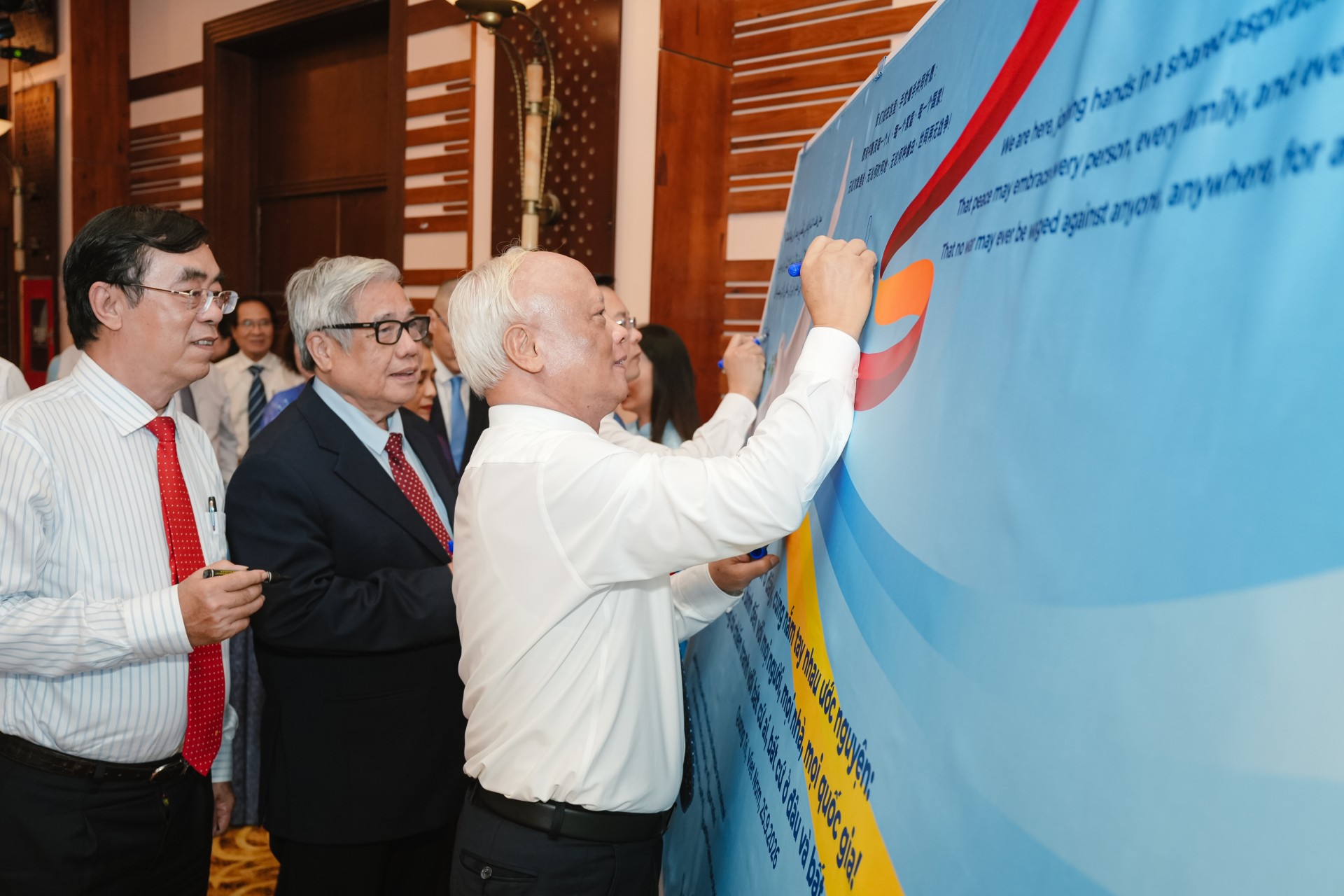 |
| The delegates take part in the ceremony to sign the peace message. (Photo: Bao Ngoc) |
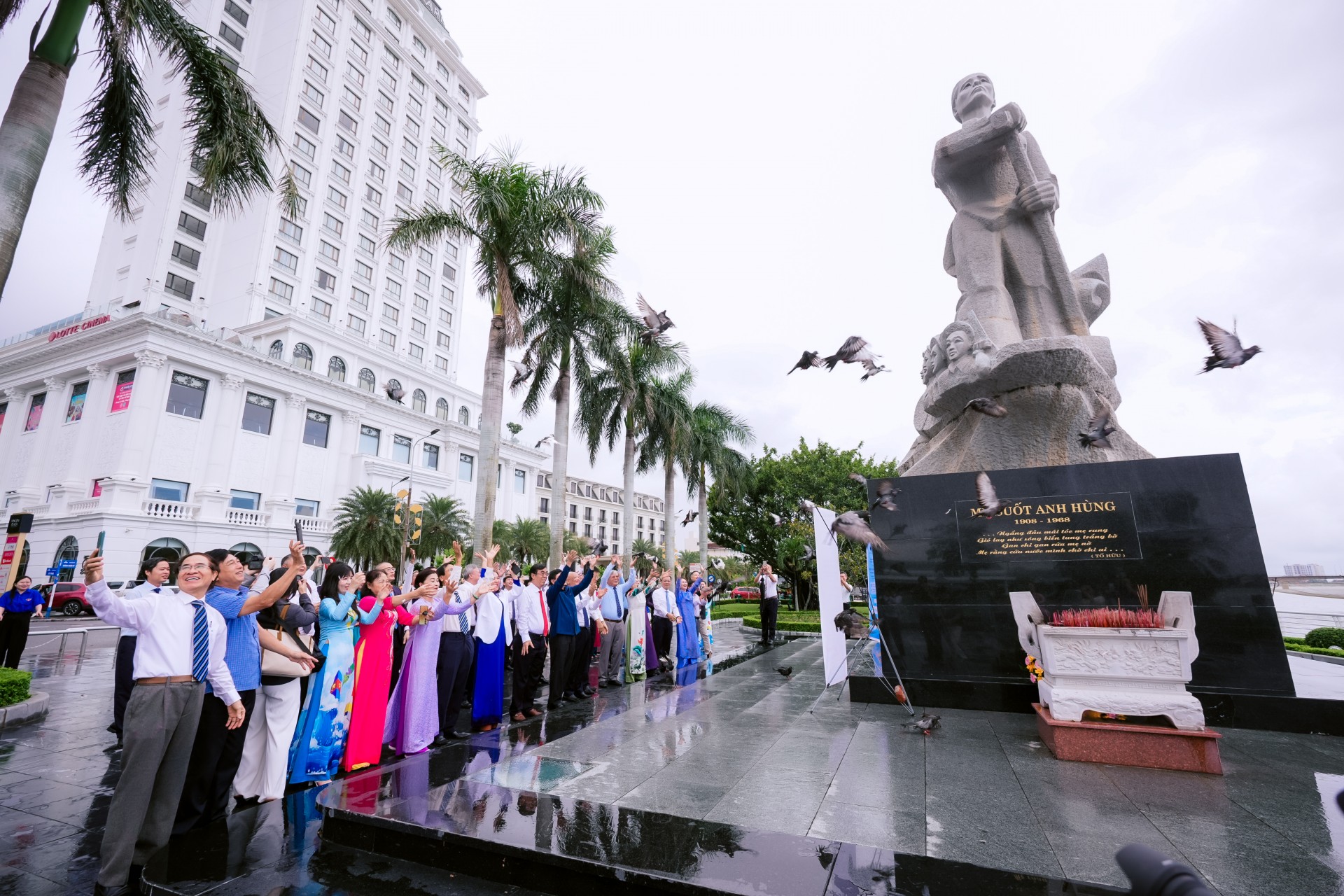 |
| The dove-release ceremony at the Mother Suot Monument along the Nhat Le River. (Photo: Bao Ngoc) |
 The Bell of Peace Rings Out from the War Remnants Museum The Bell of Peace Rings Out from the War Remnants Museum On September 20, a programme in response to the United Nations International Day of Peace (September 21) was held at the War Remnants Museum in Ho Chi Minh City, with the participation of representatives from peace and friendship organisations and more than 50 international guests from the Villa Vie Odyssey community and the Global Flagship of Peace initiative. In a space preserving memories of war, the bell of peace rang out alongside a message of dialogue, understanding and a shared commitment to the future. |
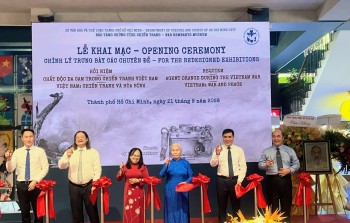 War-Time Frames Tell the Story of Peace War-Time Frames Tell the Story of Peace On the occasion of the International Day of Peace on September 21, the War Remnants Museum in Ho Chi Minh City inaugurated a newly renovated exhibition space featuring three thematic exhibitions: “Requiem,” “Agent Orange in the War in Viet Nam,” and “Viet Nam: War and Peace.” The documentary photographs invite the public to look back on a painful past while conveying a message about the value of peace to present and future generations. |
Most read


Related Stories
 Friendship
Seeking Solutions to Remove Bottlenecks to Socio-Economic Development
 Focus
Focus
Viet Nam Peace and Development Council Reviews Work in First Half of 2026
 Friendship
Seminar: Promotes Diplomacy and Deeper Global Integration in New Era
 Viets Home
Roundtable Discussion: Major Features of the Global Landscape in 2025 and Emerging Trends for 2026
Recommended
 Friendship
DAFO Launches Activities to Promote Responsible Business Practices
 Friendship
Seoul (Republic of Korea) Expands Employment Support for Vietnamese International Students
 Friendship
NA President Meets with Chinese Friendship Figures in Beijing
 Friendship
A Misfortune Turned into Happiness
Popular article
 Friendship
Hai Phong: Vietnamese and International Melodies Foster Friendship
 Friendship
I Was Never Just Passing Through Viet Nam
 Friendship
Strengthening People-to-People Exchanges, Nurturing Viet Nam-RoK Friendship
 Friendship