
Green Production Meets Halal Standards: New Gateway for Vietnamese Exports to Malaysia
 | Unlocking Tourism Potential: Vietnam and Malaysia Deepen Cooperation |
| Vietnam, Malaysia Cooperate to Combat Illegal Fishing Activities |
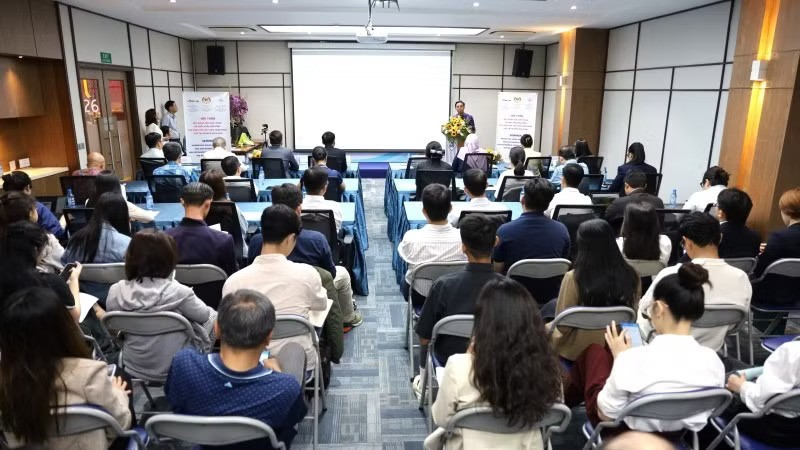 |
| Overview of the workshop. |
On April 23, the Ho Chi Minh City Investment and Trade Promotion Centre (ITPC), in coordination with the Consulate General of Malaysia in Ho Chi Minh City and the Malaysia External Trade Development Corporation (MATRADE) in Ho Chi Minh City, organized a workshop titled “Promoting green production and sustainable exports for Vietnamese goods entering the Malaysian market.”
The event aimed to support domestic enterprises in updating information on consumer trends, new developments in Halal certification in 2026, and incentive policies for imported products meeting ESG criteria in Malaysia and other Muslim markets.
According to statistics from the General Department of Vietnam Customs, bilateral trade between Vietnam and Malaysia has continuously recorded positive signals.
As of 2025, total bilateral trade turnover exceeded USD 15 billion, marking a 5% increase compared to 2024. Of this, Vietnam’s exports to Malaysia reached USD 4.8 billion.
However, amid the global wave of green transformation, particularly the strong response from Muslim-majority countries and Malaysia through preferential policies for ESG-compliant products, the key challenge facing Vietnamese enterprises is how to meet these stringent standards to enhance competitiveness.
Le Anh Hoang, Deputy Director of ITPC, stated that Vietnam-Malaysia relations are currently at their most favorable stage, following their upgrade to a Comprehensive Strategic Partnership in November 2024.
Both countries are striving toward a target of USD 25 billion in bilateral trade by 2030. For Ho Chi Minh City, exports to Malaysia in 2025 reached over USD 708 million.
According to Le Anh Hoang, Vietnamese goods still have significant growth potential in this market due to similarities in consumer culture and relatively low trade barriers.
However, integrating Halal standards with green standards remains a challenge for Vietnamese enterprises, particularly small and medium-sized enterprises, due to constraints in investment capital, clean production processes, and transparent data systems required for periodic re-certification.
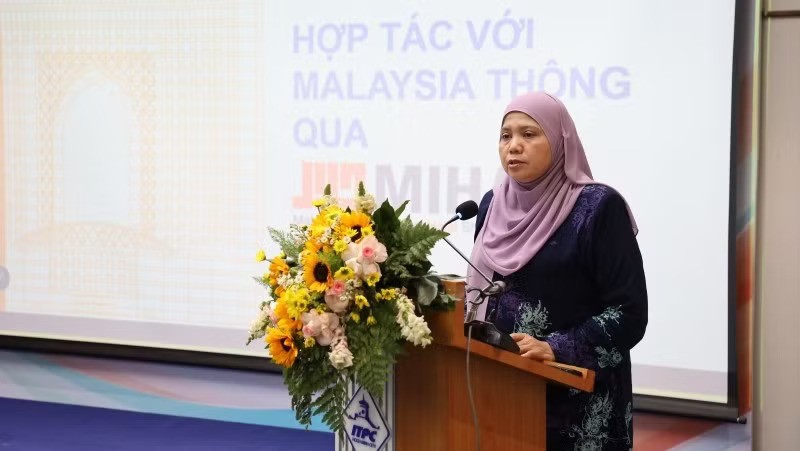 |
| A delegate speaks at the workshop. |
Meanwhile, Firdauz Othman, Consul General of Malaysia in Ho Chi Minh City, noted that the global Halal market is currently valued at more than USD 2.3 trillion and is expected to grow strongly in the coming years.
He also affirmed that Malaysia is always ready to serve as a strategic gateway for Vietnamese enterprises to access the global Halal market.
Experts emphasized that obtaining Halal certification is now a structural step and a critical risk-mitigation tool, enabling businesses to more easily comply with global ESG requirements and ISO standards (such as ISO 9001 and ISO 22000).
The core values of Halal standards, such as traceability, non-harmful production processes, social responsibility, and transparent governance, are fully aligned with the fundamental principles of sustainable supply chains.
 | International Support for Vietnam’s Halal Economic and Trade Development On April 17 in Hanoi, the Institute for South Asian, West Asian and African Studies (under the Vietnam Academy of Social Sciences), in collaboration with ... |
 | Halal Industry: New Potentials for Vietnam-Malaysia Cooperation On August 22 in Hanoi, President of the Vietnam-Malaysia Friendship Association Ngo Sach Thuc paid a visit and extended congratution to Malaysian Ambassador to Vietnam ... |


Most read

Related Stories
 Economy
Expanding Opportunities for Vietnamese Businesses in US Market
 Economy
Vietnam, Brazil Review Economic and Trade Cooperation in First Half of 2026
 Friendship
Malaysian Ambassador Dato' Tan Yang Thai - "Ambassador of Compassion"
 National
Vietnam News Today (July 9): Vietnam, Japan Seek New Strides in Defense Cooperation
Recommended
 Economy