Hanoi’s two more craft villages recognised as tourist destinations
The administration of Hanoi recently designated two craft villages in Phu Xuyen district as tourist destinations, a move aimed to develop not only local crafts but also tourism.
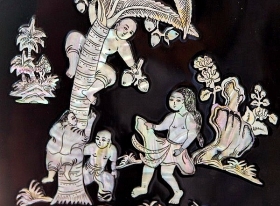
Pearl inlaid product of Chuyen My commune. Photo: Petrotimes
The new tourist sites are the mother of pearl inlaid and lacquer product making village in Chuyen My commune and the tailoring village in Van Tu commune.
Chuyen My commune has long been famous for mother of pearl inlaying with all of its seven villages specialised in making mother of pearl inlaid products, lacquer items and mother of pearl materials.
Local craftsmen produced millions of items of all sizes each year, ranging from wooden beds, cupboards, tables and chairs to lacquer paintings. The craft has been generating considerable economic benefits for local residents.
Meanwhile, Van Tu commune is known as the only place in Vietnam to have suit making as a traditional craft. There are about 1,500 households in the commune at present, up to 70 – 80 percent of which are specialized in suit making.
In recent years, the development of tailoring has helped raised local households’ income to 500 million – 700 million VND (21,500 USD – 30,200 USD) each year, some even earn billions of VND from this craft.
The designation of the two villages as tourist sites is hoped to develop not only the local crafts but also create more tourist magnets for the capital city of Hanoi.
The municipal People’s Committee tasked the two communes’ authorities with managing and developing tourism in the villages in accordance with the Law on Cultural Heritage and relevant legal regulations.
The capital city boasts 1,350 craft villages, which account for almost one-third of the total number across Vietnam, with 305 of them recognised as traditional ones. It is also home to 47 of the 52 traditional crafts nationwide.
According to the municipal People’s Committee, the annual revenue of the 305 traditional villages is more than 20 trillion VND (861.5 million USD) on average. Local per capita income is around 4 million – 5 million VND per month.
Despite the big number of craft villages, only few of them have been listed as tourist destinations.
In Phu Xuyen district, the fact that many long-standing craft villages haven’t been officially recognised has somehow made it hard for them to become more popular among travelers. As a result, their potential has yet to be fully tapped.
In its craft and craft village development plan until 2020, Hanoi listed several projects prioritised for investment, including 17 on developing tourism in craft villages. However, only two of the 17 villages have successfully developed their traditional crafts in association with tourism, namely Bat Trang ceramics village and Van Phuc silk village. The work hasn’t been carried out in the 15 remaining villages.
Among local traditional craft villages, Hanoi authorities classified seven as villages that need preservation and cultural heritage value to be brought into play; 10 as villages for tourism and in need of long-term preservation and development; and 17 as villages in need of long-term preservation.
To develop tourism in craft villages, Hanoi will select those recognised as traditional craft villages thanks to their rich cultural identities, attractive surrounding, and favourable transport system to build them into sample models, then expanding to other villages.
The Hanoi craft village association has selected potential ones such as Thach Xa bamboo dragonfly-making village in Thach That district, Chuon Ngo village in Phu Xuyen district, Du Du wood sculpture village and Chuong conical hat making village in Thanh Oai district.
According to the municipal Department of Tourism, Hanoi welcomed about 23.8 million visitors in the first 10 months of 2019, up 9.7 percent year on year. They included more than 5.3 million foreigners and nearly 18.5 million Vietnamese travellers. The city raked in some 83.16 trillion VND (3.6 billion USD) in tourism revenue during the period, rising 31.3 percent from the same period last year.
It hopes to attract about 28.6 million tourists this year, including 6.7 million foreigners and 21.9 domestic visitors./.
A total of 102,243 students across Hanoi have been admitted to public high schools, equivalent to more than 80% of all candidates who sat the entrance examination. Notably, one student was admitted to as many as five different admission choices.
Twelve historical-cultural relics and scenic sites located in Chuong My Ward, Phuc Loc Commune, Ung Hoa Commune, and Vat Lai Commune have been officially recognized. This marks the second time this year that new heritage sites in the capital have been granted official status.
In recent years, Ninh Binh has not only cemented its position on the international tourism map through its magnificent natural landscapes but has also attracted visitors with the vibrant traditional festivals that embody the rich cultural heritage of the ancient capital region.
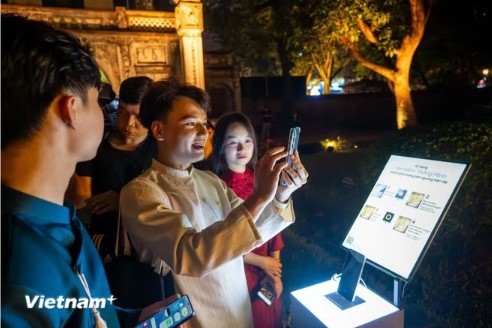
A newly issued decision, Decision No. 1033/QD-TTg approving the Digital Economy and Digital Society Development Programme for 2026 - 2030, places a strong emphasis on the tourism sector's digital transformation in Vietnam. The program prioritizes the use of digital technologies in the management and operation of tourism businesses, including accommodation providers, travel agencies, restaurants, and tourist attractions. The goal is to enhance operational efficiency while delivering more seamless, personalized, and engaging experiences for travelers.
After a foreign tourist accidentally dropped a cellphone into the river while visiting the Bay Mau Coconut Forest in Hoi An, Da Nang, a 70-year-old basket boat operator immediately jumped into the water to retrieve it.
Practical examples have shown that digital transformation is not merely about technology. It is also driving more convenient travel experiences, higher-quality services, and more attractive destinations.
According to tourism industry statistics, Vietnam welcomed 10.6 million international visitors in the first five months of 2026, up 14.9% year-on-year and the highest figure ever recorded for the same period.
According to the Vietnam News Agency correspondent in France, the weekend edition of Le Parisien recently published an article introducing Vietnam as one of the most worthwhile countries to explore in Asia. Le Parisien considered Vietnam among the most attractive destinations in the world, with majestic natural landscapes, ancient cultural heritage, and amazing cuisine.
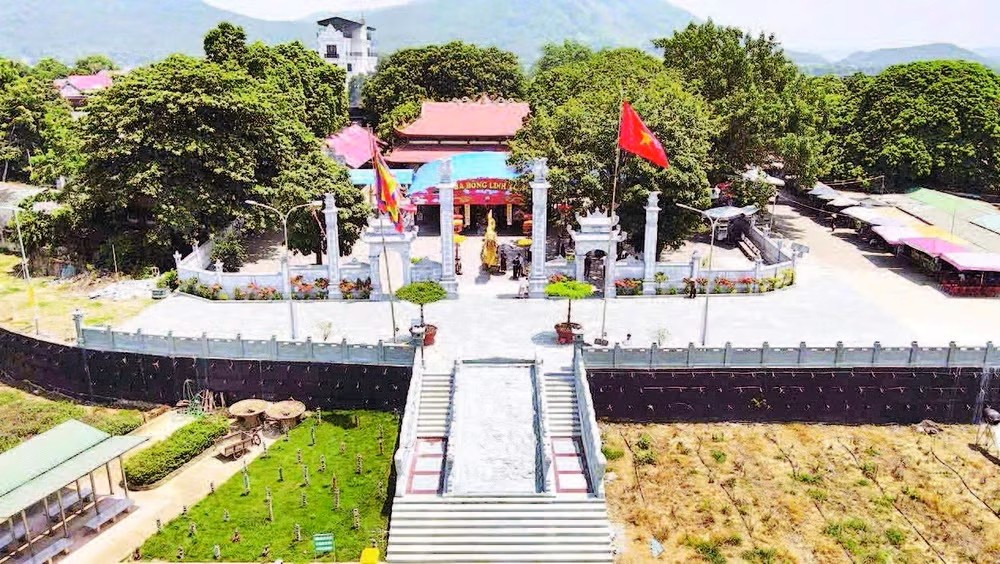
Amid the growing trend of combining heritage preservation with the development of cultural and spiritual tourism, Thanh Hoa has emerged as one of Vietnam’s notable destinations thanks to its rich network of temples and shrines associated with the UNESCO-recognized Intangible Cultural Heritage of Humanity, the Practices Related to the Beliefs in the Mother Goddesses of Three Realms of the Vietnamese People. Efforts to preserve the essence of this heritage while promoting tourism are opening up new development opportunities for the province.
Indonesia’s Antara News Agency and Tempo newspaper on May 30 published articles on the keynote address delivered by General Secretary of the Communist Party of Vietnam and State President To Lam at the opening session of the 2026 Shangri-La Dialogue.



 Viet's Home
 Handbook
 Travel
 Travel
 Travel
 Travel
 Travel
 Travel
 Travel
 Travel