
India expands its electronics manufacturing base
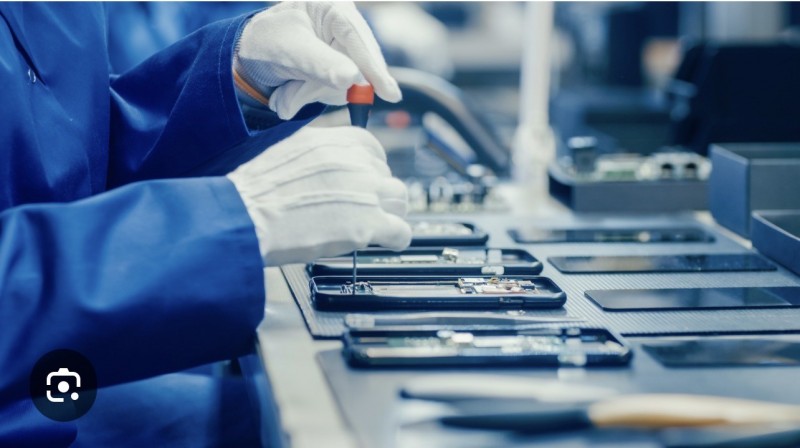 |
What once centred largely on assembling imported parts is increasingly becoming a more integrated manufacturing story, linking smartphones, components, sub-assemblies, semiconductor packaging, suppliers and export markets.
That transformation has gathered fresh momentum in August 2026 with the enactment of the Taxation and Other Laws (Amendment) Act, 2026.
The legislation gives foreign companies greater tax certainty when they store components in customs-bonded warehouses in India for supply to Indian contract manufacturers producing specified electronic goods.
The provision is available until the tax year ending March 2041, creating a long-term framework for global companies planning manufacturing and supply-chain operations in India.
The measure comes at a significant moment. India is no longer trying simply to establish itself as a destination for electronics assembly. The policy focus is increasingly shifting towards building the wider industrial architecture that allows products made in India to become part of global supply chains.
Electronics enters bigger league
The numbers show how rapidly that transition has taken place.
According to the Ministry of Electronics and Information Technology (MeitY), electronics production increased from about $20.21 billion (₹1.9 lakh crore) in 2014-15 to an estimated $139.47 billion (₹13.11 lakh crore) in 2025-26.
Electronics exports rose from around $4.04 billion (₹38,000 crore) to $45.11 billion (₹4.24 lakh crore) over the same period. That represents nearly a seven-fold increase in production and an eleven-fold rise in exports.
Mobile phones have been at the centre of this expansion. Production rose from about $1.91 billion (₹18,000 crore) in 2014-15 to $66.70 billion (₹6.27 lakh crore) in 2025-26, while exports climbed from roughly $159.57 million (₹1,500 crore) to $27.55 billion (₹2.59 lakh crore).
India has moved from being heavily dependent on imported handsets to becoming the world's second-largest mobile phone manufacturer by volume and a significant export base.
The change is also reflected in India's export basket. Smartphones emerged as India's largest individual exported commodity in FY 2025-26, surpassing traditional leading categories. Government data showed smartphone exports at about $27.87 billion (₹2.62 lakh crore) in calendar 2025.
This is an important shift in the character of Indian manufacturing. Electronics is no longer confined to meeting domestic consumption. Increasingly, factories operating in India are producing for customers and markets beyond the country.
Tax rules follow factories
The latest tax reform addresses a less visible but important part of that evolution: how multinational supply chains operate on the ground.
Modern electronics manufacturing often separates ownership of components from the company that actually assembles the finished product. A foreign electronics company may retain ownership of specialised components while placing them in India for use by an Indian contract manufacturer.
The new law provides an exemption for income arising from the storage of components in a customs-bonded warehouse when those components are supplied to an Indian contract manufacturer producing specified electronic goods on behalf of a foreign company.
The exemption applies to sales of such components and runs until 31 March 2041, subject to prescribed conditions.
The definition of specified electronic goods is deliberately broad. It covers mobile phones, laptops, all-in-one personal computers, tablets, servers and ultra-small-form-factor devices, as well as sub-assemblies, hearables, wearables and related accessories.
The significance lies in the alignment of tax rules with the commercial reality of global manufacturing.
Components can remain within India's logistics ecosystem while being supplied to local manufacturing operations without creating the same tax uncertainty that could otherwise affect the structure of such arrangements.
For international manufacturers, a 15-year horizon also matters. Supply chains require investments in factories, vendors, logistics, equipment and inventories that cannot be planned around short-lived policy measures.
Components become the focus
India's next phase is increasingly visible in the component ecosystem.
The Electronics Component Manufacturing Scheme (ECMS), notified in 2025, was designed specifically to attract domestic and global investment across components and sub-assemblies and connect Indian companies with global value chains.
Its target areas include display and camera-module sub-assemblies, printed circuit boards, passive components, electro-mechanicals, lithium-ion cells for digital applications, enclosures, supply-chain components and capital equipment.
The programme has now moved rapidly from policy design to implementation. In August, MeitYannounced that 106 ECMS projects had been approved, involving projected investment of $7.40 billion (₹69,548 crore) and around 75,000 direct jobs.
Thirty-eight plants were already operational, while another 16 were at advanced stages of construction.
The development is important because components determine how deeply a manufacturing economy is integrated into a product.
A factory assembling a finished device represents one layer of industrial capability. A network producing displays, camera modules, circuit boards, enclosures, passive components and other inputs represents a considerably broader manufacturing base.
The ECMS is therefore designed not simply to increase the number of factories, but to expand the number of links connecting those factories.
Semiconductors add new depth
The electronics story is also moving further upstream through semiconductors.
India's semiconductor programme has gathered momentum with projects spanning fabrication, assembly, testing and packaging.
In July, commercial production began at CG Semi's outsourced semiconductor assembly and test facility in Sanand, Gujarat. The government has said that five semiconductor plants are expected to begin production in India by the end of 2026.
By July, 12 semiconductor projects had been approved under the Semicon India Programme, representing committed investment of about $17.45 billion (₹1.64 lakh crore).
The Union Cabinet had also approved Semicon 2.0 in July with an outlay of $13.56 billion (₹1,27,500crore), aimed at expanding semiconductor design, fabrication, advanced packaging and the broader ecosystem of materials, gases and equipment.
This creates another layer in India's electronics ambition. The objective is moving from the assembly of finished products towards an ecosystem that includes the technologies and industrial inputs required to manufacture them.
Global chains find Indian links
The growing policy emphasis comes as global electronics manufacturing becomes increasingly distributed.
For companies, the location of a factory is only one part of the decision. Components, contract manufacturers, logistics providers, testing facilities, warehouses, capital equipment suppliers and specialised vendors must operate within a coordinated network.
India's recent policy measures increasingly reflect this reality. The ECMS seeks to integrate Indian manufacturers into global value chains, while the latest tax legislation recognises the role of foreign-owned components stored in India for use by local contract manufacturers.
Together, the measures create a framework in which production and supply-chain operations can develop alongside one another.
The country's expanding manufacturing base is already creating a broader industrial network.
Government data in July indicated that more than 40 major component manufacturers had established or expanded operations in India, alongside a growing network of Tier-2, Tier-3 and Tier-4 suppliers.
Domestic value addition in electronics manufacturing was reported at 23 percent in FY 2023-24.
That evolution is visible in the employment numbers as well. The electronics manufacturing ecosystem supported around 25 lakh jobs, with mobile manufacturing accounting for around 12 lakh jobs, according to government data released in July.
Women accounted for nearly 70 percent of the direct workforce in mobile manufacturing.
Policy moves beyond assembly
The direction of policy is increasingly clear: India is building an electronics ecosystem rather than pursuing isolated manufacturing projects.
The Production Linked Incentive scheme for large-scale electronics manufacturing has already exceeded its original targets.
By March 2026, the scheme had reported $2.19 billion (₹20,587 crore) of investment against a five-year target of $744.68 million (₹7,000 crore), production of $123.62 billion (₹11.62 lakh crore) against a target of $86.49 billion (₹8.13 lakh crore), and exports of $68.40 billion (₹6.43 lakh crore) against a target of $51.91 billion (₹4.88 lakh crore).
The government has also estimated that PLI-LSEM catalysed around $10.21 billion (₹96,000 crore) of investment in the mobile manufacturing ecosystem.
The external evaluation of the scheme found domestic value addition had reached 23 percent in FY 2023-24.
The latest tax legislation adds another piece to that policy architecture. Its importance lies less in a headline incentive than in recognising how global companies actually structure manufacturing, inventory and ownership.
India’s supply chain moment
India's electronics expansion has therefore entered a new phase. The first chapter was about creating manufacturing capacity. The next is about connecting that capacity to a much larger network of components, suppliers, technologies and international markets.
The scale already achieved provides a substantial base. Electronics production has crossed $138.30 billion (₹13 lakh crore), exports have exceeded $42.55 billion (₹4 lakh crore), smartphones have become a leading export product, component manufacturing is expanding and semiconductor production has begun.
The Taxation and Other Laws (Amendment) Act, 2026 adds long-term tax certainty to this expanding ecosystem.
Its provisions for foreign companies using customs-bonded warehouses to supply Indian contract manufacturers are designed around the realities of international supply chains rather than simply the mechanics of domestic production.
India's electronics bet is consequently becoming broader than the assembly line. It now encompasses the warehouse beside the factory, the component supplier further down the industrial corridor, the semiconductor facility upstream and the export market at the other end of the chain.
That is the larger shift: from making electronics in India to making India an increasingly connected part of how the world makes electronics.


Most read


Recommended
 Economy
Sprite Expands Global Basketball Footprint with NBA’s Nikola Jokić and New "Never Stop Refreshing The Game" Platform
 Economy
Media OutReach Newswire Founder & CEO Jennifer Kok Named Top Nominee in the Woman Entrepreneur Category for EY Entrepreneur Of The Year™ 2026 Malaysia
 Economy
India announced steel policy with a target of 604 million tons capacity by 2047
 Economy
KPLASS Singapore Officially Launches Its Far-Infrared Patches in Vietnam
Popular article
 Economy
India expands its defence exports
 Economy
India’s manufacturing export engine is finally revving up with four driving forces
 Economy
High-Tech Exports Drive Vietnam’s Economic Acceleration
 Economy