
India’s semiconductor moment: How the chip economy is entering a new phase
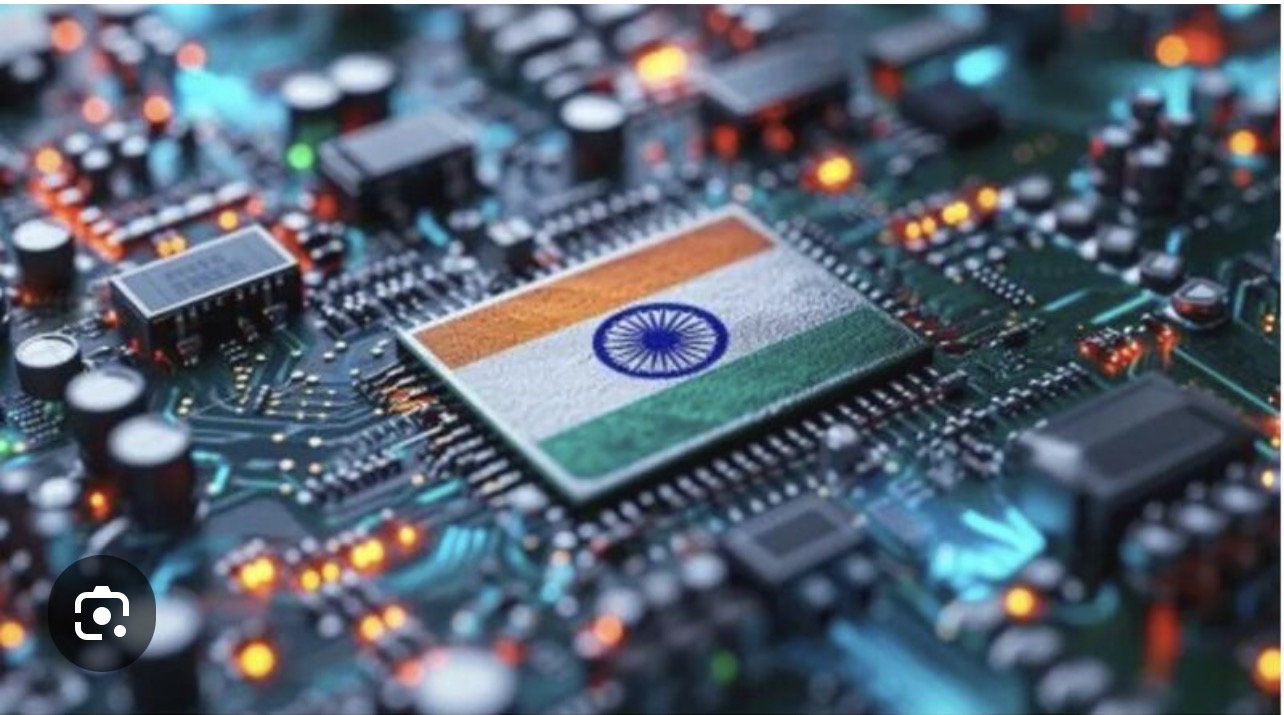 |
The transformation is becoming visible not only in government policy but also on factory floors, in chip-packaging facilities, among Indian design startups and through fresh commitments from global semiconductor companies.
The latest signal came at SEMICON India 2026 in New Delhi, where US semiconductor equipment major Applied Materials announced plans to invest $5 billion in India over the next decade.
The three-day event, held from September 17 to 19, brought together more than 600 companies and representatives from 52 countries, underlining the growing international attention around India's semiconductor ambitions.
From policy to production
India's first semiconductor push was about creating the foundation for an industry that requires enormous capital, specialised infrastructure and highly skilled manpower.
The Semicon India Programme, approved with an outlay of $8.09 billion (₹76,000 crore), was designed to establish capabilities across chip design, fabrication, assembly, testing, packaging and related manufacturing.
That foundation has now expanded considerably.
As of July 2026, 12 semiconductor manufacturing projects had been approved under the programme, representing investments of more than $17.45 billion (₹1.64 lakh crore).
The projects cover silicon fabrication, silicon carbide fabrication, gallium nitride-based display manufacturing and semiconductor packaging across several states. Three facilities operated by Micron, Kaynes Semicon and CG Semi have already entered commercial production.
At SEMICON India, Micron CEO Sanjay Mehrotra said commercial DRAM and NAND production was live at the company's Sanand facility in Gujarat. The development marks an important transition from announced investment to chips and memory products emerging from Indian manufacturing operations.
Semicon 2.0 expands vision
The next stage has been formally defined through Semicon 2.0.
Approved by the Union Cabinet in July 2026 with a total outlay of $13.56 billion (₹1,27,500 crore), the programme broadens India's semiconductor strategy into six pillars: chip design; semiconductor machines and materials; new fabrication facilities; advanced ATMP and OSAT packaging; research and development; and talent development.
Semicon 2.0 therefore seeks to develop those supporting layers alongside fabs and packaging facilities.
The India Semiconductor Mission will serve as the nodal agency, handling applications, technical and financial evaluation, recommendations and implementation oversight. Projects supported under the new scheme will generally have a duration of up to six years, while the initial application window is three years.
The policy expansion also reflects the changing nature of the semiconductor industry itself, where advanced packaging, specialised chips, power electronics, sensors and system-level integration are becoming increasingly important alongside conventional silicon manufacturing.
Global capital finds India
The company plans to use the investment over the next decade for research, supply-chain expansion and workforce development in India.
The announcement came as global demand for computing infrastructure accelerates, particularly because of artificial intelligence, data centres and advanced digital applications.
Semiconductor supply chains are simultaneously being reorganised as governments and companies seek greater resilience and diversification.
The international participation at SEMICON India reinforces that message. More than 600 exhibitors, including around 300 international participants, took part in the event, alongside six country pavilions and 12 Indian state pavilions.
Building the missing layers
One of the clearest features of India's emerging semiconductor economy is the increasing attention being given to the layers surrounding fabrication.
At SEMICON India, Tata Electronics announced multiple collaborations involving semiconductor manufacturing, advanced packaging, materials and talent. The company also agreed with Nexperia, covering wafer manufacturing, assembly and testing, technology collaboration and innovation.
Tata Electronics also announced plans for a vendor park in Dholera, Gujarat, aimed at strengthening the supplier ecosystem around its semiconductor fabrication project. Other partnerships involve areas such as photoresists, advanced chemicals, critical materials, equipment and workforce development.
That process can create an industrial network in which investment in one part of the value chain generates opportunities across several others.
Design becomes manufacturing
India's established strength in semiconductor design is also becoming more closely connected with physical products.
Under Semicon 1.0, 24 semiconductor design projects from startups and MSMEs have received financial support, while 105 startups and MSMEs have gained access to industry-standard electronic design automation tools.
Their work covers applications including satellite communications, drones, surveillance systems, Internet of Things devices, AI systems, telecom equipment and smart meters.
The latest developments suggest that this design capability is beginning to move further towards commercial deployment.
At SEMICON India, the government highlighted India's first indigenous System-on-Module, developed by IndieSemiC using C-DAC's Vega-Thejas32 processor alongside a globally certified LoRa-RF module.
The product represents the movement from chip design towards integration into commercial systems and final products.
The government has also said that students from Tier-II and Tier-III cities have designed more than 250 semiconductor chips, showing the widening geographic base of India's chip-design talent.
Talent drives the ecosystem
Behind every semiconductor plant is a workforce that requires specialised knowledge spanning fabrication, equipment engineering, materials science, chip design, packaging and testing.
India's talent-building programme is therefore becoming an increasingly important part of the semiconductor strategy.
Electronics and Information Technology Minister Ashwini Vaishnaw said in August that India had achieved its target of developing 85,000 semiconductor engineers within four years against an original 10-year target.
The government has now set a further target of developing another 100,000 engineers.
Semicon 2.0 is also expected to train 100,000 technicians, while new collaborations between industry and educational institutions are being established.
Tata Electronics and Gati Shakti Vishwavidyalaya, for instance, have signed an agreement focused on developing future-ready talent for India's semiconductor manufacturing infrastructure.
The government estimates that the semiconductor ecosystem being developed through the new phase could create around 50,000 to 60,000 direct jobs.
A market moving up
The economic opportunity behind this expansion is substantial.
Government estimates place India's semiconductor demand at roughly $45 billion to $50 billion in 2025, with consumption projected to reach about $110 billion by 2030 and exceed $200 billion by 2035.
A recent government assessment said India imported almost $150 billion worth of semiconductor products between FY2017 and FY2025, highlighting the scale of the domestic market and the importance of building production capabilities within the country.
At the same time, the wider electronics industry has expanded sharply. Electronics production rose from about $20.21 billion (₹1.9 lakh crore) in 2014-15 to around $127.66 billion (₹12 lakh crore) in 2024-25, while electronics exports increased from $4.04 billion (₹38,000 crore) to approximately $35.11 billion (₹3.3 lakh crore) over the same period.
Semiconductors are now being positioned as the next layer of that industrial expansion.
Entering The Chip Economy
The transition is already visible in commercial production, new international investments and partnerships involving global semiconductor companies. It is also visible in the structure of Semicon 2.0, which moves the policy focus from establishing individual capabilities towards connecting them.
The scale of India's domestic demand provides another important foundation. As AI, data centres, telecommunications, automobiles, consumer electronics and industrial systems increase their dependence on chips, the semiconductor industry is becoming increasingly intertwined with the broader economy.
The theme of SEMICON India 2026 - “Silicon to Systems: Building the Ecosystem” - captures that transition.
India's semiconductor strategy is moving from the ambition of making chips towards building the wider industrial system that allows chips, technologies, companies, engineers and products to develop together.


Most read


Recommended
 Economy
HID Enhances FARGO® DTC Printer Line to Help Organizations Issue Faster, More Secure ID Cards
Popular article
 Economy
Wibmo Fraud & Risk Management wins Chartis Disruptor Award for its Agentic Risk Intelligence Solution
 Economy
Several Factors Bolster Viet Nam's Economic Growth Prospects in 2026
 Economy
India boosts diesel exports amid global supply constraints
 Economy