
Key Results of 500-Day Campaign to Search For, Recover and Identify Fallen Soldiers’ Remains
| Nghe An's 500-Day and Night Campaign Collects 17,831 DNA Samples 500-Day-and-Night Campaign: 1,863 Martyrs’ Remains Recovered, Identification Efforts Accelerated |
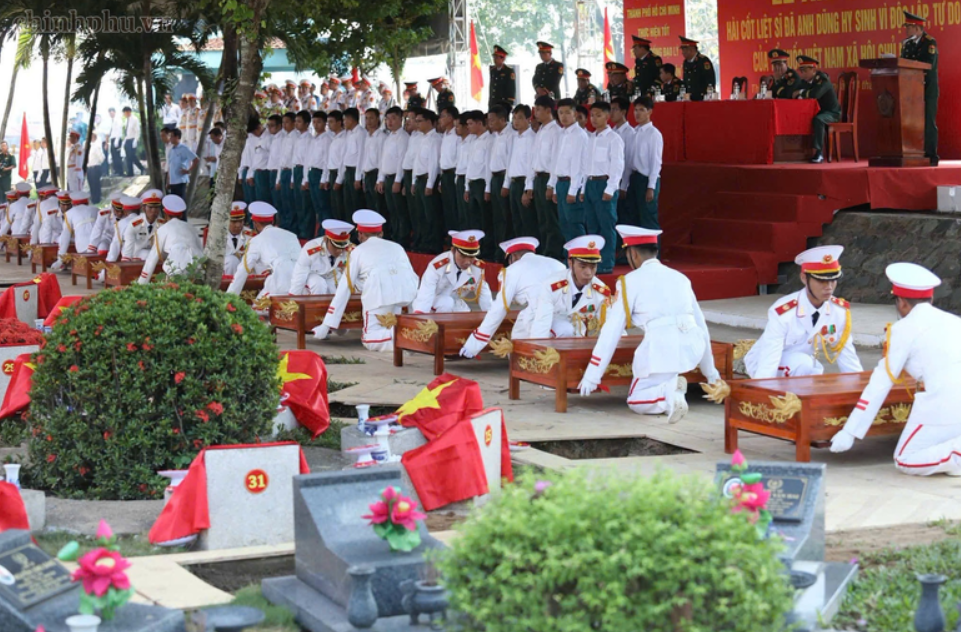 |
| Rehearsal for the memorial service, commemoration and burial of recovered fallen soldiers’ remains at Le Thi Rieng Cultural Park. (Photo: chinhphu.vn) |
According to updated figures as of October 13, 2026, the 500-Day Campaign to search for, recover and identify the remains of fallen soldiers is being implemented in a coordinated manner across multiple areas. Its key tasks include searching for and recovering remains, collecting and analyzing biological samples, completing databases, and clearing mines and unexploded ordnance in priority areas.
Search and Recovery of 3,611 Sets of Fallen Soldiers’ Remains
To date, the campaign has recovered 3,611 sets of fallen soldiers’ remains, achieving 51.59% of its target. Of these, 2,374 were recovered within Viet Nam, 217 in Laos and 1,020 in Cambodia.
Notably, the recovered remains include five collective graves of fallen soldiers in Tuyen Quang and 731 sets of remains at Le Thi Rieng Cultural Park in Ho Chi Minh City.
Currently, 32 search and recovery teams, comprising a total of 1,588 personnel, are carrying out their missions. These include 13 teams operating within Viet Nam and 19 overseas, of which eight are stationed in Laos and 11 in Cambodia.
Alongside search and recovery operations, localities and units have organized 24 memorial services and burial ceremonies, laying 1,118 sets of fallen soldiers’ remains to rest in cemeteries. These activities demonstrate gratitude to those who sacrificed their lives for the independence and freedom of the Fatherland while fulfilling the wishes of their families and the public.
Regarding the identification of fallen soldiers’ remains, all seven military regions and all 34 provinces and centrally governed cities have completed the collection of samples from remains in cemeteries, following a review of 211,301 graves.
Of these, 147,640 graves were eligible for sampling, accounting for 69.87%, while 63,661 were ineligible.
A total of 265,761 biological samples have been collected from relatives of fallen soldiers. Of these, 71,102 samples have been analyzed, and 66,909 have been integrated into the database.
The collection, analysis and integration of biological sample data are crucial steps in establishing a basis for comparison and identifying remains for which information is missing. These results are helping to gradually improve the database supporting the search for and identification of fallen soldiers in the coming period.
The receipt, storage and preservation of samples taken from fallen soldiers’ remains are also ongoing. To date, a total of 122,121 samples of remains transferred by local authorities have been received, stored and preserved.
The Military Forensic Institute alone has received 65,728 samples of fallen soldiers’ remains and conducted forensic examinations on 354 samples. The examinations yielded genetic sequences from 61 samples, supporting research, comparison and identification efforts.
Alongside the search, recovery and identification of fallen soldiers, mine and unexploded ordnance clearance operations are being conducted to ensure the safety of personnel and facilitate access to areas where information indicates the possible locations of graves.
As of October 13, 2026, a total of 17,836.272 hectares had been cleared of mines and unexploded ordnance out of the planned 22,100 hectares, equivalent to 80.71% of the target.
Under the plan, the 500-Day Campaign has five key objectives: searching for and recovering approximately 7,000 sets of fallen soldiers’ remains; completing the collection of samples from approximately 230,000 unidentified graves in cemeteries, as well as remains recovered through search operations; conducting DNA testing on approximately 18,000 samples of fallen soldiers’ remains; building, completing and operationalizing a genetic database of relatives of fallen soldiers whose identities remain unknown to support DNA matching; and accelerating and completing mine and unexploded ordnance clearance in priority areas and core zones, including Vi Xuyen in Tuyen Quang, Lao Cai, Lang Son and other areas where information indicates the possible locations of fallen soldiers’ graves.
In the coming period, closer coordination among local authorities, military and public security units, and specialized agencies will be crucial. Supplementing case records, improving the efficiency of biological sample analysis and ensuring safety in search areas will also play an important role in bringing fallen soldiers home to their families and hometowns, fulfilling the wishes of their relatives and the public.
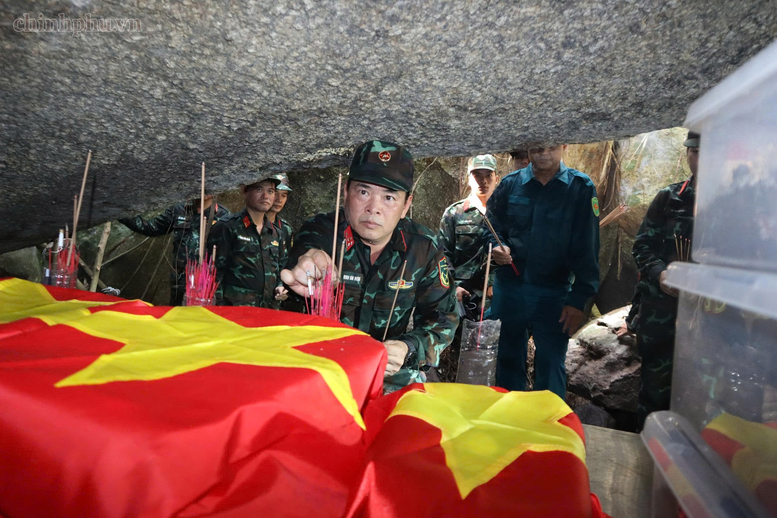
 500-Day Campaign: 28 Martyrs’ Remains Repatriated from Two Lao Provinces |
 Nearly 40,000 Phone Calls Are Made To “500-day Campaign” Hotline |


Most read


Related Stories
 Handbook
Viet Nam, US Strengthen Technological Cooperation and Use of Archival Records to Search for Fallen Soldiers’ Remains
 National
An Giang Collects DNA Samples to Identify Fallen Soldiers
 National
DNA Collection Offers Hope to Families of Fallen Soldiers
 Vietnamese Culture
Eight More Sets of Martyrs’ Remains Found at Le Thi Rieng Park
Popular article
 National
Viet Nam News Today (Oct. 27): Vietnamese, Polish PMs Seek ways to Boost All-round Cooperation
 National
Proactively Identifying Development Needs to Expand Cooperation with Foreign NGOs
 National
Viet Nam News Today (Oct. 25): Viet Nam, Mozambique Seek Stronger Agricultural Ties
 National