
People-to-People Diplomacy: Change to Reach Further
 | People-to-People Diplomacy: A Strong Bridge in Viet Nam-Cuba Ties |
| Da Nang’s People-to-People Diplomacy in 2025: Attracting More Than VND 393 Billion in International Aid |
The Lunar New Year of Binh Ngo 2026 arrives at a time when the world is undergoing significant transformations: strategic competition among major powers is expanding across multiple domains; global supply chains and economic structures are being reshaped; digital transformation, green transition, and artificial intelligence are advancing at an explosive pace; and non-traditional security challenges, climate change, localized conflicts, and humanitarian crises are becoming increasingly intertwined and complex.
Amid this current, Viet Nam is not only adapting proactively but is gradually affirming its role as a responsible nation with resilience and vision. After nearly 40 years of Doi Moi (Renewal), under the leadership of the Party, our country has accumulated new strength and standing: firmly safeguarding independence, sovereignty, and territorial integrity; maintaining macroeconomic stability; expanding foreign relations with most countries and major centers of power; and steadily enhancing its international position and prestige.
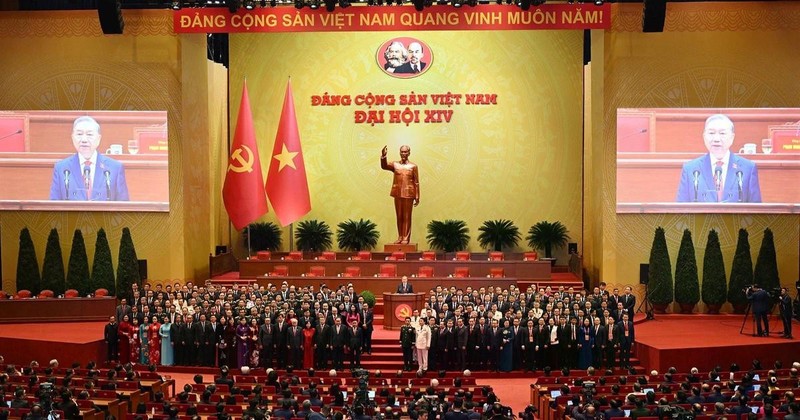 |
| The 14th Central Committee made its debut at the 14th National Party Congress. (Photo: Nhan Dan Newspaper) |
Within the country’s overall achievements, the forces engaged in foreign affairs have made meaningful contributions to creating and maintaining a peaceful and stable environment, firmly safeguarding the Fatherland, and mobilizing external resources and favorable conditions for national development. People-to-people diplomacy has continued to affirm its role as one of the pillars, helping to build a positive and favorable social foundation for Viet Nam’s relations with other countries, linking the “Party’s will” with the “people’s aspirations,” and combining national strength with the strength of the times.
From Ho Chi Minh’s thought to the demands of a new era
President Ho Chi Minh’s philosophy of “adding friends and reducing enemies” laid the foundation for Viet Nam’s people-to-people diplomacy. Guided by the principle of “winning hearts and minds” and “prevailing through reason and justice,” people-to-people diplomacy helped forge a broad international people’s front in support of Viet Nam’s just cause during the struggles for national liberation and reunification. This was not merely a method of international mobilization, but a crystallization of the nation’s humanistic tradition and a strategic vision of the power of the people in international relations.
In the period of peace, nation-building, and integration, people-to-people diplomacy has continued to serve as a bridge connecting Viet Nam with international organizations, movements, prominent figures, intellectuals, businesses, and the global community; mobilizing international resources for development; and consolidating the social foundations of bilateral and multilateral relations. The persistence of exchanges, cooperation, and international advocacy activities has helped create a favorable environment for the country’s increasingly deep and comprehensive integration.
However, as we enter a new era of development, both the context and the requirements have changed. The international environment is evolving more rapidly, standards for cooperation are higher, and strategic competition is more complex.
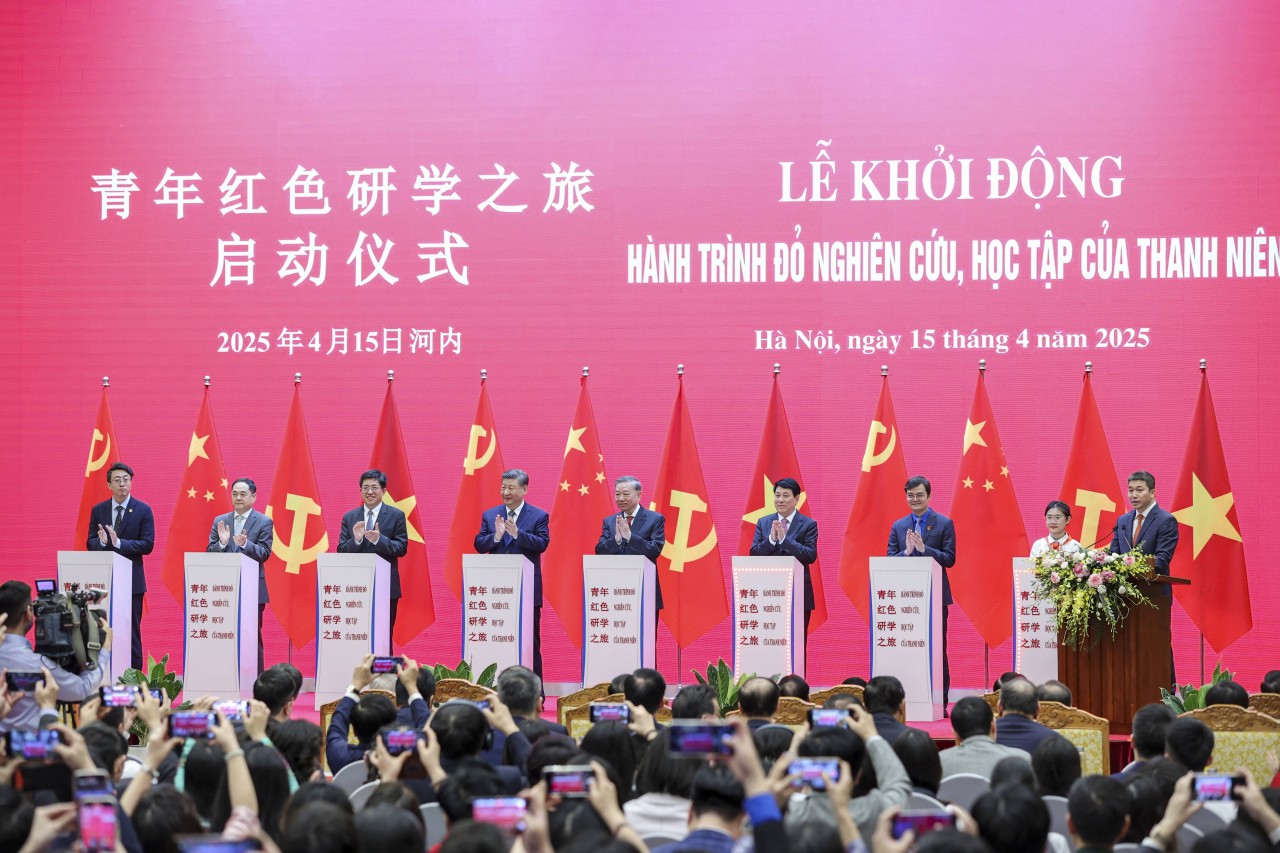 |
| General Secretary To Lam and State President Luong Cuong, together with General Secretary and President of China Xi Jinping and delegates, perform the launching ceremony of the “Red journey for youth research and study,” April 15, 2025, in Hanoi. (Photo: Dinh Hoa) |
In this context, amid increasingly demanding requirements, people-to-people diplomacy must not stop at maintaining and expanding friendly relations. It must proactively participate in shaping a conducive development environment; contribute to strengthening strategic trust; enhance national soft power; and safeguard national and ethnic interests in a multi-layered, multi-centered world.
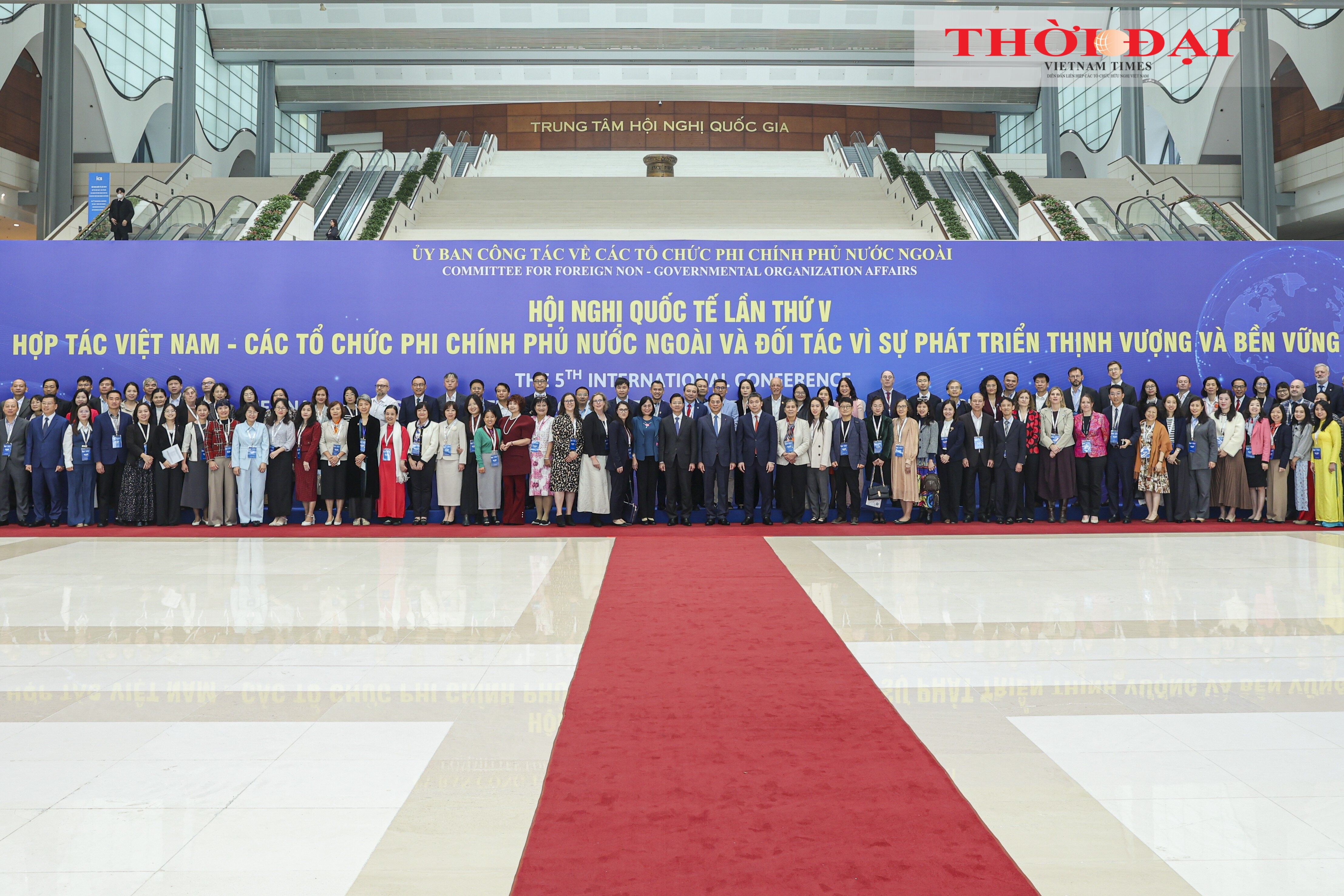 |
| Delegates attend the 5th International Conference on cooperation between Viet Nam and foreign non-governmental organizations: Partners for prosperity and sustainable development, organized by the Committee for Foreign Non-Governmental Organizations and the Viet Nam Union of Friendship Organizations, December 4, 2025, in Hanoi. (Photo: Dinh Hoa) |
It is precisely within this dynamic that the practical experience of 2025 became an important test. Amid numerous fluctuations in the global and regional situation, the Viet Nam Union of Friendship Organizations and its member organizations endeavored to renew their thinking, approaches, content, and methods of operation; shifting from “participation” to “proactive shaping,” from “exchange” to “value creation,” thereby making positive contributions to consolidating the social foundations of foreign relations and mobilizing international resources for development.
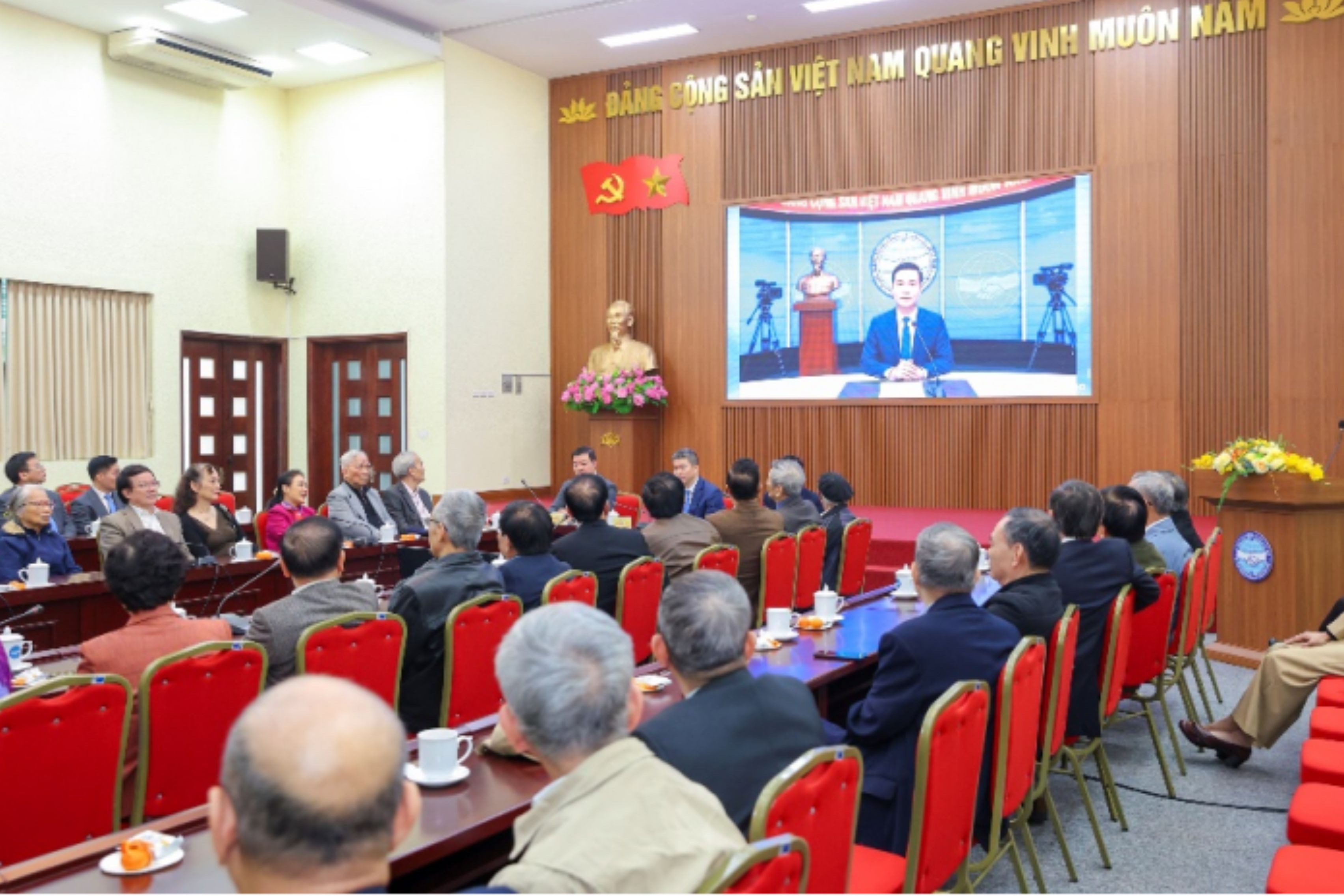 |
| Leaders, former leaders, and officials of the Viet Nam Union of Friendship Organizations across different periods watch a video summarizing the 2025 work results, including the application of artificial intelligence. (Photo: Dinh Hoa) |
Nevertheless, compared with the increasingly high expectations set by the Party and State leadership in the new era, people-to-people diplomacy still faces limitations in research and advisory capacity; in digital transformation and the application of science and technology; in alignment with the country’s major development priorities; and in the quality and succession planning of its cadre workforce.
These assessments are not intended to revisit the past, but to clearly identify the gap between requirements and existing capacity, thereby creating momentum for stronger transformation in 2026 and the years to come.
2026 - A turning point for the entire system
The 14th National Party Congress has defined the vision for the road ahead: to firmly maintain a peaceful and stable environment; to achieve rapid and sustainable national development while resolutely safeguarding the Fatherland; to comprehensively improve and enhance the people’s living standards; to uphold strategic autonomy, self-reliance, and confidence in advancing strongly into the nation’s new era; to successfully realize the goal of becoming, by 2030, a developing country with modern industry and upper-middle income; and to bring to fruition the vision of becoming a developed, high-income country by 2045, for a peaceful, independent, democratic, prosperous, civilized, and happy Viet Nam steadily advancing toward socialism.
At the 75th Anniversary Ceremony of the Viet Nam Union of Friendship Organizations, Comrade Bui Thi Minh Hoai, Member of the Politburo, Secretary of the Party Central Committee, and President of the Central Committee of the Viet Nam Fatherland Front, emphasized that “the Viet Nam Union of Friendship Organizations and its member organizations must truly transform themselves, make breakthroughs, and pursue even stronger innovation in order to live up to the legacy of our predecessors and to maintain their core role in the pillar of people-to-people diplomacy - one of the three pillars of Viet Nam’s comprehensive and modern diplomacy.” This requirement is not merely guidance, but a responsibility placed upon the Viet Nam Union of Friendship Organizations and its member organizations.
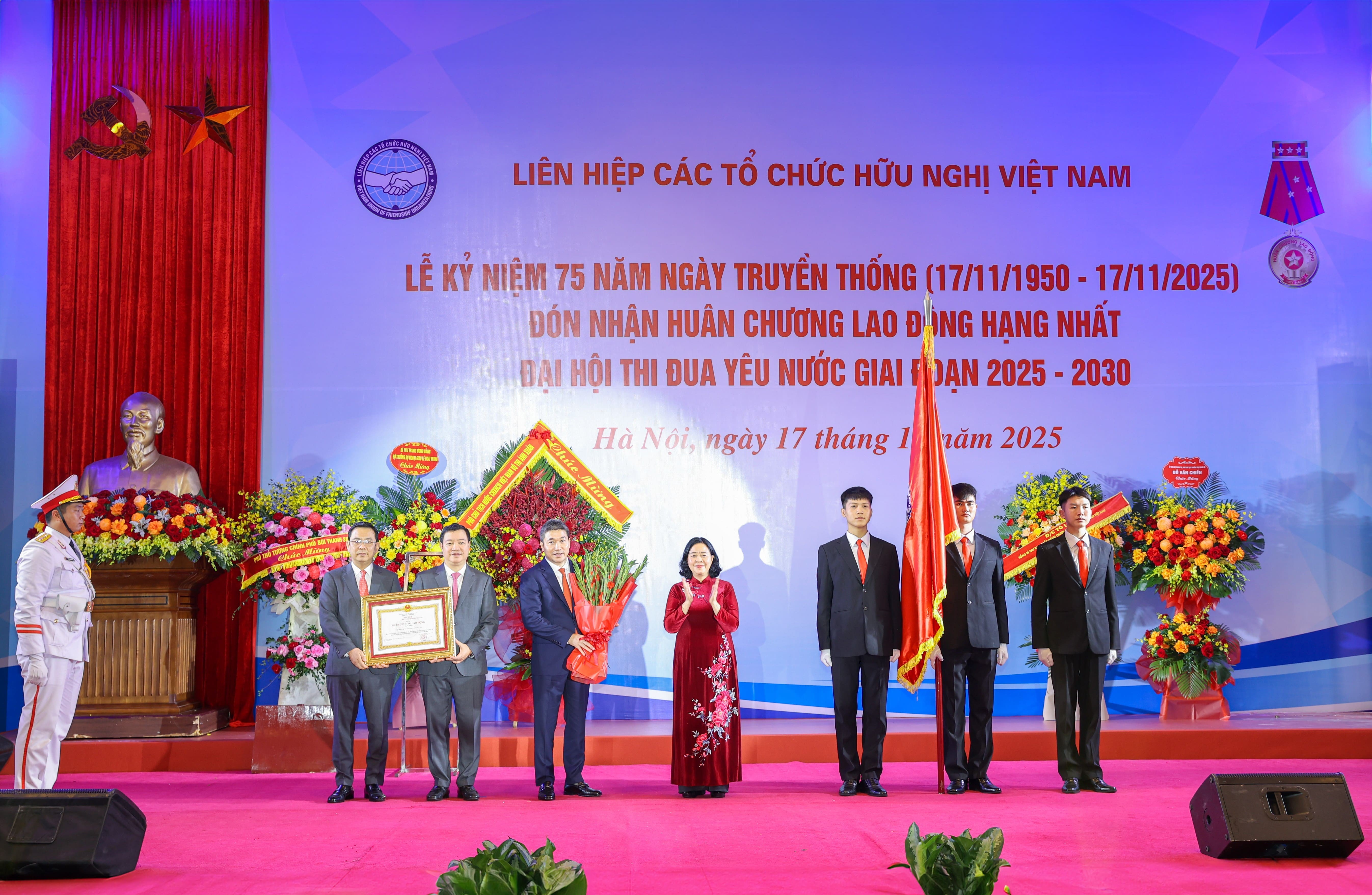 |
| Member of the Politburo, Secretary of the Party Central Committee, Secretary of the Party Committee of the Viet Nam Fatherland Front and Central mass organizations, and President of the Central Committee of the Viet Nam Fatherland Front Bui Thi Minh Hoai, on behalf of the Party and State leadership, presents the First-Class Labor Order to the Viet Nam Union of Friendship Organizations, November 17, 2025, in Hanoi. (Photo: Dinh Hoa) |
In that spirit, several key tasks must be implemented in a coordinated manner:
First, to reposition the role of people-to-people diplomacy, including that of the Viet Nam Union of Friendship Organizations, within the national development strategy. Each program and cooperative activity must be directly aligned with the major priorities identified by the 14th National Party Congress: science and technology, innovation, digital transformation, green transition, and the development of high-quality human resources.
Second, to enhance the quality of research, forecasting, and strategic advisory work. This includes establishing mechanisms to monitor and analyze international information; strengthening coordination with research institutions; proactively identifying risks and opportunities at an early stage; and making substantive contributions to policy formulation.
Third, to promote comprehensive digital transformation throughout the system of the Viet Nam Union of Friendship Organizations; to build partner databases; to digitize management processes; to enhance international communications capacity; and to proactively maintain a positive presence in the digital space.
Fourth, to develop a team of officials with firm political resolve, global thinking, and technological competence; to invest in foreign language training, digital skills, and international dialogue skills; and to create conditions for young officials to mature through practical experience.
Fifth, to strengthen close coordination with Party external relations and State diplomacy, while expanding the participation of localities, enterprises, intellectuals, youth, and overseas Vietnamese communities, thereby forming a broad, substantive, and effective people-to-people diplomatic front.
These are not merely professional requirements, but a political commitment of those engaged in people-to-people diplomacy in response to the country’s new development demands.
A new spring - confidence and aspiration
Spring is always a season of new beginnings and hope. With a 75-year tradition as its foundation, under the leadership of the Party, the State, and the Viet Nam Fatherland Front, and with the determination of the entire system, Viet Nam’s people-to-people diplomacy possesses all the necessary conditions to undertake a strong transformation: changing to elevate capacity, changing to adapt, changing to proactively open new spaces for cooperation, and to reach further in its mission of connecting the people of Viet Nam with peoples around the world.
As we enter the new era ushered in by the 14th National Party Congress, every official engaged in people-to-people diplomacy must carry a spirit of responsibility, resilience, and dedication, so that each bridge of friendship built today will become the foundation for the country’s longer strides in the future.
The Lunar New Year of Binh Ngo 2026 - a Spring of confidence and aspiration to advance further together with the nation.
 | Viet Nam Union of Friendship Organizations: Strong Renewal in New Stage of Development On February 6 in Hanoi, the Viet Nam Union of Friendship Organizations (VUFO) held a meeting with retired officials to celebrate the Spring of the ... |
 | Seminar on “The Scientific Foundations of People-to-People Diplomacy in the World” Within the framework of the national-level research project entitled “Studying people-to-people diplomacy in the world in the new context and proposing solutions for Vietnam,” the ... |
Related Stories
 Focus
Focus
Ambassador Choi Young Sam Awarded “For Peace and Friendship Among Nations” Medal
 Friendship
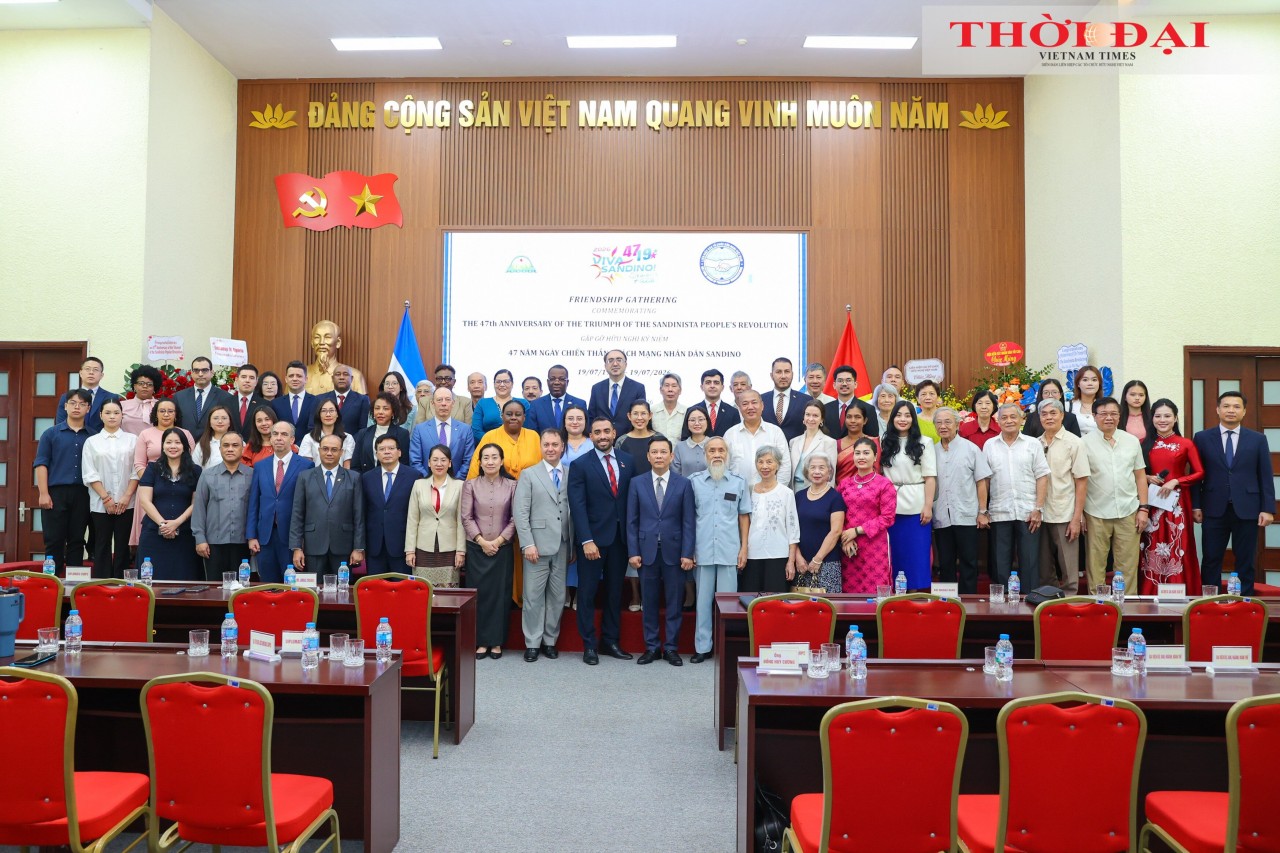
Commemorating 47th Anniversary of Triumph of Sandinista People's Revolution: Expanding Vietnam-Nicaragua People-to-People Exchanges
Recommended
 Friendship
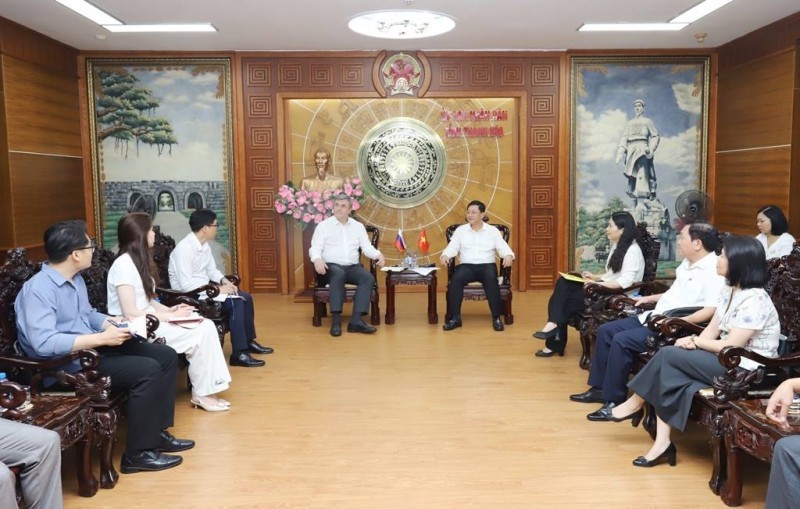
Thanh Hoa and Saint Petersburg (Russia) Strengthen Cooperation
 Friendship
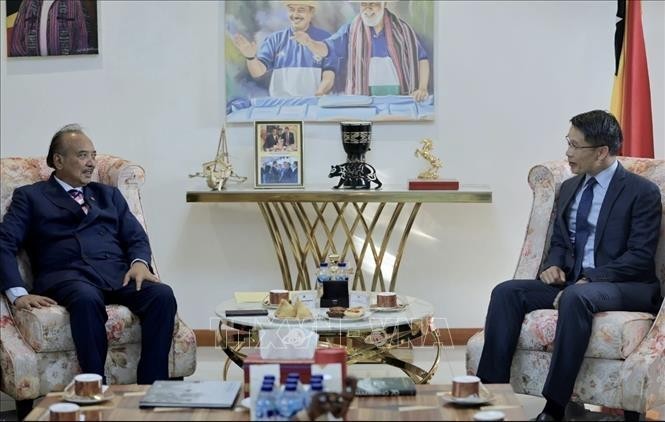
Vietnam and Timor-Leste Promote Cooperation
 Friendship
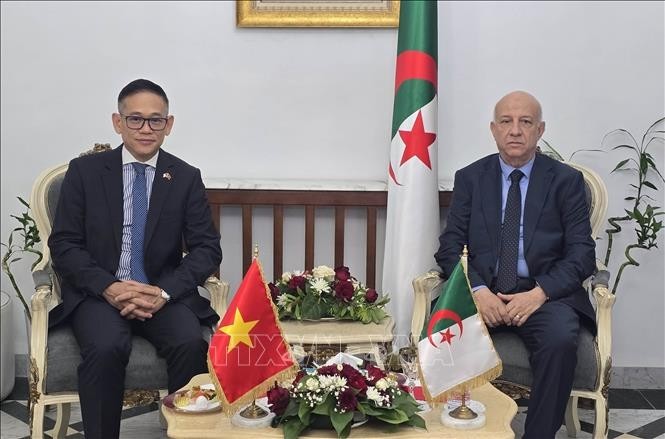
Vietnam, Algeria Strengthen Traditional Ties
 Friendship
Vietnam-Russia Friendship Association of Bac Ninh Expands Network Following Reorganization
 Friendship
Vietnam-Japan Festival 2026 Launched
 Friendship
Vietnam Establishes First Honorary Consulate in Thailand
 Friendship
Vietnam Rescue Mission Returns Home After Venezuela Earthquake Relief Operations
 Friendship