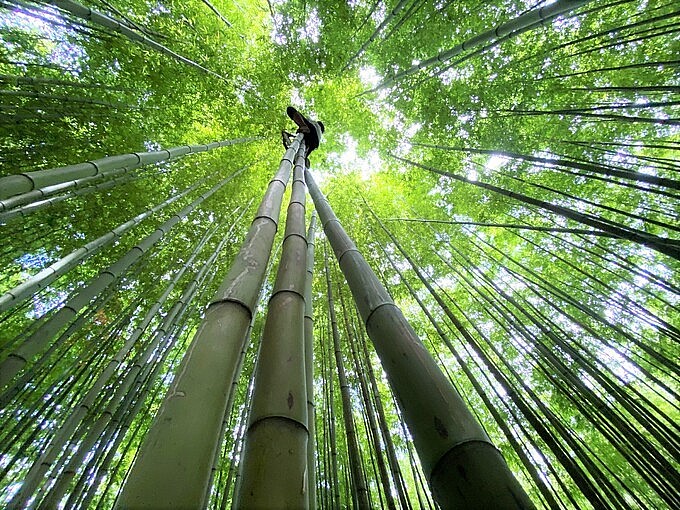
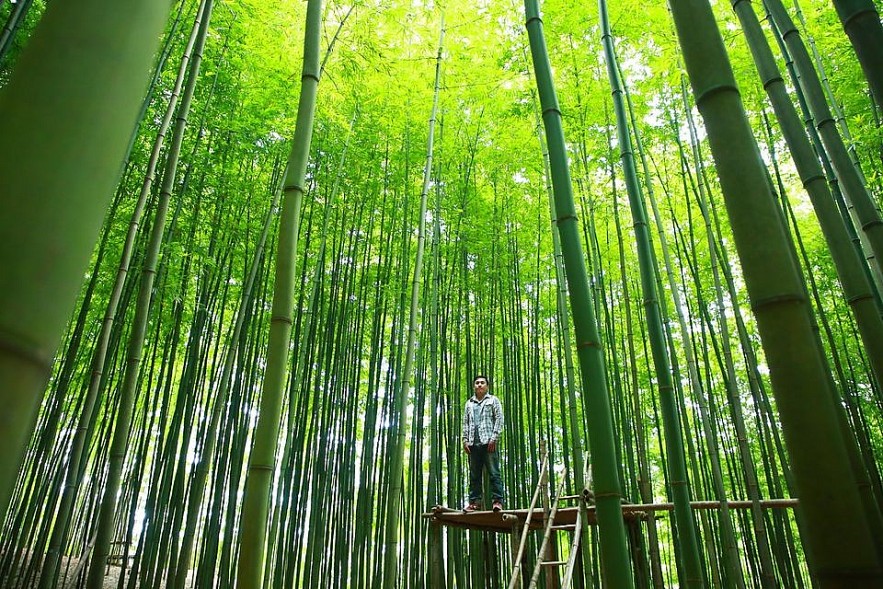
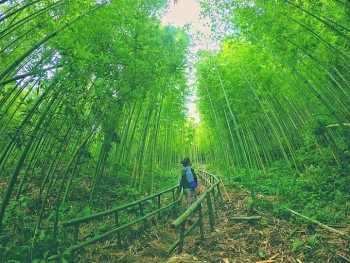
Hundreds of thousands of bamboo trees standing straight. (Photo: VN Express)
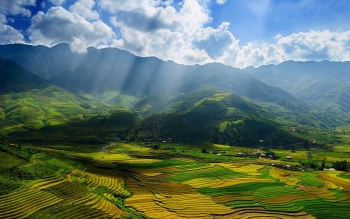
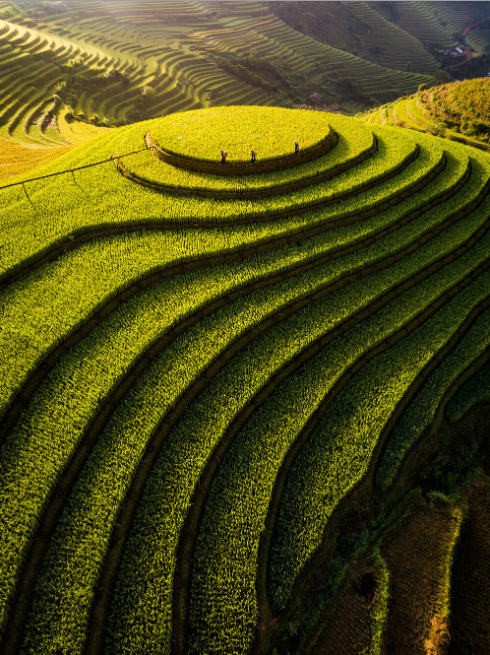
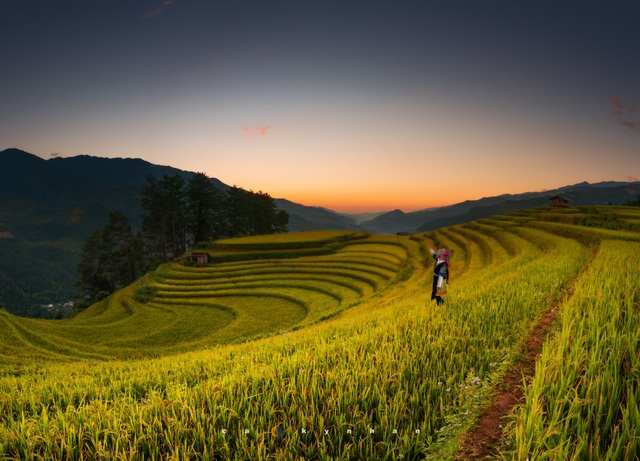
Mu Cang Chai in Yen Bai province has long been known as the paradise of terraced fields, a destination that tourists flock to in the harvesting season. But Mu Cang Chai has more than just terraced fields. About 20 km from the town, tourists will find a bamboo forest with hundreds of thousands of trees standing straight like a real-life swordplay movie scene.
The bamboo forest located in Na Hang Tua Chu village, Pung Luong commune has existed for more than 60 years, covering an area of more than one hectare. The forest was used to grow bamboo shoots, a village's specialty. From July 2020, intending to introduce local beauty to visitors and create more jobs for the local people, the authority decided to change the forest into a tourism destination. Possessing a pristine and peaceful vibe, the forest quickly becomes a famous check-in site for young people when coming to Mu Cang Chai.
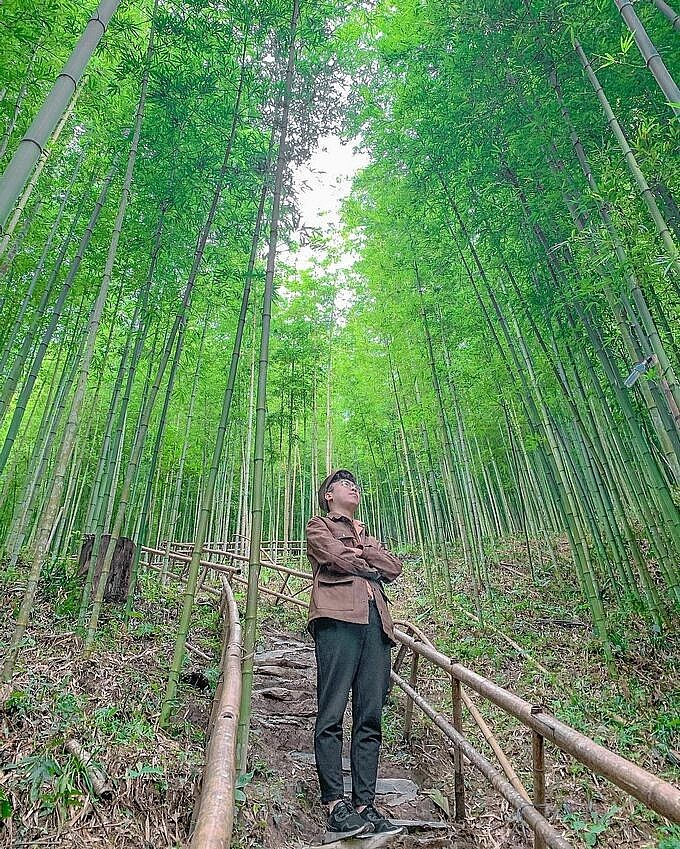
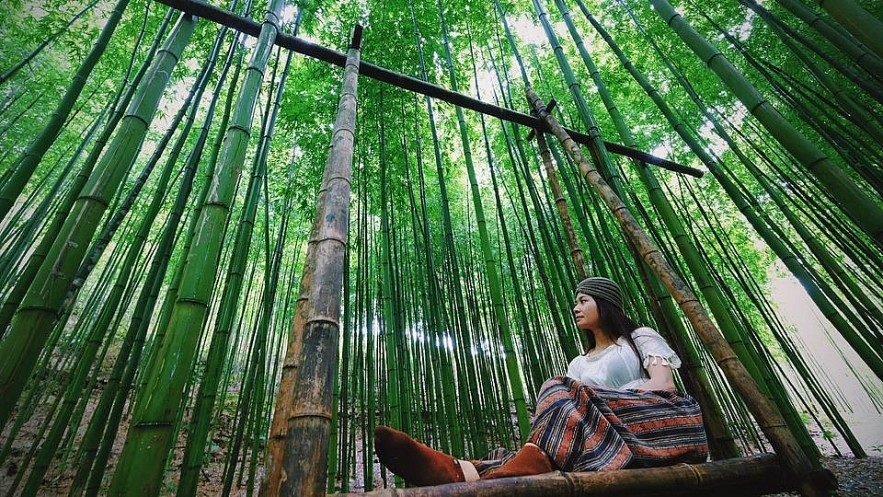
A tourist wanders in the forest. (Photo: VN Express)
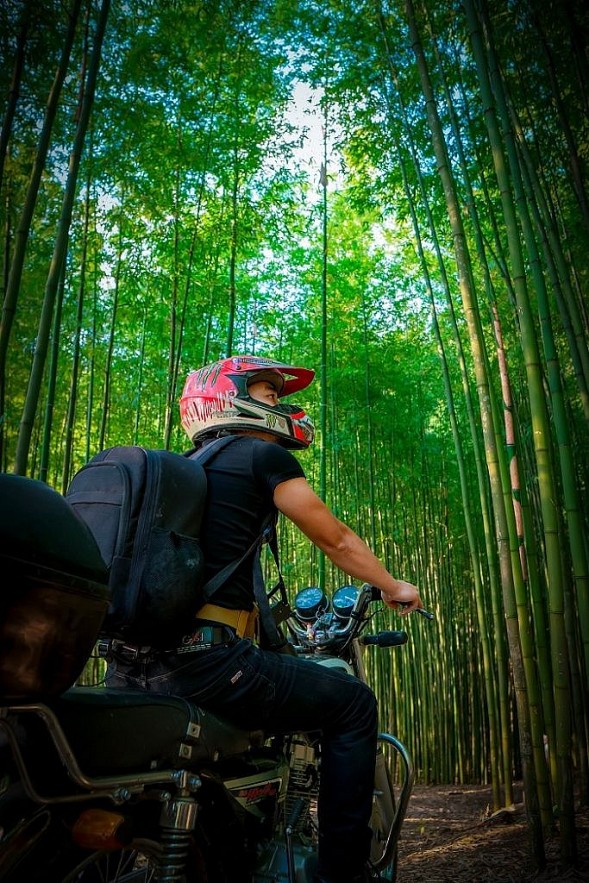
To reach Pu Luong bamboo forest, visitors should hire a local tour guide in the town of Mu Cang Chai. Tourists may have to pay for motorbike taxis, or ‘xe om' in Vietnamese, to reach the destination. Otherwise, adventurous travelers can ride a motorbike to conquer the bumpy roads to the forest. Due to the mountainous terrain, the road to the forest is narrow, bumpy, and rough. Each ticket costs VND 20,000 (US$ 0,8).
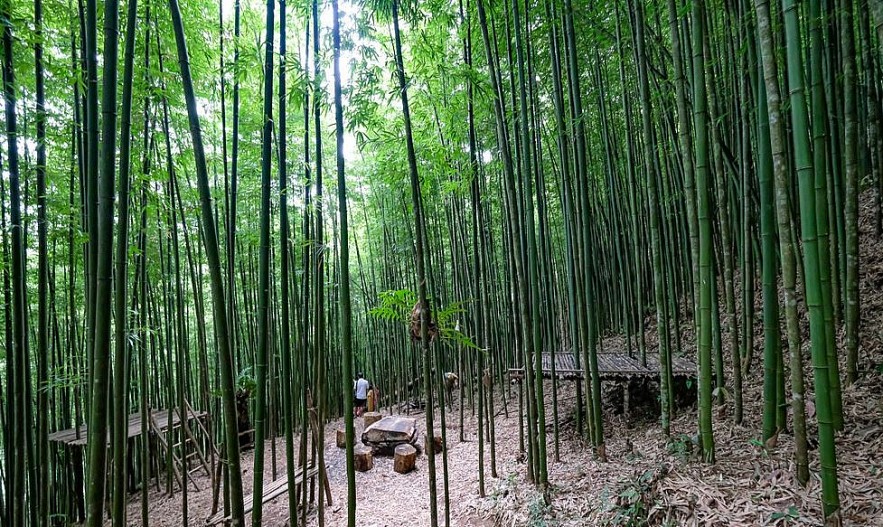
The forest scene is still unspoiled, therefore, visitors should have a sense of preservation. The garden owner has built miniatures with bamboo and leaves for guests to take pictures. The deeper you go into the forest, the more you feel the freshness and coolness of nature. However, you should avoid visiting the forest during rainy days because the road can be muddy and difficult to travel. Locals suggest bringing anti-bugs sprays, food, and water if you want to spend some hours camping in the forest.
The breathtaking bamboo forest, called 'Na Hang Tua Chu,' is located around 20 kilometers from the mountainous township of Mu Cang Chai in Yen Bai Province. (Photo: Tuoi Tre)
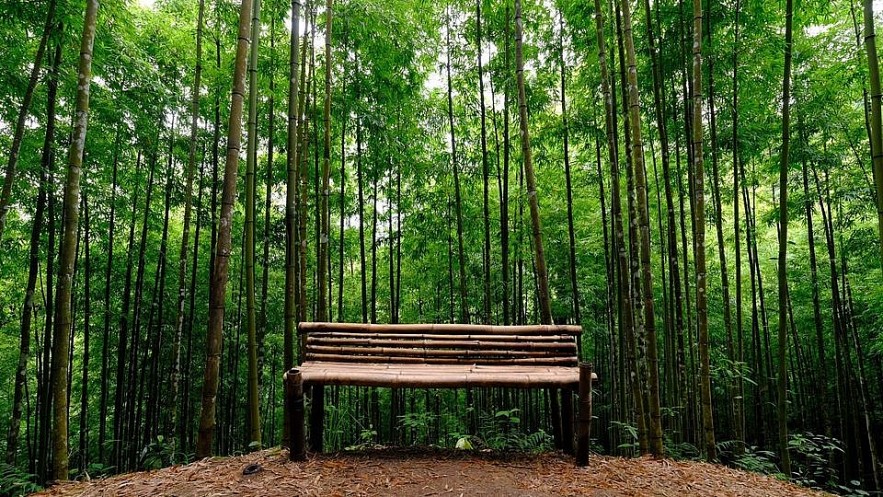
Tourists can bring fast food and snacks there to build a campsite. They are required to clean up garbage before leaving. (Photo: Tuoi Tre)
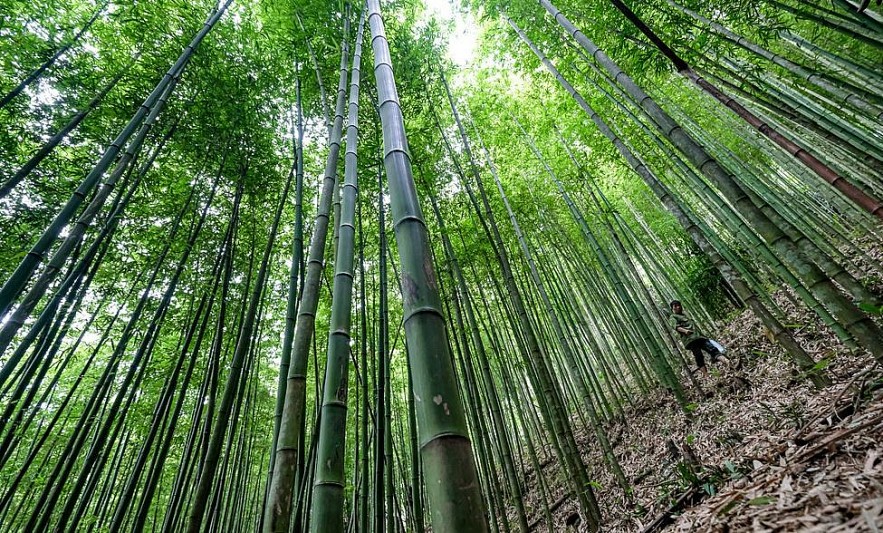
A man is pictured searching for bamboo shoots, a popular specialty that can be harvested in the forest. (Photo: Tuoi Tre)
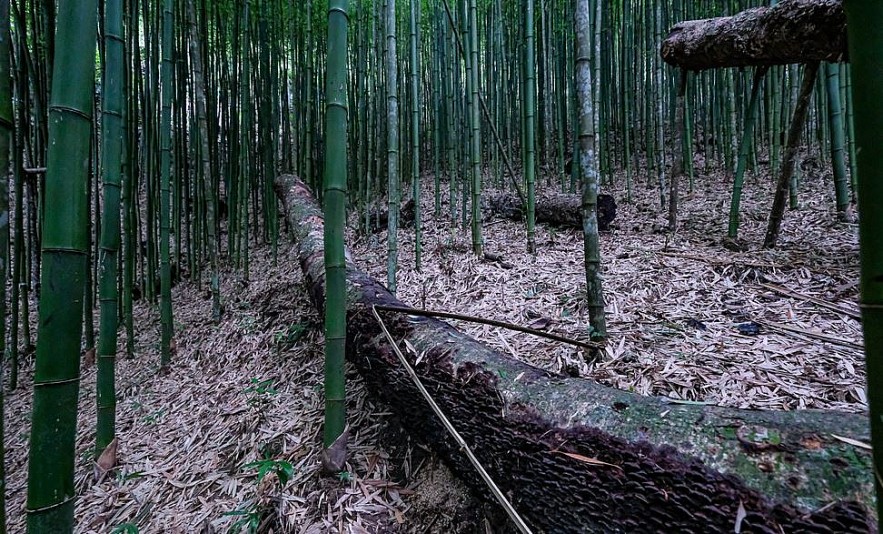
A big trunk in the bamboo forest. (Photo: Tuoi Tre)
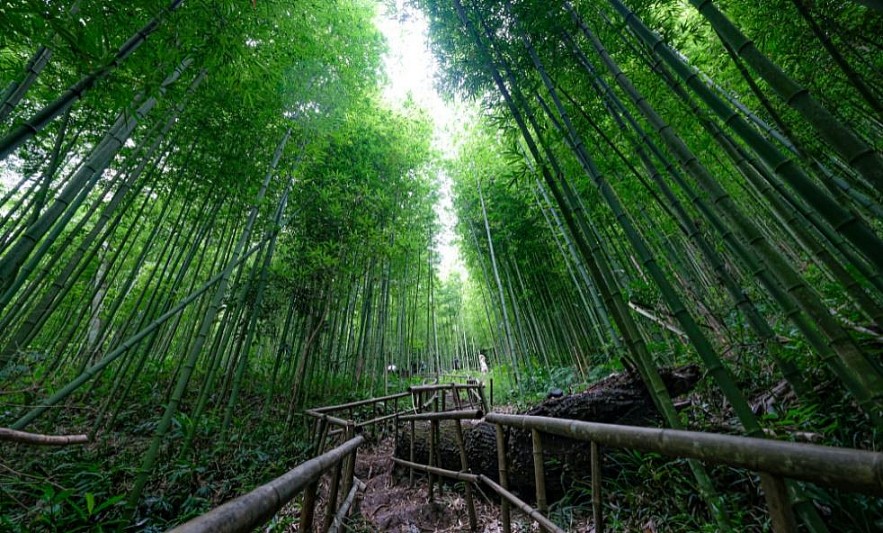
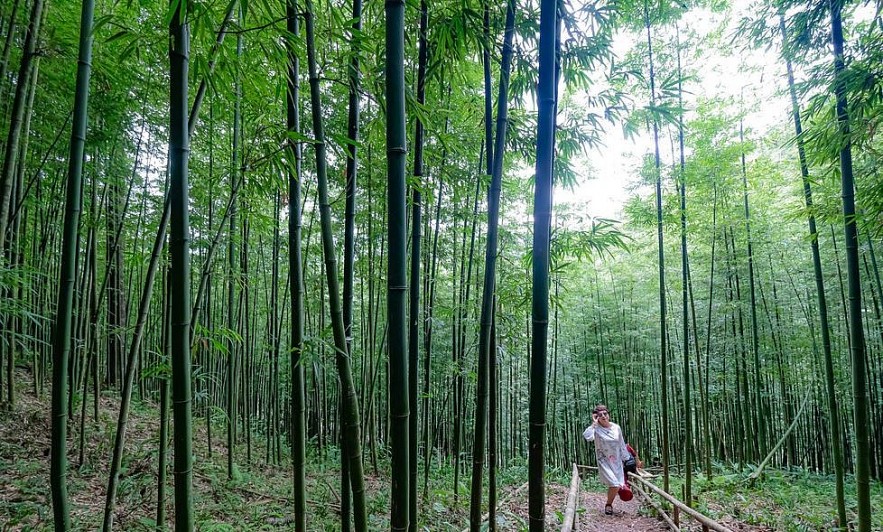
A woman walks on a narrow path lined with bamboo trees. (Photo: Tuoi Tre)
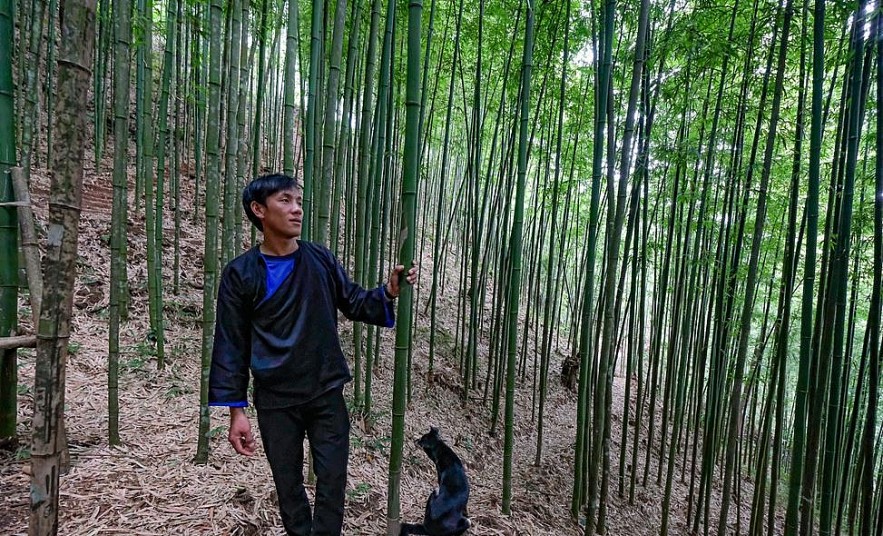
Lu A Tru, 27, owner of the bamboo forest in Na Hang Tua Chu Commune, holds a bamboo tree. He inherited the forest from his grandfather. (Photo: Tuoi Tre)
Leaving the noise of the big city behind, tourists come to the forest to enjoy the peaceful atmosphere. (Photo: WeCheckin)
Since the bamboo forest was opened to tourists in July, it has quickly become a new check-in spot for youngsters from around Vietnam. (Photo: WeCheckin)
Along with the bamboo forest in Pung Luong, visitors can also explore and admire another bamboo forest that is older than that of the bamboo forest in Hang Sung village, Mo De commune. (Photo: WeCheckin)
Hundreds of thousands of straight bamboo trees spread over an area of about one hectare, creating a wonderful space for resting, taking stunning photos, and breathing fresh air. (Photo: WeCheckin)
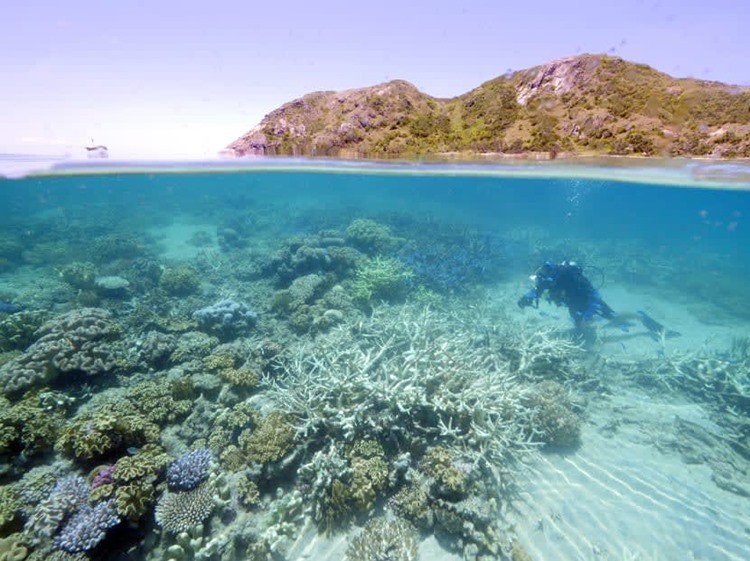
Viet Nam's long coastline and thousands of offshore islands have created ideal conditions for thriving coral reef ecosystems. As summer travel peaks in 2026, destinations including Hon Mun, Cu Lao Cham, Phu Quoc, Vinh Hy, and Con Dao are expected to attract travelers eager to explore vibrant underwater landscapes through snorkeling and scuba diving.
On July 13, the Vietnam Institute of Culture, Arts, Sports and Tourism under the Ministry of Culture, Sports and Tourism held a seminar titled “Cuisine and the development of Vietnam’s tourism”. The seminar gathered managers, experts, researchers, and businesses to recommend solutions to bringing cuisine values into play as a cultural resource, contributing to enhancing competitiveness and creating Vietnam’s tourism brand in the context of international integration.
Ho Chi Minh City orientates tourism development linked to urban economy, night-time economy, culture industry and experience economy, changing from event organizing model to developing event economy model.
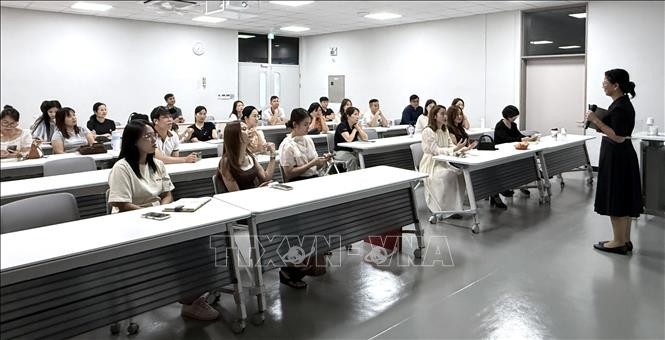
According to a report released by Statistics Korea on July 9, Vietnam ranked first in the number of foreign nationals entering the RoK for long-term stays in 2025, with approximately 98,000 people. Vietnamese citizens accounted for the largest share among foreigners staying in the country for more than 90 days.
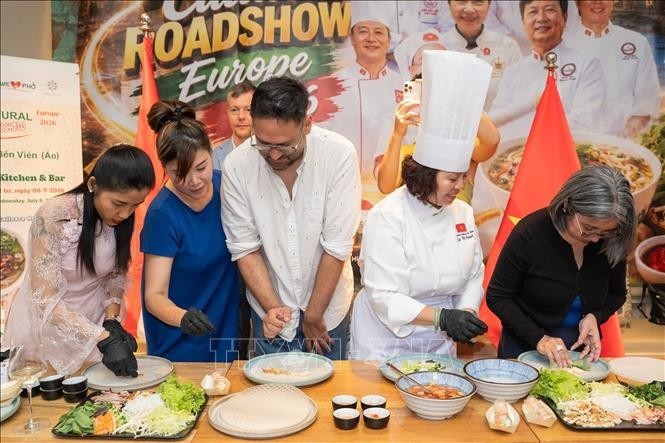
On the evening of July 8, at Pho Saigon Restaurant in Vienna, Austria, the Vietnamese Embassy in Austria, in coordination with the We Love Pho Association, the Ninh Binh Culinary Culture Association, and Vietnamese culinary artisans and experts, organized a program titled “Pho and Culinary Culture: Bringing Vietnamese Identity Closer to Europe and the World.”The event was one of the stops on the Journey of Pho and Vietnamese Culinary Culture Across Europe, contributing to the promotion of Vietnam’s image, people, and cultural values to international friends.
In the first six months of 2026, Vietnam welcomed more than 742,000 Russian visitors, 2.8 times higher than in the same period last year. This strong recovery has made Russia the third-largest source market for Vietnam's tourism industry, behind only China and the Republic of Korea.
In early July, French magazine Biba Magazine published an article stating that Vietnam attracts French travelers not only with its landscapes but also with its diverse and refined cuisine. The magazine introduced a range of dishes and culinary experiences that it considers unmissable when visiting the S-shaped country.
Southeast Asia is considered to be a destination for budget-conscious, mass-market travelers. However, according to Fortune magazine, international experts believe that Vietnam is shifting towards a high-quality tourism development model, targeting higher-spending tourists with longer stays.
Tourism activities in Can Tho have continued to recover strongly during the first months of 2026, maintaining solid growth momentum. This positive transformation has further reinforced tourism's position as a key economic sector and an important driver of the city's overall development.


 Travel
 National
 Travel
 Travel
 Travel
 Travel
 Travel
 Travel
 Travel
 Travel