
Shaping New Milestone for Vietnam-Thailand Comprehensive Strategic Partnership
 | Thai Scholar: Vietnam’s Development Success Is a Model Worth Learning From |
| Vietnam-Thailand Promote Academic Exchange and Joint Research |
On this occasion, Ambassador of the Kingdom of Thailand to Vietnam Urawadee Sriphiromya granted an interview to the press regarding the key highlights of the upcoming official visit to Thailand by the General Secretary and President, as well as the prospects for bilateral relations.
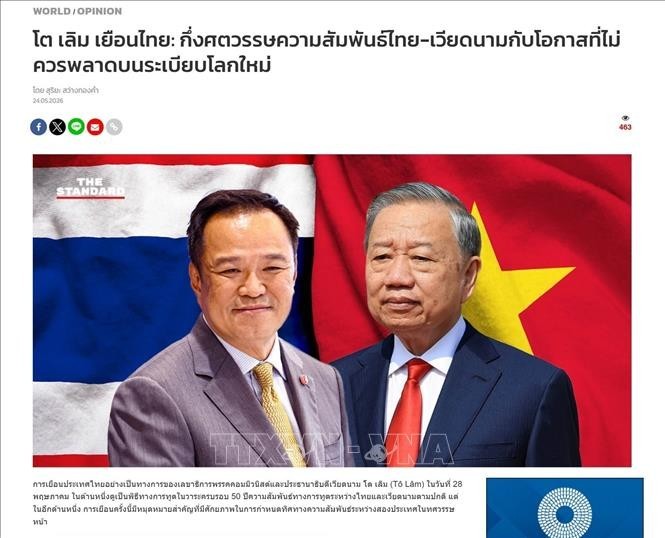 |
| Front page of the article “General Secretary and President To Lam’s visit to Thailand: Half a century of Thailand-Vietnam relations and opportunities not to be missed in the new world order” published by The Standard on May 24. (Photo: VNA) |
Could you elaborate on the significance and special importance of the upcoming official visit to Thailand by General Secretary and President To Lam?
The visit by To Lam, in his capacity as General Secretary of the Communist Party of Vietnam and President, carries great significance. This will be the first official visit to Thailand by Vietnam’s highest-ranking leader following the 14th National Congress of the Communist Party of Vietnam and the consolidation of Vietnam’s new leadership apparatus. Thailand is honored to be the first ASEAN country visited by the General Secretary and President before he continues his tour to other countries in the region.
It has been quite some time since the two countries exchanged visits at the highest level. Therefore, this event is highly anticipated not only by the two governments but also by the peoples of both countries, especially the Thai-Vietnamese community. Taking place in the year marking the 50th anniversary of diplomatic relations between the two nations (1976-2026), the visit profoundly reflects the trust, mutual respect, and close friendship shared by the two countries.
Strategically, the core achievement of the visit will be detailed discussions aimed at adopting the 2026-2031 Plan of Action (POA) to implement the Comprehensive Strategic Partnership framework. This is a comprehensive plan encompassing all areas of cooperation, enabling the two countries to support one another in achieving shared security, peace, and prosperity.
Amid a highly challenging international environment, direct exchanges and consultations between leaders help strengthen mutual trust and facilitate joint responses to issues such as energy security, food security, and transnational crime. We highly appreciate Vietnam’s proactive and active role at multilateral forums, notably its hosting of the signing ceremony for the United Nations Convention against Cybercrime (also known as the Hanoi Convention), its excellent performance as President of the 11th Review Conference of the Treaty on the Non-Proliferation of Nuclear Weapons, as well as its contributions at UNESCO and the United Nations. I am confident that the visit will yield highly successful outcomes.
How do you assess the most outstanding achievements in cooperation between the two countries in recent years?
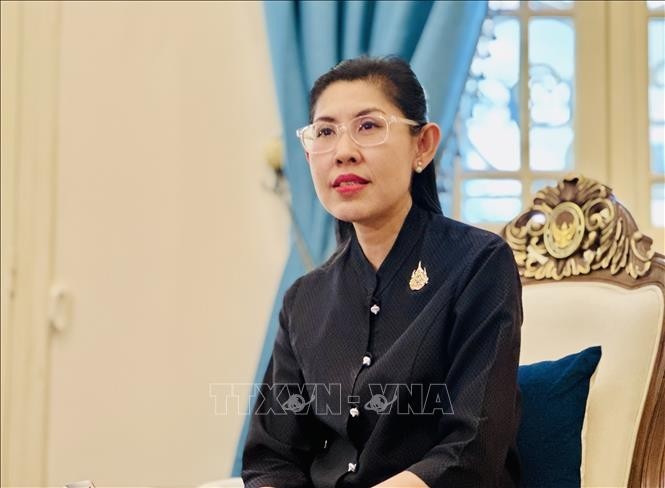 |
| Ambassador of the Kingdom of Thailand to Vietnam Urawadee Sriphiromya during the press interview. (Photo: Viet Duc) |
It can be affirmed that bilateral relations are currently experiencing their strongest development ever and continue to reach new heights year after year. Last year, the two sides agreed to elevate their ties to a Comprehensive Strategic Partnership - the highest level of cooperation that Vietnam establishes with other countries.
Economically, despite global shocks, bilateral trade has continued to grow robustly, surpassing USD 23 billion and moving closer to the target of USD 25 billion. In terms of investment, Thailand has risen from ninth to eighth place among the largest foreign investors in Vietnam. This reflects the strong confidence of the Thai private sector in the Vietnamese Government’s policies aimed at creating a favorable business environment. I have heard many businesses that invested in Vietnam 40 years ago say that they are highly satisfied and believe that relations between the two countries are now closer and more deeply connected than ever before.
Beyond economics, people-to-people exchanges constitute an extremely solid foundation. Tourist flows between the two countries have grown significantly. Last year, Hanoi was one of six capitals selected to host the Thailand Festival for the first time. This year, the event was organized to commemorate the 50th anniversary of diplomatic relations and, within just three days, attracted more than 20,000 visitors to the Hoan Kiem Lake area and the Imperial Citadel of Thang Long, sparking curiosity and admiration among Thai people for this magnificent heritage of Vietnam.
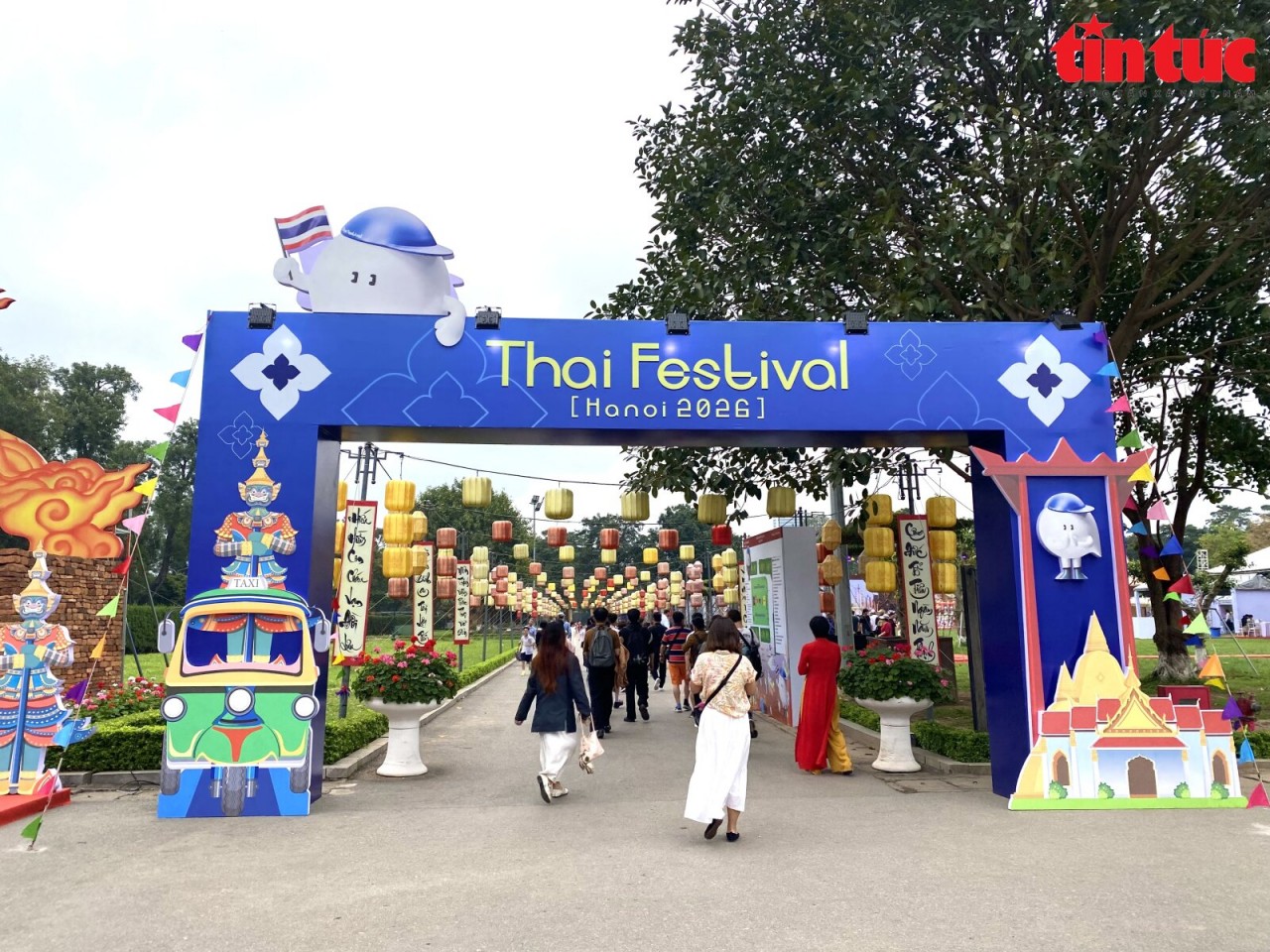 |
| Thai cultural colors stand out at the Imperial Citadel of Thang Long. (Photo: VNA) |
Security and defense cooperation has also recorded an important milestone, as a Royal Thai Navy vessel made a port call to Ho Chi Minh City after an 11-year hiatus to celebrate the 50th anniversary of diplomatic relations, demonstrating the growing strategic trust between the two countries.
In the context of a transforming global economy, what do you see as the new drivers and business opportunities for enterprises from the two countries?
Economic cooperation between the two countries is complementary in nature and is currently being shaped by the “Three Connects” strategy: connecting supply chains, connecting local economies, and connecting sustainable development.
Regarding supply chains, the two countries are moving from traditional mechanical products toward high technology, particularly semiconductors, digital transformation, and XR applications as new growth drivers. This transition is supported by Vietnam’s rapidly developing infrastructure system, from deep-water seaports and the North-South railway to international airports.
In terms of sustainable development, Thai enterprises are investing in the construction of internationally standardized green industrial parks in Vietnam, with synchronized systems ranging from electricity and water supply to waste treatment, to attract foreign green investment flows. In the retail sector, Thai conglomerates are serving as launch pads for Vietnamese agricultural products and goods to penetrate the domestic market, access the Thai market, and be exported to supermarket chains in Europe.
The energy sector also offers substantial opportunities. Thai companies have so far invested approximately USD 3 billion, generating 3,000 MW from solar, thermal, and wind power projects in Vietnam. Most recently, a Thai state-owned enterprise has been exploring the possibility of cooperating with a Japanese partner to develop a coal-fired thermal power project applying advanced green technology in Vietnam.
In addition, we see enormous potential in emerging sectors such as fintech, digital banking, and QR payments. Thailand also wishes to cooperate with Vietnam in the aviation sector, particularly in aircraft maintenance, repair, and overhaul (MRO) services, building on the presence of airlines such as VietJet, which has operated in Thailand for more than 10 years. We will also discuss cooperation in research and training in healthcare and medical services - areas that directly affect people’s quality of life.
At the regional level, what significance does cooperation between Vietnam and Thailand hold for the stability, security, and future of ASEAN?
ASEAN is facing numerous challenges both internally and from major power competition, as well as geopolitical conflicts around the world. Vietnam and Thailand share similar positions: a determination to promote a peaceful, stable, rules-based region, maintain ASEAN unity, and pursue a balanced approach toward major powers in order to keep the region away from conflict and focused on socio-economic development.
In particular, both countries are maritime nations with long coastlines. We are closely coordinating efforts to promote maritime security, ensure freedom of navigation, and uphold international law, including the 1982 United Nations Convention on the Law of the Sea (UNCLOS).
I highly appreciate Vietnam’s initiative in hosting the ASEAN Future Forum (AFF). This is an important initiative that creates a platform for dialogue not only among government agencies but also among scholars, the private sector, political parties, and representatives of ASEAN cities. Connecting networks of smart cities carries highly practical significance, as city leaders are those who directly represent and engage with the people. I believe that, through its ability to host large-scale international events, Vietnam’s capital Hanoi is truly affirming its position as an important “diplomatic hub” of the region.
In the context of increasingly complex climate change, how will the two countries cooperate to address environmental and energy challenges?
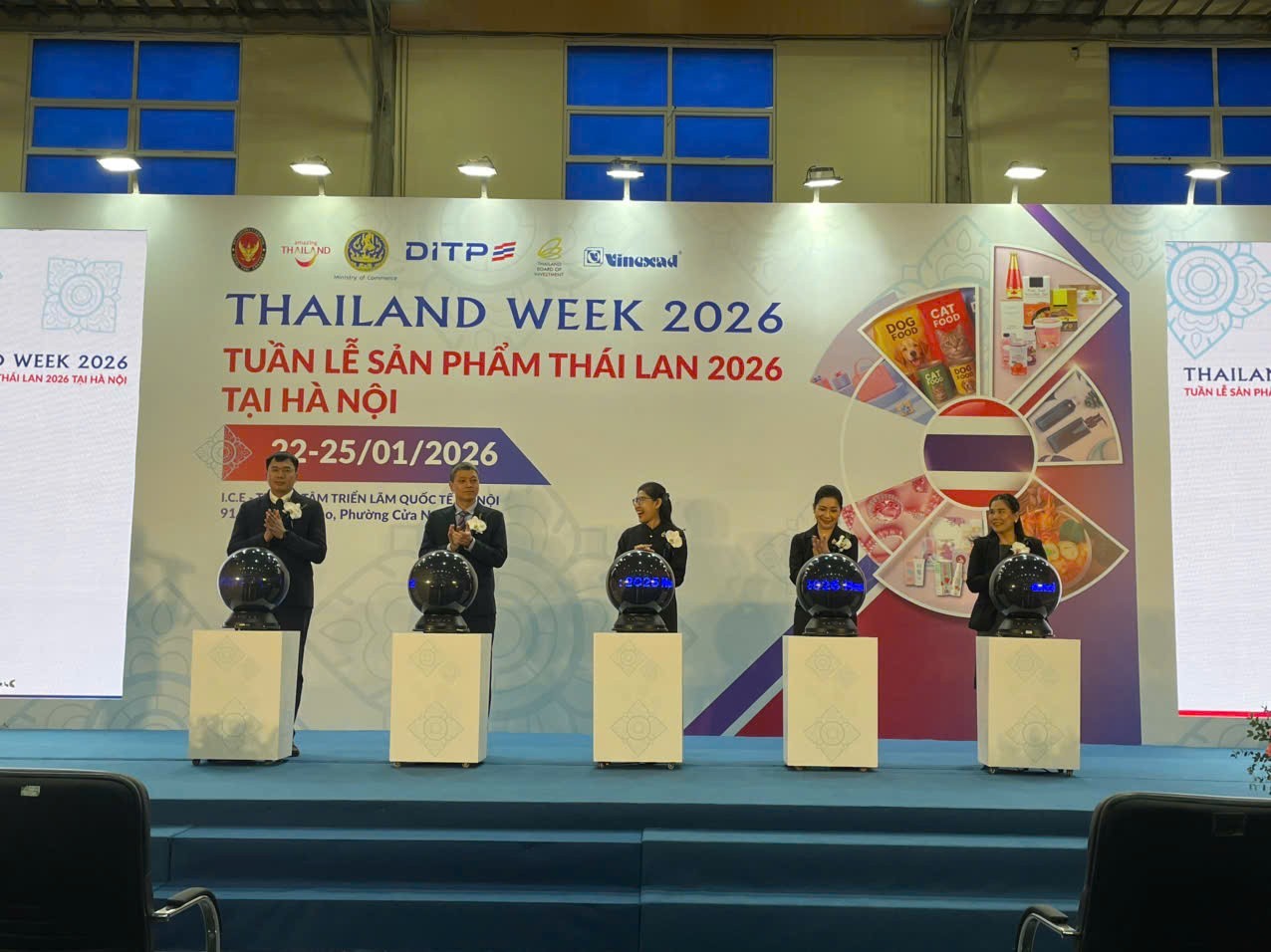 |
| Delegates press the button to launch Thailand Week 2026. (Archive photo: Thu Trang) |
The energy crisis and climate change are two parallel challenges. In terms of energy security, electricity investment cooperation between the two countries can contribute to the ASEAN Power Grid initiative, and the two sides could even establish joint ventures to invest in other ASEAN countries.
Regarding climate change, Vietnam and Thailand are committed to achieving net-zero emissions targets. We are required to gradually phase out harmful industries and transition toward a green economy.
One essential area is water resource management. Under the impact of drought, agricultural economies such as ours will be among the first to suffer. The two countries are closely coordinating through regional mechanisms such as the Lancang-Mekong Cooperation framework and the Mekong River Commission (MRC), of which Vietnam is currently serving as Chair.
At the same time, we also need to further promote smart farming models to increase productivity while preserving resources, as well as coordinate solutions to control transboundary haze caused by forest fires.
The visit by General Secretary and President To Lam will certainly deepen the long-standing and enduring friendship between the two countries and elevate the Vietnam-Thailand Comprehensive Strategic Partnership to new heights, making practical contributions to a resilient and prosperous ASEAN.
Thank you very much!
 | Vietnam, Thailand Celebrate 50 Years of Diplomatic Relations at Nha Rong Wharf The 50th anniversary celebration of diplomatic relations between Vietnam and Thailand took place on May 19 at Nha Rong Wharf, Ho Chi Minh City, featuring ... |
 | General Secretary and President To Lam’s Visit to Thailand: Advancing Trade, Logistics and Supply Chains The official visit to Thailand by General Secretary and President To Lam takes place in the context of Vietnam-Thailand relations having just been elevated to ... |
Related Stories
 National
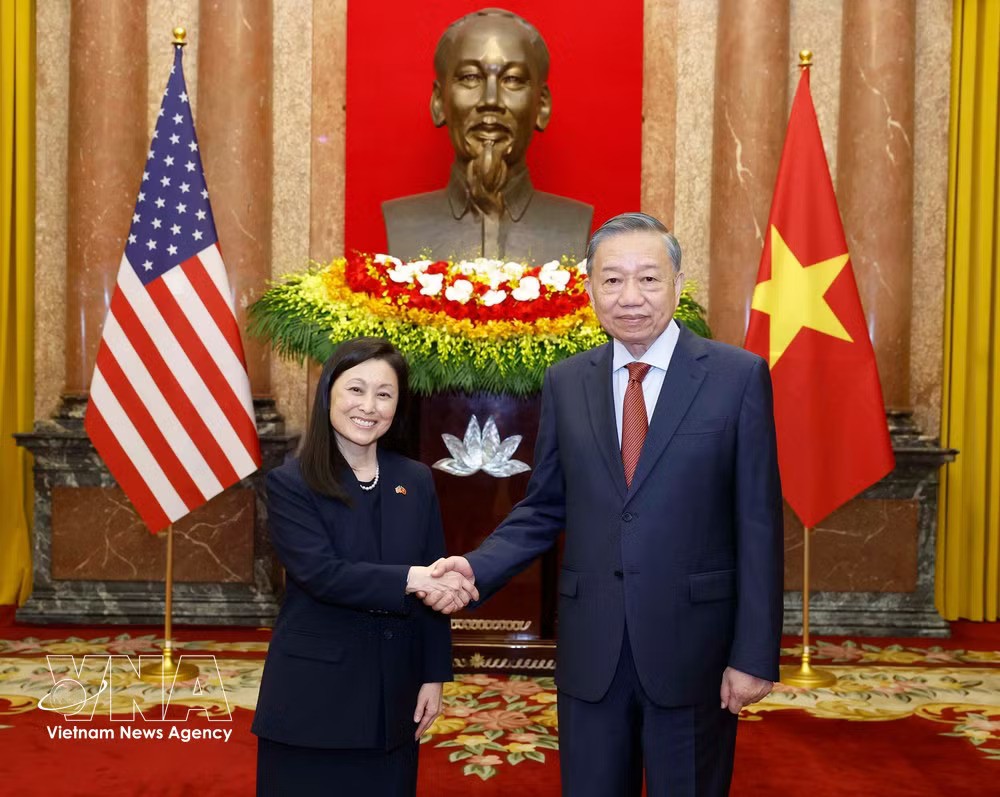
Top Leader Receives Newly Accredited Ambassadors from Portugal, Iran, Mongolia, the US, Myanmar
 National
Top Leader’s Letter Honours Vietnamese Family Values
Recommended
 National
Party Committee of the Viet Nam Fatherland Front and Central Mass Organizations: Accelerate Organizational Streamlining and Digital Transformation in Second Half of Year
 National
Vietnam News Today (July 7): Vietnam, United States Seek to Deepen Comprehensive Strategic Partnership
 National
Quang Tri Spreads Message of Dialogue and Peace from Historic Land
 National
Vietnam News Today (July 6): China-Vietnam Ties Extend Beyond Bilateral Relations
 National
Preparing for APEC 2027: Accelerating Completion of Media Infrastructure to Support International Press
 National
Vietnam News Today (July 5): Vietnam Supports Global Efforts for Energy Efficiency at IEA Conference
 National
Vietnam News Today (July 4): International Tourist Arrivals to Vietnam Rise Nearly 15% in First Half of 2026
 National