
Strongly Innovating People-to-People Diplomacy Toward More Proactive, Enabling, Connected, and Development-Oriented Approach
The session was attended by Tran Cam Tu, Politburo Member and Standing Member of the Party Central Committee Secretariat; Nguyen Thi Hong, Member of the Party Central Committee and Vice Chairwoman of the National Assembly; along with leaders and representatives of central agencies, the Central Committee of the Vietnam Fatherland Front, socio-political organizations, people's organizations, mass associations assigned tasks by the Party and the State, and leaders and representatives of provincial and municipal Party committees.
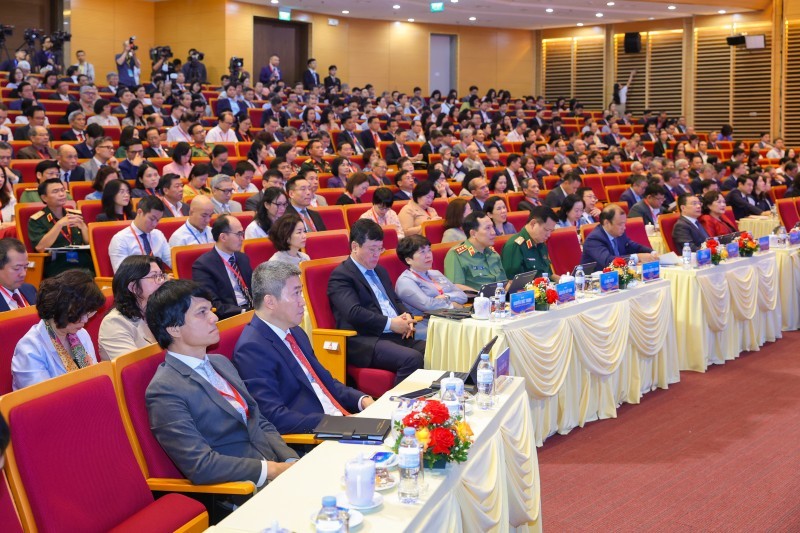 |
| Overview of the plenary session. (Photo: Dinh Hoa) |
Opening the plenary session on Party diplomacy and people-to-people diplomacy, Politburo Member and Minister of Foreign Affairs Le Hoai Trung emphasized that the event provided an opportunity to reaffirm the role of Party diplomacy and people-to-people diplomacy within Vietnam's comprehensive diplomacy, while also reviewing practical developments, identifying emerging issues, and discussing solutions to improve implementation in the coming period. He stressed that the guiding spirit of the session was to “look deeply into reality, accurately identify new requirements, and propose concrete measures that can be translated into action immediately after the Conference.”
The Minister noted that, under the leadership and direction of the Party and State leadership, together with the close coordination of agencies across the political system, Party diplomacy and people-to-people diplomacy have continued to achieve significant results in recent years. In particular, Party diplomacy has provided an important political foundation for expanding and deepening Vietnam's relations with other countries in a more stable, substantive, and sustainable manner, while enabling the country to adapt flexibly to the rapidly evolving and increasingly unpredictable global environment.
Notably, the Party channel has continued to play a vital and decisive role in strengthening the political foundation, guiding, and directing Vietnam's relations with socialist countries and neighboring countries sharing common borders, including China, Laos, Cambodia, Cuba, and the Democratic People's Republic of Korea.
High-level Party diplomatic activities have also helped shape relations with key partners, facilitating the implementation of proactive foreign policy decisions, opening broader opportunities for international cooperation, and enhancing the standing and role of both the Party and the country on the global stage.
According to the Minister, people-to-people diplomacy has continued to uphold Vietnam's tradition of goodwill, flexibility, and sincerity. It has contributed to fostering friendship between the Vietnamese people and people around the world, maintaining networks of international friends, promoting people-to-people and local-level cooperation, and expanding exchanges in culture, education, youth, women's affairs, intellectual engagement, business, overseas Vietnamese affairs, humanitarian activities, and efforts to address the consequences of war. On many issues, the support of international friends and people's organizations has remained a valuable source of encouragement, helping the international community gain a more accurate and closer understanding of Vietnam.
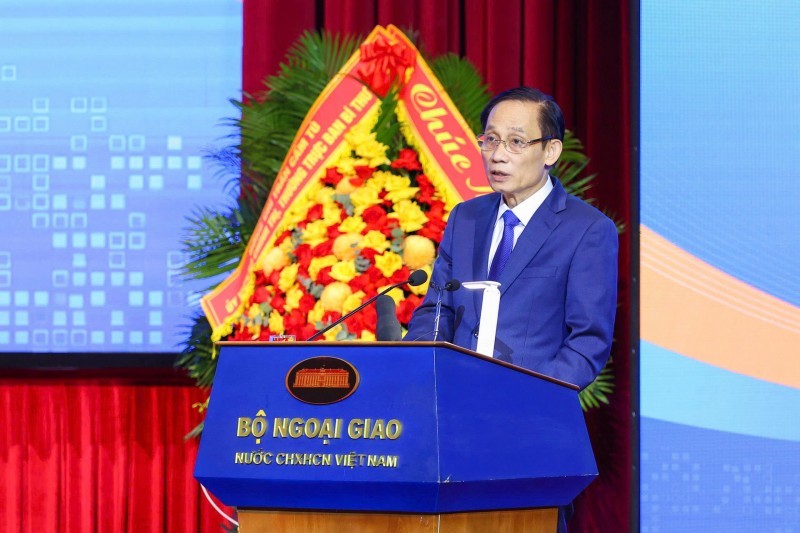 |
| Politburo Member and Minister of Foreign Affairs Le Hoai Trung speaks at the event. (Photo: Dinh Hoa) |
The Minister also acknowledged the efforts of the Party's commissions, the Vietnam Fatherland Front, socio-political organizations, people's organizations, local authorities, and Vietnam's representative missions abroad in carrying out Party diplomacy and people-to-people diplomacy. Following the restructuring of the organizational apparatus, the Ministry of Foreign Affairs promptly assumed its new responsibilities, maintained operational continuity, strengthened coordination with relevant agencies and organizations, ensured that foreign affairs activities were not disrupted, and gradually established a new, well-ordered operational framework.
Addressing the requirements of foreign affairs in the country's new stage of development, the Minister emphasized that amid profound global changes of historic significance, characterized by rapid developments, complexity, instability, and unpredictability, Vietnam has entered a new phase of development with ambitious goals for economic growth, science and technology, innovation, digital transformation, green development, and enhanced national competitiveness. In this context, foreign affairs must continue to play its pioneering and consistently important role in maintaining a peaceful and stable environment, serving development more directly, mobilizing resources for development, and safeguarding the nation from an early stage and from afar.
According to the Minister, this requires a decisive shift from correct awareness to effective implementation, from isolated activities to coordinated action, and from simply establishing connections to delivering concrete and tangible outcomes.
To enhance the effectiveness of foreign affairs in the coming period, the Minister called on participants to focus their discussions on proposing practical and feasible measures to further strengthen the role of Party diplomacy so that it will “truly serve as the political foundation, guide the overall direction of foreign relations, and play the core role in shaping strategic orientations, foreign policy guidelines, and diplomatic directions.” He also called for a strong renewal of people-to-people diplomacy toward a more proactive, enabling, connected, and development-oriented approach; improved coordination among Party diplomacy, State diplomacy, and people-to-people diplomacy; and greater effectiveness of Vietnam's representative missions abroad in research, strategic assessment, the implementation of Party diplomacy and people-to-people diplomacy activities, and promoting stronger connections between Vietnam and the international community.
Leveraging the strength of the three pillars to build a comprehensive and modern diplomacy
In his keynote address, Tran Cam Tu, Standing Member of the Party Central Committee Secretariat, affirmed that the 13th National Party Congress identified the task and direction of Vietnam's foreign affairs as: “Building a comprehensive and modern diplomacy based on three pillars: Party diplomacy, State diplomacy, and people-to-people diplomacy.” He described this as a significant milestone and a new advancement in the thinking underpinning Vietnam's diplomacy.
According to Standing Member of the Party Central Committee Secretariat Tran Cam Tu, throughout different historical periods, the implementation of Vietnam's foreign affairs has consistently involved the full participation and close coordination of all three pillars. Together, they have made important contributions to the struggle for national independence and reunification, national development and defense, the maintenance of a peaceful and stable environment, the safeguarding of national independence, sovereignty, unity, and territorial integrity, the breaking of international embargoes and isolation, the gradual creation of a favorable external environment for national reconstruction, the mobilization of external resources to support development, and the enhancement of the Party's and the country's international standing and prestige.
In recent years, strategic policy advisory work, together with the formulation of foreign policy guidelines, orientations, and decisions on major foreign affairs issues, has become increasingly effective.
Regarding Party diplomacy, Vietnam has achieved important breakthroughs in expanding and deepening its external relations. It has reaffirmed its important and decisive role in consolidating the political foundation and guiding and directing state-to-state relations with other countries. International partners have also gained a more comprehensive understanding of the Party's leadership role and governance approach, while demonstrating greater respect for Vietnam's political system.
People-to-people diplomacy has also undergone positive changes in terms of strategic thinking, content, and methods of operation. Its network of partners has continued to expand, while participation in regional and international people-to-people mechanisms has become more proactive and substantive. Foreign information work, public outreach, international resource mobilization for development, and the promotion of Vietnam's image and people have continued to achieve significant results, helping strengthen the social foundation and foster a favorable international environment for national development and defense.
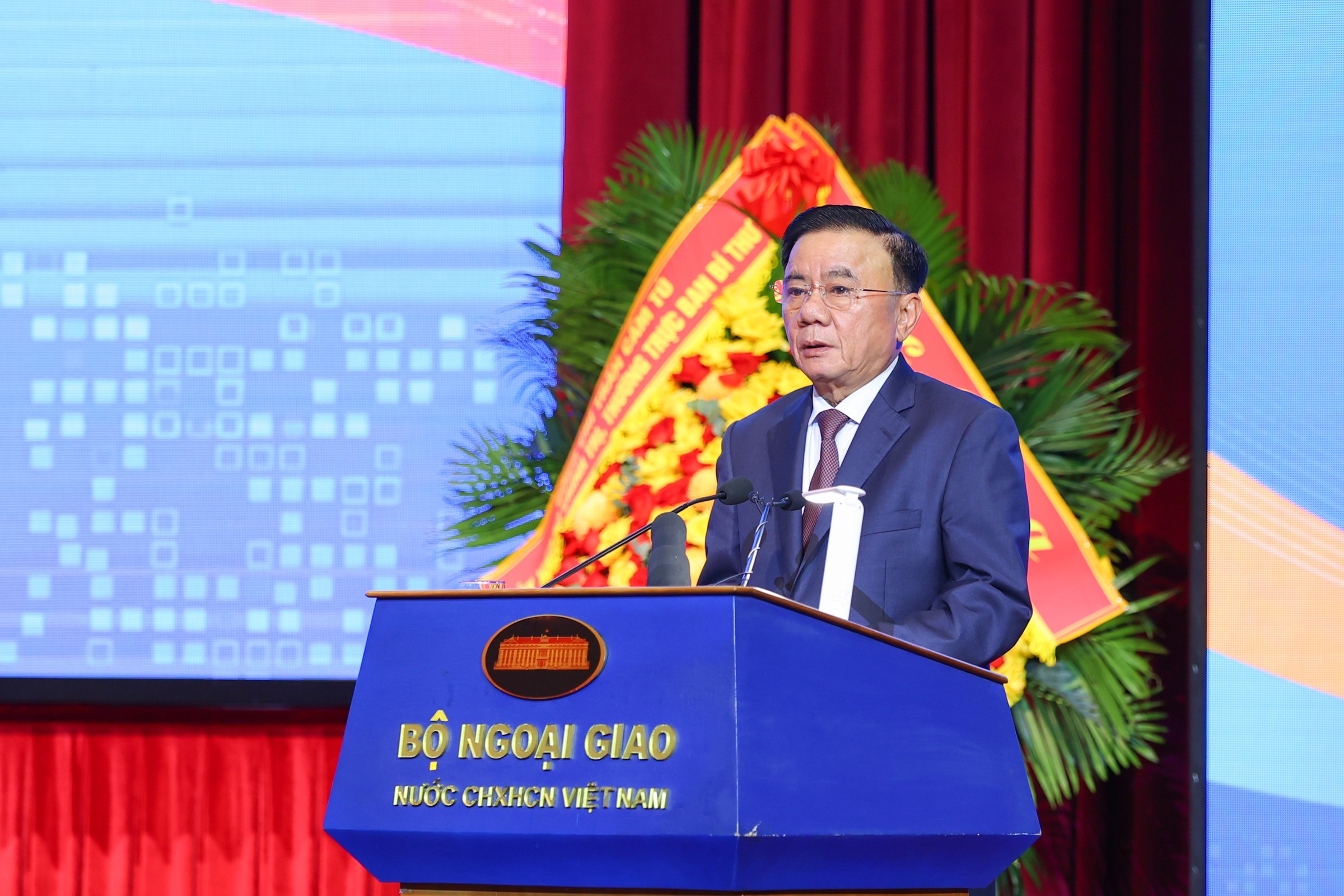 |
| Standing Member of the Party Central Committee Secretariat Tran Cam Tu speaks at the event. (Photo: Dinh Hoa) |
“These achievements have been made possible thanks to the sound, visionary, consistent, and close leadership of the Party Central Committee, directly the Politburo, the Secretariat, and the General Secretary and State President, as well as the proactive and flexible governance of the State and the active engagement and implementation by all levels, sectors, and localities, particularly the diplomatic sector,” Tran Cam Tu emphasized.
He expressed confidence that, building on the diplomatic sector's proud tradition, strong political resolve, intellectual capacity, spirit of solidarity, innovation, and aspiration to contribute, Vietnam's foreign affairs forces will continue to play a central role, work in close coordination, and generate the collective strength of a comprehensive and modern diplomacy. This, he said, would contribute to the successful implementation of the Resolution of the 14th National Party Congress and further advance the country's development while continuously strengthening its position, role, and prestige in the international arena.
Held within the framework of the 33rd Diplomatic Conference, the plenary session on Party diplomacy and people-to-people diplomacy focused on clarifying the need to harness the combined strength of the three pillars of foreign affairs during the implementation of the Resolution of the 14th National Party Congress. Participants reaffirmed the strategic guiding role of Party diplomacy and the soft power of people-to-people diplomacy in maintaining a peaceful and stable environment, expanding development opportunities, and enhancing Vietnam's international standing.
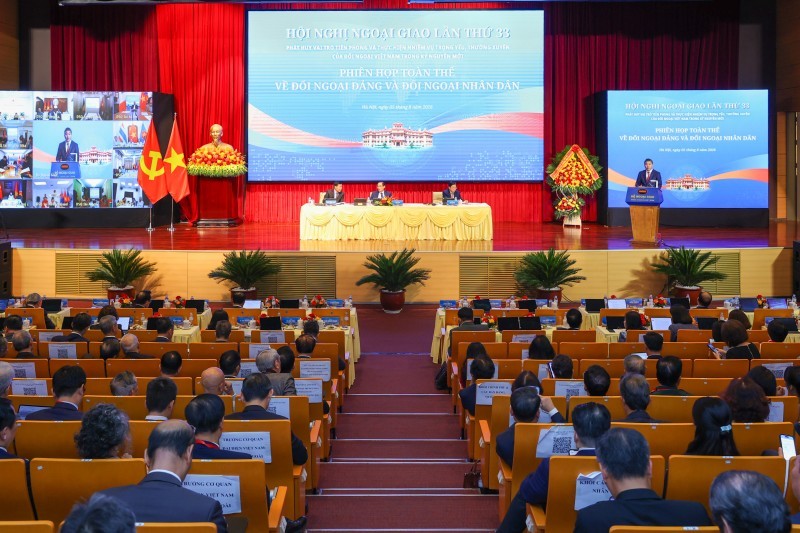 |
| Dr. Phan Anh Son, Secretary of the Party Committee, President of the Vietnam Union of Friendship Organizations, and Member of the 16th National Assembly speaks at the event. (Photo: Dinh Hoa) |
Numerous presentations shared practical experiences from localities and agencies. These included the role of the Vietnam Fatherland Front in mobilizing and guiding activities, developing personnel, and strengthening coordination among people-to-people diplomacy forces; the efforts of the Vietnam Union of Friendship Organizations in building networks of people-to-people partners under the new circumstances; Lang Son Province's experience in developing a “security-development belt” along the border; Hue City's experience in leveraging people-to-people diplomacy to promote Vietnam's image and values and transform cultural and heritage diplomacy into endogenous resources for local socio-economic development; and solutions to expand networks of people-to-people partners while connecting traditional international friends with new partners to strengthen the country's soft power.
Vietnam's representative missions abroad also shared their experiences in implementing Party diplomacy and people-to-people diplomacy in key locations such as China, South Africa, the Democratic People's Republic of Korea, and Argentina. They emphasized the need to strengthen strategic advisory capacity, consolidate political foundations, expand people-to-people exchanges, promote substantive cooperation, and proactively create favorable conditions for Vietnam's development in the evolving international landscape.
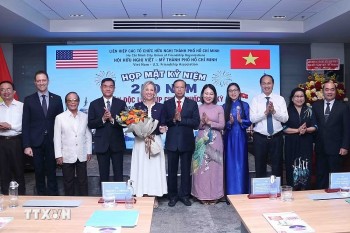 People-to-People Diplomacy Contributes to Deepening Vietnam-US Relations People-to-People Diplomacy Contributes to Deepening Vietnam-US Relations The celebration marking the 250th anniversary of the United States' Independence Day in Ho Chi Minh City reaffirmed the role of people-to-people diplomacy in strengthening mutual understanding, trust, and cooperation between the peoples of Vietnam and the US. |
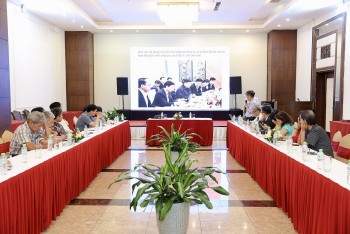 Vietnam-Germany Friendship Association Advances Cooperation Agreement to Strengthen People-to-People Ties Vietnam-Germany Friendship Association Advances Cooperation Agreement to Strengthen People-to-People Ties On July 18 in Quang Tri Province, the Vietnam-Germany Friendship Association held its Executive Committee Conference to review its work during the first six months of 2026 and identify key priorities for the coming time. Among its major objectives are advancing the signing of a cooperation agreement with the German-Vietnamese Association (DVG) and strengthening people-to-people exchanges between Vietnam and Germany. |


Related Stories
 Friendship
Deputy Minister Ho An Phong Elected President of Viet Nam-Belarus Friendship Association for 2026-2031
 Friendship
First Congress of the Dong Thap Union of Friendship Organizations for the 2026-2031 Term
 Friendship
Promoting People-to-People Diplomacy to Build a Solid Foundation Rooted in “the People’s Hearts”
 National
Da Nang Taps Foreign NGO Resources to Promote Green Development
Recommended
 Friendship
American Friends Help Ease the Pain of Agent Orange
 Friendship
65 Years of the Agent Orange Disaster: Dialogue to Spur Action
 Friendship
Aris Alip: The Filipino Friend Who Helped Build the TYM Fund
 Friendship
Viet Nam Union of Friendship Organizations Wins Seven Awards in Party Ideological Foundation Protection Contest
Popular article
 Friendship
Spreading Responsibility for Safeguarding Party’s Ideological Foundation from Viet Nam to International Community
 Friendship
DAFO Launches Activities to Promote Responsible Business Practices
 Friendship
Seoul (Republic of Korea) Expands Employment Support for Vietnamese International Students
 Friendship