
UN and Many Countries Warn of Escalating Conflict Risk in Middle East
 | Vietnam Affirms Commitment to Supporting and Contributing to Implementation of the Two-State Solution |
| Vietnam Welcomes Israel-Hamas Ceasefire, Pledges Support for Gaza Reconstruction |
UN holds emergency meeting, urges de-escalation
According to UN News, on the evening of February 28 (US time, early March 1, Vietnam time), the UN Security Council convened an emergency meeting.
Addressing ambassadors, Secretary-General Antonio Guterres warned that current military actions risk “igniting a chain of events that no one can control in the world’s most volatile region,” stressing that “everything must be done to prevent further escalation.”
Earlier, the UN chief and leaders of its affiliated agencies condemned the coordinated attacks by Israel and the United States on Iran, as well as Tehran’s retaliatory actions against Israel and the Gulf region.
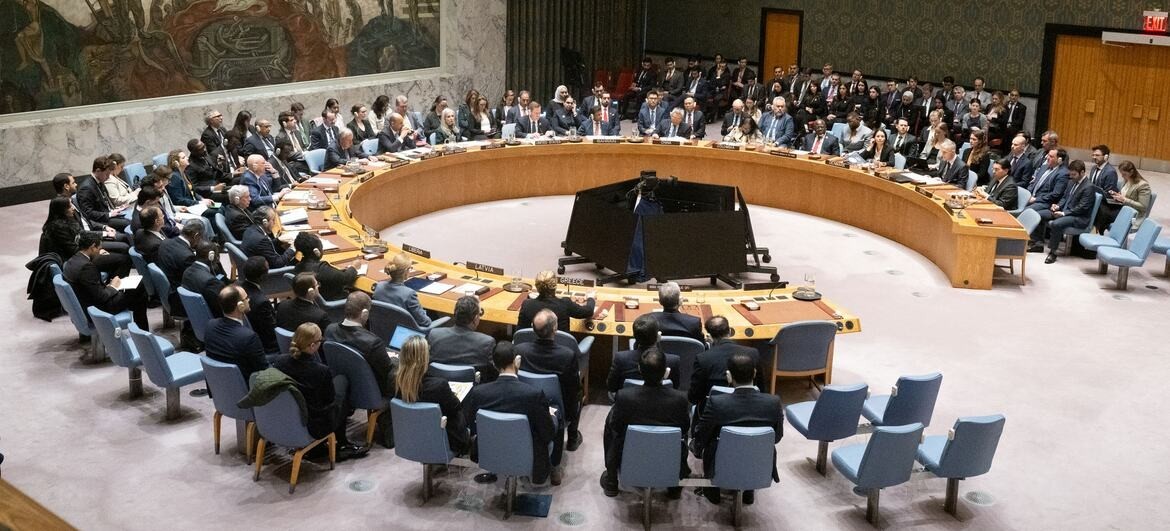 |
| UN Security Council holds an emergency meeting on the unfolding crisis in Iran and the Middle East. (Photo: UN News) |
Guterres emphasized that military escalation undermines international peace and security, urging member states to “respect their obligations under international law, including the UN Charter,” which prohibits “the threat or use of force against the territorial integrity or political independence of any state, or in any other manner inconsistent with the Purposes of the United Nations.” He also called for an immediate cessation of hostilities and de-escalation, warning of the risk of a broader conflict with severe consequences for civilians and regional stability.
UN High Commissioner for Human Rights Volker Turk stressed that in any armed conflict, civilians pay the highest price, calling on all parties to ease tensions and return to the negotiating table.
The Director-General of the World Health Organization expressed deep concern, urging leaders to choose dialogue over “meaningless destruction.”
Calls for political and diplomatic solutions
In a statement on February 28, Russia’s Foreign Ministry said the situation must be resolved immediately through political and diplomatic measures, affirming that Moscow stands ready to support the search for “peaceful solutions based on international law,” balanced interests, and mutual respect.
Russia also called on the international community, including the United Nations and the International Atomic Energy Agency (IAEA), to provide objective assessments of US and Israeli military actions in the Middle East.
In the region, Oman and Kuwait also voiced concern over the risk of a widening conflict.
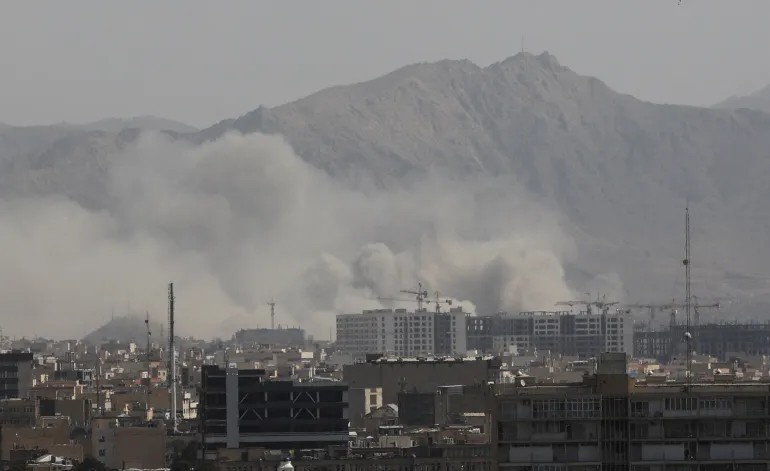 |
| Smoke rises following waves of attacks by Israel and the United States on Tehran (Iran). (Photo: Reuters) |
Oman, which has recently played a mediating role in contacts between the United States and Iran, urged all sides to exercise restraint and avoid being drawn deeper into the spiral of conflict. In a message posted on social media platform X, Oman’s Foreign Minister Badr Albusaidi called for an end to hostilities and expressed regret over the disruption of negotiation efforts.
On the same day, Kuwait’s Foreign Ministry addressed Iran’s retaliatory military activities, including targets in Kuwait, affirming the country’s full right to self-defense and its reservation of the right to take all necessary measures to protect its sovereignty and airspace. The ministry also stated that continued military escalation would undermine regional security and stability.
Countries strengthen citizen protection measures
The Republic of Korea’s Foreign Ministry urged relevant parties to make every effort to ease tensions, adding that it is closely monitoring the situation and taking necessary measures to ensure the safety of South Korean citizens in Iran.
Singapore advised its citizens in the Middle East to remain vigilant, stay updated, and follow local authorities’ guidance. On Facebook the same day, Yip Hon Weng, Chair of the Government Parliamentary Committee on Defence and Foreign Affairs in Singapore’s Parliament, expressed “deep concern” over coordinated attacks by Israel and the United States on Iranian targets, noting that the latest developments show tensions could escalate rapidly.
Indonesian President Prabowo Subianto declared readiness to mediate between Washington and Tehran following US airstrikes on Iran. Indonesia’s Foreign Ministry stressed: “Indonesia calls on all parties to exercise restraint and prioritize dialogue and diplomacy. The Indonesian Government stands ready to facilitate dialogue to restore favorable security conditions. If agreed by both sides, the Indonesian President is prepared to travel to Tehran to undertake a mediating role.”
In Europe, Switzerland called on all parties to respect international law and reduce tensions in the Middle East.
On February 28, UK Prime Minister Keir Starmer chaired a meeting of the Emergency Response Committee (Cobra) to consider appropriate measures. According to UK government sources, London did not participate in the initial airstrikes early that morning. However, the UK deployed Royal Air Force Typhoon fighter jets to Qatar to protect Al Udeid Air Base and allied military facilities in the region.
The UK government advised its citizens residing in Bahrain, Kuwait, Qatar, and the UAE to shelter in place and warned against any travel to Israel and the Palestinian territories. In an official statement, London reaffirmed its support for a negotiated solution to the Iran nuclear issue.
The German government also planned to convene an emergency meeting of its crisis management mechanism at midday on February 28 (local time) to discuss the situation in Iran and the region. Berlin urged its citizens in Iran, Israel, and neighboring countries to register with diplomatic missions and follow local authorities’ guidance on necessary measures to ensure personal safety.
 | Vietnam Upholds Trust-Building Measures to Prevent Conflicts The Vietnamese diplomat stressed the importance of mutual trust and understanding between UN peacekeeping missions and local governments and peoples to build post-conflict peace. |
 | Only two-state solution between both sides will deliver enduring peace: India on Gaza conflict "Only a Two-State solution, achieved through direct and meaningful negotiations between both sides on final status issues, will deliver an enduring peace. India is committed ... |







Related Stories
 National
Vietnam News Today (Jun. 17): Vietnam Promotes Int’l Cooperation on Ocean Governance at United Nations
 Viet's Home
Vietnam Successfully Fulfills Role as President of 11th Review Conference of Treaty on Non-Proliferation of Nuclear Weapons
 Viet's Home
Vietnam Seeks Early and Effective Implementation of Hanoi Convention
 National
Vietnam News Today (Apr. 30): UN Official Praises Vietnam’s Preparations for 11th NPT Review Conference
Recommended
 World
World
Venezuela Declares Seven Days of National Mourning for Earthquake Victims
 World
World
Europe Faces Historic Heatwave, More Than 1,000 Deaths Reported
 World
World
Myanmar Destroys Over 50 Tons of Drugs on International Anti-Drug Day
 World
World
French Adventurer to Cycle 19,000 km to Vietnam, Taking on 14 of Asia and Europe's Highest Passes
Popular article
 World
World
UN Calls for International Support for Victims of Venezuela Earthquake
 World
World
Why Trust, Not Trade, Will Determine the Success of the India–EU FTA
 World
World
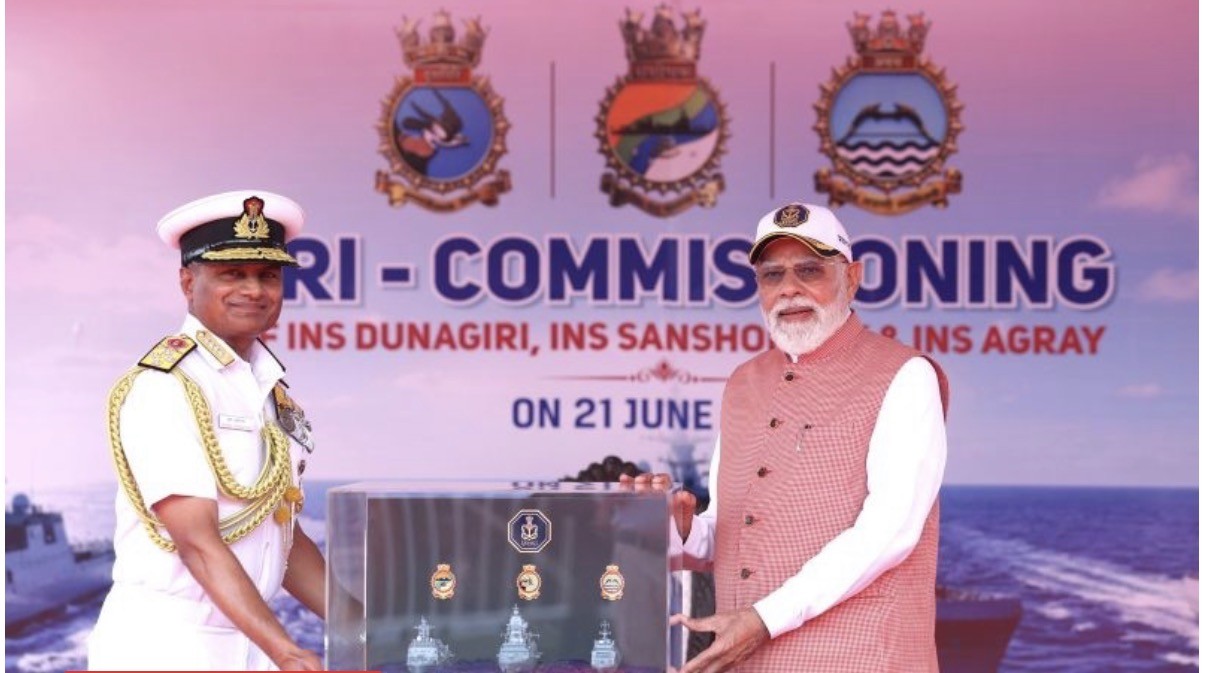
India’s naval might gets a massive boost as Modi unveils 3 indigenous vessels
 World
World