
Vietnam Introduces New Rules for Foreigners’ Entry and Residence
| Foreigners Satisfied with Cost of Living in Vietnam Tearful Goodbye: German Tourist Captures Heartfelt Moment Departing Vietnam |
New preferential visa policies to facilitate the attraction of high-quality human resources
One of the notable changes is the introduction of two new visa categories, UĐ1 and UĐ2. Accordingly, UĐ1 visas are issued to foreigners who are high-quality digital technology industry personnel and to other individuals eligible for preferential treatment under laws and resolutions of the National Assembly and resolutions of the National Assembly Standing Committee. UĐ2 visas are issued to the spouses and children under 18 years of age of foreigners holding UĐ1 visas. Visas bearing the codes LS, ĐT1, ĐT2, UĐ1 and UĐ2 are valid for no more than five years.
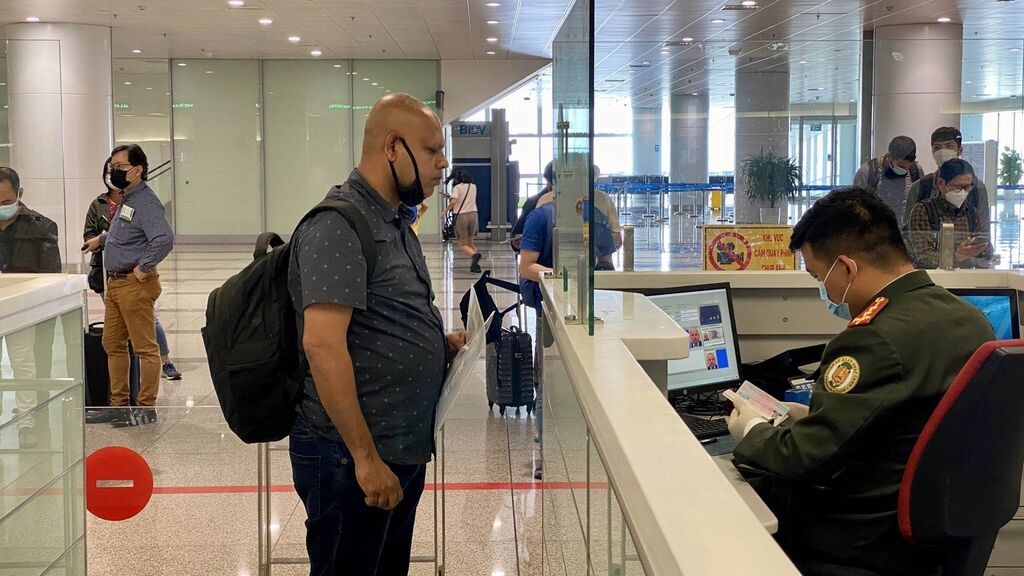 |
| The new regulations focus on improving visa policies, facilitating entry into and residence in Vietnam for foreigners, accelerating digital transformation, reducing administrative procedures. |
Along with the introduction of the new visa categories, the Law expands the groups of foreigners eligible for consideration for temporary residence cards, adding holders of UĐ1 and UĐ2 visas. Notably, temporary residence cards bearing the codes ĐT1, UĐ1 and UĐ2 are valid for no more than 10 years. This provision creates more favorable conditions for eligible preferential groups of personnel and experts, as well as their family members, to establish stable, long-term residence and employment in Vietnam.
The Law also adds a provision allowing foreigners falling within specially prioritized groups whose presence serves socio-economic development to be granted temporary visa exemptions, provided that national defense, national security, and social order and safety are ensured in accordance with Government regulations. This provides an important legal basis for implementing more flexible policies to attract high-quality human resources and international resources for national development.
Improving regulations on temporary residence, permanent residence, and sponsorship of foreigners
Law No. 118/2025/QH15 continues to address a number of issues arising in the practical management of foreigners' residence. Under the new regulations, where a treaty to which Vietnam is a party provides a different period of temporary residence, the period of temporary residence shall be granted in accordance with that treaty. This ensures consistency between domestic law and Vietnam's international commitments.
Regarding procedures related to permanent residence cards, the Law simplifies documentation requirements in cases where a card is lost. Accordingly, a foreigner whose permanent residence card has been lost only needs to clearly provide the relevant information in the application form for reissuance of the permanent residence card, instead of having to complete additional procedures or submit documents proving the loss of the card as previously required. At the same time, the Law authorizes the Minister of Public Security to decide cases in which foreigners may complete procedures for the issuance, replacement, or reissuance of permanent residence cards at immigration authorities for diplomatic, national defense, or security reasons, hereby establishing an appropriate mechanism for handling special cases.
Regulations on inviting and sponsoring foreigners have also been expanded to better reflect family relationships. In addition to the cases already provided for by law, Vietnamese citizens who are grandparents and permanently reside in Vietnam may invite and sponsor their foreign grandchildren to enter Vietnam for visits. The new provision facilitates family reunification and visits among families whose members hold different nationalities.
Accelerating digital transformation and reducing paperwork in entry and exit procedures
Another change of direct significance to citizens, businesses, and management authorities is the Law's addition of Article 6a on the exploitation and use of information from national and specialized databases to process administrative procedures.
Accordingly, for documents and information required as part of dossiers for administrative procedures concerning the entry, exit, transit, and residence of foreigners in Vietnam that are already available in national or specialized databases and can be accessed and used by competent authorities, agencies, organizations, and individuals will no longer be required to resubmit such documents or information. This marks an important shift from a management approach heavily reliant on paper documents toward data-based management, helping reduce the time and costs involved in carrying out administrative procedures.
The Law also expands the methods for carrying out procedures for inviting and sponsoring foreigners. Inviting and sponsoring agencies, organizations, and individuals may directly submit applications for visa issuance to immigration authorities; at the same time, where the conditions prescribed by law are met, they may complete the procedures through public postal services or electronically.
 |
| For procedures for agencies and organizations to apply for e-visas, the Law provides for the use of electronic identification accounts, electronic signatures, the National Public Service Portal, or the e-visa issuance portal to submit applications, pay fees, and receive results. |
For procedures for agencies and organizations to apply for e-visas, the Law provides for the use of electronic identification accounts, electronic signatures, the National Public Service Portal, or the e-visa issuance portal to submit applications, pay fees, and receive results. This approach not only facilitates procedures for inviting and sponsoring agencies and organizations, but also helps enhance transparency and the ability to inspect and authenticate information during the processing of applications.
At the same time, the Law abolishes Clauses 6 and 7 of Article 16 of the existing Law, thereby removing provisions that are no longer appropriate in the visa application process. These include the provision concerning payment of fees for notifying applicants of visa issuance, in line with the requirements to modernize information exchange methods and reduce administrative procedure costs.
Updating regulations to align with the new organizational structure
Law No. 118/2025/QH15 also revises the names of various agencies, organizations, and administrative units to ensure consistency with the restructuring of the state apparatus and the two-tier local government model. Regarding the management of foreigners at the local level, the Law stipulates that provincial-level People's Committees shall direct specialized agencies to coordinate in managing the residence of foreigners in their localities.
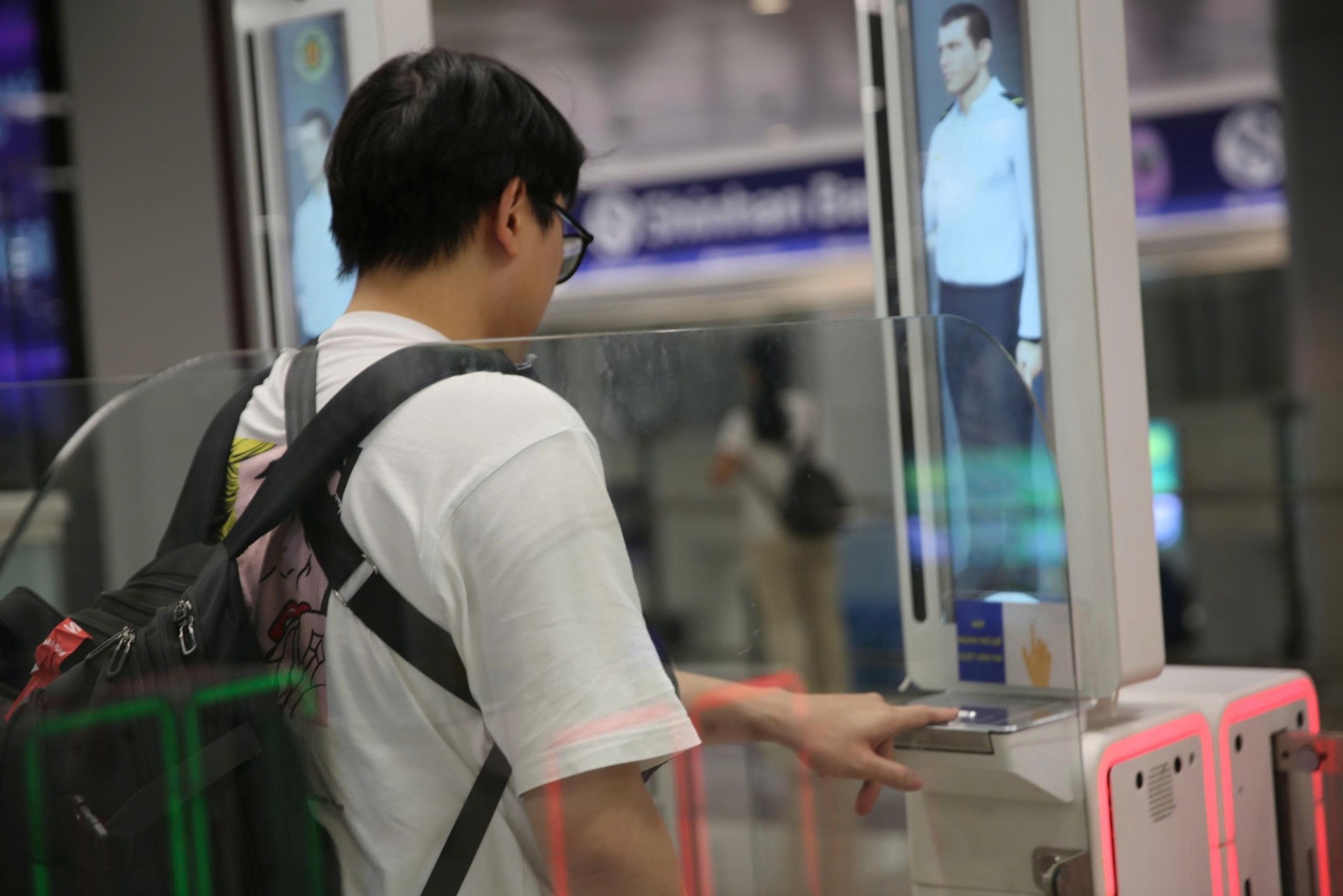
The Law also adds provisions concerning the issuance and use of electronic identification accounts for foreigners, while establishing a basis for foreigners to complete entry and exit procedures through automated control gates. These provisions further promote the application of population data, identification, and electronic authentication in immigration management, laying the foundation for the increasingly widespread provision of online, automated, and more convenient public services.
It can be seen that these amendments and supplements are aimed both at facilitating the entry, residence, and employment of foreigners in Vietnam, particularly high-quality human resources and preferentially treated groups, and at enhancing the effectiveness of state management through digital transformation, data connectivity, and data utilization. Reducing paperwork, expanding online procedures, improving visa policies, and updating the management organizational model will contribute to building an increasingly convenient, transparent, and modern environment for entry and residence, while ensuring strict compliance with requirements concerning national defense, national security, and social order and safety.
 Homebuyers Flock to Southwest Linh Dam, Hanoi Melody Residences Experiences Surge in Customers Homebuyers Flock to Southwest Linh Dam, Hanoi Melody Residences Experiences Surge in Customers Hanoi Melody Residences enhances homebuyer options by launching its 2 bedroom +1 apartments. With the announcement of flexible sales policies, especially the preferential golden policy, the 2-bedroom (BR), 2BR + 1, and 3BR apartments with areas from 68m2 - 145m2 are now totally within reach. |
 Booming Demand for Rare Hanoi Project Featuring 3 Smart Parking Basements Booming Demand for Rare Hanoi Project Featuring 3 Smart Parking Basements Hanoi is in the thirst for parking spaces, with residents often resorting to temporary lots and even parking on sidewalks. This scarcity makes projects like Hanoi Melody Residences, which offer extensive smart parking garages, stand out significantly in the city's new project landscape. |

Most read


Related Stories
 National
Viet Nam News Today (Oct. 14): Vietnam, Cambodia Sign Defense Cooperation Plan for 2027
 Friendship
Happiness in Simple Things
 Vietnamese Culture
My New Home: An Invitation to Visit
 Friendship
Wanting One Year, Finding a Lifetime
Recommended
 Handbook
Hanoi Audiences to Enjoy Six Italian Films for Free
 Handbook
Viet Nam Trade Office in Argentina Promotes Trade and Investment Cooperation with Western Argentine Provinces
 Handbook
SAP-VN Provides Mobile Dental Care in Da Nang for the First Time
 Handbook
Science and Technology Key to Viet Nam’s Sustainable Growth
Popular article
 Handbook
Vietnamese Artists Join International Art Exchange in Bangkok
 Handbook
Hanoi Offers Free Bus and Train Rides for Independence Day Holiday
 Handbook
Many Activities to Celebrate National Day
 Handbook