France takes step toward ratification of EU-Vietnam Investment Protection Agreement
The French Government has submitted to Parliament a bill seeking approval for the ratification of the EU-Vietnam Investment Protection Agreement (EVIPA), marking a new step in bringing the pact into effect.
The bill was presented by the Minister for Europe and Foreign Affairs at Council of Ministers meeting on July 27 before being forwarded to the Parliament for consideration.
Signed in Hanoi on June 30, 2019, the EVIPA aims to strengthen economic relations between Vietnam and the European Union (EU), while enhancing legal protection for investments made by investors from both sides.
The agreement has gained momentum as the EU and France deepen their engagement in the Indo-Pacific region and strengthen their strategic partnership with Vietnam. It complements the EU-Vietnam Free Trade Agreement (EVFTA), which entered into force in August 2020, and further reinforces the Comprehensive Strategic Partnership established between France and Vietnam in October 2024.
According to the French Government, the EVIPA establishes a unified legal framework governing investment protection between Vietnam and EU member states, safeguarding investors' rights while replacing the traditional investor-state arbitration mechanism with a dispute settlement system.
Once it takes effect, the agreement will replace the bilateral investment promotion and protection agreement signed between France and Vietnam in 1992, according to VNA.
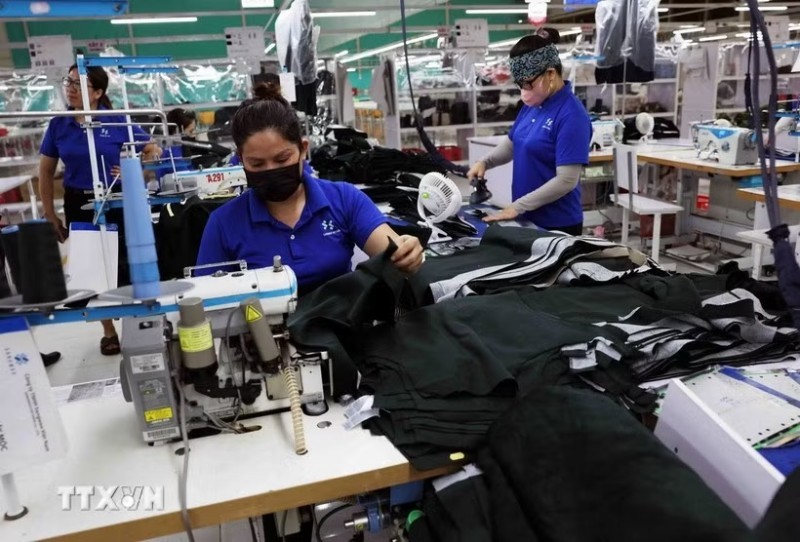 |
| Workers sew garments for export to the European market at the factory of SangWoo Vietnam Co., Ltd. in VSIP Nghe An Industrial Park (Photo: VNA) |
The French Government believes the EVIPA will help strengthen the presence of French businesses in Vietnam amid intensifying global competition. More than 250 French companies are currently operating in the Southeast Asian nation, providing jobs for around 26,000 people across various sectors.
The EVIPA was signed alongside EVFTA in 2019. However, unlike the free trade agreement, it can only enter into force after all EU member states complete their respective domestic ratification procedures in accordance with national legal requirements.
Trade drives growth momentum for Vietnam's economy in seven months
Vietnam's economy posted encouraging results in the first seven months of 2026, with trade remaining a key growth driver.
Total import-export turnover was estimated at 659 billion USD, up 28% year-on-year.
Exports reached 320 billion USD, rising 21.9%, while imports climbed 34.5% to 339 billion USD, reflecting resilient production, trade and international market integration, as well as rising demand for imported machinery and production inputs.
Deputy Minister of Industry and Trade Nguyen Sinh Nhat Tan said Vietnam's total trade may exceed 1 trillion USD in 2026, supported by effective use of new-generation free trade agreements (FTAs).
By July, more than 1.2 million certificates of origin had been issued under FTAs, covering nearly 100 billion USD in exports, or 28% of total export value. Several FTAs recorded preferential tariff utilisation rates of 30–50%.
Industrial production also continued to underpin growth. Many localities posted strong industrial production index, including Quang Ngai at 14.06%, Hai Phong at 15% and Hanoi 9.4%, reported VNA.
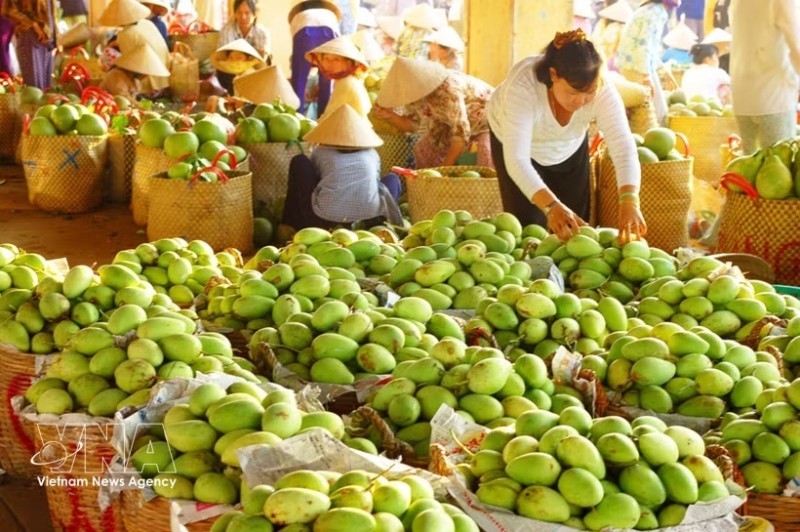 |
| Mango is one of key export products of Dong Thap (Photo: VNA) |
Nationally, GDP grew 7.94% in the first quarter and 8.39% in the second, bringing first-half growth to 8.18%. Although the stronger second-quarter performance signals improving momentum, it remains well below the pace needed to achieve the annual target.
Business confidence also improved. Nearly 169,800 enterprises entered the market in the first six months, up 11.2% year-on-year and exceeding the 151,100 firms that exited. Newly registered capital reached 1,352.6 trillion VND, up 64.8%.
These results underscore the continued importance of investment, production and exports, and domestic consumption as the economy's traditional growth pillars.
However, according to the National Statistics Office, achieving 10% GDP growth this year will require GDP to expand 11.16% in the third quarter, lifting nine-month growth to 9.19%, followed by 12.09% growth in the fourth quarter. Overall, the economy must grow about 11.7% in the second half.
Meeting this target will be challenging amid global uncertainty, uneven demand in major markets and intensifying competition. Public investment is expected to remain the primary growth engine, with faster disbursement generating spillover effects across construction, building materials, transport, trade and services.
Nguyen Thi Mai Hanh, head of the National Accounts Department at the National Statistics Office, said public investment has significant potential to drive growth in the second half as major infrastructure projects accelerate. She stressed that bottlenecks related to procedures, land clearance, construction materials and project implementation must be resolved promptly.
Economic diplomacy paves the way for Vietnamese businesses to break through in new era
Economic diplomacy is poised to become a driving force for Vietnamese enterprises amid a rapidly fluctuating global economy. Turning opportunities into growth requires an ecosystem with tight coordination among the State, overseas diplomatic missions, and the business community.
From promotion to shaping development space for businesses
The world is entering a period of profound transformation amid rapid and unpredictable changes. Strategic competition among major powers, economic fragmentation, trade protectionism, supply chain restructuring, alongside the boom of digital transformation, artificial intelligence, and green transition, are fundamentally reshaping production, business models, and the structure of the global economy.
In this context, foreign policy must go beyond fostering a peaceful environment or expanding international cooperation; it must directly contribute to generating new growth drivers for the economy. This is why economic diplomacy is increasingly identified as a core pillar of Vietnam's foreign affairs.
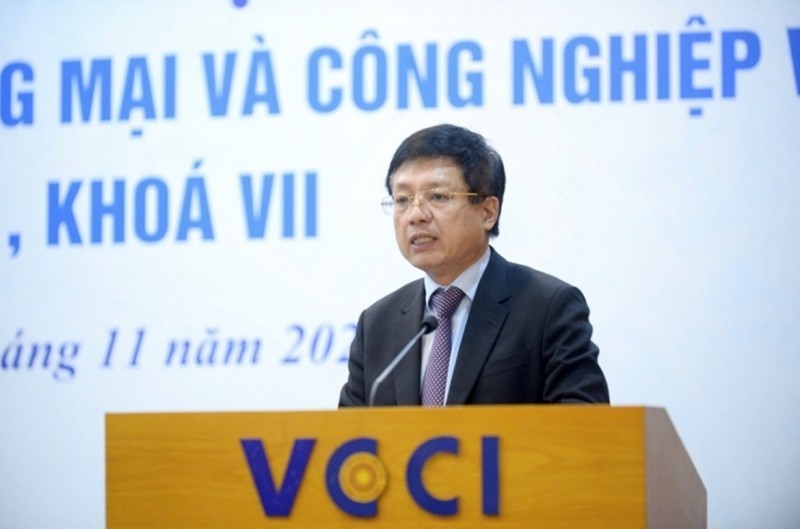
According to Assoc. Prof. Dr. Ho Sy Hung, President of the Vietnam Chamber of Commerce and Industry (VCCI), while economic diplomacy was previously tied primarily to trade promotion, investment attraction, or export support, its role has expanded significantly.
Hung noted that economic diplomacy must serve as an ecosystem connecting international resources, ranging from markets, capital, technology, knowledge, and high-quality human resources to innovation and global production networks, thereby enabling Vietnamese enterprises to integrate deeper into the global value chain.
This approach is essential as companies face competition that extends beyond pricing to include stringent requirements for green development, environmental standards, digital transformation, and modern governance, VOV reported.
 |
| Photo: VOV |
As the national representative organization for the business community, VCCI has long prioritized foreign relations. Through nearly 500 business forums, trade and investment promotion programs, and international delegations annually, VCCI helps businesses expand markets, diversify partners, and access capital, technology, and advanced management methods. A network of more than 100 international partners, including chambers of commerce, business associations, and trade promotion organizations worldwide, acts as vital bridges linking Vietnamese enterprises with the global market.
Apart from connectivity, Vietnamese businesses are progressively participating in shaping international economic rules through mechanisms such as the APEC Business Advisory Council (ABAC), ASEAN-BAC, and the Greater Mekong Subregion (GMS) Economic Cooperation. According to the VCCI leader, this provides an opportunity for the voice of the Vietnamese business community to be reflected in the formulation of trade, investment, and sustainable development policies, rather than merely adapting to regulations after their enactment.
Drawing from these practical realities, Hung emphasized the guiding motto: “Diplomacy paves the way, businesses step forward, the economy takes off.” He noted that this shows the synergistic relationship between state diplomacy and the business community in transforming foreign policy achievements into economic growth drivers.
Elevating economic diplomacy to pioneering force
Alongside expanding foreign relations, the VCCI President stressed the necessity of establishing effective coordination mechanisms among the Ministry of Foreign Affairs, Vietnam's overseas representative missions, VCCI, business associations, and enterprises. Synergy among these three pillars-diplomacy, business representative bodies, and corporations- is vital to turning international cooperation opportunities into concrete investment projects, trade contracts, and linkage chains.
Hung praised the role of Vietnam's overseas missions in supplying market intelligence, connecting partners, assisting businesses with policy navigation, and resolving hurdles during integration. However, in this new development phase, this role must be elevated.
Accordingly, diplomatic missions must act as outposts for economic diplomacy, proactively researching market trends, forecasting shifts, providing early risk warnings, and scouting cooperative opportunities before enterprises formally request them. This foundation shifts business support from reactive to proactive, and from short-term to long-term.
Conversely, the business community and industry associations must be more proactive in providing data regarding market demand, technological needs, capital requirements, and partner preferences so that diplomatic missions can deliver targeted support. According to the VCCI leader, a business forum is only successful if it yields tangible projects, enduring partnerships, and sustained long-term growth.
Reflecting on corporate realities, Hung asserted that economic diplomacy must continue innovating its mindset in the period ahead, shifting decisively from promotion to creation. This means tailoring strategies for each specific market, identifying priority sectors for key partners, and ensuring every foreign activity targets measurable, concrete outcomes.
Another emphasized requirement is establishing early warning mechanisms for international market shifts. Vietnamese enterprises face an expanding array of regulations regarding green standards, carbon emissions, traceability, data governance, and supply chain accountability. Timely updates allow businesses to adapt proactively, mitigate risks, and capitalize on integration opportunities.
Furthermore, the VCCI President proposed strengthening ties between Vietnamese enterprises and multinational corporations, investment funds, innovation hubs, universities, and international research organizations, particularly in strategic sectors such as artificial intelligence, semiconductors, digital technology, clean energy, and the green economy.
Simultaneously, the resources of overseas Vietnamese entrepreneurs and intellectuals should be effectively leveraged as critical conduits integrating domestic firms into global production and innovation networks.
According to Hung, VCCI will continue partnering with the Ministry of Foreign Affairs, ministries, localities, and overseas missions to amplify the voice of Vietnamese enterprises at international forums while channeling global resources toward national development. Active preparations for APEC 2027 are identified as a prime opportunity to promote the profile of Vietnamese businesses and promote trade, investment, and innovation.
Amid continued global volatility and intense competition, economic diplomacy serves not merely as a supportive tool for businesses, but as a primary driver of national competitive advantage.
By synchronizing Party diplomacy, State diplomacy, people-to-people diplomacy, and business action into a unified whole, diplomatic achievements can be effectively translated into economic growth, expanded development space, and elevated international standing for Vietnamese enterprises.
Workers to have five consecutive days off for National Day
The Ministry of Home Affairs has finalized plans for this year's National Day holiday.
Civil servants and State employees will be entitled to a five-day holiday from August 29 to September 2, of which the official holiday is from September 1 to 2.
August 31 is a working day, but to have it as a day off after the August 29-30 weekend, State employees will work on August 22 instead.
State agencies and organizations are required to adhere to the schedule, while also assigning personnel on duty to handle unexpeced or sudden situations that may arise during the holiday to avoid disruption to services for citizens and businesses.
Those that do not observe a fixed Saturday and Sunday holiday schedule should plan the holiday based on their actual operational schedule, VNS reported.
Employees in private businesses are also entitled to the announced National Day holiday schedule in accordance with the Labor Code.
 |
| People pose for photos during the National Day holiday around Hoan Kiem Lake in Hanoi last year. Photo: VNS |
However, apart from the official holiday on September 2, private employers can choose to let their employees take either September 1 or 3 off.
The final schedule must be announced to the employees at least 30 days prior to the holiday.
The ministry encourages private employers to follow the officially announced schedule, but they can also discuss with employees to agree on holiday arrangements that are more beneficial to the employees and their business conditions.
 Vietnam News Today (July 28): Vietnam Stands as a Vital Member of ASEAN Vietnam News Today (July 28): Vietnam Stands as a Vital Member of ASEAN |
 Vietnam News Today (July 29): Vietnam and Cambodia Deepen Ties with Focus on Economic Connectivity Vietnam News Today (July 29): Vietnam and Cambodia Deepen Ties with Focus on Economic Connectivity |