Bulgaria, Vietnam expand cooperation in medical training, research and pharmacy
The Vietnamese Embassy in Bulgaria coordinated with Hanoi Medical University (HMU) to organize a working trip to the European country from July 20-25 to boost cooperation in training, scientific research, and healthcare between Vietnam and Bulgaria.
The delegation, led by HMU Rector Prof. Dr. Nguyen Huu Tu, held working sessions with leading Bulgarian universities, hospitals, and pharmaceutical enterprises. The trip opened up practical collaborative opportunities, as a contribution to enhancing connections between partners of both sides and implementing cooperation activities within the framework of the Vietnam-Bulgaria Strategic Partnership.
During the trip, HMU and the Medical University of Sofia (MUS) signed a Memorandum of Understanding (MoU), establishing a long-term framework for cooperation in training, scientific research, and academic exchange between the two leading medical institutions of Vietnam and Bulgaria. The agreement was signed by Tu and MUS Rector Prof. Boycho Landjov.
Speaking at the signing ceremony, Vietnamese Ambassador to Bulgaria Nguyen Thi Minh Nguyet emphasized that education and training have consistently been among the most successful areas of bilateral ties over the past decades.
Generations of Vietnamese alumni in Bulgaria, including doctors, scientists, health experts, and managers, have made significant contributions to the development of the nation's health sector upon returning home, while acting as a bridge to cultivate friendship between the two peoples, according to VOV.
 |
| At the working session with the Medical University of Sofiav (Source: HMU) |
“The ambassador affirmed that the MoU will facilitate the exchange of lecturers and students, joint research, and experience sharing between the two universities, thereby strengthening cooperation between the two countries in education, science, technology, and healthcare.”
Under the agreement, the two universities will promote faculty and student exchanges, conduct joint research projects, co-organize scientific conferences, and share experiences in innovating training curricula and developing high-quality medical human resources. MUS also expressed its readiness to accept HMU PhD students in its areas of strength, and to jointly develop and register training and research projects within the framework of European Union programs.
The delegation also held a working session with the MUS Faculty of Pharmacy. Prof. Georgi Momekov, Dean of the faculty, introduced the unit's training and research capabilities, noting it has five scientists ranked among the world's top 2% most influential scientists by Stanford University in the US. Both sides agreed to advance ties in training, faculty and student exchanges, joint research, and the development of pharmaceutical projects.
During their stay in Bulgaria, the delegation visited the Bulgarian Military Medical Academy and several major hospitals in Sofia to study hospital management models, doctor training, and the application of technology in medical examination and treatment. They also discussed potential collaboration in specialist training, clinical research, and expert exchanges.
The delegation also met with DANHSON, a leading Bulgarian pharmaceutical company, to discuss potential partnerships in research, technology transfer, training, and connecting with Vietnamese pharmaceutical firms. Stefan Bojinov, a member of DANHSON's Board of Directors, expressed willingness to consider granting scholarships for Vietnamese students to study pharmacy in Bulgaria.
The working trip achieved practical results, helping expand cooperation between educational institutions, hospitals, and enterprises of both nations in training, scientific research, technology transfer, and high-quality medical human resource development. At the same time, the program continued to enhance connections between partners from Vietnam and Bulgaria, contributing to the effective implementation of the bilateral Strategic Partnership, particularly in education, science-technology, healthcare, and pharmacy.
Vietnam at forefront of driving ASEAN Community Vision 2045: Ambassador
With a serious commitment, contributions and a high sense of responsibility in fulfilling its obligations, Vietnam is working closely with other member states to turn the ASEAN Community Vision 2045’s strategic plans into concrete cooperation, Ambassador Ton Thi Ngoc Huong, Permanent Representative of Vietnam to ASEAN, told the Vietnam News Agency.
This roadmap carries both new opportunities and challenges, she said in an interview with Vietnam News Agency correspondents in Jakarta on the occasion of Vietnam's 31st anniversary of joining ASEAN (July 28) and the bloc's first year of implementing the ASEAN Community Vision 2045.
Ambassador Huong said Vietnamese ministries and agencies are coming up with plans under their respective mandates to realize the vision while shaping ASEAN-wide monitoring and evaluation mechanisms to fortify cross-sector and cross-pillar coordination.
At the same time, Vietnam has introduced initiatives to strengthen ASEAN unity, bridge development gaps, accelerate digital transformation and green transition, tackle climate change, ensure food and energy security, and enhance regional capacity to address emerging threats.
Domestically, Vietnam has embedded the realization of the ASEAN Community Vision 2045 directly into its socio-economic development planning across sectors to create synergies and deliver measurable outcomes. Vietnam is among the first ASEAN members to formulate and launch a National Plan of Action for 2026-2030 aligned with the vision and its strategic plans, reported VNA.
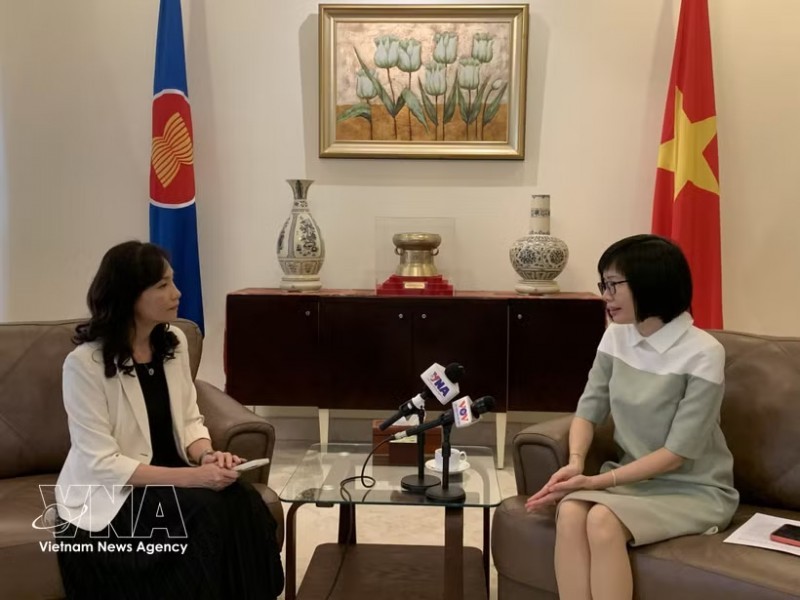 |
| Ambassador Ton Thi Ngoc Huong (right), Permanent Representative of Vietnam to ASEAN, grants an interview to the Vietnam News Agency. (Photo: VNA) |
As coordinator of the ASEAN-New Zealand and ASEAN-UK ties for the 2024-2027 period, Vietnam has also pooled support from these partners for the vision.
Vietnam must fully harness the ASEAN Economic Community and the bloc’s network of free trade agreements with external partners, she said.
With a 700-million-strong ASEAN market, the Regional Comprehensive Economic Partnership (RCEP) covering roughly 2.3 billion consumers, and ASEAN+1 free trade agreements, Vietnamese enterprises have a powerful opening to break into new markets, integrate into global supply chains, and expand production capacity.
ASEAN also acts as a critical channel to pool development resources, especially in high technology, infrastructure and pillar industries. Annual foreign direct investment inflows into ASEAN stayed robust at 244 billion USD in 2025, with a growing share flowing to hi-tech manufacturing.
Vietnam can leverage investment facilitation mechanisms under the ASEAN Comprehensive Investment Agreement (ACIA) and the bloc’s broad FTA network to move up regional value chains, moving from an assembly-driven manufacturing base to a key production hub with higher technological added value in global supply chains.
Major regional infrastructure initiatives spearheaded by ASEAN, including the ASEAN Power Grid, will gradually integrate regional electricity systems, facilitate cross-border electricity trade, bolster energy security and improve energy supply complementarity among ASEAN member states, including Vietnam.
The ASEAN Connectivity Strategic Plan 2045, spanning transport and digital infrastructure, will support sustainable infrastructure development, digital connectivity and deeper integration of trade and investment across the region.
Notably, the ASEAN Digital Economy Framework Agreement (DEFA), expected to be signed later this year, will become the world’s first comprehensive regional digital economy pact. It will establish a unified ASEAN digital market, promote e-commerce, secure cross-border data flows and digital payments, and expand opportunities for businesses, especially micro, small and medium-sized enterprises, to embed themselves more deeply in the regional digital economy.
Beyond these frameworks, ASEAN cooperation in areas such as artificial intelligence (AI), semiconductors, quantum technologies, green transition, renewable energy, circular economy, and responses to climate change, natural disasters and pandemics will allow Vietnam to better tap international resources, technology and expertise in support of sustainable development.
In her view, ASEAN’s centrality and continued relevance can only be sustained if the bloc keeps a common voice, collective responsiveness and the effectiveness of ASEAN-led mechanisms.
The foremost challenge is maintaining unity and consensus while balancing the diverse interests of member states as strategic competition among major powers intensifies. To overcome this, ASEAN member states must continue upholding dialogue, consultation and trust-building grounded in mutual respect for legitimate interests and the alignment of regional and national interests.
Above all, ASEAN must preserve its independence and strategic autonomy, ensuring that major-power rivalry does not fracture the bloc’s unity or common voice.
ASEAN-led dialogue and cooperation platforms must also be renewed. Hence, they continue to serve as venues for engaging external partners, including major powers, in trust-building, practical cooperation and conflict resolution.
At the same time, ASEAN should keep broadening and diversifying its partnerships with countries and regions around the world to unlock new cooperation opportunities while deepening existing strategic partnerships.
Another major challenge is implementation capacity, particularly the availability of resources needed to deliver on ASEAN commitments and respond effectively to emerging threats.
The bloc’s new goals demand substantial resources, while member states differ sharply in their development levels and ability to contribute.
ASEAN should, on one hand, ensure resource self-reliance, especially in priority areas, and reduce excessive dependence on external assistance. On the other hand, it should adopt an open, flexible and pragmatic approach to pooling diverse funding sources to meet its growing cooperation needs.
ASEAN must also keep improving its institutional effectiveness by refining operational mechanisms, launching joint activities and ensuring more efficient use of available resources.
Working alongside ASEAN to identify and address these challenges, Vietnam will continue to develop both short- and long-term solutions that consolidate the values of the ASEAN Community, she concluded.
Hue city named among Asia's top destinations for traditional cuisine
The central city of Hue has been recognised by online travel platform Agoda as one of Asia's most distinctive destinations for traditional cuisine, with its royal culinary heritage continuing to attract travelers seeking authentic cultural experiences.
According to Agoda, food is one of the strongest motivations for travelers exploring new destinations. By highlighting Asia's culinary “hidden gems”, the platform aims to connect visitors with places where local dishes reflect history, cultural heritage and the creativity of local communities.
Hue stood out for its imperial cuisine, a culinary tradition rooted in the city's history as the capital of the Nguyen Dynasty. Renowned for its refined flavours, meticulous preparation and artistic presentation, Hue's cuisine reflects centuries of royal and cultural traditions.
Signature dishes such as 'Bun bo Hue' (Hue spicy beef noodle soup), 'Banh beo' (steamed rice cakes), 'Banh khoai' (Hue-style crispy pancake) and 'Banh bot loc' (tapioca dumplings) embody the unique identity of the former imperial capital while showcasing the richness of Vietnam's culinary heritage.
Hue's inclusion on Agoda's list further highlights the growing international appeal of Vietnamese cuisine and reflects an increasing trend of travelers choosing Vietnam not only for its landscapes and cultural heritage, but also for its authentic local food experiences.
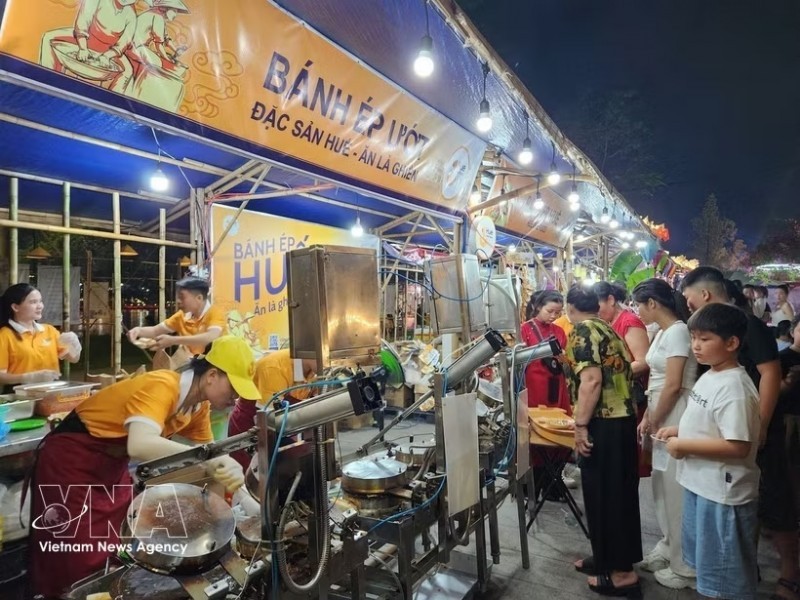 |
| Visitors sample Hue's traditional specialties during the Hue Traditional Cuisine Week 2024. (Photo: VNA) |
This is not the first international recognition for Hue's gastronomy. In 2023, global food guide TasteAtlas ranked the city 28th among the world's 100 Best Food Cities, recognising the richness and diversity of its local cuisine, cited VNA.
Hue is home to more than 1,700 of the roughly 3,000 Vietnamese dishes documented in the Nguyen Dynasty's royal records. Its culinary heritage spans three main traditions: folk cuisine, imperial cuisine and vegetarian cuisine.
Known for emphasizing quality over quantity, Hue cuisine is distinguished by sophisticated cooking techniques, elegant presentation and a refined dining culture that transforms every meal into an artistic experience.
Food has become one of the strongest draws for visitors to Hue, with many travelers choosing the city specifically to explore its culinary traditions. Beyond royal banquets and vegetarian feasts, visitors can enjoy local favourites such as 'Com hen' (clam rice), a wide variety of traditional Hue cakes and sweet soups prepared by local residents, offering an authentic taste of the city's culinary heritage.
From elaborate royal delicacies once served to Nguyen emperors to humble home-style dishes, Hue's cuisine reflects the craftsmanship, creativity and attention to detail that have defined the city's food culture for generations. With more than 1,000 recipes still preserved in the Hue style, including imperial dishes, the city remains one of Vietnam's richest culinary destinations.
Heavy rain sweeps across Vietnam, northern region faces high landslide risk
A widespread spell of heavy rain is sweeping across many parts of Vietnam. In the mountainous north, locally intense downpours are forecast to continue, heightening the risk of flash floods and landslides.
On the afternoon of July 27, Pham Thi Cham, a forecaster at the National Center for Hydro-Meteorological Forecasting, provided an update on the widespread heavy rain that has begun affecting the country.
From the afternoon of July 27 through the night of July 28, widespread moderate to heavy rain is forecast across northern Vietnam. Notably, the entire mountainous and midland region, including Cao Bang Province and western Lang Son Province, is expected to receive moderate to heavy rain, with widespread totals of 70-120mm. Some areas could see exceptionally heavy rainfall exceeding 250mm.
Pham Thi Cham particularly warned that mountainous northern provinces have experienced repeated thunderstorms and rain in recent days, leaving the soil and rock increasingly unstable. With further bouts of intense rain expected, the risk of flash floods and landslides is very high. Residents in these areas should remain vigilant and be prepared to take appropriate precautions.
Other parts of northern Vietnam are also forecast to experience widespread rain and thunderstorms, with rainfall of 50-100mm and localized totals exceeding 150mm.
Central Highlands and southern Vietnam to see prolonged rain through July 29
At the same time, the Central Highlands and southern Vietnam are also entering a period of widespread rain and thunderstorms, beginning on the evening of July 27 and expected to last through July 29.
Total rainfall during this period is forecast at 40-100mm, with some locations receiving exceptionally heavy rain of more than 200mm.
The weather agency warned that during widespread thunderstorms, people across the country should take precautions against accompanying extreme weather, including tornadoes, lightning, hail and strong wind gusts that could threaten lives and property.
Detailed outlook for the nationwide heavy rain
On July 27, northern Vietnam experienced showers, moderate rain and thunderstorms, with heavy rain in some locations. Between 7 a.m. and 3 p.m. that day, rainfall exceeded 80mm in several places, including Ho Song Ran in Quang Ninh at 109.8mm, Truc Tay in Bac Ninh at 93.6mm, Cam Giang in Thai Nguyen at 91.2mm and Phu Duc in Hung Yen at 89mm.
From the afternoon of July 27 through the night of July 28, widespread moderate to heavy rain and thunderstorms are forecast across northern Vietnam, with rainfall generally ranging from 50-120mm and exceeding 250mm in some locations, VNN reported.
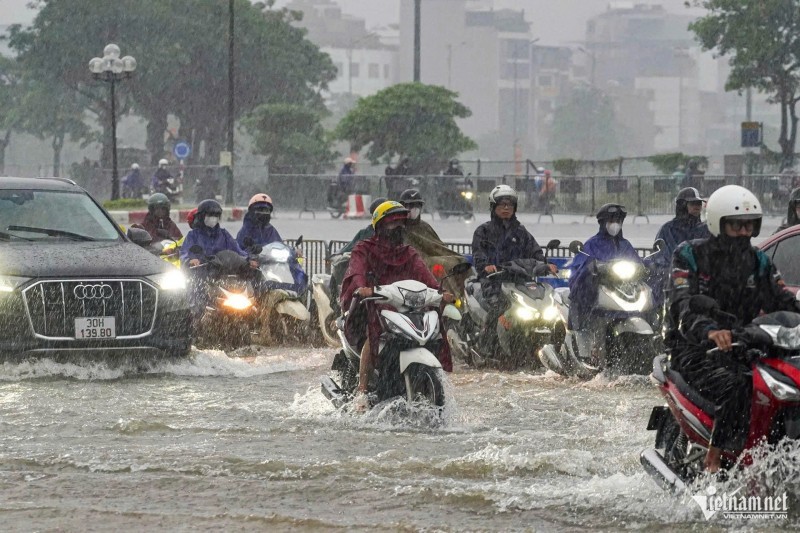 |
| Northern Vietnam is hit by heavy rain, raising the risk of flooding and landslides. Photo: Thach Thao |
From the evening of July 27 through July 29, the Central Highlands and southern Vietnam are forecast to experience moderate to heavy rain and thunderstorms, with widespread rainfall of 40-100mm and localized totals exceeding 200mm.
The weather agency warned that extremely intense rainfall could occur, with more than 100mm falling within three hours.
In addition, during the evening and night of July 27, Thanh Hoa, Nghe An, Hue and the south-central coastal region are forecast to see scattered showers and thunderstorms, with rainfall generally ranging from 10-30mm and exceeding 60mm in some locations.
Heavy rain in northern Vietnam is expected to gradually ease from July 29.
On the night of July 29, the Central Highlands and southern Vietnam will continue to experience moderate to heavy rain and thunderstorms, with rainfall of 20-40mm and localized totals exceeding 70mm. Heavy rain in these regions is expected to gradually ease from July 30.
 Vietnam News Today (July 23): Vietnam Promotes Ties With Canada, New Zealand at AMM-59 Vietnam News Today (July 23): Vietnam Promotes Ties With Canada, New Zealand at AMM-59 |
 Vietnam News Today (July 25): Vietnam, ASEAN Continue to Strengthen Foundations of Regional Peace Vietnam News Today (July 25): Vietnam, ASEAN Continue to Strengthen Foundations of Regional Peace |