Vietnam seen as ASEAN’s resilient growth bright spot
Vietnam’s economy is increasingly cementing its strategic position in global supply chains and emerging as one of ASEAN’s most resilient growth performers despite mounting geopolitical uncertainties and global economic volatility, according to international financial institutions and economic organisations.
According to the World Bank (WB), buoyed by impressive GDP growth of 8% in 2025, Vietnam entered 2026 as one of Southeast Asia's strongest-performing economies. In its latest economic update released in May, the WB highlighted Vietnam’s robust fundamentals and favourable growth outlook.
This optimism was echoed by Zhang Nianshan, Director General for the Southeast Asia Department at the Asian Development Bank (ADB), in an interview with the Vietnam News Agency (VNA). He described Vietnam’s economic outlook for 2026–2027 as relatively resilient and robust compared with regional peers, underpinned by solid macroeconomic fundamentals, ample fiscal space and low public debt.
Meanwhile, Malaysia-based property technology group IQI Global has placed Vietnam among the “Fabulous Five” — a group of five standout economies with the potential to shape the macroeconomic and investment trajectory of ASEAN over the next two decades.
International observers point to Vietnam’s ongoing transformation from a labour-intensive manufacturing base into a technology-driven, value-added economy as a key factor behind its rising profile.
Shan Saeed, chief economist at the Malaysian branch of property technology group IQI Global, described Vietnam as a leading destination in the “China+1” manufacturing diversification strategy pursued by multinational technology corporations, noting that the country possesses increasingly sophisticated export capabilities and is deeply integrated into global manufacturing network.
Vietnam’s strong integration into the global economy is reflected in its trade-to-GDP ratio of nearly 170%, making it one of the world's most open and deeply interconnected economies, he said.
The clearest example of this transformation can be seen in the electronics sector. According to Yun Liu, Senior ASEAN Economist at HSBC, the country’s export structure has undergone a significant shift. While low-value textiles and footwear once dominated exports, electronics have emerged as a key growth driver, now accounting for more than one-third of Vietnam’s total export earnings.
HSBC estimates Vietnam’s share of global consumer electronics exports has risen from nearly zero to almost 15% over the past 15 years. The country is also expanding into higher-value segments, including integrated circuits and semiconductor components, according to VNA.
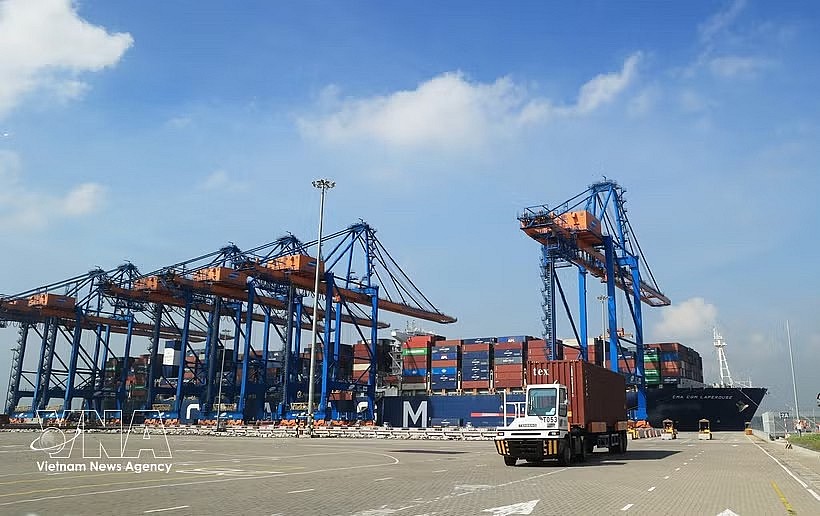 |
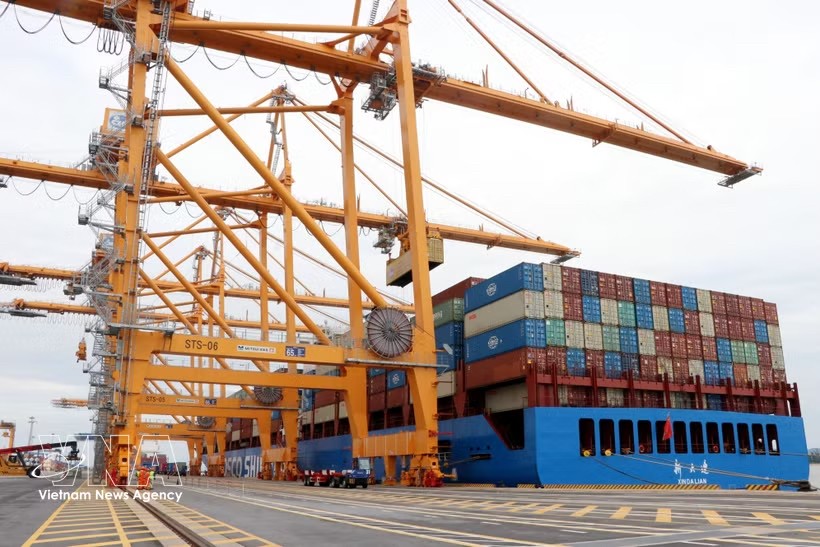
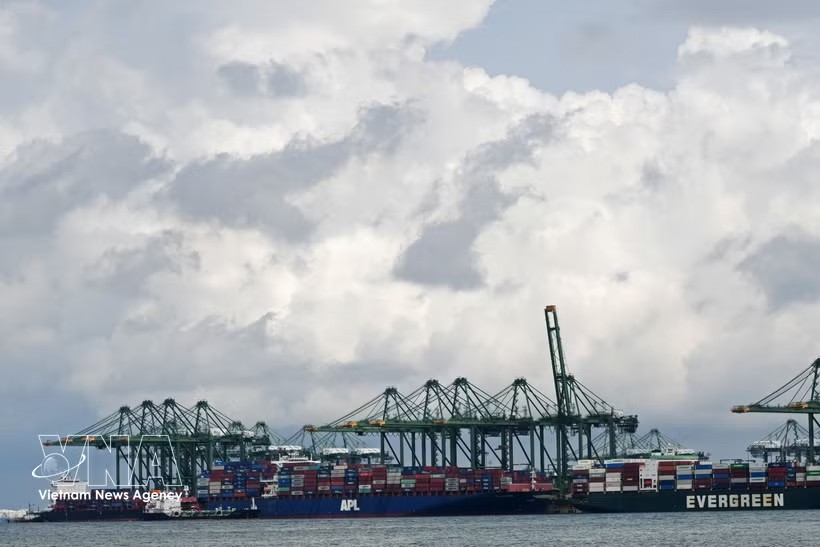
| A container truck runs at the Gemalink International Port, part of the Cai Mep port complex, in Tan Phuoc ward, Ho Chi Minh City. (Photo: VNA) |
Resilient foreign direct investment (FDI) inflows remain another major pillar of growth. The WB reported that registered FDI in the first quarter of 2026 surged 36% year-on-year, while disbursed FDI reached its highest level in the last five years.
HSBC's Chief Asia Economist Frederic Neumann noted that although global tariff uncertainties may create short-term caution among investors, Vietnam’s continued ability to attract investment reflects strong confidence in its long-term growth prospects.
Analysts also credit Vietnam’s extensive network of free trade agreements, particularly the EU-Vietnam Free Trade Agreement (EVFTA), for helping diversify export markets and enhance competitiveness.
This position has enabled Vietnam to sustain record export growth despite ongoing energy market disruptions and geopolitical uncertainties. Vietnam’s Manufacturing Purchasing Managers’ Index (PMI) rose to 52.8 in May, the highest level since February. According to Andrew Harker, Economics Director at S&P Global Market Intelligence, the improvement reflects a significant increase in both new orders and manufacturing output, providing a positive signal for the country’s industrial sector.
However, international institutions have cautioned that Vietnam’s near-term growth momentum may face headwinds. S&P Global noted that the recent rise in manufacturing orders was partly driven by inventory stockpiling amid Middle East tensions, while businesses are grappling with the sharpest input-cost increases in 15 years and continued job cuts despite stronger demand.
The WB also highlighted several structural challenges, including the widening gap between FDI and domestic firms, pressure on foreign exchange reserves, high corporate leverage, and concerns over the efficiency of large-scale public investment.
Against this backdrop, the WB forecasts Vietnam’s growth to moderate to 6.8% in 2026 before recovering in 2027–2028 as the impact of the oil shock gradually fades and domestic growth drivers strengthen.
Despite elevated short-term risks, Tamina Khan, Lead Economist for Vietnam, Cambodia and Laos at the WB said the country’s medium-term outlook remains highly positive and more balanced. She noted that with effective implementation of reforms, Vietnam is well positioned to overcome external headwinds and sustain its strong growth trajectory.
Vietnamese cuisine and handicrafts impress at UN International Bazaar 2026
Vietnam introduced its culture and cuisine at the 2026 UN International Bazaar, held at United Nations headquarters in New York on June 2, featuring 60 booths from UN member states.
The annual event, organized by the United Nations Delegates Spouses Association, promotes cultural exchange, strengthens mutual understanding among nations and raises funds for international humanitarian activities.
Continuing a long-standing tradition, the Permanent Mission of Vietnam to the United Nations and the Vietnamese Spouses Group in New York participated with two booths highlighting Vietnamese handicrafts and cuisine.
Traditional products reflecting Vietnam's cultural identity, including ceramics, lacquerware, silk, brocade and other handicrafts, attracted strong interest from visitors, with many items selling out early.
The "Vietnamese Kitchen" booth was once again among the event's most popular attractions. Vietnamese favourites such as banh mi, fresh spring rolls, grilled skewers, lemon tea and iced milk coffee left a lasting impression on international visitors.
Many guests hailed the combination of distinctive flavors, refined preparation methods and the unique cultural character of Vietnamese cuisine.
The Vietnamese booths welcomed ambassadors, United Nations officials and international guests, who visited, exchanged views and sampled a variety of products, particularly dishes prepared and served by Vietnamese diplomats and their spouses, cited VOV.
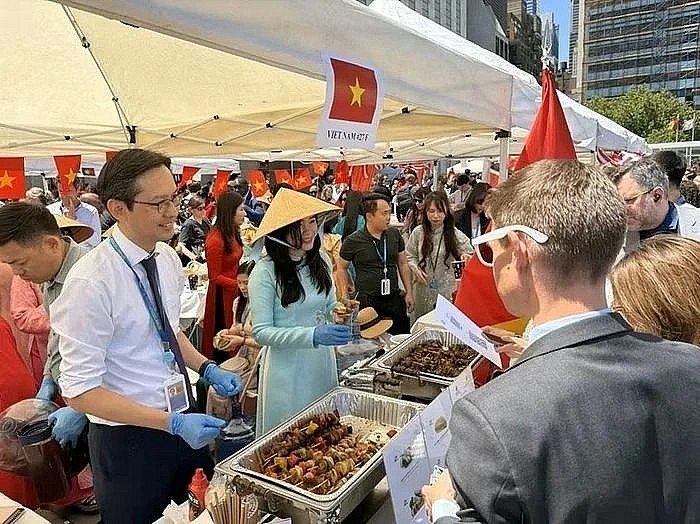 |
| Vietnamese mission's booth at the bazzar. |
At the close of the event, Vietnam once again ranked among the leading contributors to the organizers' charity fund.
The success of the Vietnamese booths helped promote the country's image, culture and people to the international community while showing Vietnam's spirit of responsibility, solidarity and positive contribution to UN activities.
The UN International Bazaar is an annual event that brings together UN member states to showcase their cultures, cuisines and traditional products while raising funds for United Nations humanitarian and development programs.
Vietnam attracts nearly 35% more FDI in first five months
Vietnam attracted 24.81 billion USD in foreign direct investment (FDI) during the first five months of 2026, up 34.9% year-on-year, the National Statistics Office under the Ministry of Finance reported on June 3.
The figure includes newly registered capital, additional capital injected into existing projects, and foreign investors’ capital contributions and share purchases.
As of May 31, Vietnam had licensed 1,576 new FDI projects with a combined registered capital of 14.84 billion USD, rising 1.7% in project number and 2.1-fold in value compared to the same period last year.
The processing and manufacturing sector remained the largest recipient of new projects, drawing 9.64 billion USD, or 65% of the registered capital. The value reached 2.45 billion USD in the production and distribution of electricity, gas, water, and air conditioners, equivalent to 16.5%; and 2.75 billion USD in the remaining sectors, 18.5%.
Among 58 countries and territories with newly licensed investments in Vietnam, Singapore was the largest with 6.8 billion USD, accounting for 45.9% of the total, followed by the Republic of Korea with 4.22 billion USD (27.4%) and China with 1.79 billion USD (12.1%).
Meanwhile, 415 existing projects registered an additional 5.78 billion USD in capital, down 32.1% from a year earlier, reported VNA.
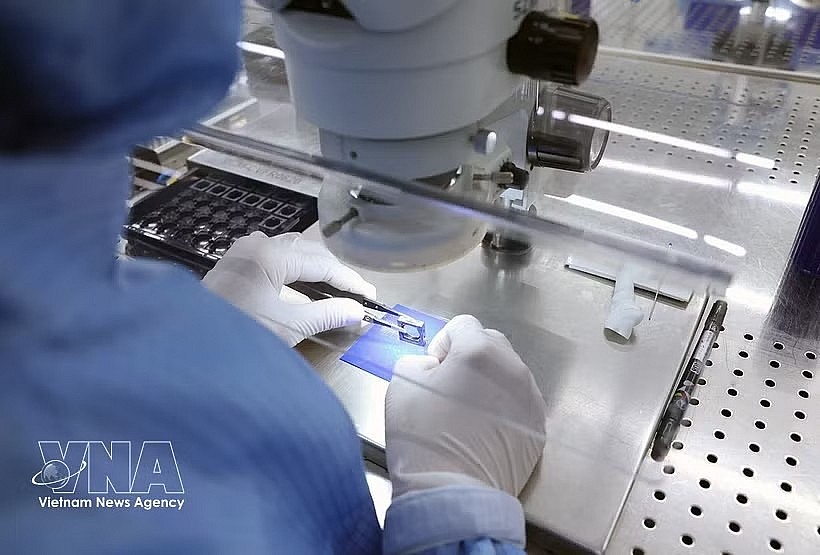 |
| A worker checks electronic components at a factory of the RoK-invested MCNEX VINA Co. Ltd in the Phuc Son Industrial Park, Ninh Binh province. (Photo: VNA) |
Combining capital channelled into new and existing projects, the value amounted to 14.52 billion USD in the manufacturing and processing industry, representing 70.4%. About 2.45 billion USD, 11.9%, was registered for the production and distribution of electricity, gas, water, and air conditioners. The remainders attracted 3.65 billion USD, or 17.7%.
During the reviewed period, foreign investors contributed 4.19 billion USD through share purchases and capital contributions, up 46.7% from a year earlier. That includes 1.9 billion USD invested in wholesale and retail, along with automobile and motorcycle repair, equivalent to 45.4%; 1.16 billion USD in specialised and sci-tech activities, 27.7%; and 1.13 billion USD in the remainders, 26.9%.
Notably, disbursed FDI reached an estimated 9.75 billion USD in the January–May period, up 9.6% year-on-year and also the highest five-month figure recorded in the past five years. Of the total, 8.06 billion USD, or 82.7%, was disbursed in processing and manufacturing; 716.5 million USD, or 7.3%, in real estate; and 356.6 million USD, 3.7%, in the production and distribution of electricity, fuel gas, water, steam, and air conditioners, according to the office.
International visitors to Vietnam increase by 16.5%
According to the Statistics Office under the Ministry of Finance, international arrivals to Vietnam in May 2026 are estimated at 1.78 million, up 16.5% compared with the same period in 2025. The country welcomed 10.6 million international visitors in the first five months of 2026, an increase of 14.9% year-on-year.
Of the total, 8.7 million international visitors arrived by air, accounting for 82.3% and up 11% year-on-year; 1.7 million arrived by road, accounting for 15.8% and up 40.8%; while 202,400 arrived by sea, accounting for 1.9% and up 15.4%.
Notably, Hanoi and Ho Chi Minh City, the two major economic hubs of the country, also recorded positive and encouraging results.
According to the Hanoi Municipal Department of Tourism, the capital welcomed an estimated 14.98 million visitors in the first five months of 2026, up 17.2% compared with the same period in 2025. Of these, approximately 4.06 million were international visitors, an increase of 28.1%. Total tourism revenue is estimated at 62.77 trillion VND, up 20.6% year-on-year.
Meanwhile, the latest figures released by Ho Chi Minh City show that the city welcomed nearly 5 million international visitors in the first four months of 2026 and collected 172 trillion VND in tourism revenue, affirming its position as the leading centre of the national tourism industry, NDO reported.
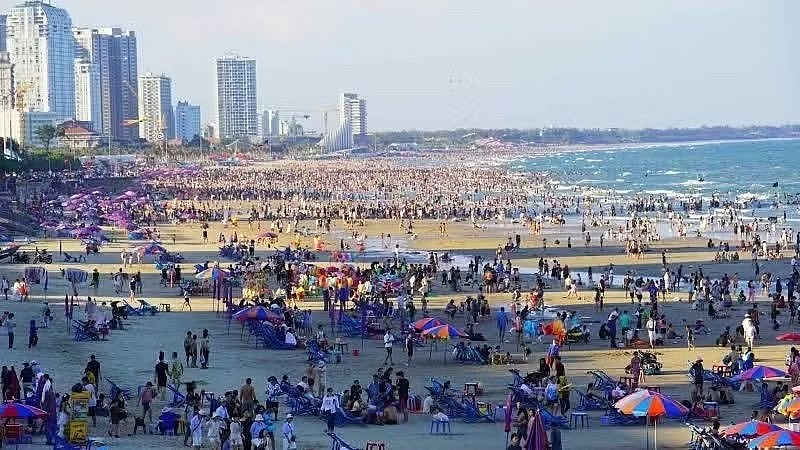 |
| Viet Nam is an attractive destination for international travellers. (Photo: PV) |
To attract more visitors, the city’s tourism sector has implemented various demand-stimulation programmes, developed new tourism products, and refreshed visitor experiences. Particularly, the sector has adapted quickly to changes in the global situation, turning challenges into opportunities to attract international tourists. Visitor numbers to Ho Chi Minh City are forecast to rise sharply in the second and third quarters of 2026, coinciding with the summer peak season and a series of attractive cultural, sporting, and tourism events.
The tourism industry believes that the strong attraction of international visitors from the beginning of 2026 marks the start of a new growth cycle. Vietnam’s tourism sector is moving from the recovery phase towards improving growth quality and competitiveness. This also demonstrates that Vietnam has continued to be an attractive destination for international travelers.
 | Vietnam News Today (May 27): Vietnam, US Foster Deeper, More Substantive Legislative Ties Vietnam News Today (May 27): Vietnam, US foster deeper, more substantive legislative ties; Thailand continues strengthening Comprehensive Strategic Partnership with Vietnam; Vietnam, Laos promote trade ... |
 | Vietnam News Today (May 31): Vietnam, Australia foster Comprehensive Strategic Partnership Vietnam News Today (May 31): Top Vietnamese leader meets Singaporean Parliament Speaker; Vietnam, Australia foster Comprehensive Strategic Partnership; Finland eyes stronger cooperation with Vietnam in ... |