| Vietnam News Today (Jun. 21) notable headlines Vietnam, Japan strengthen cooperation on intellectual property protection Vietnam-France Business Forum 2026 elevates strategic cooperation in AI era Vietnam affirms position in ASEAN, creating new growth space Singapore, Vietnam see closer links in industrial, technology and energy supply chains Vietnam among top 10 peaceful counties in Asia-Pacific: 2026 Global Peace Index Vietnam Cuisine Day held in South Africa Vietnam values UNODC support for ASEAN Festival brings Vietnamese culture to northwestern France Vietnam’s first ITLOS judge a milestone in international integration: FM |
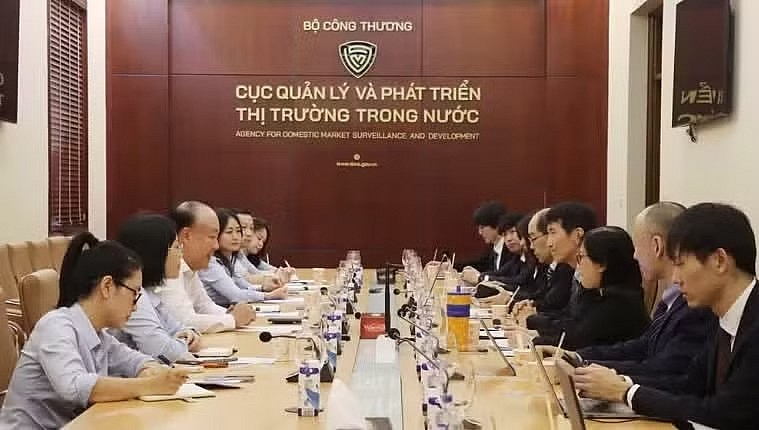 |
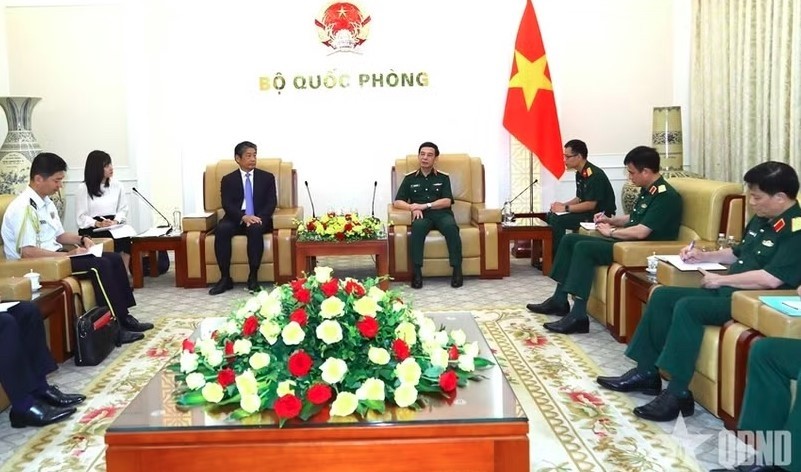
| An overview of the working session (Source: Nhandan.vn) |
Vietnam, Japan strengthen cooperation on intellectual property protection
Vietnam and Japan are stepping up cooperation on intellectual property (IP) protection, anti-counterfeit efforts and consumer rights protection, as the two countries seek to enhance enforcement amid increasingly complex violations in both traditional and online markets.
The Agency for Domestic Market Surveillance and Development under the Ministry of Industry and Trade held a working session with the Japan Patent Office (JPO) on June 20 to review the implementation of cooperation programmes on IP protection and enforcement, combating counterfeit goods and protecting consumers.
The two sides reviewed the implementation of a memorandum of understanding (MoU) on IP protection and enforcement signed in 2021 between the JPO and Vietnam’s former General Department of Market Surveillance, now the Agency for Domestic Market Surveillance and Development.
They also assessed progress in carrying out an MoU signed on December 20, 2024, between the Vietnamese agency and the International Intellectual Property Protection Forum (IIPPF) of Japan, and another signed on March 5, 2026, involving the agency, the IIPPF and e-commerce platforms.
At the meeting, Director of the agency Tran Huu Linh said the Vietnamese Government has been implementing a range of measures to strengthen the protection of intellectual property rights. Following directions from the Prime Minister, market surveillance forces have launched a nationwide crackdown on violations, uncovering and handling thousands of cases in just over a month.
According to Linh, the campaign will continue through the end of 2026 and will be accompanied by efforts to improve mechanisms and policies aimed at enhancing IP protection and preventing counterfeit and infringing goods from circulating in the market.
A key focus of discussions was the implementation of cooperation agreements between the agency, the IIPPF and major e-commerce platforms operating in Vietnam, cited VNA.
Against the backdrop of increasingly sophisticated IP infringements in the digital marketplace, both sides underscored the importance of establishing direct coordination mechanisms among regulators, rights holders and e-commerce platforms.
Under the cooperation framework, a notice-and-takedown mechanism for products suspected of violating intellectual property rights has been identified as a core tool to enable faster and more effective enforcement.
Linh said that over the past two months, e-commerce platforms, acting on requests from the Ministry of Industry and Trade, had removed thousands of products suspected of infringing intellectual property rights and taken action against around 2,000 violating seller accounts, including those involving Japanese brands.
Beyond the online environment, inspections have also uncovered numerous cases involving counterfeit goods and IP infringements affecting well-known Japanese brands such as Honda, Yamaha and Panasonic, as well as various components, spare parts and consumer products.
The cases reflect the strong presence and popularity of Japanese brands in Vietnam while highlighting the need for closer cooperation between enforcement agencies and the business community to foster a transparent and healthy business environment and better protect consumers, he said.
JPO Commissioner Kasai Yasuyuki commended the effective cooperation between the Vietnamese department and Japanese enterprises in protecting intellectual property rights.
He also praised the efforts of the Vietnamese Government and market surveillance authorities in the recent nationwide enforcement campaign, noting that the large number of violations detected and handled demonstrated Vietnam’s strong commitment to building a transparent, safe and IP-respecting business environment.
Kasai expressed his hope of receiving regular updates on enforcement outcomes to share with Japanese businesses and international partners. He also proposed that the two sides consider organising joint activities in early 2027 to promote the Vietnam–Japan cooperation model in combating counterfeit goods and protecting intellectual property rights.
Linh affirmed that stronger cooperation with the JPO and the Japanese business community would not only help protect the intellectual property rights of Japanese brands in Vietnam but also contribute to building a healthier business environment, safeguarding consumers, enhancing business competitiveness and strengthening the credibility of the Vietnamese market in the process of international integration.
The two sides agreed to continue advancing cooperation under the signed agreements, strengthen information exchange, enhance enforcement capacity and develop new initiatives to improve the fight against counterfeit goods and intellectual property infringements in the coming years.
Vietnam-France Business Forum 2026 elevates strategic cooperation in AI era
The recent Vietnam-France Business Forum 2026 in Paris brought together senior executives from leading global corporations, including Airbus, NVIDIA, TotalEnergies, EDF and Sanofi, to discuss new cooperation opportunities in artificial intelligence (AI) and high technology.
Co-organised by FPT Corporation, MEDEF International and Business France, the forum focused on sovereign AI and AI-driven business operating models.
At the opening session, Vietnamese Ambassador to France Trinh Duc Hai said Vietnam-France relations have continued to see positive development, particularly since both nations upgraded ties to a Comprehensive Strategic Partnership in 2024.
According to Ambassador Trinh Duc Hai, recent discussions with leaders of major French industrial groups such as EDF, SNCF, Alstom, Airbus, Thales, Sanofi and Artelia have opened up concrete cooperation opportunities in a range of strategic sectors.
He also called on French businesses to support the early ratification of the EU-Vietnam Investment Protection Agreement (EVIPA), highlighting it as an important signal for promoting bilateral investment flows.
Vietnam’s push toward high-tech development and AI is creating broad opportunities for cooperation with French businesses, particularly as many French companies have maintained a long-standing presence in the Vietnamese market.
According to Benoit Clocheret, President of MEDEF International – the global outreach arm of the Mouvement des Entreprises de France (MEDEF) and Executive Chairman of Artelia Group, sovereignty is a shared principle in the development strategies of both France and Vietnam, not only at the policy level but also in business cooperation.
He noted that Artelia has operated in Vietnam for more than 20 years, with over 800 employees and more than 1,500 projects, of which 99% of its workforce in Vietnam is local.
One of the key factors drawing strong interest from French investors is Vietnam’s economic growth of more than 8% in 2025, according to VOV.
 |
| The Vietnam-France Business Forum 2026 opens a new chapter in strategic technology cooperation. |
A representative of Business France said Vietnam’s growth is sustainable and built on solid foundations, driven by structural reforms across multiple sectors, including infrastructure modernisation, healthcare improvement, education reform and international financial ambitions.
According to Business France, Vietnam’s greatest strength lies in its human capital, a young, well-trained workforce that is dynamic, entrepreneurial and highly responsive to innovation and technology.
Dao Quoc Cuong, Financial Counselor at the Embassy of Vietnam in France, said France currently ranks 16th among countries and territories investing in Vietnam, with cumulative investment exceeding US$ 4 billion across 745 projects in 29 provinces and cities.
Vietnam is entering a new phase of national development, targeting average annual growth of more than 10% during 2026-2030, he continued.
To achieve this goal, Vietnam is accelerating institutional reforms, streamlining administrative procedures and developing new models such as free trade zones and international financial centers in Ho Chi Minh City and Da Nang.
From the technology sector’s perspective, Pham Minh Tuan, Deputy Chief Executive Officer of FPT Corporation, said 93% of business leaders now view AI sovereignty as a core issue in technology governance.
However, around half of AI initiatives in Europe and France continue to face implementation challenges due to barriers related to legacy system integration and data fragmentation.
According to Tuan, AI sovereignty can only deliver meaningful results when backed by strong execution capacity.
With its technology foundation, delivery capability and global experience, FPT is well positioned to enable businesses to turn AI strategies into practical, large-scale outcomes.
The Vietnam-France Business Forum 2026 served as a platform for exchanging insights and opened a new chapter for broader strategic cooperation in high technology and AI.
The combination of France’s strengths in research and science and Vietnam’s execution capacity and technology talent is expected to create new competitive advantages for both countries in the global digital economy.
Vietnam affirms position in ASEAN, creating new growth space
Vietnam has emerged as an increasingly important driver of regional economic integration over the past three decades, with two-way trade with ASEAN soaring to approximately 91 billion USD in 2025 from only 3.26 billion USD in 1995.
As Southeast Asia accelerates economic connectivity, digital transformation and green growth, the country is strengthening its position as a key manufacturing, logistics and digital trade hub, helping to create new growth space for the region.
Le Quoc Phuong, former Deputy Director of the Industry and Trade Information Center under the Ministry of Industry and Trade, said Vietnam’s accession to ASEAN in 1995 and participation in regional free trade agreements (FTAs), including the ASEAN Free Trade Area (AFTA), the ASEAN Trade in Goods Agreement (ATIGA) and the Regional Comprehensive Economic Partnership (RCEP), have provided a strong impetus for trade growth.
ASEAN is now one of Vietnam’s largest trading partners, behind only the US, China and the Republic of Korea. Deep tariff reductions within the bloc have facilitated Vietnamese exports while promoting the country’s deeper integration into regional production networks. The bloc is also an important source of investment.
Statistics from Vietnam Customs show that eight ASEAN member states have invested in all the 18 economic sectors in Vietnam, with manufacturing and processing industries attracting more than 1,000 projects worth about 22.2 billion USD. Vietnam has become an increasingly important link in ASEAN supply chains, importing components and materials from Thailand, Malaysia and Singapore for production, assembly and export.
Cooperation is also expanding into the digital economy, green transition, renewable energy and logistics. One promising area is the ASEAN Power Grid (APG). With its strategic location and significant offshore wind potential, Vietnam is emerging as a key hub in the bloc’s energy security strategy, according to VNA.
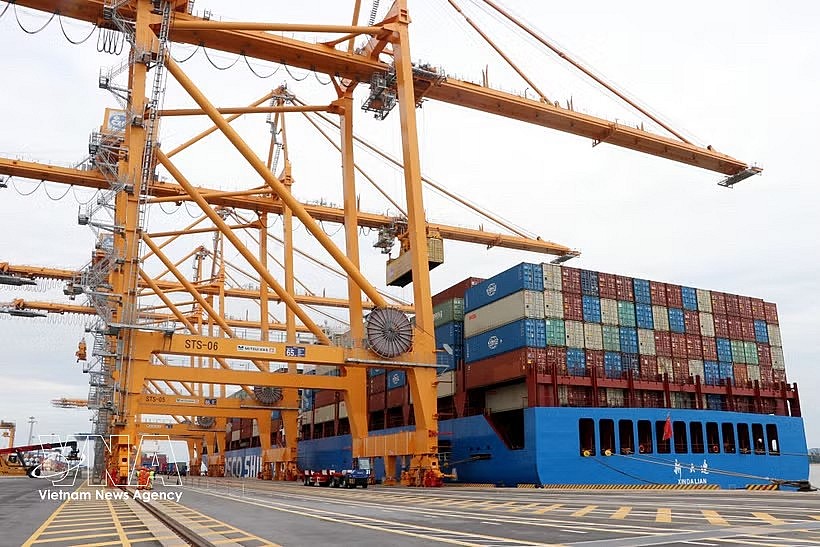 |
| Containers are loaded at Hai Phong Port TIL International Terminal (HTIT). (Photo: VNA) |
According to the ASEAN Center for Energy, full APG connectivity could contribute up to 3 trillion USD to regional GDP by 2040 and create around 1.45 million jobs. Le Phuong Hoa, Deputy Director of the Institute for Asia-Pacific Studies under the Vietnam Academy of Social Sciences, stressed that maintaining ASEAN centrality is essential for safeguarding the region’s development space and strengthening cooperation based on international law.
Expanding cooperation space
Beyond traditional trade, the digital economy is becoming a new growth engine for ASEAN, with Vietnam among the region’s most dynamic markets. According to the e-Conomy SEA 2025 report, ASEAN’s digital economy could reach 305 billion USD in gross merchandise value (GMV) this year, up 17% year-on-year.
E-commerce remains the key growth driver, with Vietnam among the fastest-growing markets in the region. Vietnam is also promoting cooperation in the digital sector through efforts to conclude the ASEAN Digital Economy Framework Agreement (DEFA), which is expected to facilitate cross-border data flows, digital trade and greater participation of small and medium-sized enterprises in the regional digital ecosystem.
Meanwhile, green transition is opening up new avenues for cooperation. Vietnam’s electric vehicle adoption rate has reached about 33% of total vehicle sales, significantly above the ASEAN average. Despite strong growth, experts believe there remains substantial room for deeper cooperation, as intra-ASEAN trade accounts for only about 20–22% of the bloc’s total trade.
To make better use of regional FTAs, Vietnamese enterprises need to enhance competitiveness, strengthen brands, increase technological content in exports, and meet higher standards in green transition, digitalisation and sustainable development.
At the 27th ASEAN Economic Community Council Meeting, Deputy Minister of Industry and Trade Phan Thi Thang affirmed Vietnam’s readiness to work closely with other ASEAN members to enhance the resilience of the regional economy.
Singapore, Vietnam see closer links in industrial, technology and energy supply chains
Trade between Vietnam and Singapore over the five-month period of 2026 pointed to closer links between the two economies in industrial, technology and energy supply chains, showing efforts by both sides to adapt and strengthen resilience amid regional and global geopolitical uncertainties.
According to the Vietnam Trade Office in Singapore, Vietnam remained Singapore’s 10th-largest trading partner during the period, with bilateral trade reaching SGD23.3 billion, equivalent to about US$18.022 billion, up 43.4% from the same period in 2025.
Singapore’s exports to Vietnam reached SGD12.3 billion, up 4.8%, while its imports from Vietnam rose sharply by 142.9% to SGD 1 billion. Based on domestic exports alone, the island citty state recorded a trade deficit with Vietnam of nearly SGD7.3 billion.
Three product groups continued to post strong growth: electrical machinery, equipment and parts (HS 85); mineral fuels, oil and related products (HS 27); and nuclear reactors, boilers, machinery and mechanical appliances (HS 84).
For HS 85, Singapore’s exports to Vietnam declined slightly by 2.8%, while imports from Vietnam surged 161.8%. For HS 27, growth hit 28.8% and 244.9%, respectively, while HS 84 recorded increases of 49.7% and 268.7%.
This trend suggests that rising trade flows are not merely short-term growth in turnover, but also indicate increasingly close economic links in regional supply chains, particularly in electronics, machinery, energy and logistics.
A report released by Singapore’s Ministry of Trade and Industry (MTI) on June 17 showed that the country’s non-oil domestic exports rose 38.4%, with electronics exports surging 94.8%, largely due to demand related to artificial intelligence (AI), integrated circuits, data storage products and personal computers.
This has created favorable conditions for HS 85 and HS 84, while also reflecting Vietnam’s growing participation in regional supply chains for electronics, components, machinery and industrial equipment.
For HS 27, growth stemmed mainly from shifts in energy supply and Vietnam’s efforts to diversify import sources, VOV reported.
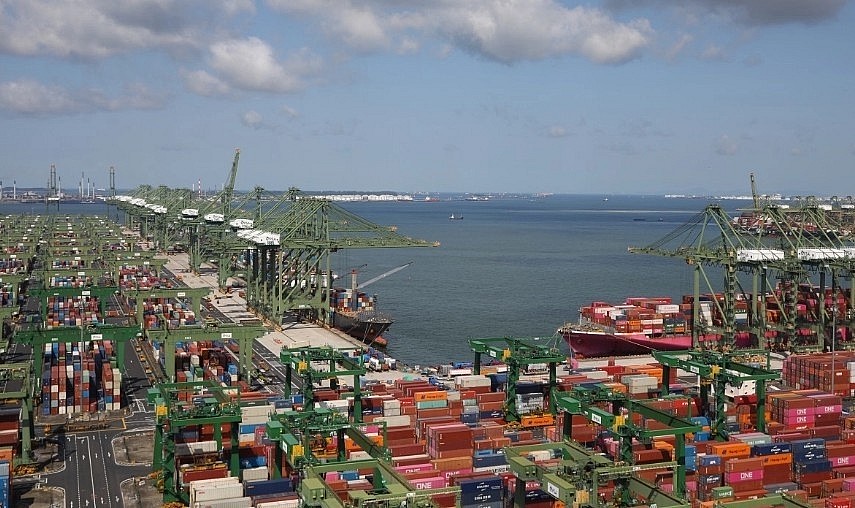 |
| A view of the Port of Singapore Authority's Pasir Panjang Terminal (Illustrative image) |
During the past four months of 2026, Vietnam’s imports of refined petroleum products soared 28.7%, while LPG imports increased 34.5%. In this context, Singapore continues to play a key role as a regional hub for fuel trading, storage, refining and distribution.
Overall, growth in HS 85, HS 84 and HS 27 further highlights increasingly close economic links between Vietnam and Singapore in industrial, technology and energy supply chains.
According to Cao Xuan Thang, Vietnam’s Trade Counsellor in Singapore, although the island city state’s economy is likely to maintain positive growth momentum in 2026, the overall outlook remains uncertain due to external volatility.
As a high-purchasing-power market, a major trade and financial hub, and a gateway to regional supply chains, Singapore is set to maintain strong demand for technology products, components, support services, construction-related goods, logistics, food and beverages, and essential consumer products.
However, Vietnamese businesses need to pay close attention to quality, standards, delivery reliability and price competitiveness, particularly as Singaporean importers and consumers may become more cautious amid rising inflation and living costs.
Vietnam among top 10 peaceful counties in Asia-Pacific: 2026 Global Peace Index
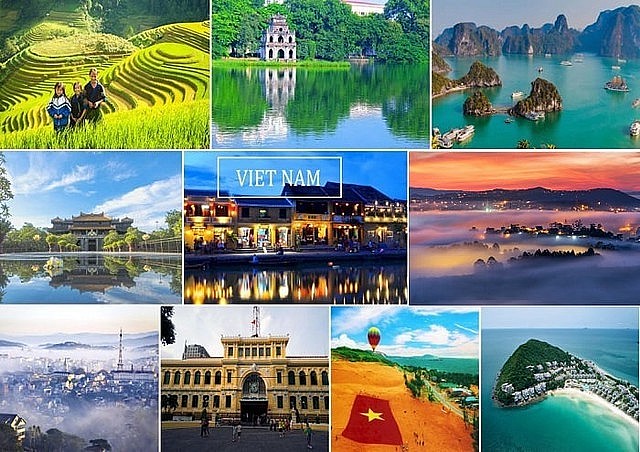
Vietnam ranked eighth in the Asia-Pacific and 41st globally in the 2026 Global Peace Index (GPI).
The Southeast Asian nation's overall score in the index was largely unchanged at 1.738. The country remained in the GPI's second-highest category.
The index groups countries into five tiers: very high, high, medium, low and very low levels of peace, along with a separate category for countries not included in the report.
With this score, Vietnam is also in the top four most peaceful countries in Southeast Asia, ranking behind Singapore (1.435), Malaysia (1.513) and Timor-Leste (1.681), cited VGP.
 |
| Photo: VGP |
Produced by the Institute for Economics and Peace since 2007, the annual GPI report ranks 163 independent countries and territories according to their level of peacefulness, covering 99.7 per cent of the world's population.
It measures the state of peace across three domains: societal safety and security, ongoing domestic and international conflict and the degree of militarization.
 | Vietnam News Today (Jun. 16): Vietnam-France Cooperation Supports Comprehensive Child Development Vietnam News Today (Jun. 16): Vietnam - bridge in advancing ASEAN–Russia relations; Vietnam, China promote development strategy connectivity, substantive cooperation; Vietnam-France cooperation supports comprehensive child ... |
 | Vietnam News Today (Jun. 17): Vietnam Promotes Int’l Cooperation on Ocean Governance at United Nations Vietnam News Today (Jun. 17): PM Le Minh Hung departs for ASEAN-Russia Summit in Kazan;Vietnam, Canada seek deeper cooperation in media, education and innovation; Vietnam ... |