Vietnam, Thailand strengthen investment ties, smart city cooperation
The Vietnamese Ministry of Foreign Affairs, the Thai Embassy in Vietnam, and the People's Committee of Phu Tho province jointly held the Thai Connect in Phu Tho 2026 program on June 17, attracting around 400 representatives from government agencies, diplomatic missions, business associations, and enterprises from both countries.
The event featured a range of investment and trade promotion activities, business matching sessions, and the Thai Connect Expo. A key highlight was the thematic discussion, "Thailand-Vietnam connectivity: smart cities as a driver for economic growth and sustainable development," where participants exchanged experience and explored cooperation in digital transformation, smart urban development, green growth, and sustainable development.
On the occasion, Vietnamese and Thai partners exchanged many important cooperation documents, including a letter of intent by CP Group to expand its investment project in Phu Tho with an estimated capital of 320 million USD, as well as investment memoranda of understanding involving Central Retail Vietnam and MM Mega Market Vietnam.
The program also officially launched the implementation of the Doan Hung Industrial Park – AMATA City Phu Tho project, developed by Thailand's AMATA Corporation. Covering nearly 500 hectares, the project is designed as a modern eco-industrial park and regional high-tech manufacturing centre, and is expected to create a new growth engine for the province.
Deputy Minister of Foreign Affairs Nguyen Manh Cuong said the event was held during the year marking the 50th anniversary of Vietnam–Thailand diplomatic relations (August 6, 1976–2026). Over the past five decades, bilateral ties have evolved into one of the region's most dynamic and effective partnerships.
Thailand is currently Vietnam's largest trading partner within ASEAN, while Vietnam ranks as Thailand's sixth-largest trading partner globally. Bilateral trade reached 22.07 billion USD in 2025, with both sides aiming to increase the figure to 25 billion USD in the coming years. Thailand also has 805 valid investment projects in Vietnam with a combined registered capital of 15.4 billion USD.
Thai Ambassador to Vietnam Urawadee Sriphiromya described the program as one of the activities contributing to the implementation of the Comprehensive Strategic Partnership between the two countries. She praised Phu Tho authorities for creating favourable conditions for Thai businesses, saying this has strengthened investor confidence and encouraged further investment expansion, according to VNA.
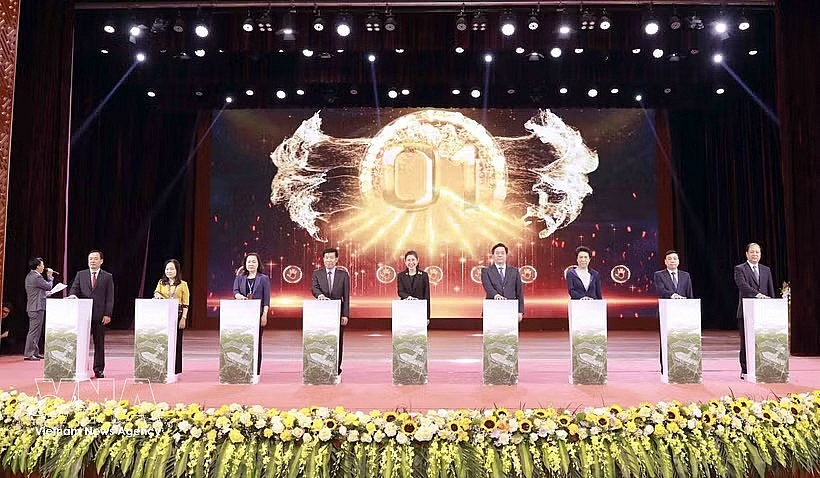 |
| Delegates press the button to officially launch the Doan Hung Industrial Park – AMATA City Phu Tho project at the conference. (Photo: VNA) |
Chairman of the Phu Tho People's Committee Tran Duy Dong said the program reflects the province's commitment to implementing Vietnam's foreign policy and international integration strategies while promoting the Vietnam–Thailand Comprehensive Strategic Partnership Action Program for 2026–2031. It also supports the "Three Connects" strategy, focusing on supply chain connectivity, business and local government partnerships, and the alignment of sustainable growth strategies.
As of June 2026, Thailand had 16 investment projects in Phu Tho with a total registered capital exceeding 400 million USD, mainly in manufacturing, industrial infrastructure, trade and services, and real estate. The province hopes to attract more Thai investment in high technology, logistics, smart cities, green energy, the circular economy, agriculture, and high-quality tourism.
Vietnam’s trade surplus with EU expands amid economic headwinds
Vietnam’s trade with the European Union (EU) remained resilient in the first five months of 2026, with exports posting robust double-digit growth and the country’s trade surplus with the bloc climbing 11.3% year-on-year to US$18.1 billion, despite slowing economic activity in Europe.
Surplus tops US$18 billion
Trade between Vietnam and the EU maintained momentum during the January–May period, supported by the EU – Vietnam Free Trade Agreement (EVFTA) and sustained demand for key Vietnamese exports, even as the EU grappled with inflationary pressures and sluggish consumer spending.
Latest data from the Customs Department showed bilateral trade reaching US$36 billion during the five-month period. Exports to the EU rose 16.9% from a year earlier to US$26 billion, while imports increased 21.6% to nearly US$8 billion, leaving Vietnam with a trade surplus of about US$18.1 billion.
Strong performances were recorded across major export categories, including electronics, garments and textiles, wood products and agricultural commodities. Imports from the EU were concentrated on machinery, equipment and production technologies.
The bloc’s growing contribution also helped lift Vietnam’s total trade turnover to more than US$445 billion in the first five months, up 25% year-on-year.
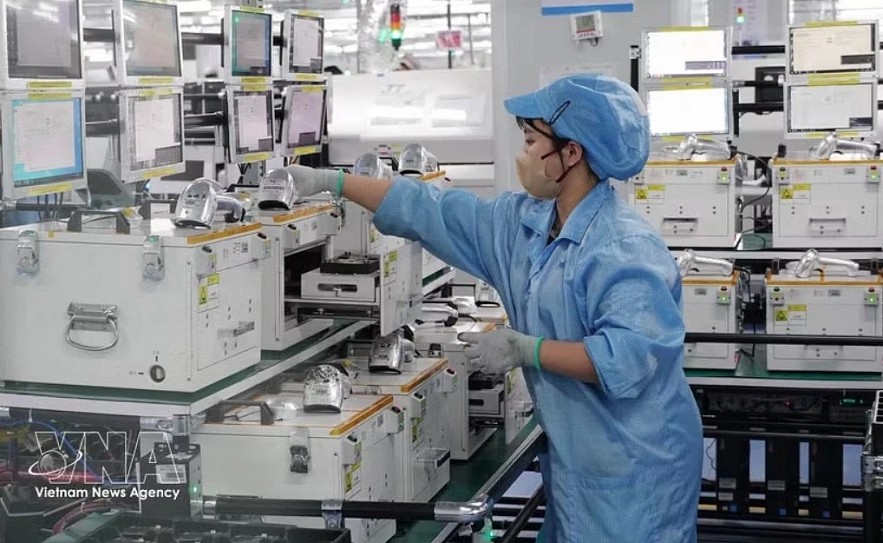 |
| Production of electronic components at DBG Technology Vietnam Co., Ltd. in Yen Binh Industrial Park, Thai Nguyen province. (Photo: VNA) |
Vietnam is currently the EU’s largest trading partner in ASEAN. In 2025, bilateral trade approached US$74 billion, with Vietnamese exports to the bloc reaching US$56.2 billion, up 8.6%, while imports rose 5.4% to US$17.6 billion. The figures translated into a record trade surplus of US$38.6 billion.
Last year, computers, electronic products and components led export earnings at US$10.89 billion, followed by machinery, equipment and spare parts at US$7.42 billion, and phones and components at US$6.9 billion, all posting growth from the previous year.
The Ministry of Industry and Trade attributed the strong performance largely to the EVFTA, which has significantly expanded market access for Vietnamese goods in the EU’s nearly 500-million-consumer market. Rising exports and a steadily widening trade surplus have further strengthened Vietnam’s role in global supply chains.
Since the agreement took effect in August 2020, bilateral trade has surged. Bilateral trade turnover increased from US$49.7 billion in 2020 to US$68.4 billion in 2024 before approaching US$74 billion in 2025. Over the same period, Vietnam’s exports to the EU grew from US$35.1 billion to US$56.2 billion, while its trade surplus nearly doubled from US$20.5 billion to almost US$39 billion.
The sustained growth highlights the Vietnam – EU economic partnership as one of the country’s most stable and successful trade relationships. European businesses increasingly regard Vietnam as a strategic link in global supply chains thanks to its strong FDI attraction, diversified export markets and extensive network of free trade agreements.
Raising supplier standards
The steady rise in exports and trade surplus since the EVFTA entered into force reflects Vietnamese businesses’ growing ability to meet the EU’s stringent quality and regulatory requirements. Many products have effectively leveraged tariff preferences under the agreement to generate export revenues exceeding US$1 billion, while local firms have deepened their integration into the supply chains of European multinational corporations.
At the same time, exporters face mounting pressure as the EU tightens rules on environmental protection, carbon emissions, product traceability and corporate responsibility.
Dau Anh Tuan, vice secretary-seneral and director of the Legal Department at the Vietnam Chamber of Commerce and Industry (VCCI), said globalisation continues to create opportunities, but businesses must also adapt to increasingly demanding standards on sustainability, transparency and accountability.
The EU currently accounts for around 13% of Vietnam’s total exports and is becoming an increasingly important destination as the country seeks to diversify markets amid growing global trade uncertainties. According to the Ministry of Industry and Trade, the EU trade landscape is being reshaped by three major trends: US tariff policies, green transition and digital transformation. Together, these forces are redefining global supply chains, import regulations and supplier expectations.
To stay competitive, many textile and garment manufacturers are accelerating investments in green production and sustainable development. Garco 10 Corporation, for example, is investing heavily in modern equipment, digitalisation and smart manufacturing lines at its new factory in Hung Yen province. More than VND142 billion (US$5.39 million) has been earmarked for equipment upgrades and digital transformation, alongside nearly VND40 billion for construction and VND29.5 billion for additional investment projects.
Tran Ngoc Quan, Trade Counselor at the Vietnam Trade Office in Belgium and the EU, said Vietnamese enterprises must proactively align with the requirements of the European Green Deal while advancing circular economy models, sustainable production and responsible consumption to secure long-term growth in the European market.
El Nino strengthens, threatening water shortages across Vietnam
Meteorologists warn that a powerful El Nino event could bring hotter temperatures, reduced rainfall and heightened climate risks to many parts of Vietnam.
El Nino has officially formed and is forecast to strengthen further in the coming months. Vietnam could face reduced rainfall, worsening drought conditions and increased saltwater intrusion, while the threat of powerful storms, extreme rainfall and flash floods remains.
Could match or even exceed the historic El Nino event
Speaking to the media on June 17 about disaster preparedness, Dang Thanh Mai, Deputy Director General of the Department of Meteorology and Hydrology, said both domestic and international forecasting models indicate that El Nino is almost certain to persist from June 2026, intensify during the second half of the year and potentially continue into early 2027.
Notably, the probability of a very strong El Nino event is currently estimated at 60-65%, comparable to the 2015-2016 episode and potentially ranking among the strongest El Nino events recorded since 1950.
According to Mai, if this scenario materializes, average temperatures nationwide could rise by 0.5-1.5 degrees Celsius above long-term averages, with increases of 1-2 degrees Celsius possible during the final months of the year. Rainfall could decline by 25-50%, particularly across Central Vietnam, the Central Highlands and the South.
"As a result, the risks of drought, water shortages and saltwater intrusion will increase in many areas," Mai said.
Mai Van Khiem, Director of the National Center for Hydro-Meteorological Forecasting, added that most major meteorological agencies worldwide have now confirmed the emergence of El Nino. In Vietnam, the seasonal climate bulletin released on June 15 also officially recognized the phenomenon.
According to Khiem, the likelihood of a strong El Nino has been rising rapidly. While forecasts in April placed the probability at around 20%, it climbed to 57% in May and reached approximately 65-66% in the June update.
"Current trends suggest a very high probability that El Nino will reach an intensity similar to the 2015-2016 event, and the possibility of it becoming even stronger cannot be ruled out," Khiem said.
The 2015-2016 El Nino brought prolonged heatwaves, severe drought and historic saltwater intrusion across many localities, particularly in the South Central Coast, the Central Highlands and the Mekong Delta.
Less rainfall does not mean fewer disasters
Forecasts indicate that rainfall during this year's wet season in the north-central and central coastal regions will remain below average, increasing the risk of water shortages for agricultural production.
Meanwhile, the Central Highlands and the Mekong Delta are expected to be among the regions most heavily affected by El Nino, facing elevated risks of drought and saltwater intrusion.
Khiem noted that lessons from the 2019-2020 El Nino demonstrated how early warnings and adjustments to agricultural planning could significantly reduce damage. Many localities proactively altered planting schedules and advanced crop cycles to avoid peak drought and salinity periods, according to VNN.
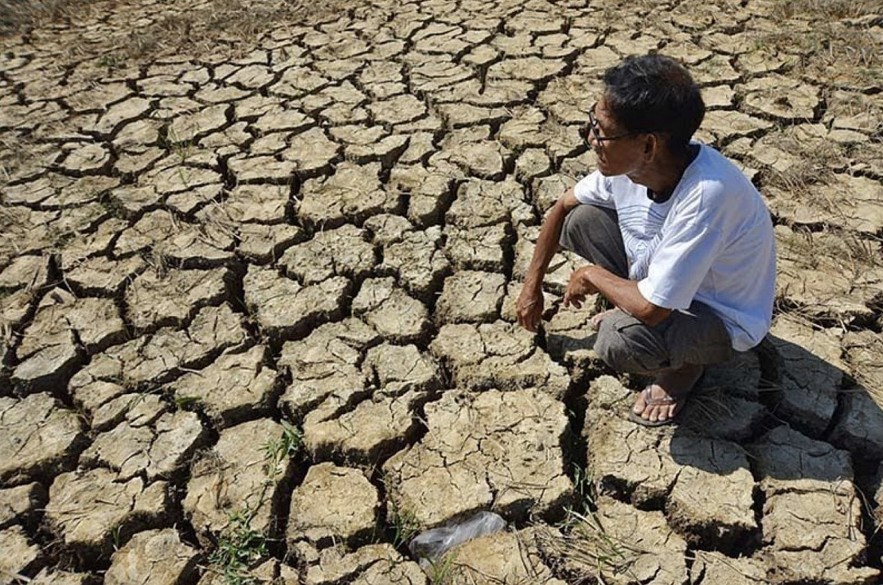 |
| El Nino increases the risk of drought, water shortages and saltwater intrusion across many regions. Photo: Dinh Tuan |
In the Central Highlands, the 2026-2027 dry season is expected to be drier than normal, with reduced rainfall and an earlier end to the rainy season. This could directly affect major cash crops such as coffee and pepper. Authorities are therefore being urged to develop water storage plans early to ensure adequate supplies for both production and daily use.
One important point, experts say, is that El Nino typically reduces the number of storms and tropical depressions forming in the East Sea compared with long-term averages. However, that does not mean disaster risks will diminish.
Powerful storms capable of causing severe damage can still occur during El Nino years. Extreme weather events such as localized heavy rain, flash floods and landslides also remain significant threats.
Khiem emphasized that although overall rainfall is expected to decrease, short-duration extreme rainfall events could still occur, triggering urban flooding, major river floods and landslides in mountainous areas.
"We must not become complacent simply because the number of storms or average rainfall decreases. Extreme weather events can still occur and cause serious damage," he said.
 | Vietnam News Today (Jun. 14): Prime Minister’s upcoming trip to give fresh impetus to Vietnam - Russia ties: Ambassador; Vietnam seeks expanded US partnership in ... |
 | Vietnam News Today (Jun. 15): PM Le Minh Hung Heads to Russia for Landmark ASEAN-Russia Summit Vietnam News Today (Jun. 15): Top leader To Lam leads Vietnam’s foreign affairs and integration steering committee; PM Le Minh Hung heads to Russia for ... |