| Vietnam News Today (Jun. 19) notable headlines PM attends plenary session of ASEAN – Russia Commemorative Summit Vietnam, Canada seek to elevate comprehensive partnership Vietnam targets at least 10 bln-dollar strategic technology firms by 2030 Chinese businesses see Vietnam as a key growth market in Southeast Asia Vietnam’s four-decade reform results in steady rise in economic freedom Vietnamese association, Korean journalists forge partnership Direct Hanoi-Amsterdam route boosts Vietnam-Netherlands ties Hundreds of companies join Automechanika Ho Chi Minh City 2026 14th National Congress of Vietnam Women's Union wraps up |
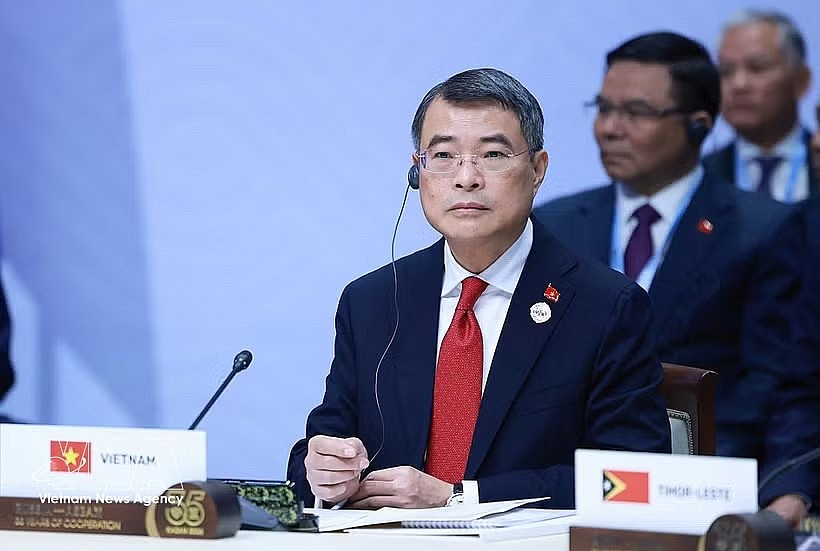 |
| Prime Minister Le Minh Hung at the plenary session of the ASEAN – Russia Commemorative Summit marking 35 years of relations in Kazan on June 18, 2026. (Photo: VNA) |
PM attends plenary session of ASEAN – Russia Commemorative Summit
Prime Minister Le Minh Hung led a high-ranking Vietnamese delegation to attend the plenary session of the ASEAN – Russia Commemorative Summit marking 35 years of relations in Kazan, the capital of Russia’s Republic of Tatarstan, on June 18.
The plenary session saw the presence of Russian President Vladimir Putin, ASEAN Secretary-General Kao Kim Hourn, and heads of delegations from 11 ASEAN member states.
Opening the meeting, President Putin welcomed participants and underscored ASEAN’s role in international relations. He noted that the bloc enjoys a firm standing not only across the Asia-Pacific region but also globally, having demonstrated resilience over time and developed an intergovernmental cooperation framework grounded in widely recognized principles of international law and mutual respect for interests.
The Russian leader outlined the summit agenda, which focuses on current regional and international issues, reviews the achievements of ASEAN – Russia cooperation over the past 35 years, and discusses future directions, objectives and priorities for the ASEAN – Russia Strategic Partnership.
He placed particular emphasis on economic cooperation, stressing that collaborative efforts should be inclusive and benefit enterprises of all sizes.
The commemorative summit is regarded as an important occasion to deepen the ASEAN – Russia Strategic Partnership, reinforce political commitments, inject fresh momentum into cooperation and shape strategic orientations for the next phase of relations across the three pillars of politics – security, economy, and society – culture.
PM Hung’s participation highlights the strategic importance Vietnam attaches to ASEAN – Russia cooperation and reflects the country’s wish to continue playing a bridging role in promoting a more substantive and effective partnership between the bloc and Russia, commensurate with its potential and making a new stride as the two sides mark 35 years of relations, cited VNA.
ASEAN – Russia relations began in July 1991 when a Russian Deputy Prime Minister attended the opening session of the 24th ASEAN Foreign Ministers’ Meeting in Kuala Lumpur. Russia subsequently became a full dialogue partner of ASEAN at the 29th ASEAN Foreign Ministers’ Meeting in Jakarta in July 1996, establishing a formal cooperation framework.
A major milestone came in 2005 with the first ASEAN – Russia Summit in Kuala Lumpur, where both sides adopted the Joint Declaration on Progressive and Comprehensive Partnership and endorsed a Comprehensive Programme of Action for 2005–2015.
The partnership was further strengthened at the second ASEAN – Russia Summit in Hanoi in 2010, when the two sides reaffirmed their commitment to further deepening ties and enhancing coordination in the evolving Asia-Pacific regional architecture. The summit also highlighted Vietnam’s active role in promoting ASEAN – Russia relations and Russia’s participation in ASEAN-led mechanisms, including the East Asia Summit (EAS) and the ASEAN Defence Ministers’ Meeting Plus (ADMM+).
To mark the 20th anniversary of dialogue relations, ASEAN and Russia held a commemorative summit in Sochi in 2016 under the theme “moving towards a strategic partnership for mutual benefit”, adopting the Sochi Declaration to guide future cooperation.
A major breakthrough came at the third ASEAN – Russia Summit in Singapore in November 2018, when the two sides elevated their relationship to a Strategic Partnership. They also adopted a declaration on security and information and communication technology cooperation and witnessed the signing of an economic cooperation memorandum between ASEAN and the Eurasian Economic Commission.
The fourth ASEAN – Russia Summit, held in 2021 to mark 30 years of relations, reaffirmed efforts to enhance the Strategic Partnership. Leaders approved a joint statement on building a peaceful, stable and sustainable region and a declaration on combating illicit drug trafficking.
ASEAN – Russia cooperation is currently guided by the Comprehensive Plan of Action for 2021–2025. Activities are supported by the ASEAN – Russia Dialogue Partnership Financial Fund, established in 2007.
Russia appointed its first Ambassador to ASEAN in 2009 and established its Mission to ASEAN in 2017, further strengthening coordination and policy dialogue with the bloc.
Vietnam, Canada seek to elevate comprehensive partnership
National Assembly (NA) Chairman Tran Thanh Man on June 18 received newly appointed Canadian Ambassador to Vietnam Jim Nickel, expressing confidence that the two countries will continue to expand cooperation and bring their Comprehensive Partnership to new heights.
During the reception, Chairman Man extended his regards to Canada's Governor General, Speakers of the House of Commons and Senate, and the Canadian people. He also commended Ambassador Nickel’s efforts to promote bilateral cooperation.
The top legislator said he is pleased with the strong development of Vietnam–Canada relations in recent years, noting that high-level exchanges and cooperation across various channels have been maintained effectively, helping strengthen mutual understanding and trust.
Two-way trade has grown rapidly, reaching 8.6 billion USD in 2025, making the two countries important trading partners. Cooperation in science and technology, education, and training has also progressed positively. Legislative ties have continued to deepen, marked by the establishment of parliamentary friendship groups in both countries.
Chairman Man affirmed that Vietnam considers Canada one of its important partners, stressing that the two nations share common interests in peace, stability, the rule of law, diversification, and multilateralisation. He highlighted significant potential for cooperation in energy, green growth, innovation, and high technology.
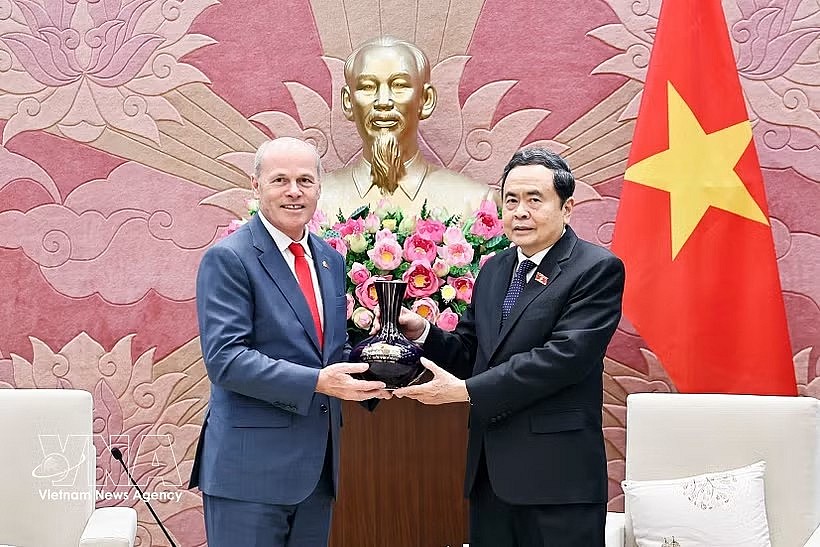 |
| National Assembly Chairman Tran Thanh Man presents a souvenir to Canadian Ambassador to Vietnam Jim Nickel. (Photo: VNA) |
The NA Chairman underscored the need to make better use of opportunities provided by the Comprehensive and Progressive Agreement for Trans-Pacific Partnership (CPTPP) to broaden cooperation for mutual benefit. Such efforts, he said, would maintain peace, stability, cooperation, and development in the Asia-Pacific region and beyond.
He called on the Canadian ambassador to continue promoting collaboration in key areas, including energy, science and technology, innovation, the green economy, and high-quality human resources development, according to VNA.
Regarding parliamentary relations, Chairman Man thanked Canada for its support in improving Vietnam’s legal framework and enhancing the capacity of NA agencies. He proposed increased delegation exchanges, closer cooperation between specialised committees, stronger engagement of parliamentary friendship groups, and continued coordination at regional and global inter-parliamentary forums.
For his part, Nickel congratulated the host on his election as Chairman of the 16th-tenure NA, as well as on the success of the 14th National Party Congress and the elections of deputies to the 16th National Assembly and People’s Councils for the 2026–2031 term.
The ambassador reaffirmed that Canada views Vietnam as a key partner in ASEAN and an important bridge for strengthening Canada–ASEAN relations. He agreed with Chairman Man’s assessment of the promising prospects for bilateral cooperation and noted that both countries share strong interests in maintaining peace, stability, free trade, a rules-based international order, and strategic autonomy.
Nickel pledged that Canada would work closely with Vietnam to deepen cooperation in sustainable supply chains, food and energy security, climate change response, and legislative exchanges, while strengthening coordination at multilateral forums, particularly within the CPTPP and the Asia-Pacific Economic Cooperation (APEC) forum.
Vietnam targets at least 10 bln-dollar strategic technology firms by 2030
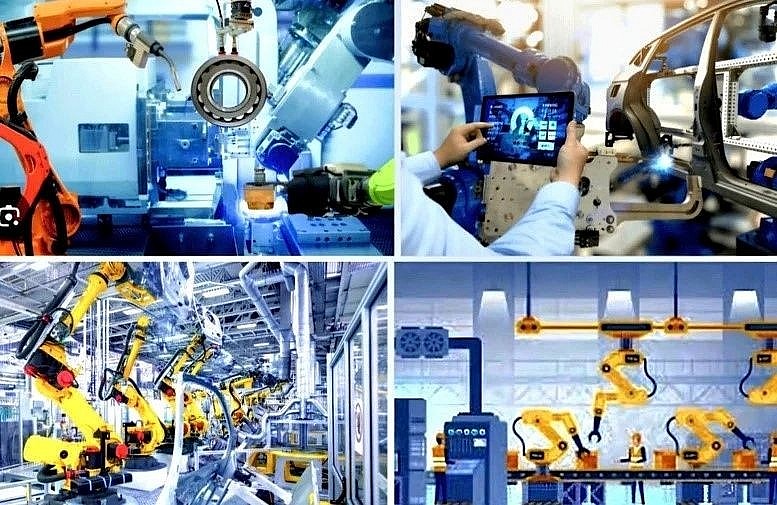
Vietnam aims to develop at least 10 strategic technology companies generating annual revenues of US$1 billion or more by 2030 as part of efforts to strengthen digital infrastructure, data sovereignty, artificial intelligence and technological self-reliance under a newly approved national development plan.
The target is outlined in the Government’s Strategy for Developing Large-Scale Strategic Technology Enterprises for the 2026–2030 period, which seeks to create national champions capable of driving innovation, digital transformation and sustainable economic growth.
High standards for technology and innovation
Under the strategy, strategic technology enterprises will be assessed not only by their business scale but also by their technological capabilities and innovation performance.
To qualify, a company must generate annual revenue of at least US$1 billion, employ a minimum of 5,000 workers and allocate at least 3% of its revenue to research and development (R&D).
In addition, each enterprise must hold at least one patent granted by a leading international intellectual property office, including the United States Patent and Trademark Office (USPTO), the European Patent Office (EPO), the Japan Patent Office (JPO), the Korean Intellectual Property Office (KIPO) or the China National Intellectual Property Administration (CNIPA).
The designated strategic technology enterprises are expected to play a leading role in developing a modern, integrated national digital infrastructure to support digital transformation, the digital economy and national digital security.
Vietnam seeks to put at least six new international submarine fiber-optic cable routes into operation by 2030, including at least one route invested in and led by a domestic enterprise, VOV reported.
The country also plans to expand 5G coverage to 99% of the population and develop five large-scale green data centres that meet international standards, supporting its ambition to become a regional data hub.
Advancing AI and Make-in-Vietnam technology ecosystem
Under the plan, strategic technology enterprises will help build an open, interoperable and secure national digital data ecosystem, enabling standardised and responsible data sharing and utilisation.
The initiative is intended to accelerate the development of digital government, the digital economy and digital society while safeguarding national data sovereignty.
 |
| Vietnam aims to develop at least 10 strategic technology companies generating annual revenues of US$1 billion or more each by 2030 (Photo: danviet.vn) |
Vietnam has set a goal of achieving self-reliance in at least 70% of technologies included on the list of strategic technologies designated by the Prime Minister. The country also aims to rank among the top three ASEAN nations in artificial intelligence research, development and application.
In addition, at least six AI systems built on domestic data resources are expected to be developed for key sectors, including justice, finance, agriculture, environment, education, healthcare, culture, sports and tourism.
Creating a supportive environment for technology enterprises
Beyond technological targets, the Government emphasised the importance of improving institutions and creating favorable conditions for innovation-driven businesses.
Priority resources will be directed toward major science and technology, innovation and digital transformation projects. Authorities will also strengthen intellectual property protection, support international trade promotion and help Vietnamese technology companies expand into global markets.
Local governments are encouraged to introduce regulatory sandbox mechanisms for emerging technologies, products and services, allowing innovative solutions to be tested under controlled conditions and facilitating the commercialization of new technologies.
Chinese businesses see Vietnam as a key growth market in Southeast Asia
Vietnam is increasingly viewed by Chinese businesses as one of ASEAN’s most dynamic consumer markets and a strategic gateway for regional expansion, thanks to its strong economic growth, young population, expanding middle class and deep integration into global trade networks.
The assessment was highlighted at the opening of the International Baby Products & Toys Expo (IBTE Hanoi 2026) and the Hanoi Trendy Toys Expo on June 18 at the Vietnam Exhibition Centre in Hanoi.
In his opening remarks, To Ngoc Son, deputy director of the Department of European-American Markets under the Ministry of Industry and Trade, noted that Vietnam has become one of the world’s 32 largest economies after nearly four decades of economic reform, while its trade volume now ranks among the top 15 globally.
According to him, Vietnam’s per capita income has approached US$5,000, while a population of more than 100 million, rapid urbanisation and a growing middle class are helping transform the country into one of the region’s most vibrant consumer markets.
He noted that Vietnam’s extensive participation in free trade agreements and global supply chains has further strengthened its attractiveness to investors and international brands.
Miao Huawei, director of the Exhibition Department at the Trade Development Bureau (TDB) of China’s Ministry of Commerce, confirmed that Vietnam is continuously stepping up its efforts to open the market and improve the investment environment. In addition, the benefits from the Regional Comprehensive Economic Partnership (RCEP) are increasingly taking effect.
He described Vietnam as one of ASEAN’s most promising markets in terms of growth potential and investment opportunities, while also serving as an important hub in the expansion strategies of Chinese companies across Southeast Asia, according to VOV.
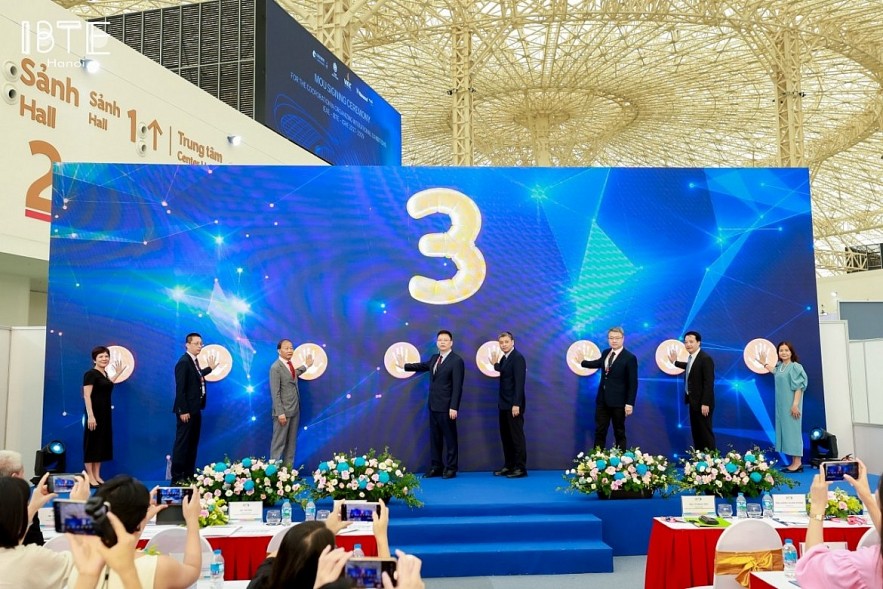 |
| Delegates open the International Baby Products & Toys Expo (IBTE Hanoi 2026) on June 18. (Photo: thoibaotaichinhvietnam.vn) |
Stronger business connectivity, trade promotion and investment cooperation could help unlock the full potential of both the Vietnamese market and the broader regional economy.
He added that industry exhibitions such as IBTE can serve as effective platforms linking suppliers and buyers, facilitating practical business cooperation between companies from the two countries, particularly in light industry and consumer goods sectors.
According to organizers, IBTE Hanoi 2026 covers approximately 20,000 square meters and features more than 1,000 booths operated by around 500 enterprises from Vietnam, China, the Republic of Korea, Japan, Malaysia, Indonesia and other countries.
Exhibits are grouped into five major categories: trendy toys, baby and children’s products, licensed toys, educational toys and stationery products. Many exhibitors are also showcasing innovations in creative toys, early childhood education products and childcare solutions.
Vietnam’s four-decade reform results in steady rise in economic freedom
Vietnam scored 64.4 points, ranking 66th out of 184 economies in the 2026 Index of Economic Freedom published by the Heritage Foundation, above both the global average and the average for the Asia-Pacific region.
The nation continues to receive positive assessments from international organizations regarding the quality of its business environment and the effectiveness of its economic reforms.
The Heritage Foundation noted that since the Index of Economic Freedom was first published in 1995, few economies of comparable size have achieved such significant improvements as Vietnam in its transition toward a market-oriented economy.
The most noteworthy aspect of this year's report is not Vietnam's ranking but its long-term progress.
When the Heritage Foundation first introduced the index in 1995, the country scored only 41.7 points. After more than three decades of Doi Moi and international economic integration, the country's score has risen to 64.4 points—an increase of more than 20 points.
This improvement has elevated Vietnam from the category of economies with low levels of economic freedom to the "moderately free" category. Vietnam's current score also exceeds both the global average of 59.9 points and the Asia-Pacific regional average of 58.6 points.
Today, Vietnam is not only among the world's leading rice exporters but also an important player in the global electronics supply chain, attracting major technology companies to establish manufacturing operations in the country, VGP reported.
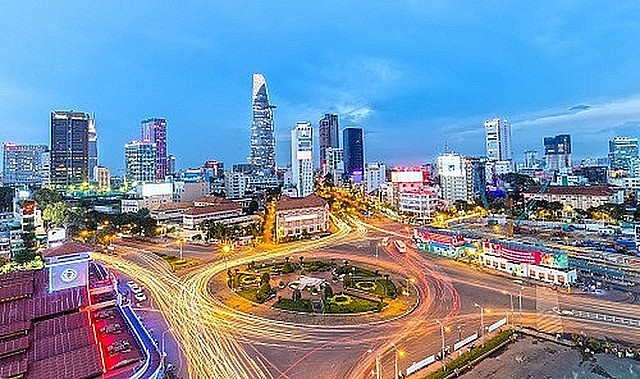 |
| A corner of Ho Chi Minh City - Vietnam's largest economic engine. |
Many international organizations regard Vietnam as one of the world's most dynamic economies. Sustained economic growth over many consecutive years, a young workforce, strong adaptability, and a steadily improving investment climate have made the country an increasingly attractive destination for international capital.
The Heritage Foundation noted that expanding trade, promoting foreign investment, and gradually developing the private sector have been important drivers of Vietnam's economic growth.
Data in the report showed that Vietnam has achieved a high degree of economic integration. Its total trade volume is equivalent to approximately 164.8 percent of GDP, reflecting the economy's close integration with global markets.
Vietnam also performed strongly in several component indicators. Its fiscal health score reached 96.9 points, placing it among the highest in the world, while its tax burden score stood at 89.5 points. Public debt remains at around 31.3 percent of GDP, significantly lower than that of many advanced economies.
These factors contribute to a stable foundation for long-term growth and help maintain Vietnam's attractiveness to international investors.
The Index of Economic Freedom is compiled by the Heritage Foundation to assess the degree of economic freedom across countries and territories around the world. The 2026 edition evaluates 184 economies based on 12 quantitative and qualitative indicators grouped into four broad categories: the rule of law, government size, regulatory efficiency, and market openness.
Specifically, the assessment covers property rights, government integrity, judicial effectiveness, government spending, tax burden, fiscal health, business freedom, labor freedom, monetary freedom, trade freedom, investment freedom, and financial freedom
 | Vietnam News Today (Jun. 15): PM Le Minh Hung Heads to Russia for Landmark ASEAN-Russia Summit Vietnam News Today (Jun. 15): Top leader To Lam leads Vietnam’s foreign affairs and integration steering committee; PM Le Minh Hung heads to Russia for ... |
 | Vietnam News Today (Jun. 16): Vietnam-France Cooperation Supports Comprehensive Child Development Vietnam News Today (Jun. 16): Vietnam - bridge in advancing ASEAN–Russia relations; Vietnam, China promote development strategy connectivity, substantive cooperation; Vietnam-France cooperation supports comprehensive child ... |