Vietnam–Japan Festival 2026 promotes ties among young generations
The 11th Vietnam–Japan Festival opened in Ho Chi Minh City on March 7, serving as a key annual cultural exchange event that strengthens friendship, deepens the comprehensive strategic partnership between Vietnam and Japan and promotes ties between the younger generations of both countries.
The two-day event featured around 300 booths and a wide range of activities including artistic and cultural performances, trade and tourism promotion, sports events, and people-to-people exchange.
The festival aims to create a vibrant cultural space where people from both countries, especially young people, can share and spread the spirit of the “Cherry Blossom – Lotus Alliance.”
In his opening speech, Vo Van Minh, Chairman of the Ho Chi Minh City People’s Council, highlighted that after more than a decade of development, the Vietnam–Japan Festival has become a vivid symbol of friendship and strong ties between the peoples of the two countries. From an initial cultural exchange event, the festival has grown into a multidimensional platform connecting fields such as culture, arts, trade, tourism, sports, and people-to-people exchange.
This year’s event holds special significance as the festival enters its second decade, opening new prospects for deeper cooperation between the two countries. It is also the first festival held following Ho Chi Minh City’s administrative reorganisation, part of the city’s vision to grow into a dynamic megacity with strong economic potential and expanded international partnerships, reported VOV.
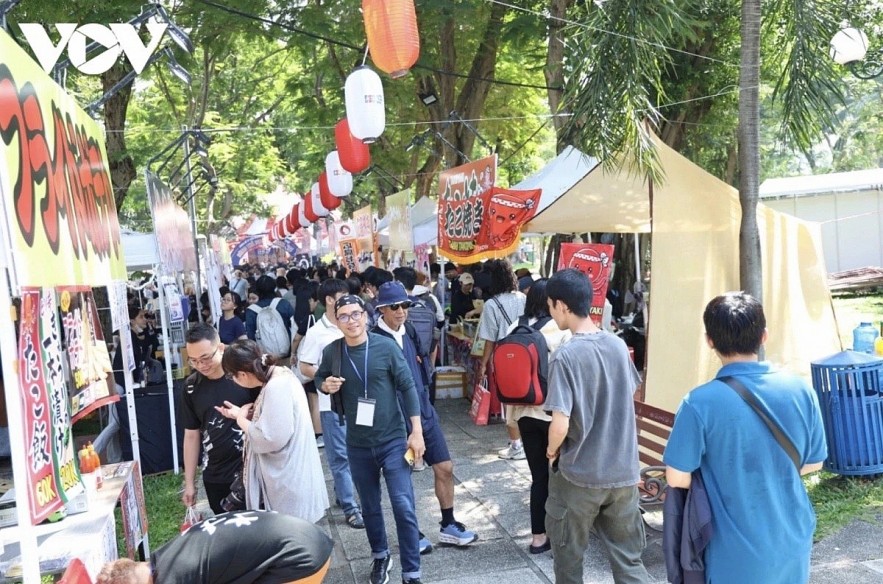 |
| Vietnam–Japan Festival 2026 fosters stronger ties among young generations from both countries. |
Hashimoto Seiko, a member of Japan’s House of Councillors and head of the festival’s organizing committee on the Japanese side, said this year’s festival is the largest ever held, with an expected 500,000 visitors attending the event.
In addition to traditional cultural activities, the organisers have introduced a number of modern urban sports popular among Japanese youth, such as skateboarding, breaking, cycling, double-dutch jump rope, and baseball experiences.
Vietnam aims for higher-value segments in global chains
Vietnam is entering a pivotal stage of development. After years of growth based on abundant labor and strong investment capital flows, the economy now faces a fundamental question: what will be the driver for the next journey?
At the 14th Party Congress, Vietnam reaffirmed its strategic vision: heading toward double-digit GDP growth and reaching higher average income status by 2040. However, recent trends show that the road ahead is by no means easy.
This was analyzed in a January 2026 study by David Dapice from Columbia University, one of the experts who has closely followed Vietnam's economic progress for many years.
He pointed out that the goal of double-digit growth is a very high threshold. Even after achieving impressive GDP growth of nearly 8 percent in 2025, Vietnam's average growth rate for the 2020–2025 period was only 5.7 percent, much lower than the over 7 percent in previous years and far from the 8–10 percent annual target.
This slowdown is not merely cyclical: it reflects structural changes. In recent years, growth rates have shown signs of decelerating compared to the previous period.
The labor force is no longer expanding as fast as before, the process of labor transition from agriculture to industry is nearing its limit, while the demographic advantage is gradually narrowing.
This means that Vietnam cannot continue to rely primarily on expanding the scale of capital and labor to maintain high growth momentum.
Total Factor Productivity (TFP), the most comprehensive measure of innovation and efficiency, needs to be placed at the center of the growth strategy.
Dapice calculated that to maintain a 7 percent growth rate over the next decade, Vietnam's productivity needs to increase by about 3.6–4 percent per year, a major leap compared to the level of about 2.7 percent in the 2010s.
It is concerning that the contribution of TFP to growth is on a downward trend. While in the early 2000s, TFP contributed more than half of GDP growth, this figure has recently fallen below 45 percent, cited VNN.
 |
| Photo: VNN |
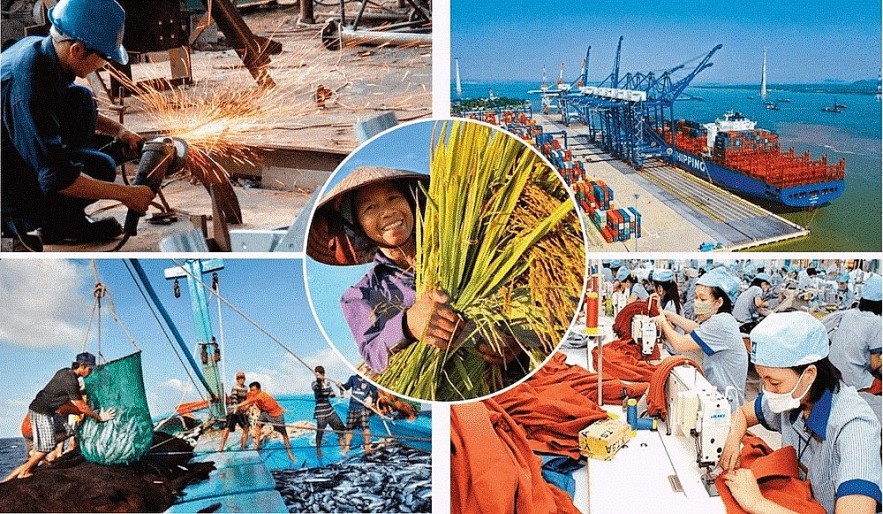
Meanwhile, Vietnam's economy still depends heavily on low value-added assembly activities. For example, only about one-third of the value of Vietnam's booming electronics exports is produced domestically, meaning 35–40 percent of local added value, compared to 55–60 percent in China and over 70 percent in South Korea.
If it continues to only play the role of an outsourcer in the global supply chain, Vietnam will find it difficult to escape the middle-income trap.
However, the good news is that Vietnamese leaders are clearly aware of this reality. A series of recent reforms, especially the four new Politburo resolutions, often called the “four pillars,” emphasize promoting the private sector, technological dynamism, legal reform, and deeper global integration.
In mid-2025, the National Assembly also passed a historic administrative overhaul, merging the country's 63 provinces and cities into 34 larger units to streamline the administrative apparatus and “create a foundation for sustainable growth.”
These steps aim to enhance Vietnam's institutional and organizational productivity, addressing the soft factors that help drive innovation.
Expert Chris Malone, from Dalberg Global Advisor, said for reforms to truly create a transformation, Vietnam needs a unified strategic framework that can connect issues of scale, specialization, and innovation.
Part of the solution will be developing regional economic clusters as a platform to lead Vietnam's next growth phase. These steps will enhance Vietnam's institutional and organizational productivity, addressing the soft factors that help drive innovation.
Economic clusters
In economic history, regional economic clusters have proven to be powerful drivers for upgrading productivity and added value. A cluster is not just a concentration of businesses in the same industry in one locality; it is a complete ecosystem.
This ecosystem includes linked businesses, suppliers, service providers, a highly skilled workforce, and even specialized training facilities and research institutes in a specific field.
When a region reaches sufficient scale, it can develop deep specialization and become a leading global hub in a particular industry.
Thanks to this, the nation can retain a higher percentage of added value domestically and drive faster innovation.
Phu Quoc strengthens appeal as international arrivals soar in early 2026
Phu Quoc island in the Mekong Delta province of An Giang welcomed more than 2.2 million visitors in the first two months of 2026, up 57.7% year on year, with international arrivals soaring 86.4%, reaffirming the island’s growing appeal as a leading tourism destination in Southeast Asia.
According to the provincial Department of Tourism, An Giang served more than 5.8 million tourist arrivals in the two months, generating over 15.75 trillion VND (around 600 million USD) in total tourism revenue, up nearly 60% year on year. International visitors rose sharply by 83.2%, highlighting the strong recovery and expansion of inbound tourism. Notably, the Phu Quoc special zone earned 13.5 trillion VND from tourism activities, accounting for 85.7% of the province’s tourism revenue.
Nguyen Vu Khac Huy, Chairman of the An Giang Tourism Association, said the Phu Quoc special zone is increasingly affirming its strong appeal to international visitors with impressive growth, positioning the “pearl island” as a standout destination in Southeast Asia and a direct competitor to renowned resort islands such as Bali in Indonesia and Phuket in Thailand.
According to Huy, the impressive growth reflects effective tourism promotion campaigns as well as major investments in infrastructure, particularly the launch of international flights to Phu Quoc. However, he emphasised that the surge in international arrivals also raises demands for higher service standards, better environmental protection and richer tourism experiences.
The local tourism sector must continue improving service quality to retain visitors and ensure Phu Quoc lives up to its reputation as a ‘pearl island’ on the global tourism map, he said.
This year, An Giang’s tourism sector aims for a further breakthrough in both visitor numbers and revenue, striving to strengthen its position as a leading cultural and eco-tourism destination in the Mekong Delta.
The local authorities view 2026 as a key year to further strengthen tourism infrastructure and services ahead of APEC Economic Leaders’ Week in 2027, which will be hosted by Phu Quoc.
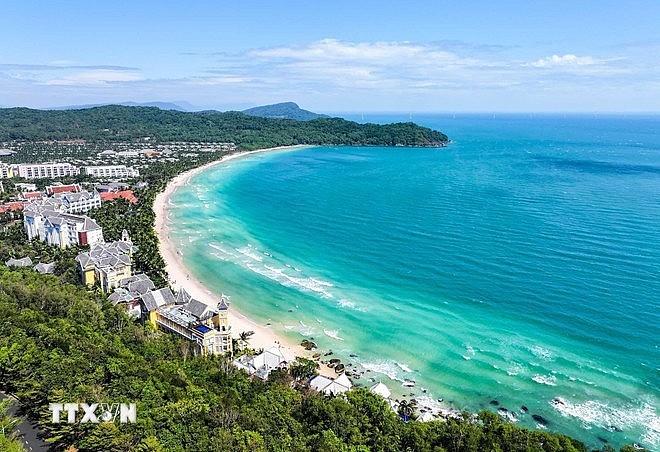 |
| Khem beach in Phu Quoc island of An Giang province. (Photo: VNA) |
Bui Quoc Thai, Director of the provincial Department of Tourism, said preparations are under way to upgrade tourism infrastructure, improve service quality and enhance the island’s international image in the lead-up to the major global event.
Efforts are focusing on accelerating construction projects linked to APEC 2027, protecting the island’s marine environment and training a professional tourism workforce capable of meeting international standards, Thai noted.
The growing influx of international visitors is also considered an important opportunity for Vietnam to promote its image as a dynamic, friendly and attractive destination to APEC member economies.
To further improve the visitor experience, Phu Quoc authorities have launched a tourism rapid response team and a 2026 tourism code of conduct to better protect visitors’ rights, promptly handle incidents, and ensure a safe, transparent and civilised tourism environment. The initiative is expected to strengthen Phu Quoc’s image as a safe and professional destination, while supporting preparations for major international events, particularly APEC 2027, and boosting visitor confidence.
The province is finalizing a tourism development plan for the 2025–2030 period with a vision to 2035, while strengthening tourism linkages with key markets such as Ho Chi Minh City, the Central Highlands and northern mountainous regions to further improve the quality of service and boost competitiveness of its tourism sector.
 | Vietnam News Today (Mar. 3): Vietnam, Brazil push cooperation in agriculture, energy and biotechnology; Ho Chi Minh City tightens friendship with Bulgarian partners; Vietnamese culture ... |
 | Vietnam News Today (Mar. 4): Vietnam Wishes to Lift Ties with Greece to New Level Vietnam News Today (Mar. 4):Vietnam opposes use of force against sovereign nations; Vietnam wishes to lift ties with Greece to new level; Border Guards stand ... |