Vietnam shifts toward high-quality FDI as investors call for stronger reforms
As global competition for foreign direct investment (FDI) intensifies, Vietnam is reshaping its investment attraction strategy by shifting from a focus on “investment quantity” to “investment quality,” prioritising high technology, innovation, sustainability, and value-added industries.
The view was highlighted during a working session between Nguyen Thanh Nghi, head of the Communist Party of Vietnam’s Central Policy and Strategy Commission and domestic and foreign business communities at the Vietnam Connect Forum 2026 held on May 13.
Administrative procedures remain the biggest bottleneck
At the forum, foreign business associations agreed that Vietnam continues to be an attractive investment destination thanks to its political stability, large market size, and strong growth potential. However, many investors argued that traditional competitive advantages such as low labour costs and tax incentives are gradually narrowing within the region.
Bruno Jaspaert, chairman of the European Chamber of Commerce in Vietnam (EuroCham) said, Vietnam should focus not merely on incentives, but on building a stable and predictable investment environment.
According to him, amid the rapid restructuring of global supply chains, investors are increasingly concerned about policy consistency and implementation effectiveness at the local level, factors that directly influence long-term investment decisions.
Meanwhile, Ko Tae-yeon, chairman of the Korean Chamber of Commerce in Vietnam (KoCham), emphasized that administrative procedures remain the largest obstacle facing FDI enterprises in Vietnam.
He noted that although Vietnam has made progress in recent years, procedures related to investment licensing, tax refunds, land access, and sub-licenses are time-consuming and inconsistent across localities, increasing operational costs and risks for businesses.
Several enterprises also proposed extending land lease terms to provide greater stability for large-scale projects and long-term investments, particularly in high-tech sectors.
Investors call for clearer rules rather than higher incentives
Foreign business representatives also argued that Vietnam should no longer compete primarily through cost advantages, as such strategies are becoming less sustainable within the region.
Instead, they stressed the importance of “institutional quality,” including legal transparency, policy predictability, and consistency in implementation.
Some opinions also highlighted the need for clearer regulations regarding Economic Needs Test (ENT) in merger and acquisition activities, as well as improved market access mechanisms as Vietnam participates in next-generation free trade agreements.
In addition, workforce quality was repeatedly identified as a decisive factor, especially as FDI flows increasingly shift toward high-tech industries such as artificial intelligence, semiconductors, and the digital economy.
Vietnam accelerates reforms for new generation FDI
Addressing the meeting, Nguyen Thanh Nghi, head of the Communist Party of Vietnam’s Central Policy and Strategy Commission, highly appreciated the constructive feedback and recommendations put forward by the business community and industry associations, noting that these practical proposals would help enhance the effectiveness of foreign investment attraction and further strengthen linkages between foreign-invested enterprises and domestic businesses.
The Party and the State of Vietnam consistently view the foreign-invested economic sector, together with the state-owned and private sectors, as important pillars of the national economy, maintaining close linkages, complementing one another, and developing in parallel within the country’s new growth model, he emphasized.
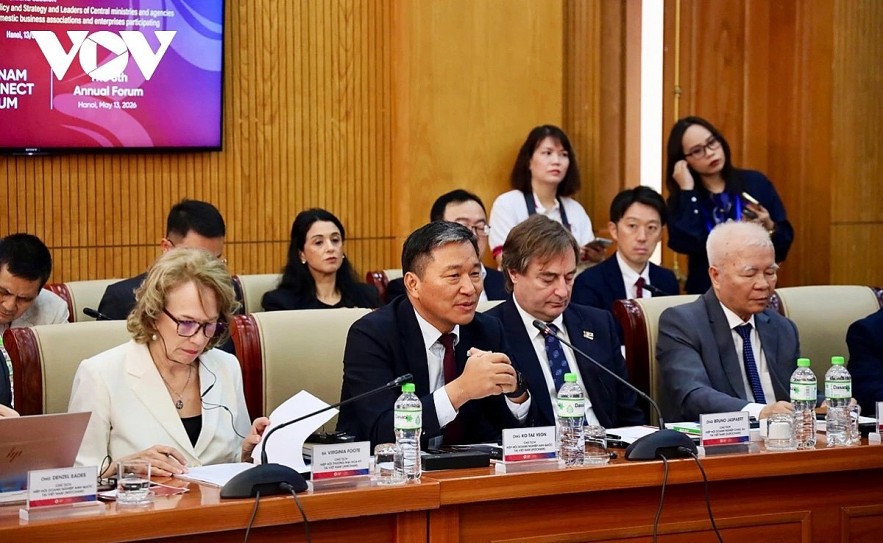 |
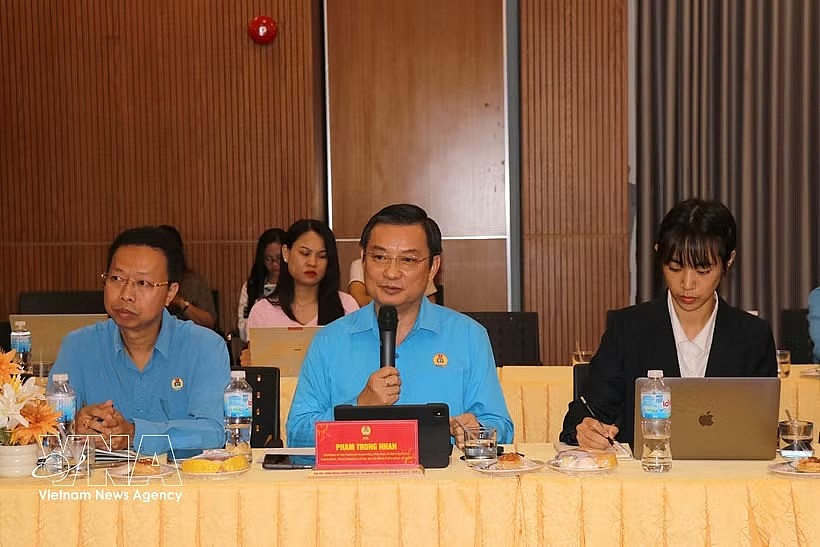
| Representatives of foreign business associations in Vietnam raise their voice and make recommendations to improve Vietnam's FDI attraction capacity |
He said Vietnam has clearly defined its next-stage FDI strategy as improving investment quality, efficiency, and sustainability rather than focusing solely on capital scale.
Under the strategy, Vietnam is encouraging foreign investment into high-tech industries, research and development centres, innovation ecosystems, green economy sectors, and high-quality workforce training, while also strengthening linkages between foreign investors and domestic enterprises to boost localisation and technology transfer.
The government is also accelerating administrative reforms through comprehensive digitalisation, shifting from pre-licensing control toward post-audit supervision, and enhancing data connectivity among regulatory agencies.
Vietnam aims to place its investment environment among the top three in ASEAN and among the world’s top 30 economies by 2028.
As competition for FDI across Asia is increasingly shifting from “cost competition” toward “competition in institutions, technology, and human capital,” Vietnam’s new-generation FDI strategy is expected not only to increase investment inflows, but more importantly, to upgrade the country’s position within global value chains.
Vietnam eyes stronger role for overseas Vietnamese in national unity
A leading representative of the Vietnamese community in Europe has called for the selection and training of influential overseas Vietnamese figures to help promote Party and State policies abroad.
Hoang Dinh Thang, Chairman of the Union of Vietnamese Associations in Europe, has proposed selecting and training influential overseas Vietnamese individuals to help spread the Party’s and State’s policies more effectively while becoming more deeply involved in the Fatherland Front system.
Speaking during the 11th National Congress of the Vietnam Fatherland Front (VFF) on Tuesday afternoon, Thang said the Vietnamese community in Europe has consistently remained connected to the homeland, actively participating in patriotic movements and contributing meaningfully to strengthening national unity.
Thang, who also serves as a Presidium member of the Central Committee of the Vietnam Fatherland Front, said the Union of Vietnamese Associations in Europe had effectively implemented numerous action programs and campaigns initiated by the VFF over the past 15 years.
According to Thang, one of the organization’s most significant achievements has been reinforcing community solidarity while preserving Vietnamese culture and language among younger generations born overseas.
“The community model in the Czech Republic, with dozens of member associations and affiliated branches, has delivered positive results,” Thang said.
“Programs such as Vietnamese Language Honor Day, Hung Kings Commemoration Day, Vietnamese language classes and traditional culture courses for second- and third-generation Vietnamese have helped nurture a strong connection to the homeland among overseas Vietnamese communities.”
He highlighted the recognition of the Vietnamese community as an ethnic minority group in the Czech Republic in 2013 and in Slovakia in 2023 as important milestones reflecting the community’s successful integration and growing reputation in Europe, cited VNN.
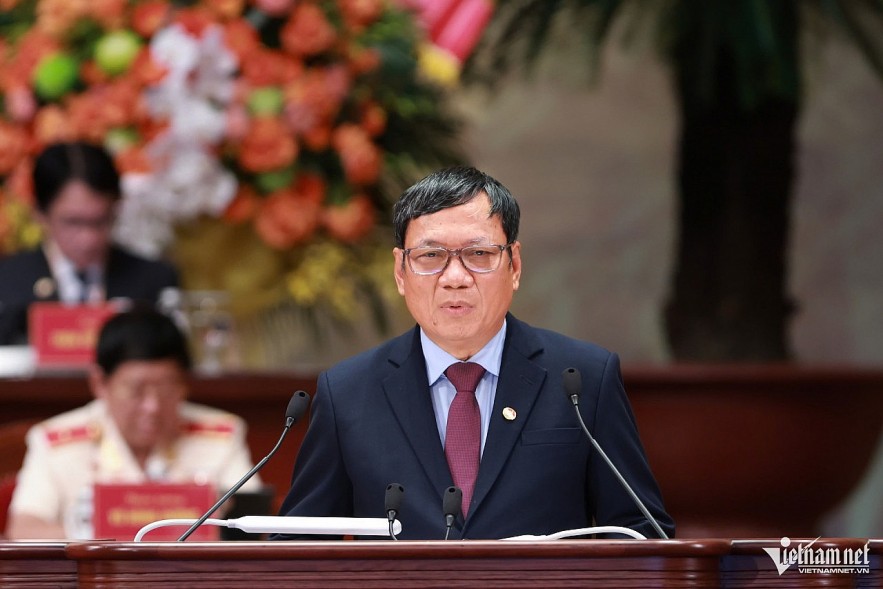 |
| Hoang Dinh Thang, Chairman of the Union of Vietnamese Associations in Europe, speaks at the 11th National Congress of the Vietnam Fatherland Front. |
Thang also emphasized the role of overseas Vietnamese communities in public diplomacy amid deepening international integration.
According to him, Vietnamese associations in Europe have worked closely with Vietnam’s diplomatic missions to promote the country’s image internationally, contributing to stronger cooperation in investment, trade, education, science, technology and tourism between Vietnam and European countries.
The Vietnamese community in Europe has also played an active role in charity and social welfare activities, supporting people in Vietnam during natural disasters and health crises.
Responding to calls from the Vietnam Fatherland Front, overseas Vietnamese communities in Europe contributed tens of billions of Vietnamese dong during the 2025 storm season.
The Vietnamese community in the Czech Republic alone donated VND10.9 billion ($419,000), according to Thang.
In addition, the union and its member associations have supported Vietnamese residents in integrating into local societies, complying with local laws and building an image of a united, responsible and sustainably developing Vietnamese community abroad.
Drawing from practical experience within Vietnamese communities in Europe, Thang proposed that the Vietnam Fatherland Front modernize its engagement methods with overseas Vietnamese by making stronger use of digital platforms to improve interaction and better understand community concerns and aspirations.
He said the Union of Vietnamese Associations in Europe would continue working closely with the Vietnam Fatherland Front to mobilize the strength of overseas Vietnamese communities toward building “a strong, prosperous and happy Vietnam.”
Thang also urged the Fatherland Front to strengthen its role in supervision, social criticism and policymaking related to overseas Vietnamese affairs.
He called for more favorable policies regarding nationality, investment, repatriation and initiatives to attract overseas Vietnamese intellectuals and entrepreneurs to contribute to the homeland.
“The Vietnam Fatherland Front should focus on building a core force within overseas Vietnamese communities by selecting and training reputable, dedicated and capable individuals who can effectively spread the Party’s and State’s policies while participating more deeply in the Front system,” Thang said.
He also stressed the need for stronger coordination between the Vietnam Fatherland Front, the Ministry of Foreign Affairs and other ministries and agencies to create greater synergy and effectiveness in overseas Vietnamese affairs.
In addition, he proposed developing a comprehensive initiative to mobilize overseas Vietnamese resources for the cause of national unity, while introducing mechanisms to recognize and reward overseas Vietnamese individuals and organizations that make meaningful contributions to the country.
 | Vietnam News Today (May 9): Vietnam PM Meets with Lao, Malaysian Counterparts in Philippines Vietnam News Today (May 9): Party General Secretary and State President To Lam and a high-level Vietnamese delegation attended the Vietnam-Sri Lanka Trade, Investment and ... |
 | Vietnam News Today (May 11): Right Time for India, Vietnam to Forge Cooperation: IVCCI Chairman Vietnam News Today (May 11): Right time for India, Vietnam to forge cooperation: IVCCI Chairman; Vietnamese businesses in Singapore work to expand homegrown brands abroad; ... |