
A rich vegetable garden grows atop a unique home in Vietnam
| French architecture in Saigon (HCM City) in spotlight | |
| History of Hanoi's French-style architecture on display | |
| French experts help northern Vietnam province design tourism plans |


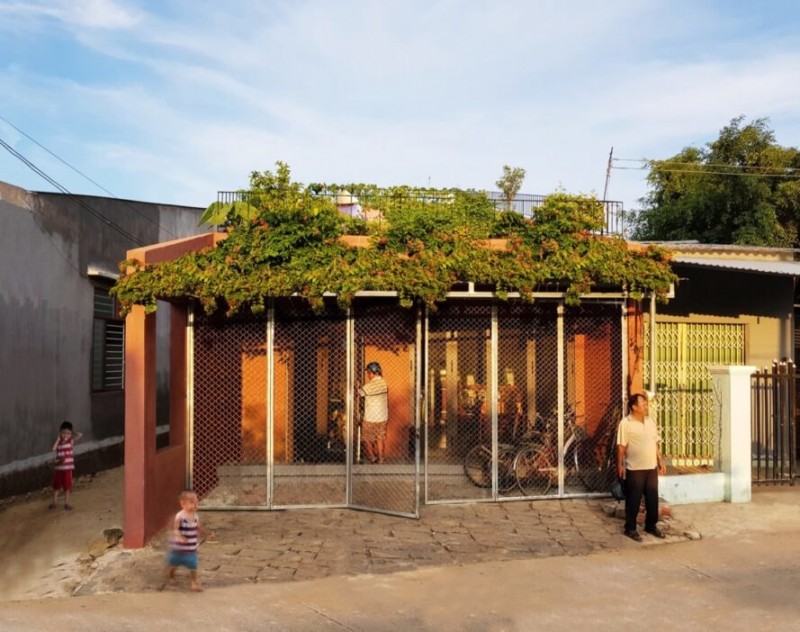 |
The recent completed home - dubbed the Red Roof after its red façade and eye-catching roof – is the residence of a married couple who grew up in the area and sought a unique home conducive to their traditional cultural lifestyle.
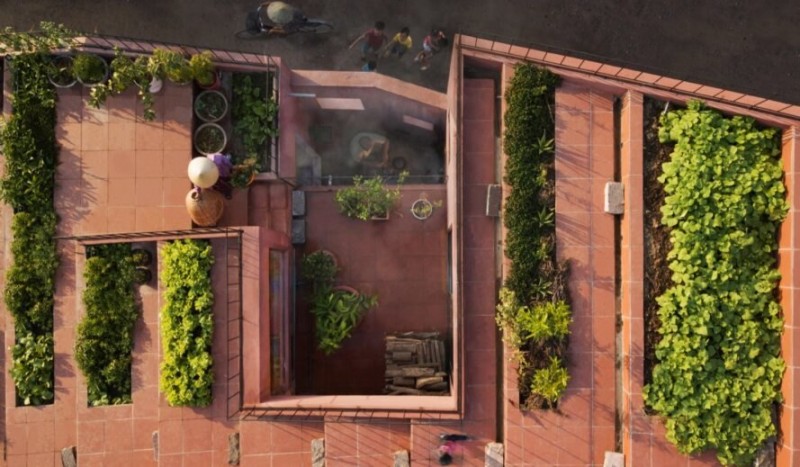
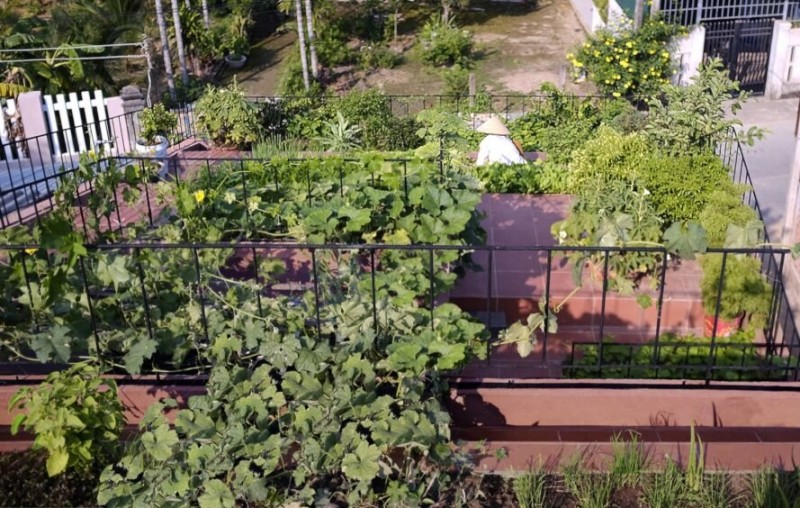
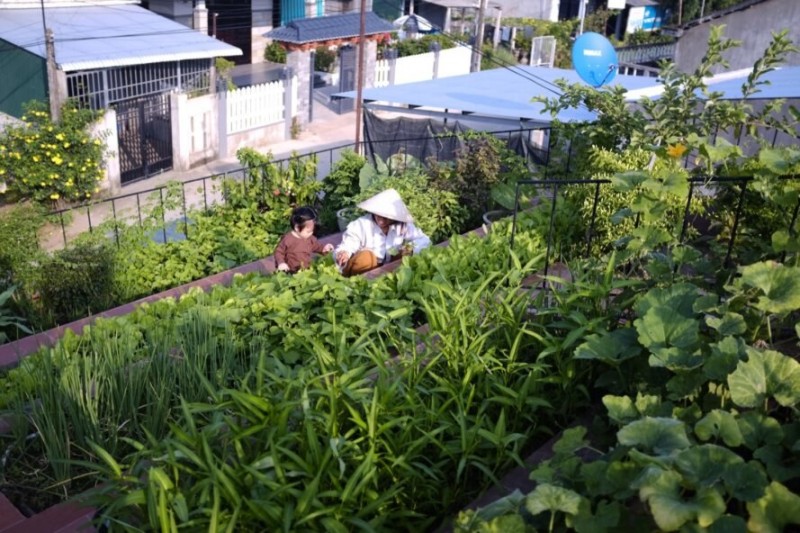
Designed with an emphasis on connecting with nature, the home features a flourishing vegetable garden on its roof and multiple courtyards for seamless indoor-outdoor living.
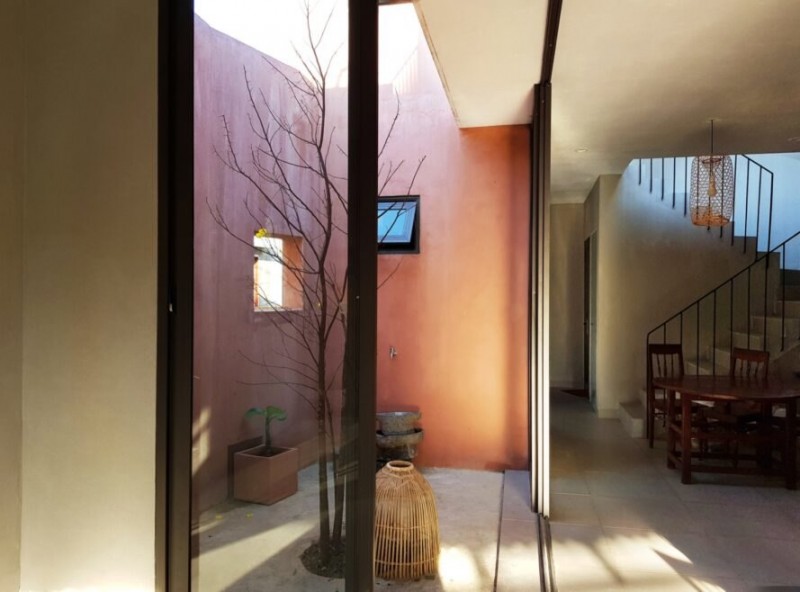
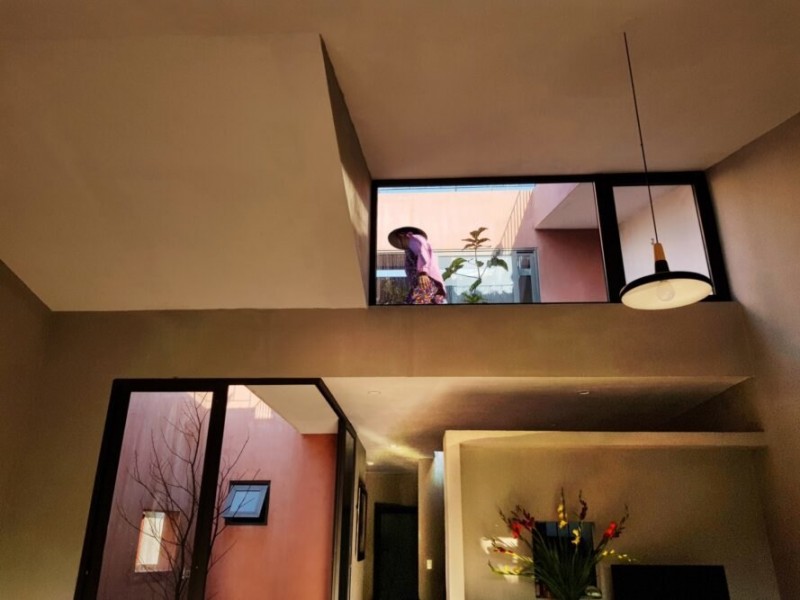
Located along the main road of the village, The Red Roof is a compact residence of 80 square meters that stretches east to west on a long and narrow plot. Accessed from the west end, the entrance leads past a gated front yard with a bicycle repair space to a covered porch that opens up to a double-height living room. Tucked behind is a kitchen and dining area next to a small interior courtyard and bathroom. A set of stairs to the mezzanine and the rice storage area separates the kitchen from the master bedroom in the rear; this space leads to the small backyard.
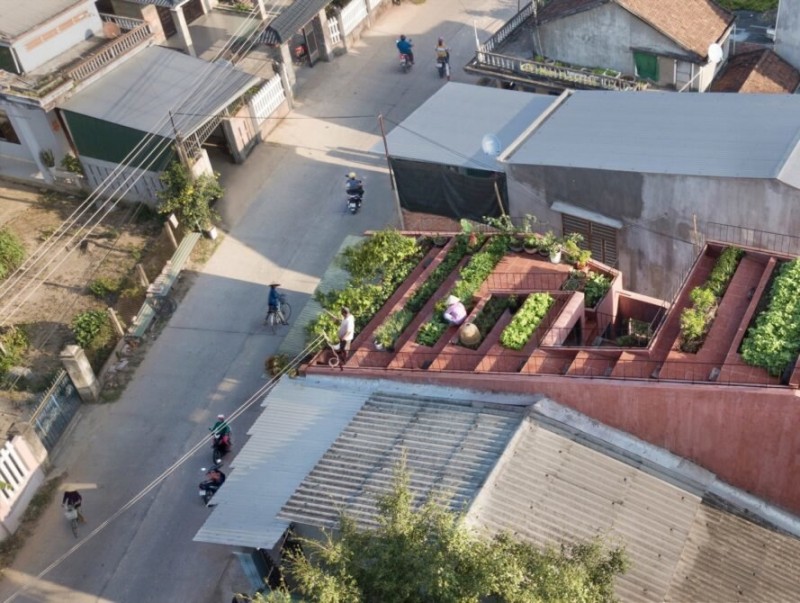 |
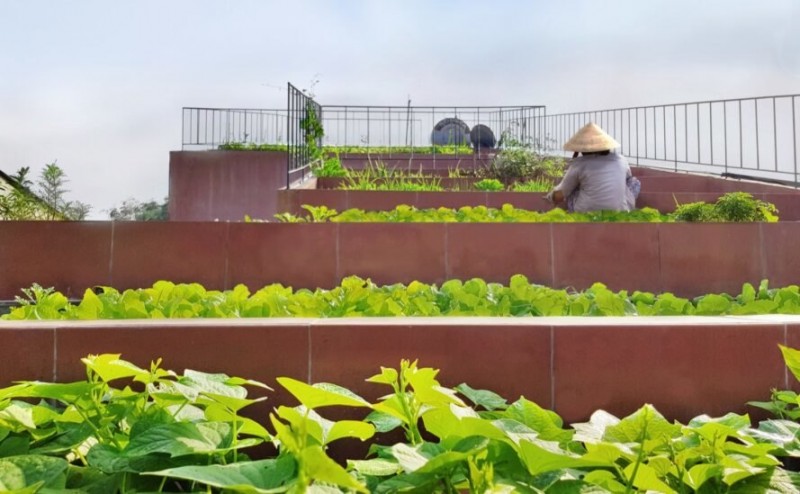
A second bedroom with a bathroom and an alter room are located on the mezzanine level. The alter room has access to a courtyard and the terraced vegetable gardens on the roof. The vegetable garden not only gives the couple ample opportunities to indulge in their love of gardening and cooking, but it also helps tighten bonds with the community, who benefit from the harvest.
 |
 |
“In Vietnamese traditional landscape, ‘the red roof’ house represented for a time of regional local architecture,” the architects said in a statement. “However, now new multi-story houses with steel roofs seem to have lost the identity of village landscape.” The architects used a stair-step method as to not overwhelm the urban landscape with another towering, steel structure. Instead, the stair-step design “establishes the communication between the space on the roof and the space under the road. ‘The red roof’ has the intent to keep, to store and remind the familiar rural lifestyle.”
 |
 |
 |
 |



Most read




Recommended
 Handbook
New VAT Refund Rules for Goods Purchased by Foreigners and Overseas Vietnamese upon Departure from Vietnam
 Handbook
Conclusion No. 57-KL/TW: Highest Priority to the Search, Recovery, and Identification of Fallen Soldiers' Remains
 Handbook
Elderly to Receive Free Annual Health Check-ups at Least Once a Year In Vietnam
 Handbook
Hanoi Recognizes Additional Historical and Scenic Sites
Popular article
 Handbook
Plan for Organizing “Vietnam Culture Day” for 2026-2030 Period
 Handbook
Photo Exhibition by Three French Photographers on Vietnam
 Handbook
Free Film Week for International Children's Day Held Nationwide
 Handbook