
A Woman with Cerebral Palsy Turns Her Job Search into a Journey of Creating Opportunities
She taught herself online marketing, found a job that suited her abilities, and then went on to offer free training and connect people with disabilities to employment opportunities in cities and provinces across Vietnam.
21 doors closed
Born in 1995 in Hưng Yên Province, Ánh weighed only about 1 kilogram at birth. Her development was significantly slower than that of other children her age. She has spastic cerebral palsy, which severely affects her mobility. Her childhood was marked by physical therapy, acupuncture and constant exercises; her stiff legs made even basic movement extremely difficult.
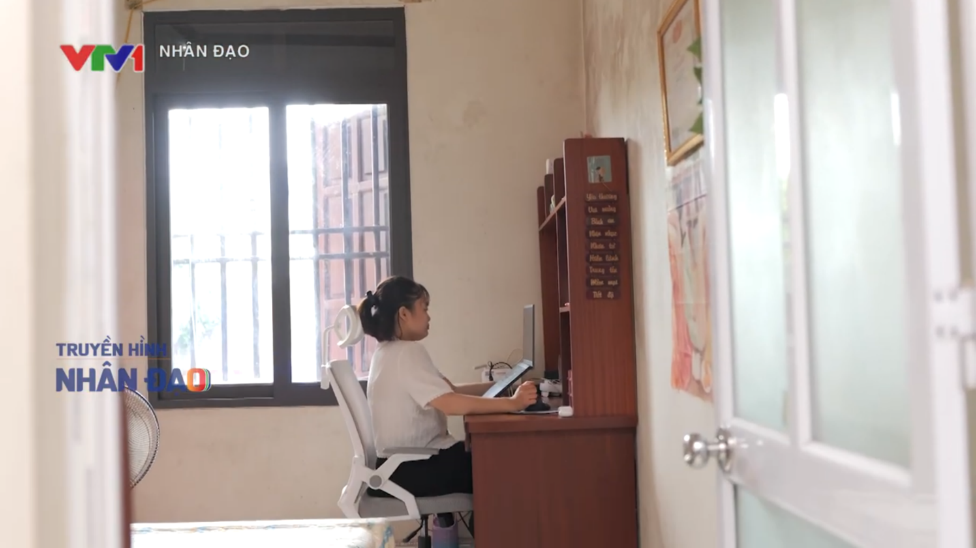 |
| The computer—a tool that opened up a new world for Ánh. |
Ánh started school later than her peers. While other children ran and played in the schoolyard, she could only sit in the classroom. Unable to join in her friends’ activities, she immersed herself in books and schoolwork. Education became her way of opening up a world that her legs could not yet take her to.
Being different also meant that Ánh often heard hurtful comments. Some people asked why she needed to study when, in the future, she would only be able to depend on her family anyway.
But her parents saw things differently. They did not want to keep their daughter at home simply because she was physically challenged. They were determined to send Ánh to school, let her interact with society, learn how to communicate and, most importantly, acquire a profession so that she could eventually support herself.
Ánh grew up with that aspiration. She wanted to prove that she could accomplish something through her own abilities, rather than spend her life becoming a burden on her family and society.
In 2016, Ánh began looking for a job. That was when she realized just how wide the gap could be between wanting to become independent and finding work that was genuinely suitable for a person with disabilities like herself.
She remembers being rejected 21 times while applying for jobs. For many people, that many setbacks could be enough to shake their confidence. But Ánh asked herself a different question: “If I cannot meet the requirements of a job in the conventional way, is there another way of working that might be more suitable for me?”
Ánh began teaching herself new skills. Starting with content creation, she delved deeper into Google, Google Maps, websites and ways of finding customers for businesses. Online marketing gradually opened up a new path for her.
In the digital environment, physical mobility was no longer such a major barrier. Instead, knowledge, skills and the ability to create value became the determining factors. The computer that had once been a companion to the girl who could not run and play with her friends, helping her open a window to the wider world, now became a tool that allowed Ánh to enter the labor market.
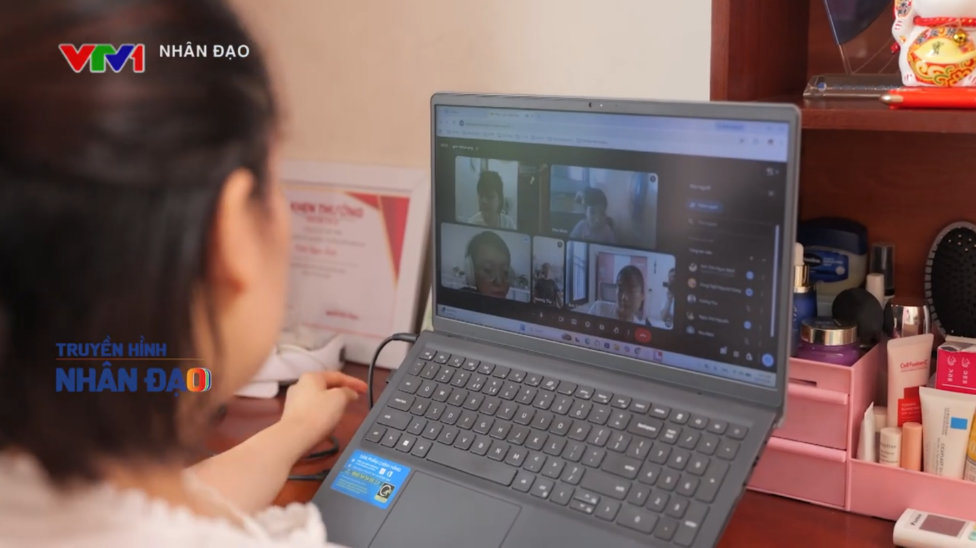 |
| An online marketing training session led by Ánh—serving as a bridge connecting people with disabilities to work-from-home job opportunities. |
She eventually found a job that suited her. But her own job search also led her to an important realization: she might not be the only person standing in front of a door without knowing how to open it.
From seeking opportunities to creating opportunities
Ánh understands what it feels like to have the ability to work but not know where to find an opportunity. She also understands that, for many people with disabilities, the challenge is not simply whether a company is willing to hire them. Sometimes the harder task is finding a profession that matches their abilities, health conditions and way of life.
Meanwhile, the digital environment can offer another path. People with disabilities can learn new skills, find customers and carry out their work from home, reducing barriers related to transportation and conventional workplaces.
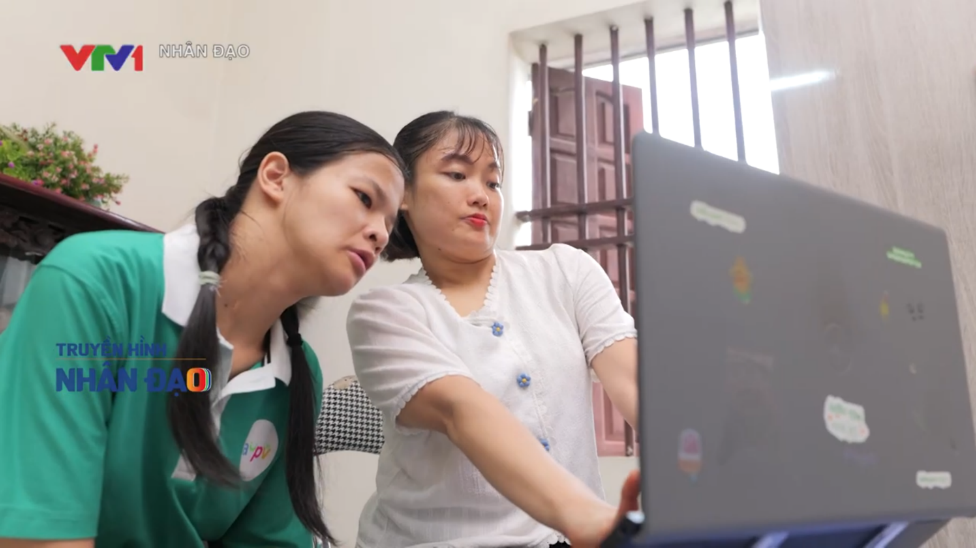 |
| After training, Ánh directly integrates the trainees into the team or connects them with suitable job opportunities. |
Drawing on her own experience, Ánh began thinking about how she could pass opportunities on to people like herself. In 2022, she started offering free online marketing classes for people with disabilities across Vietnam.
She taught what she had once had to figure out on her own: how to find customers, receive orders and carry out assignments. But Ánh did not want the training to end with a course or a certificate. She understood very clearly that for someone seeking independence, a certificate could never replace a job.
So after the training, suitable participants were either hired by Ánh or connected with employment opportunities. The classes thus became more than places to learn a profession. They became starting points for people with disabilities to enter the world of real work.
In 2024, Ánh founded Gucomedia, bringing together people with disabilities working in online marketing in different provinces and cities. They work remotely, collaborate through digital platforms and earn an income from the work they undertake.
What Ánh wants to change is not the idea that people with disabilities must try to be “like able-bodied people.” Instead, she wants to demonstrate that work can be organized in different ways to suit each person’s abilities. When they have suitable employment, people with disabilities can earn an income, support their families and take greater control of their lives.
When her trainees earn their first income through their own abilities, what they receive is more than money. It is the feeling that they are useful, that they are capable and that they have the right to choose how they live their lives. Ánh understands that value better than most. The door she once searched for is now a door she is trying to open for others.
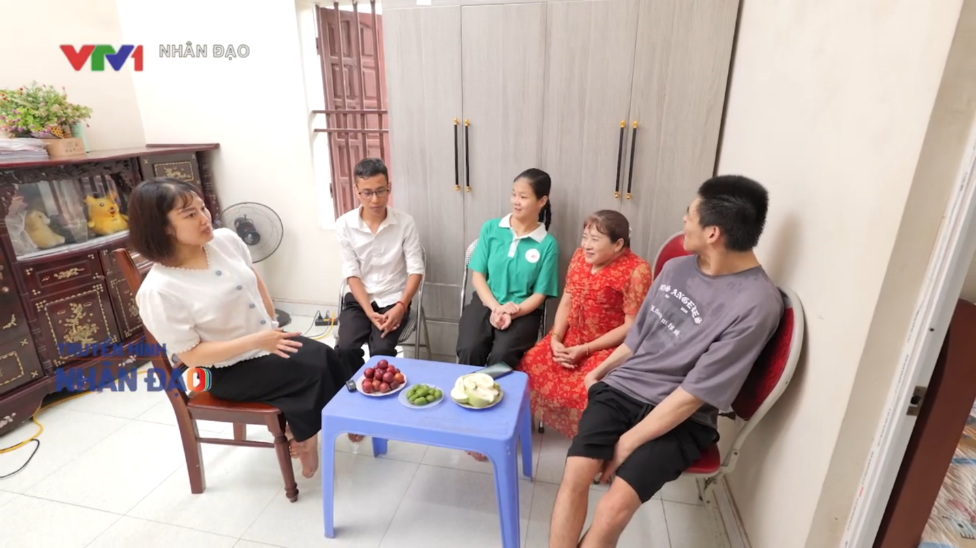 |
| The Hung Yen Province Club for Adults Living with Cerebral Palsy is Anh's next project, driven by a desire to support others in similar circumstances. |
More than a job: a place to belong
The more Ánh worked alongside people with disabilities, the more she realized that employment addresses only part of their challenges. Many people still spend most of their time at home. They lack not only a job, but also opportunities to meet others, build relationships and find a community where they can share things that are difficult to explain to people who do not share their circumstances.
Ánh began another journey. She founded the Hưng Yên Club for Adults Living with Cerebral Palsy and serves as its chairwoman. It provides a space where people with similar experiences can meet, share, seek advice and connect with one another.
Ánh does not want the club to be simply a place people turn to when they need help. She envisions a community where members can access information, learn from one another, build relationships and gradually become more independent in their lives. Looking further ahead, she hopes to develop more vocational training activities, from marketing to handicrafts, so that each person has more choices suited to their abilities.
If Ánh once needed someone to show her a path forward, she is now striving to become a guide for others.
From someone who needed an opportunity, Ánh has become someone who creates opportunities.
Building bridges so that compassion can continue to spread
Finding and sharing the stories of people like Trần Ngọc Ánh is also the mission of “Nối trọn yêu thương” (“Connecting Complete Love”).
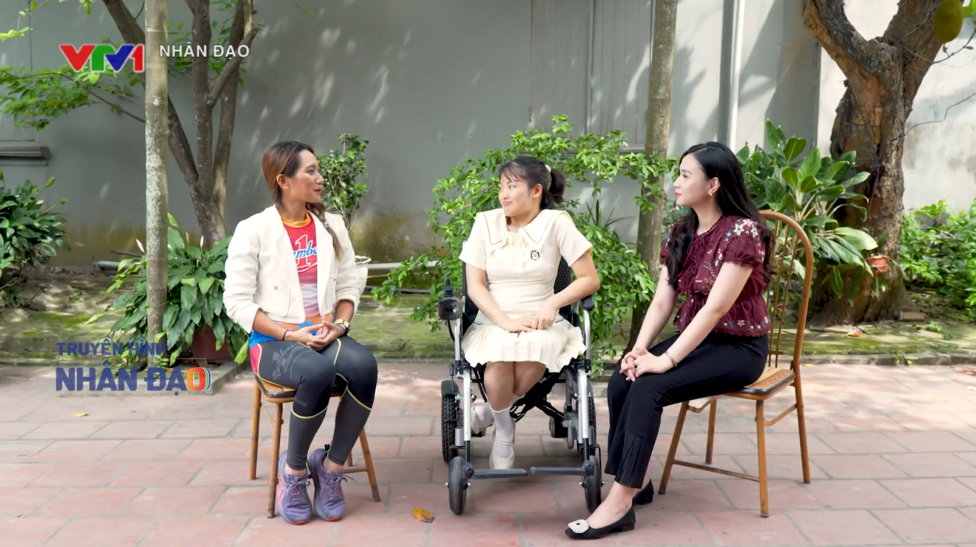 |
| For over seven years, alongside the “Nối trọn yêu thương” (Connecting Full Love) initiative, Tan Hiep Phat has helped spread stories of resilience, sharing, and a spirit of responsibility toward the community. |
For more than seven years, the program, produced by the Humanitarian Television Channel with the support of Tân Hiệp Phát Group since its early days, has traveled to many parts of Vietnam to find, meet and tell the stories of ordinary people with extraordinary resilience—people who rise above their circumstances, live responsibly, live for others and strive to make their lives greater than themselves.
Hundreds of people have brought hundreds of different stories. Some have faced illness, some have overcome loss, while others have lived with disabilities since birth. But what the program seeks is not simply stories of adversity. It is the way each person chooses to overcome that adversity and live afterward.
Overcoming hardship for oneself is already admirable. But when someone finds their footing again and chooses to live responsibly, support others, and turn their own experiences into motivation and opportunities for the community, the story becomes even more moving.
That is why the stories featured in “Nối trọn yêu thương” do more than evoke sympathy. They inspire the belief that adversity does not necessarily have to be the end of the road; sometimes, it can become the starting point for a new journey.
Along that journey, Tân Hiệp Phát contributes not only resources to help these stories reach audiences. The company also finds a shared set of values in “Nối trọn yêu thương.” The program inspires perseverance, optimism, resilience and the courage to overcome life’s challenges. Its featured individuals choose not merely to live for themselves; drawing on what they have experienced, they continue to create value for their families, communities and society.
These are also values that Tân Hiệp Phát cherishes and pursues. For the company, when kindness and resilience go hand in hand, positive values can be created and multiplied. One person overcoming their own limitations can inspire another. One opportunity passed on can become many more opportunities. One inspiring story can continue to generate other inspiring stories.
Trần Ngọc Ánh cannot change what happened to her. She cannot make the 21 rejections disappear. But she can choose what to do after all those experiences. She chose to keep moving forward—not only for herself, but also to open more doors for people who are now standing where she once stood.
This is also the meaning behind “Nối trọn yêu thương.” A program can begin with a single encounter. A story can begin with a difficult circumstance. An act of kindness can begin with one outstretched hand. When these things continue to be passed on, the story no longer belongs to just one person.
From one door opened for Ánh, more doors are now opening for people with disabilities. From one story being told, other stories are continuing to be written.
And from one encounter, bridges of compassion continue to reach farther.


Most read


Vietnamese and RoK Doctors Provide Free Surgery for Children with Birth Defects in HCMC

Inspired by Her Father’s Words, Do Thi Hue Has Spent 15 Years Empowering People with Disabilities


Related Stories
Viets Home
Inspired by Her Father’s Words, Do Thi Hue Has Spent 15 Years Empowering People with Disabilities
 Viets Home
Extending Care, Bringing Joy to Children This Mid-Autumn Festival
 Viets Home
Five Years of “Walking Through Life with Children”: The Love That Remained After the Pandemic
 Economy
Strengthening Domestic Capabilities, Expanding Growth Opportunities for Vietnamese Businesses
Recommended
Viets Home
Vietnamese and RoK Doctors Provide Free Surgery for Children with Birth Defects in HCMC
 Expats in Vietnam
Returning to Viet Nam Is Like Coming Home
 Viets Home
Eight Additional Remains of Fallen Soldiers Discovered at Le Thi Rieng Park
 Viets Home
UAE Culture Comes Alive in Hanoi
Popular article
 Viets Home
WVI and Dien Bien Chart Next Chapter in Support for Children
 Viets Home
Tuyen Quang: New Space for Reading, Experiential Learning and Career Guidance for Kim Xuyen Students
 Viets Home
Finding Confidence in Learning English
 Viets Home