
Shoppers can shop the new DEEBOT T9 and DEEBOT N8 PRO robot vacuums exclusively on Shopee at ECOVACS ROBOTICS Brand Of The Day on 17 - 18 April
Discover smarter home cleaning with ECOVACS ROBOTICS and Hyun Bin on Shopee in Thailand
BANGKOK, THAILAND - Media OutReach - 15 APRIL 2021 -Shopee, the leading e-commerce platform in Southeast Asia and Taiwan, and ECOVACS ROBOTICS, the world's leading home service robotics maker, introduces the latest robotic vacuum cleaners,DEEBOT T9 and DEEBOT N8 PRO,at the first ECOVACS ROBOTICS Brand Of The Day on Shopee. Through this collaboration, ECOVACS ROBOTICS aims to empower users to live a smarter and hassle-free lifestyle with easy access to its innovative robotic solutions. Starting from 17 April, the DEEBOT T9 and DEEBOT N8 PRO which come upgraded with more powerful and intelligent features will be made exclusively available on Shopee. Shoppers can look forward to attractive perks such as gift-with-purchase of the DEEBOT T9, limited-time deals and brand vouchers during the campaign.
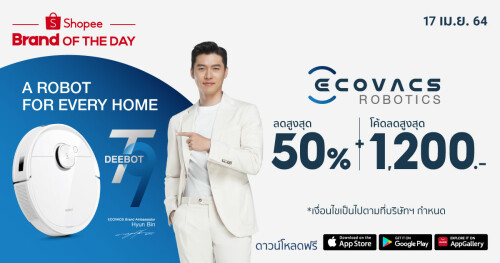
Shoppers can also stand a chance to win the DEEBOT T9 on Shopee, by participating in a social media contest inspired by South-Korean heartthrob and celebrity, Hyun Bin, who was recently unveiled as ECOVACS ROBOTICS brand ambassador for five Asian countries. He was also featured in a video specially produced by Shopee and ECOVACS ROBOTICS for this campaign.
Johnny Zhu, General Manager of Asia Pacific, ECOVACS ROBOTICS, said, "The prevalence of smart technology has driven up demand for smart home cleaning solutions across the region in recent years. At the 11.11 Big Sale last year, ECOVACS ROBOTICS was listed as the best-selling brand for vacuum cleaners in Southeast Asia, on Shopee. We are very excited to partner with Shopee again for this exclusive launch to introduce a robot into every home, helping consumers to ease their cleaning chores. We look forward to replicating our success this year, and strengthening our partnership with Shopee, giving more consumers access to high-quality and intelligent home service robotics."
Zhou Junjie, Chief Commercial Officer at Shopee, added, "Shopee Mall is home to many of our region's favourite brands, with ECOVACS ROBOTICS being one of the most loved smart home appliances brand for homeowners in Southeast Asia. We've observed that more shoppers are purchasing big-ticket items online, and are willing to spend more on quality home appliances on our platform. We are delighted to launch this first Brand Of The Day with ECOVACS ROBOTICS to provide our shoppers with first-hand access to smarter tools for their homes."
The Best DEEBOT Just Got Better
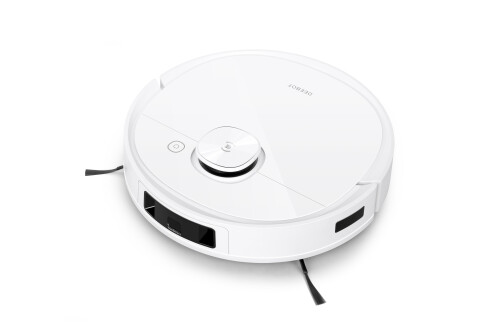
DEEBOT T9
The new DEEBOT T9 is the first model with intelligent 9-in-1 obstacle avoidance features that combine powerful vacuuming and mopping functions, with a built-in mobile air freshener. Its leading-edge TrueDetect 3D 2.0 obstacle detection and avoidance technology help the robot intelligently clean the floor without entanglement or being stuck around the home. Users can enjoy an effective and superior cleaning experience with the model's upgraded suction power and Intelligent Control feature to provide hands-free cleaning management.
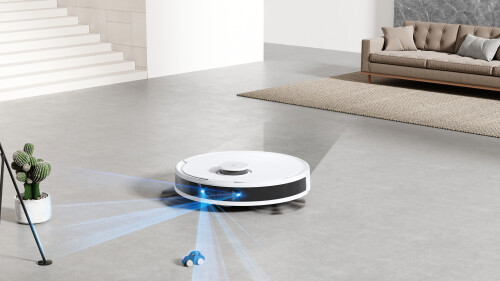
DEEBOT N8 PRO
Similarly, the new DEEBOT N8 PRO comes with enhanced laser detection function and integrated industry-leading algorithms, which helps the robot to plan an efficient cleaning route faster and with more precision. Users can use the ECOVACS Home App to control where the robot enters and clean, to maintain privacy where needed. The electronically-controlled water pump and water tank allow for mopping and vacuuming in one go, without the need for repeated stops to top up the water tank.
From 17 - 18 April, ECOVACS ROBOTICS Brand Of The Day will bring a host of exclusive deals and fun exclusively on Shopee, which include:
● Special launch prices and gift pack only on Shopee: Get the new DEEBOT T9 and DEEBOT N8 PRO at special prices of 17,900 Baht and 14,900 Baht respectively, with a 1,200 Baht Discount Voucher and a gift pack only on Shopee. Shoppers can also enjoy up to 50% off on selected ECOVACS ROBOTICS products, limited-time 1,200 Baht discount vouchers.
● Learn how to clean effectively on Shopee Live: Shoppers can watch Key Opinion Leader "Cee" Chatpawee unbox the new DEEBOT T9, and demonstrate how the new DEEBOTs can maximise home cleanliness with their superior vacuuming and mopping functions.
Find out more about the ECOVACS ROBOTICS Brand Of The Day on Shopee at https://shopee.co.th/bod-ecovacs
Watch the campaign video featuring Hyun Bin here: https://youtu.be/-6wfBSQc5J0
Download Shopee for free on App Store or Google Play Store.
About ECOVACS ROBOTICS
Innovating Since Day One – Creating the Intelligent Home.
At ECOVACS ROBOTICS, we care about innovating solutions to enhance your lifestyle. Based on a deep understanding of use cases and consumer experiences, we design robots that help you to "live smart, enjoy life". With over 20 years of design and industry-leading research, we have led the market as homes become more intelligent and responsive. We are building a world where your home asks less of your attention, becomes more seamless and powerful, and frees you to spend more time doing what you love.
About Shopee
Shopee is the leading e-commerce platform in Southeast Asia & Taiwan. Shopee connects shoppers, brands and sellers across Asia and other fast-growing markets, empowering anyone to buy and sell anywhere and at any time.
Shopee offers an easy, secure, and engaging experience that is enjoyed by millions of people daily. It offers a wide product assortment, supported by integrated payments and logistics, as well as popular entertainment features tailored for each market. Shopee is also a key contributor to the region's digital economy with a firm commitment to helping brands and entrepreneurs succeed in e-commerce.
Shopee is a part of Sea Limited (NYSE:SE), a leading global consumer internet company. In addition to Shopee, Sea's other core businesses include its digital entertainment arm, Garena, and digital financial services arm, SeaMoney. Sea's mission is to better the lives of consumers and small businesses with technology.



Most read

Promoting Vietnamese Language Teaching, Learning, Cultural Exchanges and Connections with Homeland

Top Vietnamese Leader Meets Acting President of New Zealand–Vietnam Friendship Association


Recommended
 Economy
Indonesia Sees Strong Potential for Agricultural Cooperation with Vietnam
 Economy
India plans polysilicon incentives
 Economy
Chinese Businesses Value Agricultural Mechanisation Cooperation with Vietnam
 Economy
Inside Apple's iPhone Shift To India
Popular article
 Economy
Expanding Horizons: Uzbekistani Student Dulatkhan Charts His Future at CUHK
 Economy
Hanoi Promotes Investment and Tourism Potential to French Business Community
 Economy
Can Tho Promotes Tourism Cooperation in Thailand
 Economy