
Developing Phong Nha-Ke Bang into a World-Class Tourist Destination
 | Vietnam’s Three UNESCO Heritages in Top of Most Impressive in Southeast Asia |
| Visitors to Explore Ancient Conifer Forest at Phong Nha-Ke Bang for First Time |
Phong Nha-Ke Bang Heritage in Quang Tri Province boasts a one-of-a-kind natural landscape featuring a spectacular cave system, including Son Doong, the world's largest cave. Despite these exceptional assets, the area is currently facing a typical "bottleneck" in tourism development due to its limited range of tourism products, resulting in relatively low international visitor numbers. Addressing this challenge requires more comprehensive and systematic solutions.
Pham Hong Thai, Director of the Management Board of Phong Nha-Ke Bang National Park, said the park possesses globally outstanding geological, geomorphological, and biodiversity values. The Phong Nha-Ke Bang limestone massif is one of the largest karst formations in Southeast Asia, with a geological history spanning more than 400 million years and representing all major stages of the Earth's crustal development.
From initially offering only two tourism products - visits to Phong Nha Cave and Tien Son Cave - the national park now features nearly 20 tourism products, including internationally acclaimed experiences such as "Conquering Son Doong, the World's Largest Cave" and "Exploring Hang En Cave."
The park's extraordinary natural potential and the countless mysteries hidden beneath its forests continue to attract visitors. Nevertheless, tourism figures remain relatively modest. The destination currently welcomes approximately one million visitors annually, including around 200,000 international tourists and 800,000 domestic travelers.
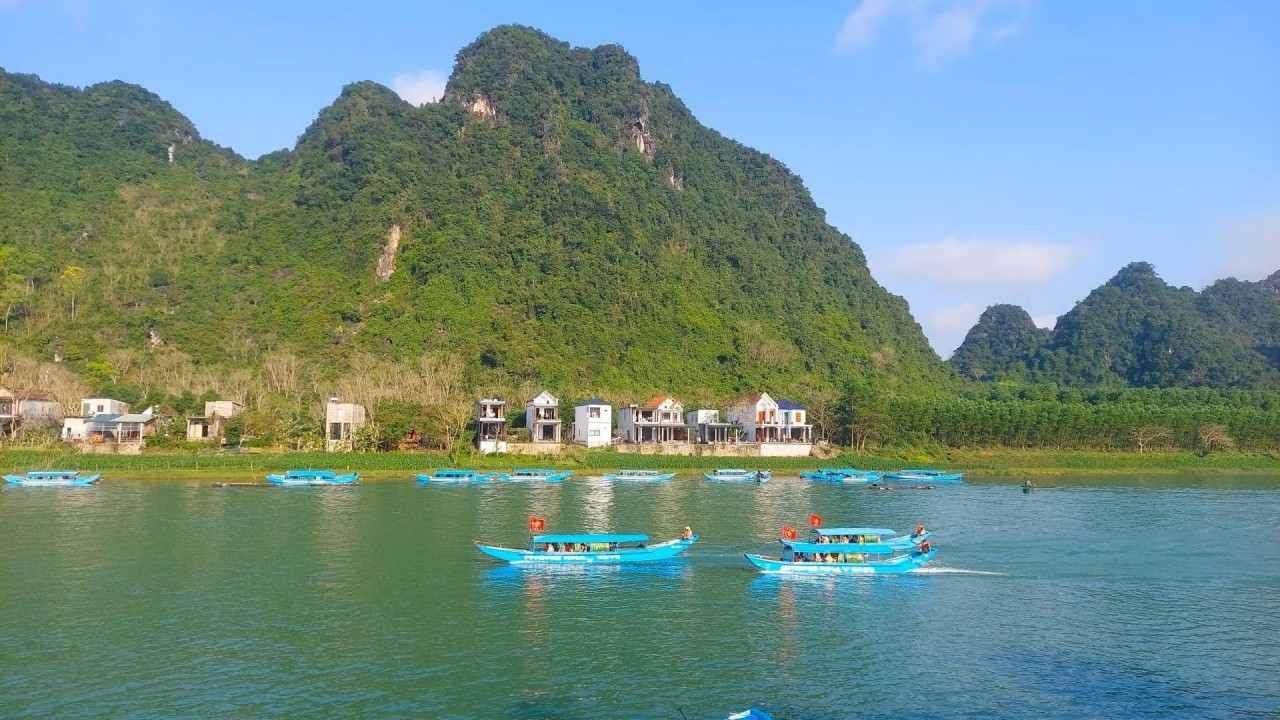 |
| Boats transport visitors to Phong Nha Cave (Photo: People's Newspaper) |
Notably, nearly 90 percent of international travelers moving along Vietnam's north-south transportation corridor - by train, bus, or air - pass through Quang Tri without stopping. The fundamental reason is that the destination's perceived value has not yet become compelling enough for travelers to dedicate several days of their Vietnam itinerary to visiting the area.
Under the current tourism model, the carrying capacity of the core zone of Phong Nha-Ke Bang National Park remains limited, while surrounding tourism products are still underdeveloped. Premium adventure tours such as Son Doong, Hang Ba, Hang Va, and Tu Lan generate exceptionally high visitor spending but deliberately limit participant numbers to ensure strict conservation of the park's core zone in accordance with UNESCO regulations. At present, cave adventure tourism in Quang Tri attracts approximately 50,000 visitors annually.
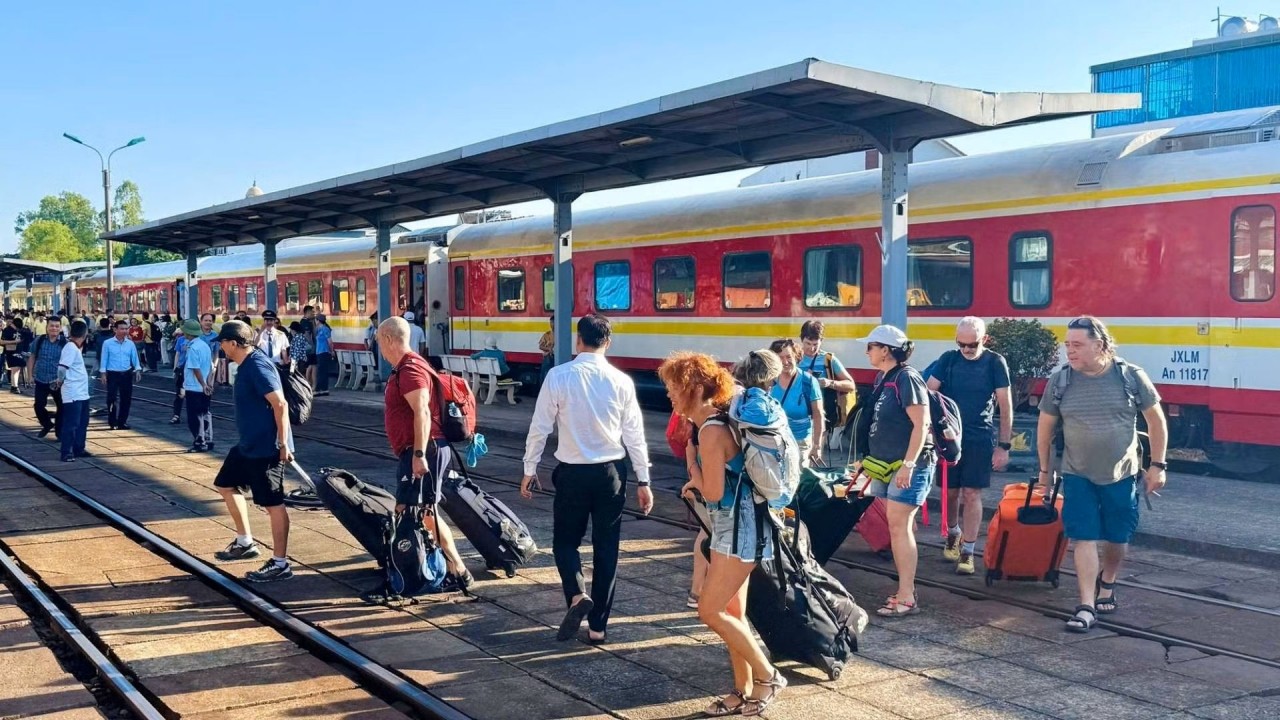 |
| International visitors arrive at Phong Nha-Ke Bang by train (Photo: People's Newspaper) |
Tourism expert Nguyen Chau A shares this assessment, attributing the situation to two primary factors. First, Phong Nha-Ke Bang's tourism offerings remain heavily concentrated on cave tourism alone. While standard cave tours attract large numbers of visitors, these travelers generally spend relatively little and stay for only one to two days. Visitors arrive, explore the caves, and leave, as the heritage area lacks a sufficiently attractive supporting tourism ecosystem capable of encouraging higher spending and extending visitor stays.
Regarding coastal tourism, Vietnam possesses thousands of kilometers of coastline, allowing visitors to enjoy beautiful beaches throughout the country. Meanwhile, Quang Tri's beaches and the waterways around Phong Nha have yet to establish distinctive attractions capable of differentiating themselves from competing destinations.
| Phong Nha-Ke Bang should no longer rely solely on exploiting its cave resources. Instead, the destination needs to undertake a comprehensive transformation from being merely a "cave sightseeing destination" into a diversified tourism ecosystem combining resorts, ecological experiences, cultural attractions, and entertainment. Nguyen Chau A, Tourism Expert |
Second, destinations across northern Vietnam - including Ninh Binh, Ha Long, Lang Son, Ha Giang, and Cao Bang - all feature cave systems that cater to mass tourism. Since Vietnam's caves are generally much larger than those found in Europe and North America, even relatively small caves in Ninh Binh are impressive enough to amaze international visitors.
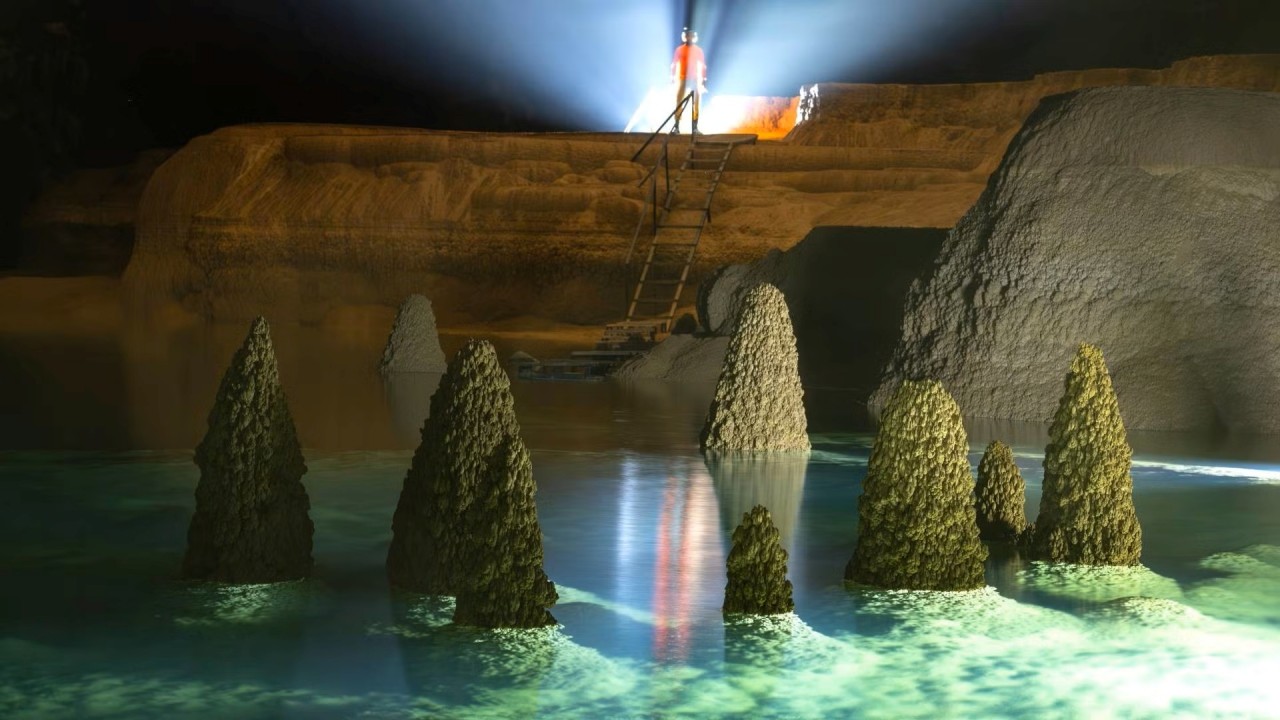 |
| Hang Va features countless spectacular stalagmites (Photo: People's Newspaper) |
Once travelers have already satisfied their interest in conventional cave sightseeing at earlier destinations, most mainstream international tourists no longer consider Phong Nha compelling enough to justify a stop - except for dedicated cave exploration enthusiasts, who specifically travel to Vietnam for expedition tours and are therefore unaffected by this challenge.
According to tourism experts, if Phong Nha-Ke Bang aims to triple its tourism scale and achieve a stable target of 2 to 3 million visitors annually - including between 700,000 and 1 million international arrivals - it should move beyond simply utilizing its cave resources. Instead, it should comprehensively transform itself from a "cave sightseeing destination" into a multifunctional tourism ecosystem offering resorts, ecological experiences, cultural activities, and entertainment, similar to the successful model developed by Chiang Mai in Thailand.
Achieving this transformation will also require prioritizing investment in transportation infrastructure, reforming tourism governance, and accelerating the adoption of digital technologies to support tourism development in the new era.
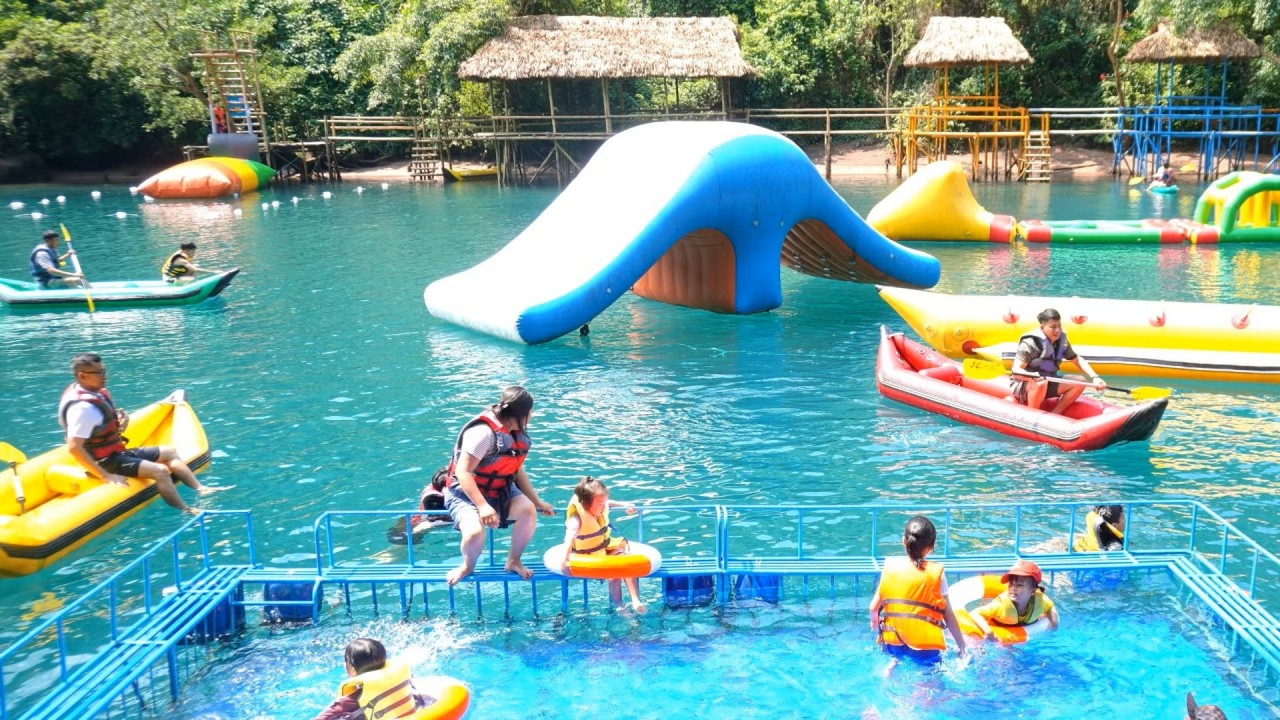 |
| Visitors enjoy water activities on the Chay River (Photo: People's Newspaper) |
Nguyen Chau A further emphasized that expanding tourism development eastward is a key strategic step to create additional room for growth, generate new tourism and service economies, and significantly reduce pressure on the carrying capacity of the Phong Nha-Ke Bang World Natural Heritage site's core zone.
Relocating large-scale entertainment facilities, major accommodation complexes, and vibrant cultural and nightlife districts toward the eastern area would help preserve the pristine condition of the caves within the core heritage zone while ensuring the site's long-term sustainability.
 | Vietnam’s Villages Attract Growing Numbers of Experience-Seeking Travelers In recent years, rural tourism has emerged as a vibrant trend among international travelers visiting Vietnam. |
 | Vietnam Welcomes over 2 Million International Visitors for Three Consecutive Months Vietnam’s tourism growth in the first quarter of 2026 is therefore not merely an increase in numbers, but a reflection of the convergence of core ... |


Most read




Related Stories
 Travel
Top Coral Reef Diving Destinations in Viet Nam for Summer 2026
 National
Vietnam News Today (July 12): Vietnam Ready to Share Digital Transformation Experience with Timor-Leste
 National
Vietnam News Today (July 10): Third Vietnam-Laos Border Defense Friendship Exchange Gets Underway
 Travel
French Magazine Highlights Must-Try Dishes of Vietnam Cuisine
Recommended
 Travel
Hanoi Ranks Among World’s Friendliest Destinations for International Tourists
 Travel
"Discover Moscow" - Tourism Information Ecosystem Launches Vietnamese Version Platform
 Travel
Leveraging Cuisine to Elevate Vietnam's Tourism Brand
 Travel
Ho Chi Minh City Boosts Tourism Revenue Through High-Value Visitor Strategy
Popular article
 Travel
Vietnam Ranks First in Number of Foreigners with Long-Term Stays in RoK
 Travel
Bringing Essence of Vietnamese Cuisine Closer to Europe and the World
 Travel
Russian Arrivals to Vietnam Nearly Triple in First Half of 2026
 Travel