
Drinking Green Tea for Eight Weeks May Deliver Noticeable Health Benefits
 From Deadlines to Nature: How Vietnamese Youth Are Cooling Down Burnout From Deadlines to Nature: How Vietnamese Youth Are Cooling Down Burnout |
 A New Summer Habit: More Consumers Are Peeling Bottle Labels After Every Refreshing Drink A New Summer Habit: More Consumers Are Peeling Bottle Labels After Every Refreshing Drink |
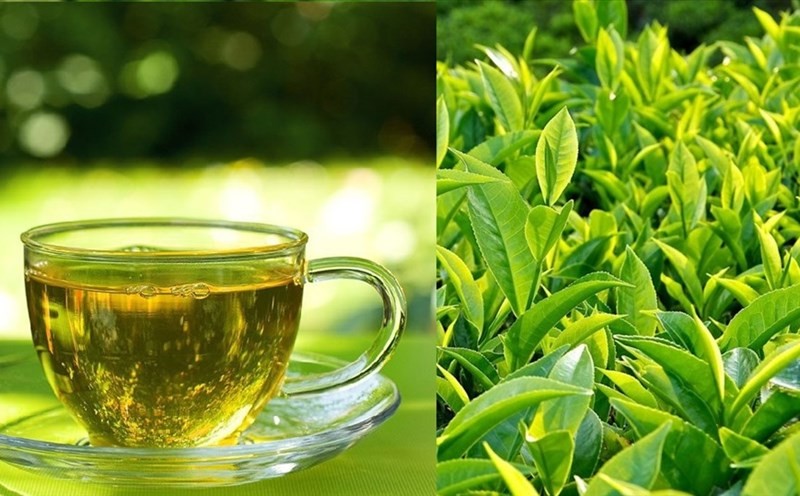
Scientifically known as Camellia sinensis, green tea is among the most extensively studied foods for its antioxidant properties and potential role in weight control.
According to Dr. Ngo Duc Phuong, Director of the Institute of Herbal Medicine Science, green tea is commonly consumed in Vietnam in two forms: fresh tea leaves, which are boiled to make tea, and dried loose-leaf tea, which has been pan-fired and dried. Both varieties contain high levels of biologically active compounds, particularly catechins.
Among these, epigallocatechin gallate (EGCG) is the most notable. This powerful antioxidant, together with caffeine, plays a key role in regulating the body's energy expenditure and fat metabolism.
 |
| Green tea supports weight loss. |
Nutritional studies have shown that EGCG can promote fatty acid oxidation, enabling the body to use stored fat more efficiently as a source of energy.
Meanwhile, the caffeine naturally present in green tea produces a mild thermogenic effect, increasing the body's energy expenditure and supporting weight management.
Green tea is also rich in polyphenols, plant compounds that have been associated with anti-inflammatory effects, improved lipid metabolism, and enhanced insulin sensitivity. These mechanisms may help reduce fat accumulation, particularly visceral fat, which surrounds internal organs and is linked to an increased risk of metabolic disease.
“Several studies and meta-analyses suggest that consuming green tea extract containing approximately 300–800 milligrams of catechins per day—equivalent to about 3–5 grams of dried tea leaves or 35–40 grams of fresh tea leaves—for eight to twelve weeks may help overweight individuals lose approximately 1–2 kilograms and reduce visceral fat when combined with a healthy diet and regular exercise,” Dr. Phuong said.
Some clinical trials have also reported measurable reductions in waist circumference and abdominal fat among participants.
However, Dr. Phuong emphasized that green tea should be regarded as a supportive aid rather than a quick-fix solution for rapid fat loss.
Fresh Tea or Dried Tea: Which Is Better?
According to Dr. Phuong, both fresh and dried green tea offer nutritional benefits when prepared correctly.
Fresh tea leaves typically produce a stronger flavor and contain relatively high levels of polyphenols, particularly when the leaves are freshly harvested. However, brewing time and water volume should be carefully controlled to prevent the tea from becoming excessively bitter or astringent.
Dried loose-leaf tea, on the other hand, is easier to store and generally maintains more stable levels of its bioactive compounds over time.
To preserve the highest concentration of beneficial catechins, experts recommend brewing green tea with water at 70–80°C (158–176°F) rather than boiling water.
Consumers can therefore choose either fresh or dried green tea based on personal preference and convenience.
Health experts recommend drinking one to three cups of green tea per day and avoiding consumption on an empty stomach.
“People with a history of insomnia, rapid heartbeat, or gastritis should consume green tea with caution, as its caffeine content may overstimulate the nervous system or aggravate stomach discomfort,” Dr. Phuong advised.


Most read


Related Stories
 Viets Home
Extending Care, Bringing Joy to Children This Mid-Autumn Festival
 Viets Home
Five Years of “Walking Through Life with Children”: The Love That Remained After the Pandemic
 Viets Home
A Woman with Cerebral Palsy Turns Her Job Search into a Journey of Creating Opportunities
 Economy
Strengthening Domestic Capabilities, Expanding Growth Opportunities for Vietnamese Businesses
Recommended
 Viets Home
Eight Additional Remains of Fallen Soldiers Discovered at Le Thi Rieng Park
 Viets Home
UAE Culture Comes Alive in Hanoi
 Viets Home
WVI and Dien Bien Chart Next Chapter in Support for Children
 Viets Home
Tuyen Quang: New Space for Reading, Experiential Learning and Career Guidance for Kim Xuyen Students
Popular article
 Viets Home
Finding Confidence in Learning English
 Viets Home
Dien Bien Buries Remains of 10 Fallen Soldiers at Tong Khao Martyrs' Cemetery
 Viets Home
My New Home: An Invitation to Visit
 Viets Home