
Five Key Priorities of the Vietnam Fatherland Front in the New Term
 | Homes Rebuilt After the Natural Disaster |
| The 11th National Congress of the Vietnam Fatherland Front Holds Preparatory Session |
The opening session was attended by General Secretary and State President To Lam; former Party General Secretary Nong Duc Manh; former Politburo members and former State Presidents Truong Tan Sang and Luong Cuong; Politburo member and Prime Minister Le Minh Hung; former Politburo members and former Prime Ministers Nguyen Tan Dung and Pham Minh Chinh; Politburo member and National Assembly Chairman Tran Thanh Man; former Politburo members and former National Assembly Chairpersons Nguyen Van An, Nguyen Sinh Hung, and Nguyen Thi Kim Ngan; Politburo member and Permanent member of the Party Central Committee Secretariat Tran Cam Tu; former Politburo members and former Permanent members of the Secretariat Phan Dien, Le Hong Anh, and Tran Quoc Vuong.
Also in attendance were current and former Politburo members, Party Central Committee Secretaries, leaders and former leaders of the Party and State, current and former members of the Party Central Committee, leaders of ministries, sectors and the Vietnam Fatherland Front, veteran revolutionaries, Heroic Vietnamese Mothers, Heroes of the People’s Armed Forces, Heroes of Labour, ambassadors, chargés d’affaires and representatives of diplomatic missions from 16 countries in Vietnam, along with more than 1,300 delegates representing social classes, ethnic groups, religions, armed forces personnel, overseas Vietnamese, and Front officials at all levels.
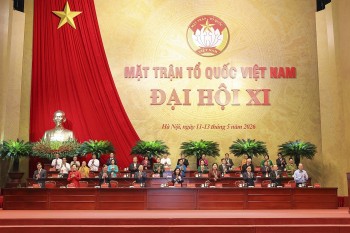
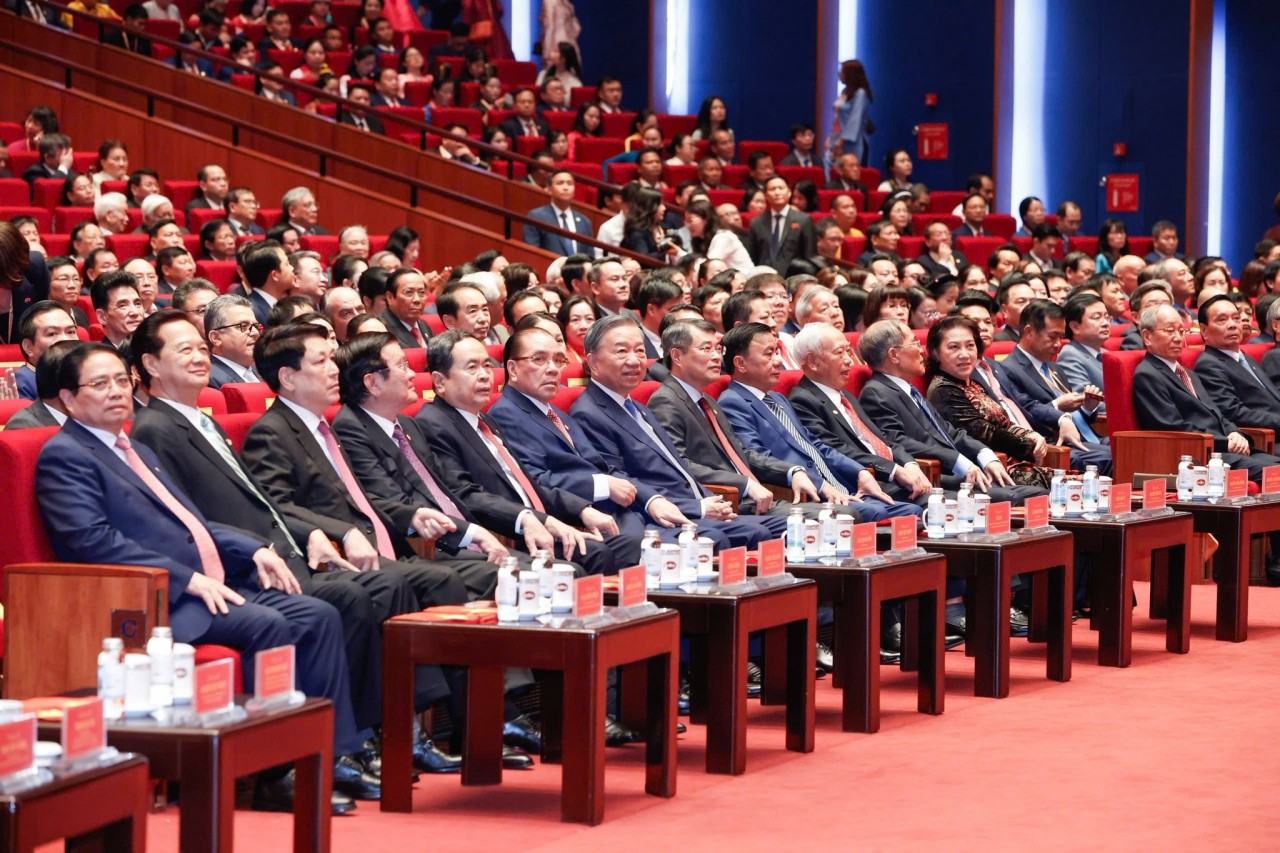 |
| General Secretary and State President To Lam, together with current and former leaders of the Party and State, attended the 11th National Congress of the Vietnam Fatherland Front for the 2026-2031 tenure. (Photo: Vietnam Fatherland Front) |
Affirming the new position and operating model of the Vietnam Fatherland Front
Delivering the opening speech, Politburo member, Secretary of the Party Central Committee, Secretary of the Party Committee of the Vietnam Fatherland Front and Central Mass Organizations, and President of the Central Committee of the Vietnam Fatherland Front Bui Thi Minh Hoai stated that during the 2024-2026 period, under the Party’s leadership, with the close coordination of the State, Government, National Assembly, and the consensus of the people, the VFF system continuously renewed its content and operational methods, promoting its role as the center for national unity and social mobilization. It actively participated in Party and government building, improved the quality and effectiveness of supervision and social criticism, safeguarded the lawful and legitimate rights and interests of the people, promoted democracy, and strengthened social consensus.
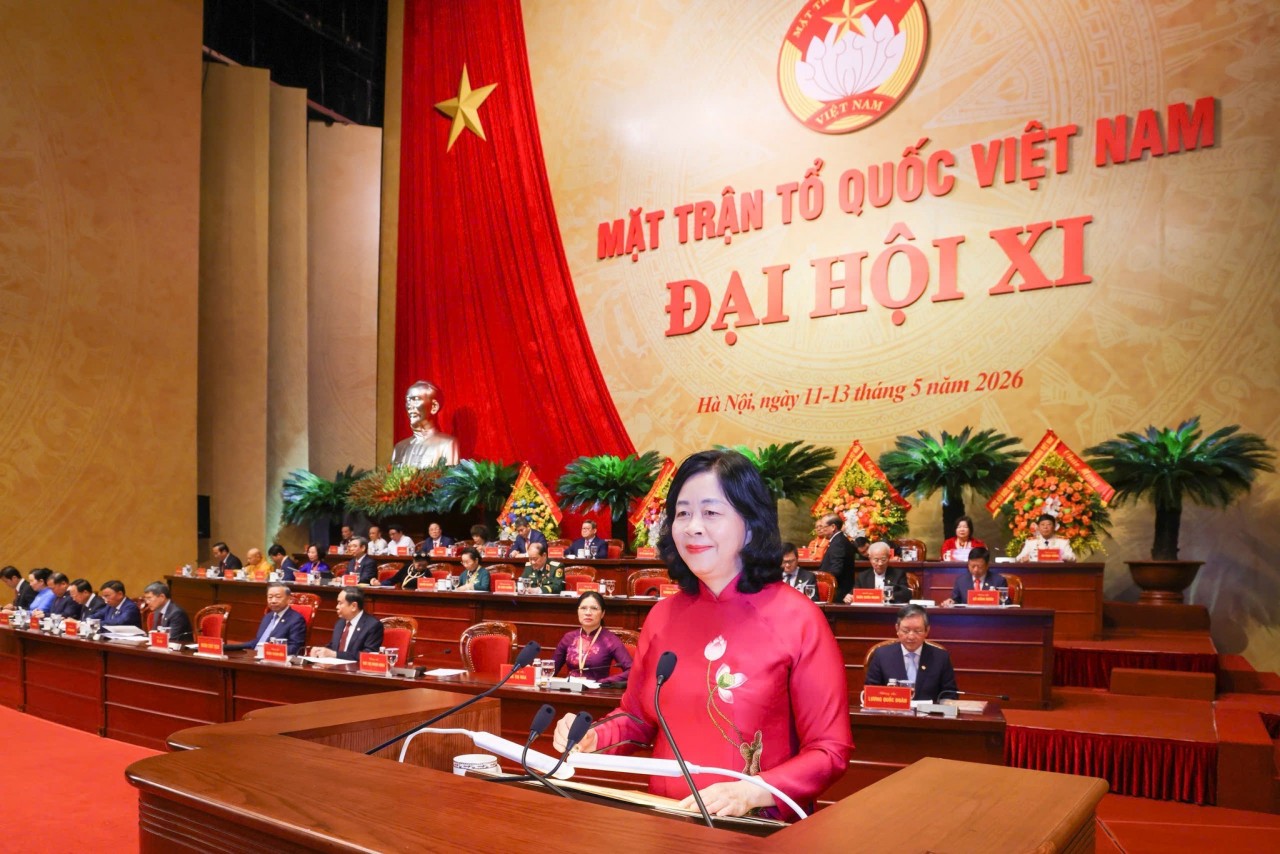 |
| Bui Thi Minh Hoai, Politburo member, Secretary of the Party Central Committee, Secretary of the Party Committee of the Vietnam Fatherland Front and Central Mass Organizations, and President of the Central Committee of the Vietnam Fatherland Front, delivers the opening speech. (Photo: Vietnam Fatherland Front) |
The Vietnam Fatherland Front clearly demonstrated its proactive role in coordinating with relevant agencies to propose and improve mechanisms and policies. A notable highlight was its active and effective participation in drafting and organizing public consultations on the Resolution amending and supplementing several articles of the Constitution of the Socialist Republic of Vietnam. The Front also made significant contributions to the successful organization of elections for deputies to the 16th National Assembly and People’s Councils at all levels for the 2026-2031 tenure; mobilized people to actively participate in patriotic emulation movements and campaigns; and provided timely support to those heavily affected by natural disasters and floods, especially the poor, disadvantaged, and vulnerable groups, thereby effectively implementing the Party’s policy and viewpoint that no one should be left behind.
According to Bui Thi Minh Hoai, the 11th National Congress of the VFF is taking place at a time when the country is entering a new stage of development with many major opportunities alongside numerous challenges. Under the Party’s leadership, the entire nation is determined to realize the aspiration of building a prosperous, civilized, and happy country with an independent and self-reliant economy deeply integrated into the world. The Congress is an important political and social event that has attracted great attention from people nationwide and overseas Vietnamese communities. It is also the first Congress of the VFF operating under a new model, affirming the Front’s new position and mode of operation.
The Congress is tasked with discussing and objectively and comprehensively assessing the situation of various social strata and the great national unity bloc; reviewing the implementation of the Resolution and Action Program of the 10th-tenure VFF for the 2024-2026 period; and agreeing on directions, objectives, and the Action Program for the 2026-2031 tenure. It will also amend and supplement the VFF Charter, and conduct consultations to select the Central Committee, Presidium, Standing Board, and leadership positions of the Central Committee of the VFF for the 2026-2031 tenure.
With the spirit of “Solidarity - Democracy - Innovation - Creativity - Development,” the Congress Presidium called on delegates to uphold a strong sense of responsibility, solidarity, and wisdom; focus on thoroughly studying and discussing the documents submitted to the Congress; and contribute insightful and high-quality opinions so that the Congress truly becomes an important milestone in the process of reforming and improving the effectiveness of the Vietnam Fatherland Front’s activities in the new revolutionary period.
Presenting the summary draft Political Report at the Congress, Ha Thi Nga, member of the Party Central Committee and Vice President-Secretary General of the 10th-tenure Central Committee of the VFF, stated that during the 2026-2031 tenure, the VFF will strengthen its role as the political core in building the great national unity bloc; broadly unite all social strata; promote internal strength and the aspiration for national development; and encourage emulation in learning and creative labor. The Front will continue to comprehensively renew its organizational structure, content, and operational methods in a practical and effective manner, with stronger grassroots orientation and closer engagement with the people. It will strengthen the leading role of the VFF and coordination and unified action among member organizations; promote democracy, supervision, and social criticism; participate in Party and State building and the fight against corruption, wastefulness, and negative phenomena; and implement digital transformation in the Front’s activities.
The Congress also heard presentations from representatives of local Fatherland Front chapters, member organizations, and outstanding individuals contributing opinions to the draft Political Report.
Renewing operational methods with people at the center
In his keynote address to the Congress, General Secretary and State President To Lam affirmed that the 11th National Congress of the VFF for the 2026-2031 tenure is a highly significant political and social event taking place at a time when the country is entering a new stage of development with new standing, new strength, and new opportunities, while also facing many new requirements and tasks. The Congress is being held in a special context: the 14th National Congress of the Party concluded successfully; the elections for deputies to the 16th National Assembly and People’s Councils at all levels for the 2026-2031 tenure marked strong innovation; and the political system is now operating under a more streamlined organizational model that demands higher efficiency, effectiveness, and better service to the people.
“Therefore, the 11th National Congress of the VFF marks the beginning of a new development journey for the Front with a new position, a new organizational model, and new tasks and requirements,” the General Secretary and State President emphasized.
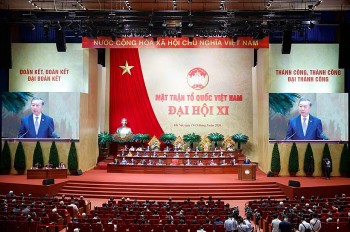
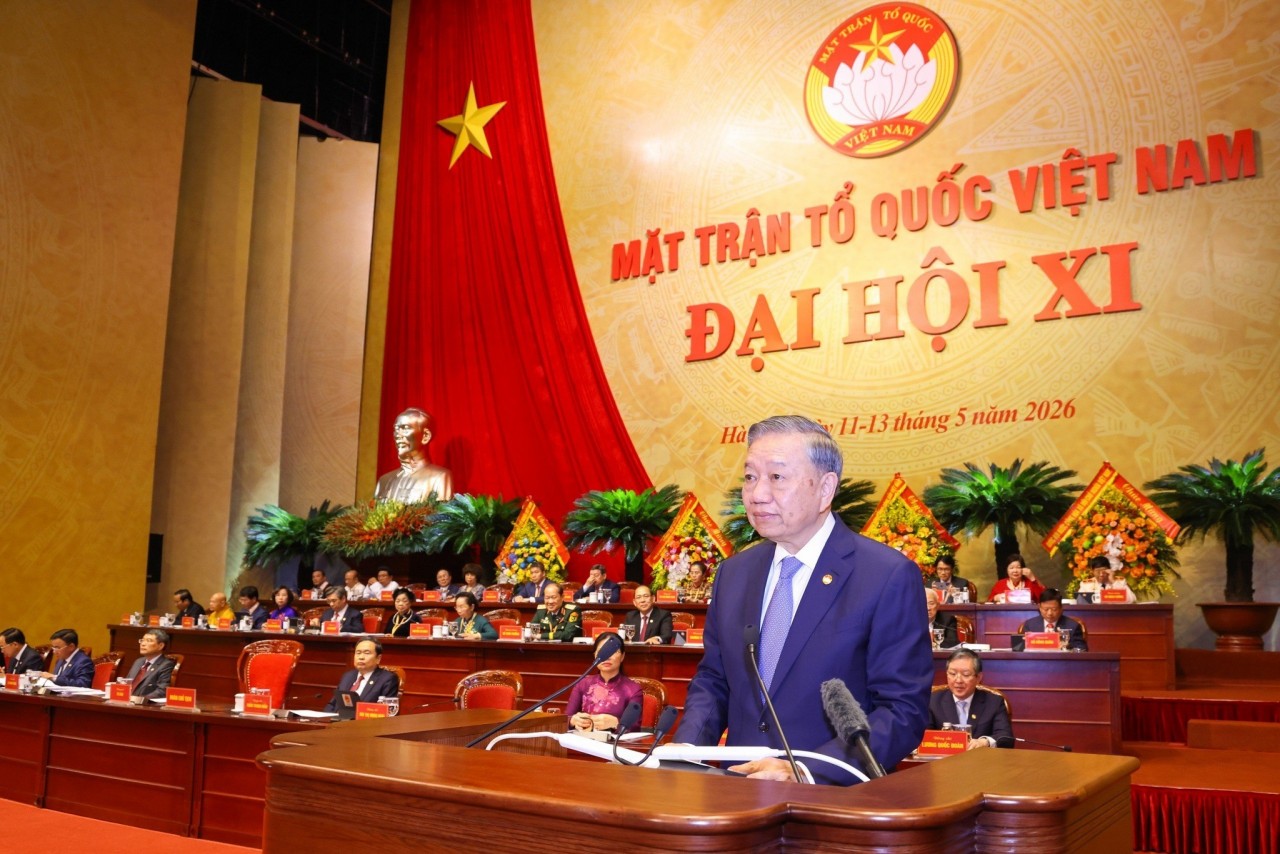 |
| General Secretary and State President To Lam delivers a keynote address at the 11th National Congress of the Vietnam Fatherland Front for the 2026-2031 tenure. (Photo: Vietnam Fatherland Front) |
According to General Secretary and State President To Lam, the Congress must clearly define what the VFF should do and how it should act to continue serving as a place that unites the people’s will, reflects public aspirations, protects the legitimate rights and interests of the people, connects the strength of the people, and promotes the great national unity bloc.
On behalf of the Party and the State, the Party General Secretary and State President acknowledged, congratulated, and commended the important achievements attained by the VFF at all levels, its member organizations, Front officials, and all social strata in recent years.
Alongside these achievements, the Party General Secretary and State President also pointed out several shortcomings in Front activities, including that the content and methods of mobilizing and gathering the people have, in some places and at certain times, failed to keep pace with rapid social changes; some movements remain formalistic; supervision and social criticism in some areas have not achieved high quality; the monitoring of public sentiment in cyberspace has not been sufficiently timely; and digital transformation in Front activities has been uneven.
The Party General Secretary and State President highlighted five key groups of tasks for the Vietnam Fatherland Front in the new tenure.
First, thoroughly grasp the principle that “the people are the root,” with the people serving as the subject and center of the process of renewal and development, and as the guiding principle throughout all Front activities. All Party guidelines, State policies and laws, and all Front programs, campaigns, and movements must originate from the needs, aspirations, and lawful and legitimate rights and interests of the people, aiming to improve their material and spiritual well-being and happiness. The Front must place the people at the center of all activities; rely on the people to build the Party, the State, and the political system; promote the people’s mastery; and substantively implement the principle of “people know, people discuss, people act, people inspect, people supervise, and people benefit.” The Front must both convey the Party’s sound guidelines and the State’s proper policies to the people, and bring the voices, aspirations, initiatives, and legitimate concerns of the people to the Party and the State.
Second, renew methods of mobilizing and gathering the people and promoting the strength of the great national unity bloc. Society is changing rapidly, and therefore methods of mobilization and engagement must also change. Mobilization cannot rely solely on conferences, documents, and slogans; it must be carried out through dialogue, persuasion, tangible benefits, exemplary conduct, concrete results, and the ability to resolve issues that concern the people. Every Front program, movement, and campaign must shift strongly from general launches to concrete implementation; from slogans to results; and from formality to substance, ensuring that they are easy to understand, easy to remember, and easy to implement, with clear goals, clear responsibilities, clear timelines, and measurable outcomes and impacts on people’s lives. The Front must not replace the State or its member organizations, and must not bureaucratize its activities. It must fulfill its proper role as the political core that gathers, coordinates, supervises, conducts social criticism, cares for, protects, and promotes the people’s strength. Under the new organizational model, the structure may become leaner, but its ability to unite people must become broader; the apparatus may have fewer layers, but its activities must become closer to the people.
Third, improve the quality of supervision and social criticism and participate in Party and State building. Supervision and social criticism are extremely important functions of the Vietnam Fatherland Front. Supervision must focus on issues that concern the people, generate social concern, and involve policies with major impacts on people’s lives. Social criticism must be conducted early and proactively, right from the process of formulating guidelines and policies; it should not merely comment on wording, but also address policy objectives, social impacts, feasibility, implementation resources, and the interests of the people.
“Social criticism is not intended to create difficulties for State agencies, but to ensure that policies are more accurate, closer to the people, more transparent, more feasible, and more humane. To achieve this, the Front must improve its capacity, quality, and methods of supervision and social criticism; better mobilize experts, scientists, legal professionals, intellectuals, businesspeople, and reputable individuals; and rely on data, social surveys, and voices from the grassroots. In particular, there must be mechanisms to follow through on the settlement of recommendations after supervision and social criticism activities, ensuring that the Front’s recommendations do not stop at reports and that the legitimate opinions of the people do not fall into silence,” the General Secretary and State President stressed.
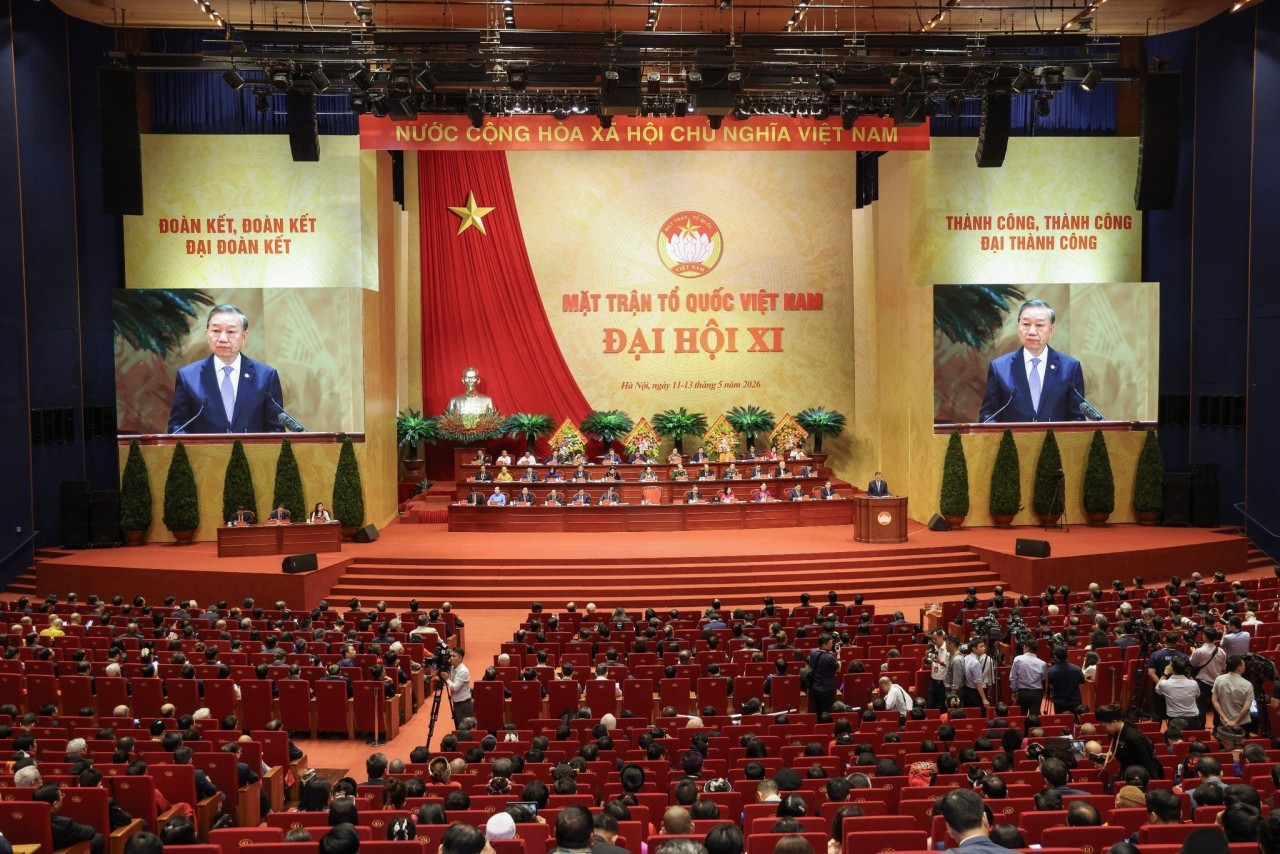 |
| The 11th National Congress of the Vietnam Fatherland Front for the 2026-2031 tenure. (Photo: Vietnam Fatherland Front) |
Fourth, care for the practical interests of the people and strengthen social consensus from the grassroots level. Sustainable national unity must be built on the foundation of the people’s tangible interests. When people are cared for, protected, respected, able to participate, and able to benefit, unity will have deep roots, consensus will have a solid foundation, and trust will become lasting. The Front should continue renewing activities aimed at supporting the poor, vulnerable groups, disadvantaged people, ethnic minorities, religious communities, workers, farmers, women, youth, the elderly, children, persons with disabilities, and overseas Vietnamese facing difficulties. Social welfare programs must be transparent, accountable, targeted at the right beneficiaries, and subject to social supervision. They should not stop at short-term assistance but should aim toward sustainable livelihoods, skills development, employment, education, healthcare, and people’s capacity for self-reliance. The Front should promote the self-governing role of local communities; build united, safe, prosperous, and happy residential areas; and develop community self-management models in areas such as public security, environmental protection, educational promotion, elderly care, child protection, and preservation of cultural identity, while resolutely combating negative practices and social evils. Social consensus should not be merely superficial silence, but must be built on democracy, listening, dialogue, harmonization of interests, and protection of the people’s legitimate rights and interests.
Fifth, build a modern Front with a streamlined organization, people-oriented officials, substantive digital transformation, and a long-term vision. Following the implementation of the new organizational model, the VFF should proactively review, summarize, and objectively assess achieved results, as well as difficulties, obstacles, and bottlenecks in coordination mechanisms, task allocation, organizational structure, and relations between the Front and its member organizations. It should promptly advise on and propose institutional improvements to ensure that the Front system operates smoothly and effectively, without overlap, bureaucratization, or replacing the functions of other bodies.
Front officials must possess strong political integrity, dedication to the people, credibility within the community, and skills in mobilization, dialogue, persuasion, social criticism, and handling situations. They must not become detached from the people or work solely through reports; instead, they must go directly to the people, listen thoroughly, speak truthfully, make recommendations to the right authorities, and follow issues through to final results. The Front should effectively operate digital platforms so that people can submit feedback, recommendations, and opinions anytime and anywhere; develop a 24/7 Digital Front Portal; organize a “Month of listening to the people”; and implement a Provincial Social Trust Index. At the same time, the Front should regard theoretical research and practical reviews on the great national unity bloc, socialist democracy, and the people’s mastery as important tasks. It should advise on the development and implementation of a Strategy for Great National Unity through 2035, with a vision toward 2045, while further clarifying the foundations, principles, methods, and mechanisms for promoting the strength of the people, culture, and the Vietnamese people.
In order for the VFF to successfully fulfill its tasks, General Secretary and State President To Lam called on Party committees, Party organizations, and authorities at all levels to further deepen their awareness of the Front’s position and role; to respect, listen to, coordinate with, and create favorable conditions for the Front to effectively carry out the functions and responsibilities entrusted to it by the Party, the State, and the people. Opinions, recommendations, supervision, and social criticism from the Front should be regarded as important channels for improving leadership, management, and governance. Party committees and authorities at all levels bear responsibility for receiving, explaining, and clearly responding to such recommendations. At the same time, the Front itself must improve the quality of its recommendations by ensuring that they are accurate, focused, evidence-based, aimed at the common good, constructive in spirit, and followed through to concrete results.
The General Secretary and State President requested that, immediately after the Congress, the Central Committee of the VFF, Front organizations at all levels, and member organizations promptly translate the Congress Resolution into concrete action programs and plans with clear priorities, specific responsibilities, designated personnel, timelines, and measurable outcomes.
 | The 11th National Congress of the Vietnam Fatherland Front Holds Preparatory Session On May 11, more than 1,300 delegates attending the 11th National Congress of the Vietnam Fatherland Front (VFF) for the 2026-2031 tenure convened for a ... |
 | Vietnam Fatherland Front Must Better Harness Strength of Great National Unity: Top Leader In the new era, great national unity is not only a spiritual tradition, but also a national development capacity and a source of strength to ... |
Related Stories
 National
Party Committee of the Viet Nam Fatherland Front and Central Mass Organizations: Accelerate Organizational Streamlining and Digital Transformation in Second Half of Year
 National
Vietnam Fatherland Front Launches “Month of Listening to the People”
Recommended
 National
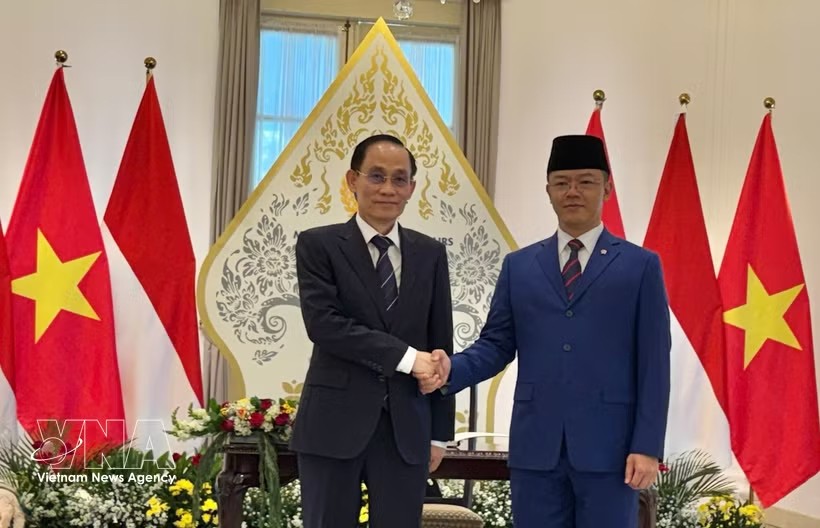
Vietnam News Today (July 14): Vietnam, Indonesia Chart New Strategic Cooperation Agenda
 National
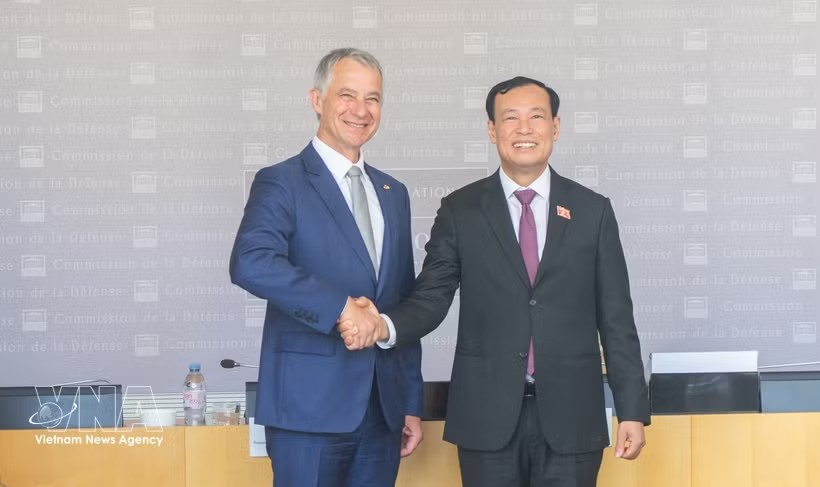
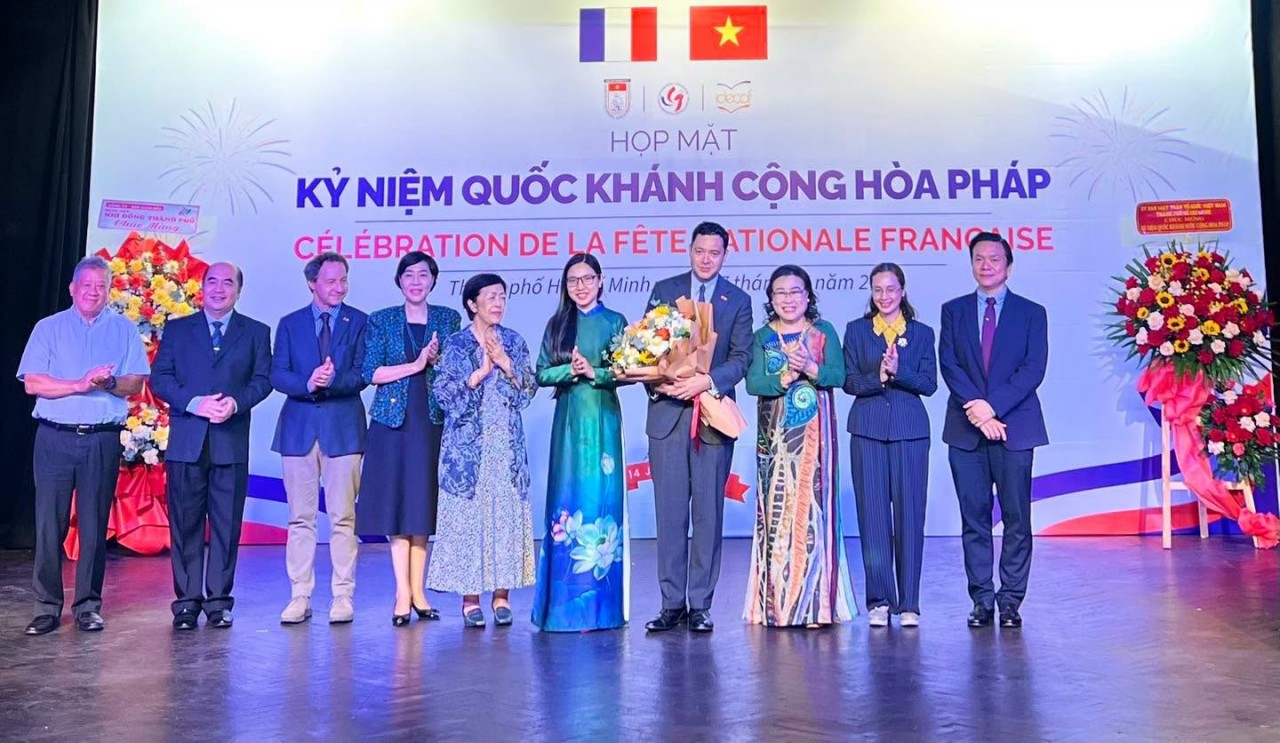
Vietnam News Today (July 13): Vietnam, France Seek to Deepen Comprehensive Strategic Partnership
 National
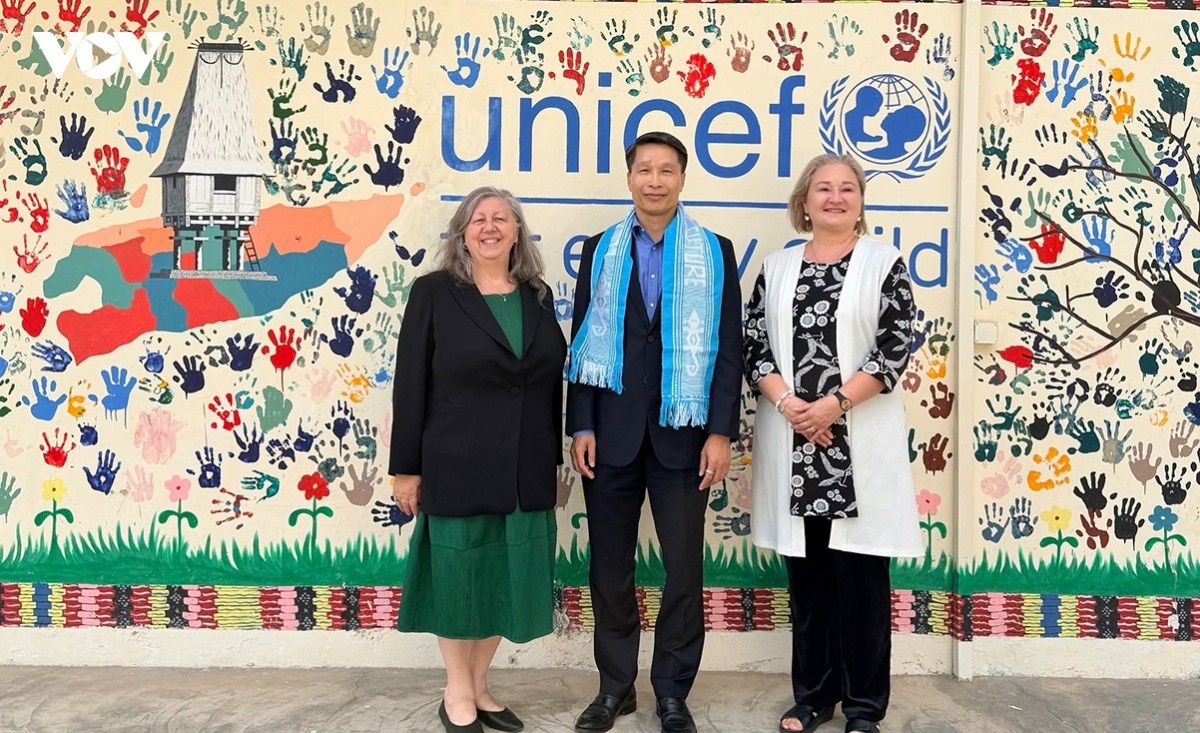
Vietnam News Today (July 12): Vietnam Ready to Share Digital Transformation Experience with Timor-Leste
 National
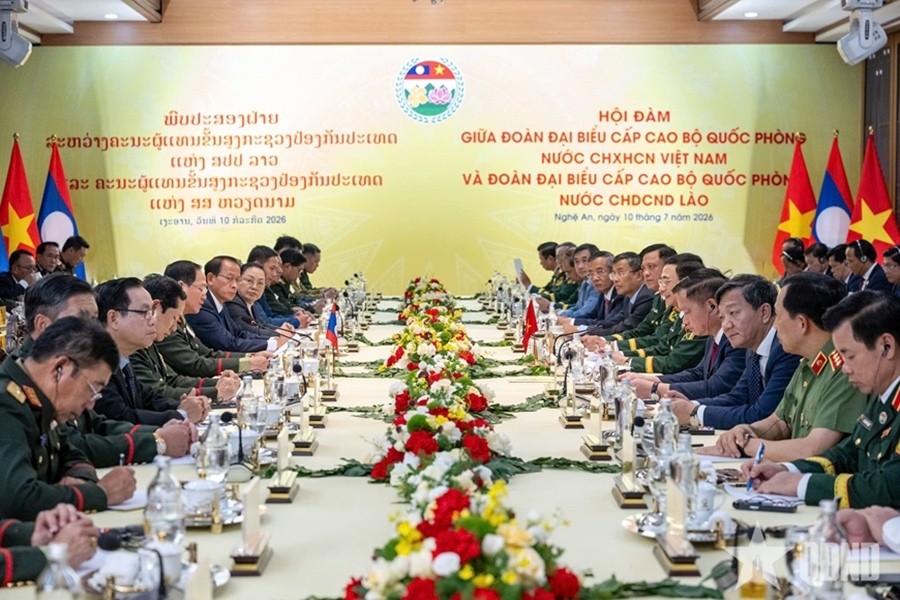
Vietnam News Today (July 11): Vietnam and Laos Agree to Enhance Defense Cooperation
 National
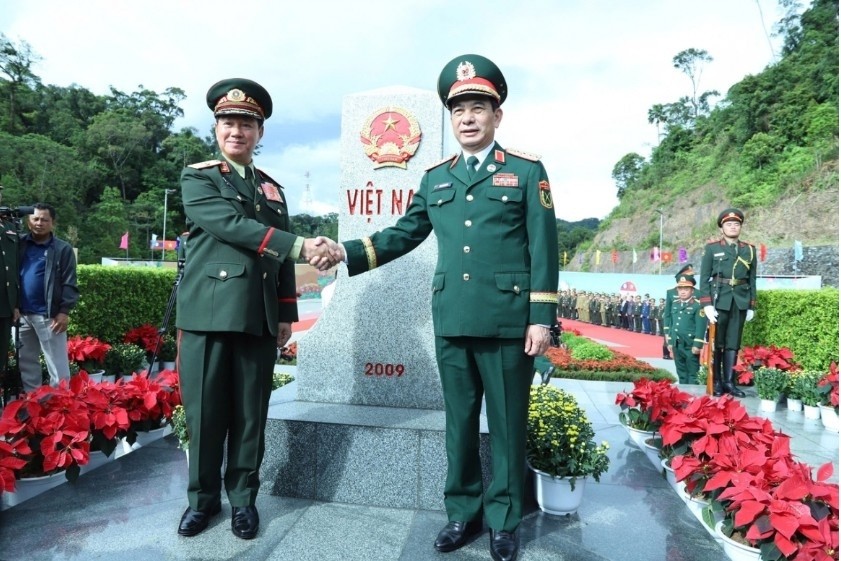
Vietnam News Today (July 10): Third Vietnam-Laos Border Defense Friendship Exchange Gets Underway
 National
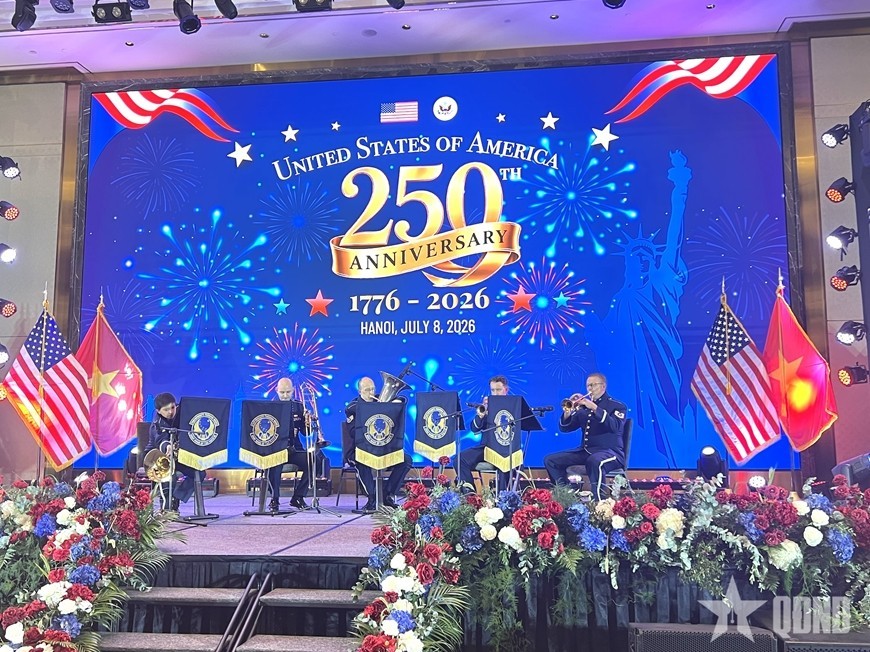
Vietnam Looks Forward to New Breakthroughs in Cooperation with the US
 National
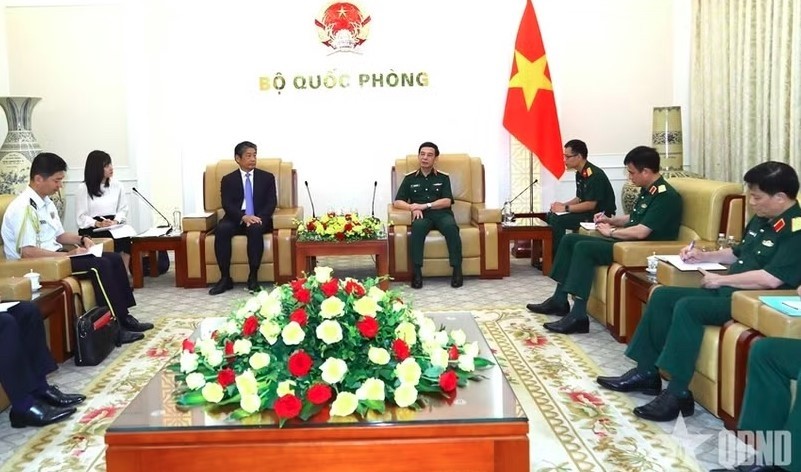
Vietnam News Today (July 9): Vietnam, Japan Seek New Strides in Defense Cooperation
 National