
India’s space startup drive takes off
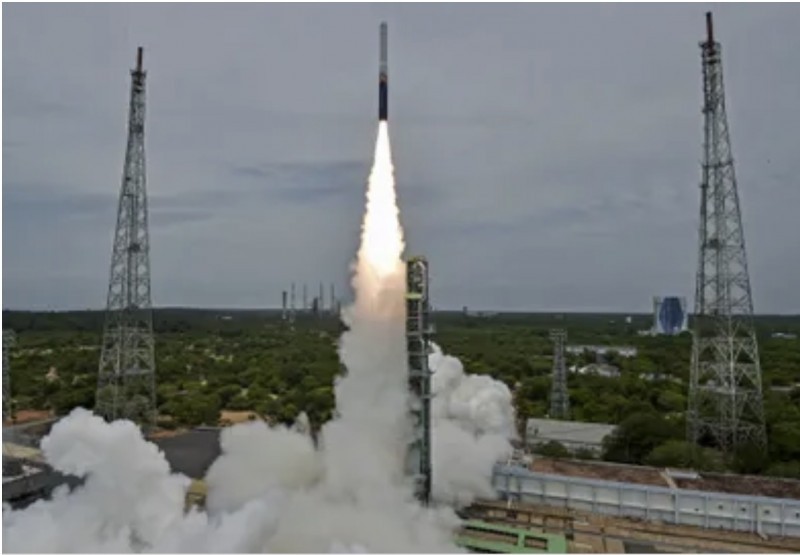 |
INDIA’s private space sector has entered an exciting phase with Skyroot Aerospace’s launch of Mission Aagaman, the maiden flight of its Vikram-1 rocket. Built, designed and tested by the Hyderabad-based startup with infrastructure support from the Indian Space Research Organisation (ISRO), the rocket placed ko multiple payloads into low-Earth orbit.
It marks a step in India's commercial space programme, made possible by ISRO and the Indian National Space Promotion and Authorisation Centre (IN-SPACe). The mission reflects India’s changing strategy towards the space sector.
Under the new space policy, government agencies are increasingly expected to act as partners and enablers while private companies develop commercial products and services.
Skyroot is one of the nearly 400 space startups that have emerged after India opened its space sector to private participation. Founded by young ex-ISRO engineers, the company has developed Vikram-1, named after Vikram Sarabhai, the father of India’s space programme. The four-stage launch vehicle is built to place small satellites into low-Earth orbit.
Small satellites have transformed access to space over the past decade. Around 1,200 such satellites were launched worldwide in 2020. By 2024, this number had risen to around 2,800. Small satellites accounted for nearly 97% of all spacecraft launched that year. Universities use them for research and startups deploy them for Earth observation and communication services, while governments rely on them for weather forecasting, disaster monitoring and environmental studies.
Rapid advances in electronics render satellites technologically outdated within a few years. Rather than operating a few large satellites for 15 years or more, many organisations now prefer constellations of smaller satellites in low-Earth orbit that can be upgraded and replaced more frequently. This has created a growing demand for dedicated launch vehicles such as Vikram-1.
Instead of waiting for space on larger rockets, customers can book dedicated launches into the orbit best suited to their missions. Vikram-1 has been developed to serve this growing market.
One of Vikram-1’s distinguishing features is its major use of carbon-fibre composite structures. Carbon-fibre composites are as strong as metal but much lighter. Every kilogram saved in the rocket’s structure can be used to carry more payload or reduce the amount of propellant needed, improving the rocket’s efficiency.
Vikram-1 also features India’s first fully 3D-printed rocket engines. Built using additive manufacturing, engine parts that once had to be made separately and assembled can now be produced as a single component. This optimises manufacturing, shortens production time, reduces costs and improves reliability by cutting the number of joints and components.
Together, lightweight composite materials and additive manufacturing exemplify a broader shift in rocket engineering towards faster production, lower costs and more frequent launches — an important requirement for the rapidly growing small-satellite market.
The maiden mission is the first of three planned developmental flights. It will qualify the rocket for future commercial missions.
Vikram-1 has four stages. The first three use solid-propellant motors to lift the rocket into space. The fourth stage, called the Orbital Adjustment Module, uses liquid propulsion. It performs the final orbital insertion and can continue operating after the payloads are released, carrying out experiments or demonstrating new technologies. Such restartable upper stages are becoming increasingly important because they can deploy multiple satellites more accurately and support technology demonstrations after the main mission is complete.
The mission carries several technology-demonstration payloads. SCOPE (3U), developed by Skyroot, will test technologies for the company’s future missions and also carry an Earth-imaging camera. SOLARAS S3, built by Grahaa Space, will demonstrate the company’s nanosatellite bus.
It also carries Embrace, developed by Cosmoserve Space. It uses soft-robotic petals and a deployable capture target to test a new actuation mechanism. The technology could eventually be used to capture and remove space debris.
The mission also has several symbolic and commercial payloads. These include miniature sculptures of Vikram Sarabhai, APJ Abdul Kalam and CV Raman, created by artist Ajay Kumar Mattewada.
Skyroot first demonstrated its capabilities in November 2022 with Vikram-S, India’s first privately developed rocket to reach space. Although it was a suborbital mission and did not place satellites into orbit, it successfully validated a number of important systems, including propulsion, guidance and flight control.
The experience gained during that mission has contributed directly to the development of Vikram-1. The current version can carry up to 350 kg into low-Earth orbit. Skyroot plans to expand the Vikram family with more powerful versions capable of carrying up to 550 kg. This will strengthen India’s growing private launch capability and broaden the country’s access to the global small-satellite launch market.
Around the world, companies such as Rocket Lab (New Zealand), Firefly Aerospace (US) and several European startups have demonstrated that privately developed launch vehicles can become commercially successful. India is hopeful that its growing private space sector will compete in this expanding international market by offering reliable and cost-effective launch services.


Most read


Recommended
 Economy
Building New-generation Financial Centre
 Economy
Turkish Cooperatives Open New Channel for Vietnamese Businesses to Source Raw Materials
 Economy
New Drivers Promote Vietnam-China People-to-people Exchange
 Economy
Lam Dong Seeks to Expand Tourism Cooperation with India
Popular article
 Economy
Ho Chi Minh City and Northern Territory of Australia Expand Cooperation Opportunities Across Multiple Fields
 Economy
Indonesia Sees Strong Potential for Agricultural Cooperation with Vietnam
 Economy
India plans polysilicon incentives
 Economy