
Building New-generation Financial Centre
| Tradewind Finance Provides USD 2.5 Million Non-Recourse Export Factoring Facility to Vietnamese Cable Exporter Quang Ninh To Host 2027 APEC Finance Ministers' Meeting |
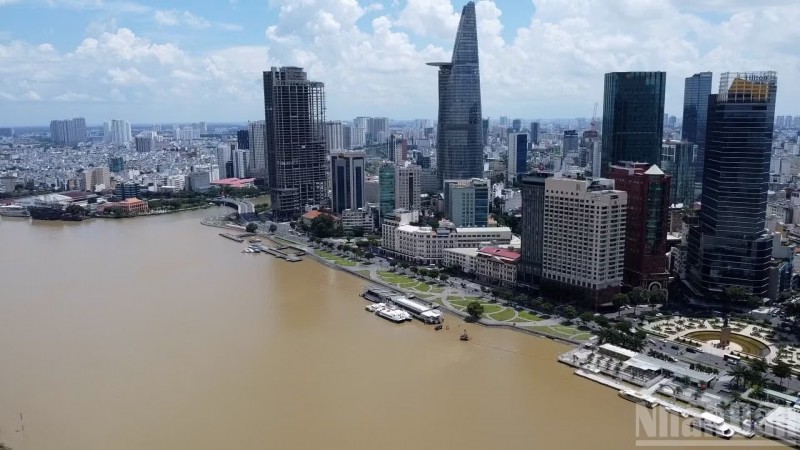 |
| Centre of District 1, Ho Chi Minh City. (Photo: Thanh Dat/Nhan Dan Newspaper) |
In mid-July 2026, Vietnam's International Financial Centre in Ho Chi Minh City (VIFC-HCMC) launched an advisory council comprising 13 prominent Vietnamese and international experts to provide strategic advice and help connect the centre with global resources.
In the middle of July 2026, VIFC-HCMC launched an advisory council comprising 13 prominent Vietnamese and international experts to provide advice and connect the centre with global resources.
Since its establishment, VIFC-HCMC’s core objective has been to facilitate foreign investors’ access to Vietnam and encourage capital inflows, allowing them to share in the benefits of the country’s economic growth.
Unlike traditional financial centre models established by other countries decades ago, however, Ho Chi Minh City is pursuing the development of a new-generation international financial centre.
The foundation is technology, data, innovation, and modern financial service; while allowing users to experience products, mobilizing capital methods, and new business models in the control framework.
Instead of directly competing with long-established financial centres, the city strives for a flexible ecosystem, high adaptability, and a regional hub for capital flows. To realize this goal, the problem is at the mechanism.
International experience demonstrates that successful financial centres all possess a sufficiently flexible institutional framework for volatile markets. Therefore, competitiveness should not be measured by scale of the number of organizations but by a legal environment that encourages and ensures both innovation and system safety
For international investors, besides profit, policy stability, transparency, and predictability are priorities. To meet these demands, Ho Chi Minh City needs greater authority to pilot special mechanisms, particularly regulatory sandboxes for fintech, digital assets, cross-border payments, and financial products aligned with international standards.
Recently, recommendations in the draft Law on Special Urban Areas have focused on granting Ho Chi Minh City greater autonomy in key areas, including expanded authority over planning, infrastructure development, bond issuance, talent-attraction policies, and the implementation of sandbox mechanisms. These are necessary conditions for strengthening the city’s competitiveness in attracting investment.
However, this specific mechanism only demonstrates value if they make it easier for capital to flow into the economy. If investors must still navigate complex administrative procedures similar to those currently in place, the effectiveness of such policies will remain limited.
After 6 months of operation, VIFC-HCMC recorded around USD 20 billion in committed capital from domestic and international investors. This is a good signal; however, according to economic experts, the effectiveness of financial centres should not be assessed by the number of organisations and the scale of registered capital, but by long-term capital for infrastructure, energy, logistics, innovation, and business development.
The decision not to pursue direct competition with long-established international financial centres reflects a pragmatic approach. The priority should instead be to develop a model suited to Vietnam’s own strengths and development conditions, while making full use of its rapid economic growth, digital transformation and strategic geographical position in the region.
Building a new-generation financial centre is not the duty of only the financial industry or Ho Chi Minh City, but a part of the strategy to complete the institutional economic market to expand national mobilizing capital sources. When the specific mechanism is synchronously and transparently built and effectively operated, financial centres will better serve as a connecting bridge to attract international capital to serve the country’s goal.
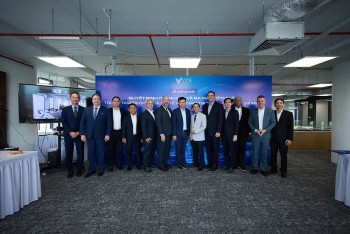 13 Economic Experts Join Advisory Board of VIFC-HCMC 13 Economic Experts Join Advisory Board of VIFC-HCMC On July 12, the Executive Agency of the Vietnam International Financial Centre in Ho Chi Minh City (VIFC-HCMC) announced the establishment of the VIFC-HCMC Advisory Board, comprising 13 members, including prominent domestic and international experts in finance, investment, and policy making. |
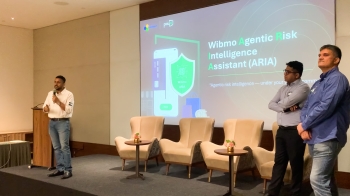 Wibmo Unveils Agentic Risk Intelligence Assistant - an AI Assistant for Financial Crime Operations Wibmo Unveils Agentic Risk Intelligence Assistant - an AI Assistant for Financial Crime Operations Wibmo, a PayU company and leading provider of payment security solutions, unveiled Wibmo Agentic Risk Intelligence Assistant (ARIA), an AI-powered platform designed to transform financial crime operations, at its flagship industry event 'Securing Digital Payments: Innovation, Intelligence & Trust' held at Jio World Convention Centre, Mumbai. |


Most read


Related Stories
 Vietnamese Culture
Eight More Sets of Martyrs’ Remains Found at Le Thi Rieng Park
 National
Viet Nam News Today (Oct. 14): Vietnam, Cambodia Sign Defense Cooperation Plan for 2027
 Friendship
Strengthening People-to-People Exchanges, Nurturing Viet Nam-RoK Friendship
 Friendship
War-Time Frames Tell the Story of Peace
Recommended
 Economy
India converts gas-fuelled plant for green ammonia
 Economy
India’s Startups Are Srengthening the Country’s Space Tech Boom
 Economy
ZTE Launches M8000 Intelligent Computing Micro-Module Data Center, New-Gen AIDC IT POD Solution for Global Deployment
 Economy
Mountains and Seas Unite for a New Chapter: "Sojourn in Guizhou" International Promotion Conference Held in Macao
Popular article
 Economy
Vietnamese And Bulgarian Businesses Seek Further Cooperation Opportunities
 Economy
India enhances ability for cancer drug price caps, lowering prices of 137 medicines
 Economy
Carlsberg Asia Partners with Grab to Deliver a New Dining Experience
 Economy