| Vietnam News Today (Aug. 14) notable headlines Vietnam, New Zealand expand cooperation in trade, technology and security Vietnam underscores ASEAN unity, centrality Lam Dong steps up tourism cooperation with Indian partners Ha Noi ready to strengthen cooperation with Russian partners HCM City leads Vietnam in FDI with US$10.3 billion in seven months Vietnam steps up search, recovery and identification of fallen soldiers Vietnam, Singapore firms develop digital trust infrastructure for ASEAN trade Finland expands opportunities for Vietnamese technology experts ACIAR, Vietnam deepen research collaboration for sustainability in agriculture |
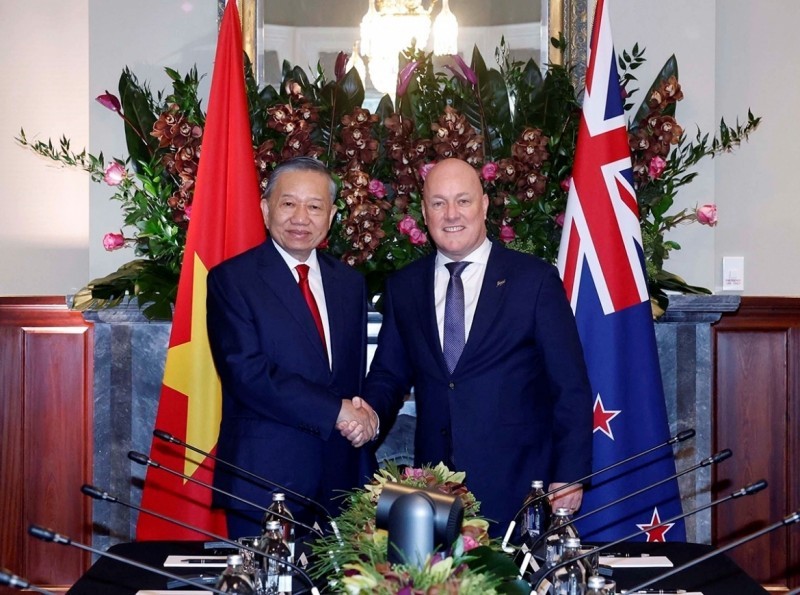 |
| New Zealand Prime Minister Christopher Luxon (R) and Vietnamese Party General Secretary and State President To Lam shake hands ahead of their talks in Auckland on August 13, 2026. (Photo: VNA) |
Vietnam, New Zealand expand cooperation in trade, technology and security
Vietnam and New Zealand will broaden cooperation in trade and investment, agriculture, science and technology, digital transformation and security, while working to remove market barriers and create new opportunities for businesses from both countries.
The agreement was reached during talks in Auckland on August 13 between New Zealand Prime Minister Christopher Luxon and Vietnamese Party General Secretary and State President To Lam who is in New Zealand on a three-day state visit.
The two leaders pledged to further consolidate political trust through high-level and other exchanges across Party, State and parliamentary channels, as well as people-to-people contacts, and effectively implement the 2025-2030 Action Program for the Comprehensive Strategic Partnership.
Trade and investment at the heart of bilateral ties
The two leaders said the Vietnamese and New Zealand economies are highly complementary and identified trade and investment as an important pillar with considerable room for expansion, particularly in agricultural, aquatic and seafood products.
They vowed to make better use of trade agreements shared by the two countries, including the Comprehensive and Progressive Agreement for Trans-Pacific Partnership (CPTPP), Regional Comprehensive Economic Partnership (RCEP) and ASEAN-Australia-New Zealand Free Trade Area (AANZFTA), according to VOV.
The two sides will work to facilitate trade and market access for their respective key agricultural products, reduce technical barriers and enhance cooperation on quality standards, quarantine, food safety and electronic certification.
They will also create more favorable conditions for businesses from each country to invest in the other’s market.
Prime Minister Christopher Luxon affirmed that New Zealand will continue to strongly promote trade and investment cooperation, creating more opportunities for businesses from the two countries to invest and cooperate with each other.
New space for technology and innovation
Science and technology, innovation and digital transformation also featured prominently in the talks. The two leaders shared the view that the development goals of both countries increasingly rely on science, technology and innovation.
Prime Minister Luxon praised Vietnam’s efforts to develop policies and solutions for applying artificial intelligence to data sovereignty and national digital sovereignty.
New Zealand will continue sharing experience with Vietnam in areas including digital government, science and technology ecosystems, and innovation and startup support centers, he told his guest.
The two sides’ focus on these areas is expected to complement existing cooperation and generate new opportunities for collaboration as both countries pursue new development models, reported VNA.
Party General Secretary and State President To Lam expressed appreciation for New Zealand’s practical and effective support for Vietnam over the years, particularly in agriculture and the environment.
He called for continued cooperation in developing green, low-emission and climate-resilient agriculture, ensuring food security and increasing the added value of agricultural products.
The two sides also agreed to develop exemplary models of cooperation in sustainable agriculture.
More substantive defense and security ties
The two sides also agreed to make defense and security cooperation more substantive and effective.
Priority areas include maritime security, naval exchanges, cybersecurity and military medicine. They will also study the establishment of a direct communication mechanism or hotline for cases involving transnational crime and accelerate negotiations toward establishing a bilateral cooperation mechanism and signing a relevant agreement.
Meanwhile, education, tourism, connectivity and people-to-people exchanges were identified as important drivers of bilateral relations.
The two sides will expand cooperation in training high-quality human resources with the expertise and skills required for the new development phase.
They also encouraged airlines from both countries to move toward opening direct air routes, helping reduce the geographical distance between Vietnam and New Zealand and presenting more opportunities for people-to-people exchanges and practical cooperation.
Greater coordination in regional and global affairs
The two leaders agreed to further coordinate on regional and international issues of mutual concern through multilateral forums, particularly the United Nations.
Prime Minister Luxon expressed appreciation for Vietnam’s role as coordinator of ASEAN-New Zealand relations and its support for New Zealand’s elevation of ties with ASEAN to a Comprehensive Strategic Partnership. He also affirmed New Zealand’s support for Vietnam during its APEC 2027 year.
The two sides reaffirmed the importance of upholding international law and settling disputes in the East Sea through peaceful means in accordance with international law, particularly the 1982 United Nations Convention on the Law of the Sea (UNCLOS).
The outcomes of the talks point to a broader agenda for the Vietnam-New Zealand Comprehensive Strategic Partnership, with the two sides seeking to turn their complementary strengths into more concrete cooperation in trade, investment, technology, agriculture, security and connectivity.
Party General Secretary and State President To Lam arrived Auckland on August 12, beginning a three-day visit to New Zealand at the invitation of Governor-General Dame Cindy Kiro.
Vietnam underscores ASEAN unity, centrality
The Vietnamese Embassy in China, in its capacity as rotating chair of the ASEAN Committee in Beijing (ACB), hosted a ceremony on August 13 to celebrate the 59th anniversary of ASEAN, with the participation of ambassadors and representatives of ASEAN member states and the ASEAN-China Center.
The ASEAN embassies in Beijing also welcomed the newly appointed Secretary-General of the ASEAN-China Center, Zhang Lizhong, on the occasion.
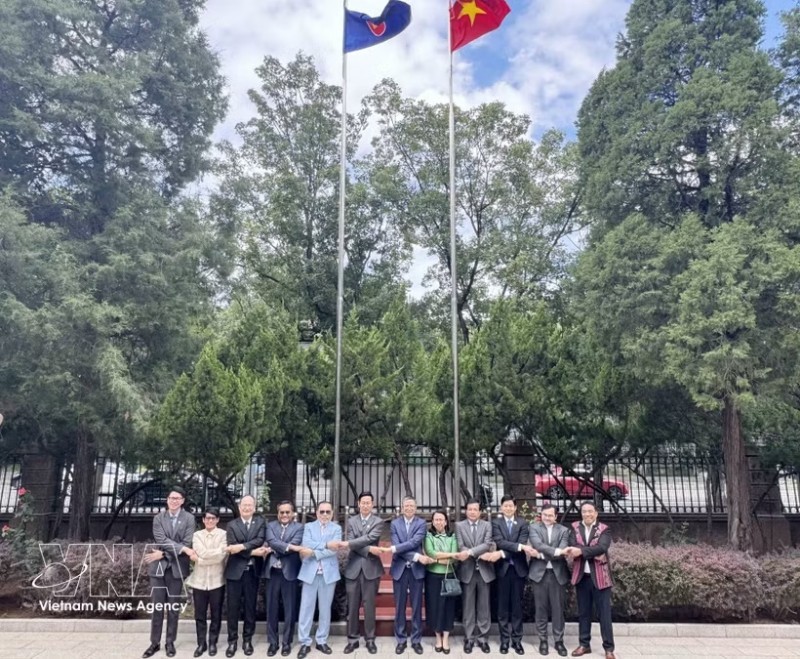 |
| ASEAN ambassadors in Beijing and the Secretary-General of the ASEAN-China Centre pose for a group photo. (Photo:VNA) |
Addressing the event, Vietnamese Ambassador Pham Thanh Binh said that after 59 years of formation and development, ASEAN has grown into a community of 11 member states, reflecting the region’s diversity and dynamism.
He highlighted ASEAN’s ability to listen to one another, respect diversity, manage differences and build consensus as among the key lessons underpinning the bloc’s strength and enabling it to move forward together.
Binh also spoke highly of the positive development of ASEAN-China relations, expressing his hope that the two sides would continue to tap their considerable potential for cooperation in the coming period.
For his part, Zhang thanked ASEAN ambassadors and representatives in Beijing for their warm welcome, affirming that the ASEAN-China Center would continue to serve as a bridge between the two sides, reported VNA.
The center will work closely with ASEAN diplomatic missions in China to promote exchanges, deepen mutual understanding and expand practical cooperation among the parties, he said.
The messages delivered at the celebration underscored the continued importance attached by both sides to strengthening ASEAN-China relations based on friendship, trust and mutually beneficial cooperation, thereby contributing to peace, stability and development in Southeast Asia and the wider Asian region.
The program also featured exchanges among participants in a friendly atmosphere, highlighting the unity, solidarity and close bonds within the ASEAN community in Beijing.
Lam Dong steps up tourism cooperation with Indian partners
Lam Dong province is stepping up tourism cooperation with Indian partners, seeking to tap the fast-growing Indian market and expand international tourism links.
The provincial People’s Committee, in coordination with the Consulate General of India in Ho Chi Minh City, held a tourism networking and cooperation program on August 13 in Xuan Huong-Da Lat ward, bringing together local tourism stakeholders and Indian partners.
The program aimed to promote Lam Dong’s distinctive culture as well as its new and signature tourism products and services to the Indian market, while strengthening tourism promotion and developing new domestic and international tours and routes.
Vo Thanh Huy, Deputy Director of the provincial Department of Culture, Sports and Tourism, said Lam Dong and its Indian partners would focus on three key areas to develop tourism in both quality and scale.
These include developing products tailored to the Indian market, particularly MICE, resort, wedding and Halal tourism; strengthening business, tour and route connectivity; and promoting air links and market outreach to facilitate greater visitor exchanges, cited VNA.
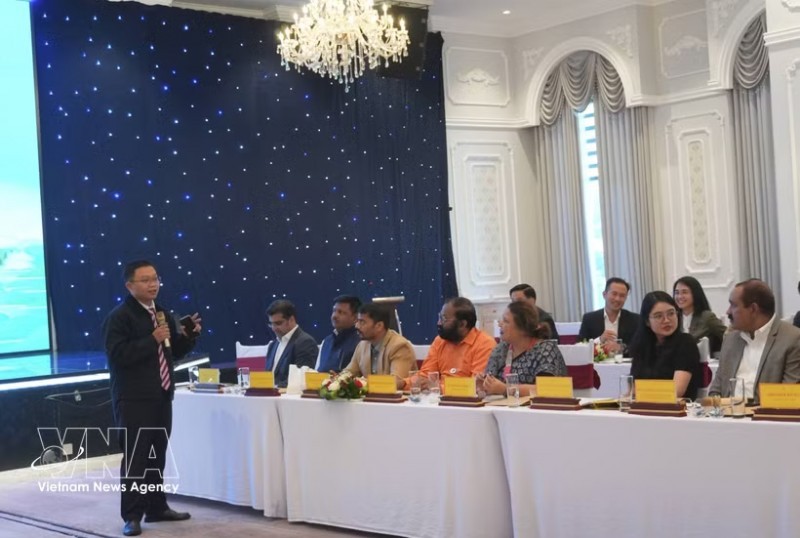 |
| Lam Dong and Indian tourism businesses and travel agencies discuss opportunities for cooperation, investment and tourism promotion. (Photo: VNA) |
The two sides will also explore broader cooperation in culture, trade and investment, he said.
Ranga Reddy Kukunuru, Chairman of the Indian Association of Tour Operators, said Lam Dong has strong potential for MICE, wedding and honeymoon tourism but still faces challenges in attracting Indian visitors, including limited market information, insufficient promotion and a shortage of tourism personnel.
He suggested that the province step up tourism promotion in India and consider establishing a tourism promotion office there to provide information to travel companies and promote major festivals and events, such as the Da Lat Flower Festival, to Indian travelers.
Lam Dong should also strengthen tourism workforce training, particularly for tour guides with a good understanding of Indian culture, customs and people, helping create a more memorable experience for visitors, he said.
Since August 10, the Indian delegation has been conducting a field survey of tourism products and services in Lam Dong, experiencing offerings suited to the Indian market in the Mui Ne and Da Lat tourism centres.
The visit was aimed at identifying opportunities for cooperation and developing tourism products tailored to Indian travelers.
According to the provincial Department of Culture, Sports and Tourism, Lam Dong welcomed around 9,000 Indian visitors in 2025 and another 6,000 in the first six months of 2026.
Ha Noi ready to strengthen cooperation with Russian partners
Leading a working delegation to the Russian Federation, Politburo member and Secretary of the Ha Noi Party Committee Tran Duc Thang visited the Vietnamese Embassy in Russia and held a working session with Ambassador Dang Minh Khoi on August 12.
At the working session, Secretary of the Ha Noi Party Committee Tran Duc Thang thanked Ambassador Dang Minh Khoi and the embassy’s officials and staff for supporting the inter-agency delegation during its visit and working trip to Russia.
Tran Duc Thang emphasized that Vietnam attaches particular importance to its traditional friendship and comprehensive cooperation with the Russian Federation. The working trip aims to promote the Vietnam-Russia relationship towards increasingly deeper, substantive and effective development.
One of the key focuses of the working trip is to discuss infrastructure cooperation with Russian partners, including urban railway projects in Ha Noi and Ho Chi Minh City, reported NDO.
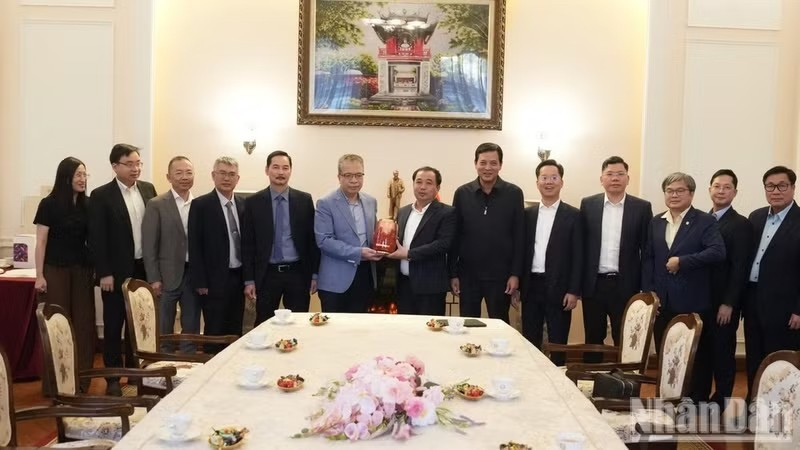 |
| Politburo member and Secretary of the Ha Noi Party Committee Tran Duc Thang presents a gift to the Vietnamese Embassy in Russia. (Photo: Thanh The) |
The Secretary of the Ha Noi Party Committee said the working trip also provides an opportunity to discuss with the Russian side the Moscow House project in Ha Noi and a Russian school in Ha Noi.
“Ha Noi is ready to discuss cooperation not only with Moscow but also with other Russian localities in a wide range of fields, including education, science and technology,” he added.
Providing an overview of Vietnam-Russia relations, Vietnamese Ambassador to Russia Dang Minh Khoi reviewed notable events and cooperation achievements between the two countries in recent years. The ambassador said Russian businesses are showing strong interest in infrastructure development projects in Vietnam, particularly urban railways and metro systems.
Ambassador Dang Minh Khoi also provided information about the Vietnamese community in Russia and the activities of the embassy in recent years.
At the working session, the two sides discussed measures to strengthen coordination and help promote cooperation between Ha Noi and its Russian partners, thereby contributing to the Vietnam-Russia comprehensive strategic partnership.
HCM City leads Vietnam in FDI with US$10.3 billion in seven months
Ho Chi Minh City emerged as Vietnam’s top destination for foreign direct investment in the first seven months of 2026, as foreign investors continued to funnel capital into major economic and industrial hubs.
According to a report from the Foreign Investment Agency under the Ministry of Finance, foreign investors injected capital into 30 of Vietnam’s 34 provinces and centrally governed cities during the first seven months of 2026, with total registered capital exceeding US$38 billion.
Ho Chi Minh City emerged as the country’s largest FDI recipient, attracting more than US$10.3 billion in registered capital. The figure accounted for 27.1% of the national total and was up 157.1% year on year.
HCM City's position is notable not only for the amount of capital attracted but also for the breadth of investment activity. The past seven months saw the city lead the country in all three major forms of foreign investment recorded by the Foreign Investment Agency.
It licensed 1,235 new projects, received 189 applications for capital adjustments and recorded 1,224 capital contribution and share purchase transactions.
This indicates that the city's appeal to foreign investors extends beyond a small number of large-scale projects, with investment continuing to come through a wide range of projects and investment forms.
Meanwhile, the northern province of Thai Nguyen ranked second with more than US$8 billion, equivalent to 21.1% of the national total, reported VOV.
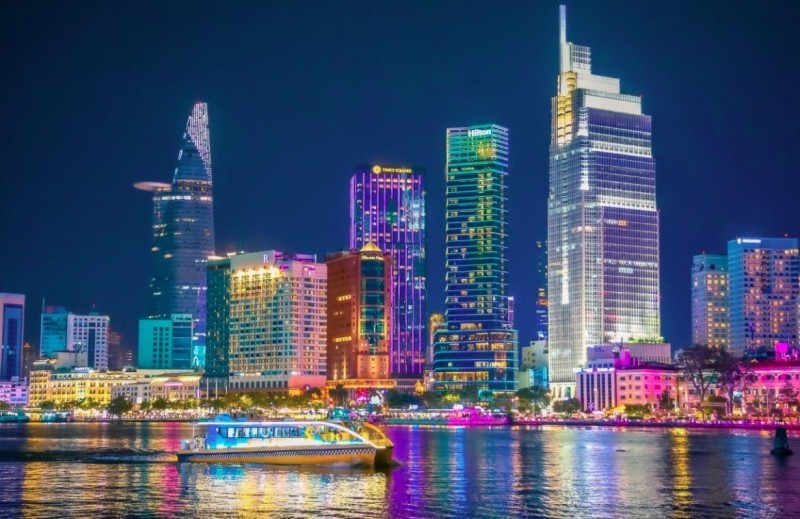 |
| Ho Chi Minh City tops FDI inflows with US$10.3 billion in the first seven months of 2026 (Illustrative image) |
Thai Nguyen's sharp rise in the rankings was driven largely by several major projects. The province attracted about US$8.07 billion in seven months, more than 22 times the amount recorded a year earlier.
Hanoi ranked third among the localities attracting the most FDI in the first seven months, with nearly US$3.6 billion, accounting for 9.5% of the national total. Its registered FDI fell 3.8% year on year.
On a cumulative basis through July 2026, HCM City was the country's largest recipient of FDI, with more than US$149 billion in registered capital, accounting for 26.7% of the national total.
Bac Ninh ranked second with more than US$51.4 billion, followed by Hai Phong with US$47.8 billion, Dong Nai with US$46.13 billion and Hanoi with US$45.3 billion.
Tay Ninh, Thai Nguyen, Hung Yen, Thanh Hoa and Ninh Binh completed the top 10, with cumulative registered FDI ranging from around US$15.9 billion to US$27 billion.
The Foreign Investment Agency described HCM City as a gateway for new investment flows, benefiting from a dynamic investment market and a diverse range of sectors and investment models. Bac Ninh, meanwhile, has continued to strengthen its position as a major manufacturing hub.