
New Financial Mechanism to Unlock Strategic Technology Breakthroughs
| Overseas Vietnamese Experts and Intellectuals Join Efforts to Address Major Science and Technology Challenges Vietnam Targets Breakthroughs in Strategic Technology Development |
The Minister of Science and Technology has issued Circular No. 49/2026/TT-BKHCN, stipulating the financial mechanism for strategic technology research and development tasks under the National Special Program on Science, Technology and Innovation for Strategic Technologies.
 |
| Illustrative photo: Strategic technology research and development tasks have requirements that differ from those of conventional science and technology tasks. |
Establishing an appropriate financial mechanism for strategic technologies
According to Assoc. Prof. Dr. Dao Ngoc Chien, Director of the Executive Agency of the National Foundation for Science and Technology Development (NAFOSTED) under the Ministry of Science and Technology, strategic technology research and development tasks have requirements that differ from those of conventional science and technology tasks.
These tasks are aimed at mastering core and foundational technologies and creating strategic technology products. They involve high levels of complexity and risk, requiring systems integration capabilities, the mobilization of highly qualified personnel, and the transfer of research results into production, technology transfer and commercialization.
Circular No. 49/2026/TT-BKHCN concretizes major policies on the development of science, technology, innovation, digital transformation and strategic technologies, particularly the Resolution of the 14th National Party Congress and Politburo Resolution No. 57-NQ/TW.
The overarching principle of the new mechanism under Circular No. 49/2026/TT-BKHCN is to translate policy orientations into financial mechanisms that can be implemented immediately in practice. These include remuneration based on job positions; hiring experts under market-based mechanisms; managing funding according to work packages and evaluation milestones; lump-sum funding based on results; greater autonomy; mobilizing non-budgetary resources; allocating contingency funding; implementing multiple independent research approaches; and addressing the financial implications of accepted risks.
One of the notable aspects of the new mechanism is the method for paying remuneration to personnel involved in strategic technology tasks.
Instead of being based primarily on administrative titles or days worked, remuneration will be determined according to the job position, professional requirements, responsibilities, time commitment and output products. The lead organization is given the autonomy to determine appropriate job positions for each work package and according to the actual requirements of the task.
In developing the policy, the Ministry of Science and Technology studied and referred to the research personnel model of Singapore’s Agency for Science, Technology and Research (A*STAR), comparing positions with corresponding characteristics and levels of responsibility. The proposed rates were developed based on income levels in Singapore, adjusted for after-tax income and purchasing power parity (PPP), rather than being mechanically converted using nominal exchange rates.
Under this approach, remuneration rates are structured according to levels of responsibility and contribution. The Chief Engineer may receive up to VND 300 million per month; the task leader up to VND 150 million per month; key members up to VND 120 million or VND 100 million per month, depending on their positions; personnel directly involved in implementation from VND 70 million to VND 90 million per month; and technicians and professional support staff up to VND 45 million per month.
These are ceiling rates used for the preparation, appraisal and approval of budget estimates. The actual remuneration of each individual will be determined based on their job position, number of months involved and proportion of time devoted to the task.
This approach reflects the view that investment in strategic technologies must first and foremost mean investment in people capable of creating and mastering those technologies. The remuneration policy is designed in relation to the responsibilities, capabilities and value generated by highly qualified personnel.
Hiring domestic and foreign experts under market-based mechanisms
For fields in which Vietnam does not have sufficient experts or needs rapid access to international knowledge and technologies, the Circular allows domestic and foreign experts to be hired under an agreed-upon mechanism.
Remuneration is determined based on professional requirements, the scope and content of the work, qualifications, capabilities, experience, time commitment, prevailing market rates and international practices.
The monthly remuneration for experts is normally capped at the remuneration level of the task leader. Where it is necessary to hire an expert at a higher rate, the lead organization must provide an explanation of the necessity, the basis for determining the rate, the feasibility of mobilizing the expert, the expected effectiveness and the ability to balance funding. The maximum remuneration may equal that of the Chief Engineer, at VND 300 million per month.
This mechanism is intended to remove financial norm-related barriers to mobilizing experts suited to strategic technology challenges.
Managing funding by work packages and evaluation milestones
A fundamental new feature is the method of preparing budgets and managing funding according to Work Packages and Milestones.
Each work package clearly defines its objectives, scope, outputs, funding, responsible organization or individual, and implementation timeline. The overall task budget is established from the work packages and consolidated according to evaluation milestones.
This approach directly links resources to technological progress and outcomes, thereby clearly determining what resources are being used for, what products must be delivered and when the results must be verified.
Performance results at each evaluation milestone serve as the basis for the payment and finalization of funding, as well as decisions on funding for the next phase. The evaluation milestone also serves as a control point for considering whether to continue, adjust or terminate a task early based on actual results, following a “Go/No-Go” approach.
Thus, milestone-based lump-sum funding is not merely intended to simplify payment procedures. It also provides a results-based management tool, granting research organizations greater autonomy while maintaining control points to ensure the effective use of public funds.
Allowing multiple approaches to address the same technology challenge
As research into new technologies is inherently uncertain, the Circular allows multiple independent research approaches to be pursued for challenges where several technological pathways are feasible, provided they pursue the same objectives, requirements and evaluation criteria.
Each approach is budgeted, allocated funding, contracted, paid for and finalized separately. It is evaluated and screened based on results at each milestone. An approach that is no longer suitable may be terminated. Funding corresponding to completed milestones will be paid and finalized in accordance with regulations, while no further budget will be allocated for milestones that have not yet been implemented.
This mechanism allows multiple technological pathways to be tested without spreading resources too thinly throughout the entire task, thereby increasing the likelihood of selecting the most suitable solution based on actual results.
Contingency funding, advance payments and mobilization of social resources
For strategic technology development tasks, contingency funding is established to address issues arising during implementation. The contingency amount is proposed by the lead organization and considered and decided upon by the management authority, but must not exceed 10% of the total estimated funding from the state budget allocated to the task.
The Circular also allows lead organizations to use their own legitimate financial resources or other lawful sources of funding to advance funds for urgent activities before the state budget is disbursed. The advanced funding will be consolidated for payment and finalization in accordance with regulations.
At the same time, the mechanism for mobilizing counterpart funding from enterprises, organizations and individuals has been expanded. Counterpart contributions may take the form of cash, machinery, equipment, technological production lines, laboratories, testing facilities, technical infrastructure, intellectual property rights, technology use rights, software, intangible assets, direct personnel costs and other lawful resources.
Through this approach, the State not only provides funding for an individual research task but also seeks to establish a model in which the State and society jointly mobilize resources to address strategic technology challenges, increasing the participation of enterprises from research and testing to the receipt, transfer and commercialization of research results.
Accepting risks without relaxing oversight
Another notable aspect is the mechanism for addressing accepted risks in technology research and development.
Under the Circular, where a task falls within the category of accepted risks as provided by law, the lead organization is not required to reimburse the portion of state budget funding that has been used for the correct objectives, contents and scope, and in compliance with regulations.
This mechanism creates greater room for scientists, enterprises and research organizations to confidently pursue new and challenging technological pathways with the potential to generate breakthroughs.
However, the mechanism remains tied to accountability and the principles of public budget management. Any funding used for improper purposes or in violation of regulations must be reimbursed. Cases of fraud or intentional violations will be handled in accordance with the law.
Alongside greater empowerment, the Circular establishes requirements for post-audit supervision and accountability. Lead organizations are given greater autonomy in organizing personnel, allocating resources, adjusting funding within permitted limits and implementing tasks. However, they remain responsible for products, technical targets, progress, the effectiveness of funding use and the integrity of their documentation.
Information on the management and use of funding will be updated on digital platforms. Management authorities will monitor and supervise activities based on risk-management principles and may request explanations, inspections or independent audits when there are grounds to do so.
With these new mechanisms, Circular No. 49/2026/TT-BKHCN seeks to change how the State uses financial resources to promote strategic technologies: making commensurate investments in people, mobilizing highly qualified experts, organizing resources by work packages, allocating and disbursing funding according to performance milestones, empowering implementing organizations, mobilizing enterprises to participate and creating room to address research risks.
The ultimate goal is to concentrate public resources on tangible outcomes: mastering technologies, developing products, promoting technology transfer and commercialization, thereby contributing to stronger technological self-reliance and national competitiveness.
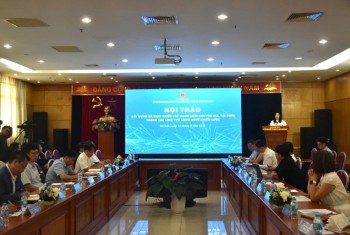 Overseas Vietnamese Experts and Intellectuals Join Efforts to Address Major Science and Technology Challenges Overseas Vietnamese Experts and Intellectuals Join Efforts to Address Major Science and Technology Challenges On August 10, 2026, in Hanoi, the State Committee for Overseas Vietnamese Affairs under the Ministry of Foreign Affairs held a workshop entitled “Building and developing networks of experts and intellectuals in strategic technology fields.” At the workshop, delegates called for further improvements to mechanisms and policies to create more favourable conditions for the participation of overseas Vietnamese experts and intellectuals in addressing major challenges and undertaking science and technology tasks in the country. |
 Vietnam Targets Breakthroughs in Strategic Technology Development Vietnam Targets Breakthroughs in Strategic Technology Development After more than one year and eight months of implementing Resolution No. 57-NQ/TW of the Politburo, science and technology, innovation, and digital transformation have seen clear changes in awareness, institutions, and implementation. The Ministry of Science and Technology has identified its key focus through the end of 2026 as making a strong shift from institutional development to creating concrete products, technologies, and results. |


Most read


Related Stories
 Handbook
Science and Technology Key to Viet Nam’s Sustainable Growth
 Friendship
Digital Transformation to Enhance Cooperation with International Organisations
 National
Vietnam News Today (Sep. 9): Prime Minister Le Minh Hung to Attend 18th BRICS Summit in India
 Friendship
A Robot's Handshake
Recommended
 Economy
Oxfam and VCCI-HCM Help Businesses Improve Management and Connect with Markets
 Economy
Tay Ninh and Thanh Hoa Seek Investment Partners and Market Expansion Opportunities in Bulgaria
 Economy
India converts gas-fuelled plant for green ammonia
 Economy
India’s Startups Are Srengthening the Country’s Space Tech Boom
Popular article
 Economy
ZTE Launches M8000 Intelligent Computing Micro-Module Data Center, New-Gen AIDC IT POD Solution for Global Deployment
 Economy
Mountains and Seas Unite for a New Chapter: "Sojourn in Guizhou" International Promotion Conference Held in Macao
 Economy
Vietnamese And Bulgarian Businesses Seek Further Cooperation Opportunities
 Economy