
A Robot's Handshake
| Robot Talent Contest for Students Held Nationwide for The First Time STEM Robotics Training for 30 Teachers and Students at Lao-Vietnamese Friendship School in Sekong |
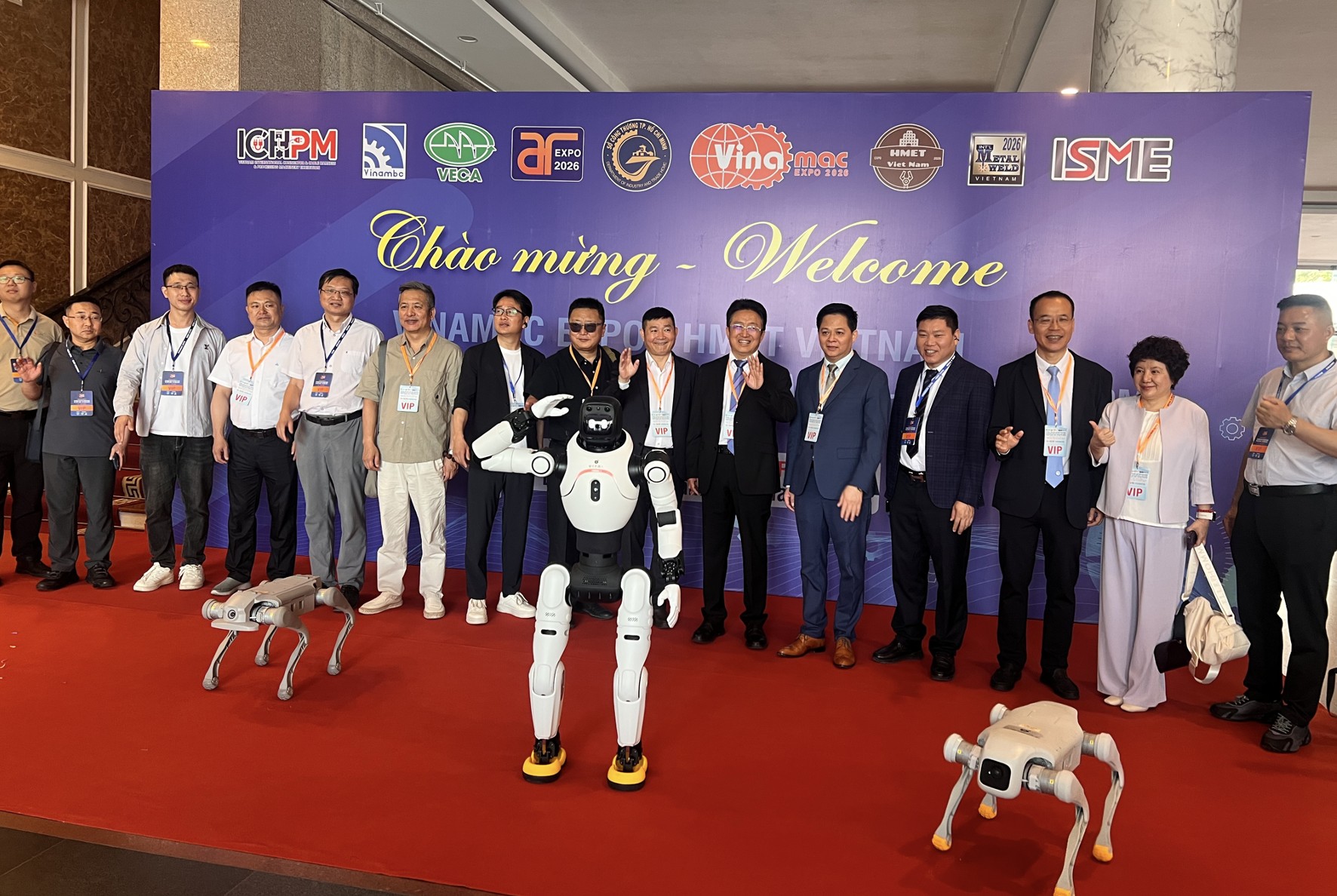 |
| Cheng Yi (eighth from left) posing with the robot and delegates at the 2nd China-ASEAN Artificial Intelligence Industry Development Summit Forum. |
3 months for a touch
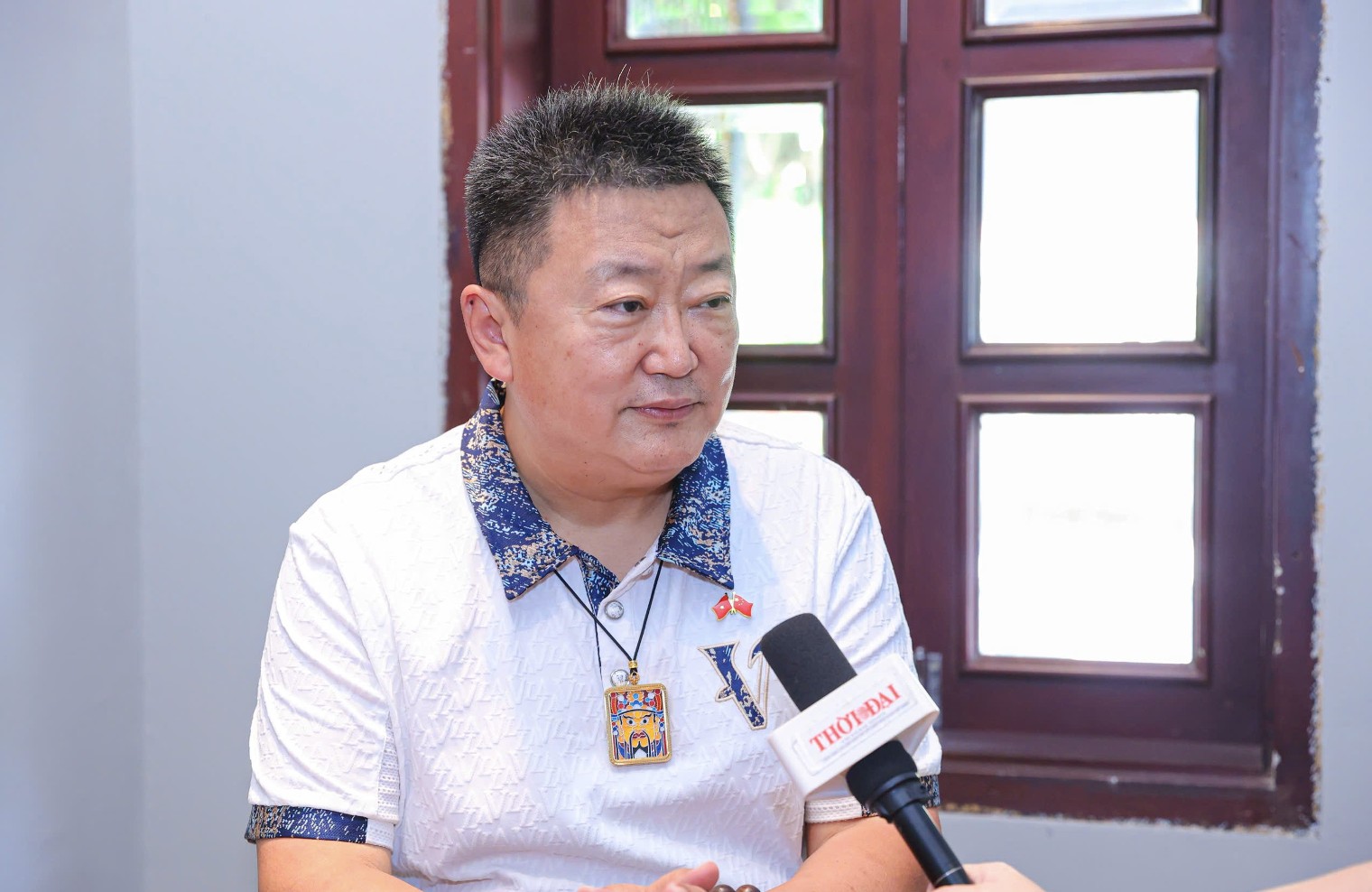
I am Cheng Yi, a Chinese. For nearly 20 years, I have traveled frequently between China and Viet Nam, participating in numerous exchange and cooperation activities in the fields of cinema, culture, and science and technology between the two countries. Among the projects I have undertaken in Viet Nam, my involvement in organizing and developing the 2nd China-ASEAN Artificial Intelligence Industry Development Summit Forum is one of the milestones I remember most vividly.
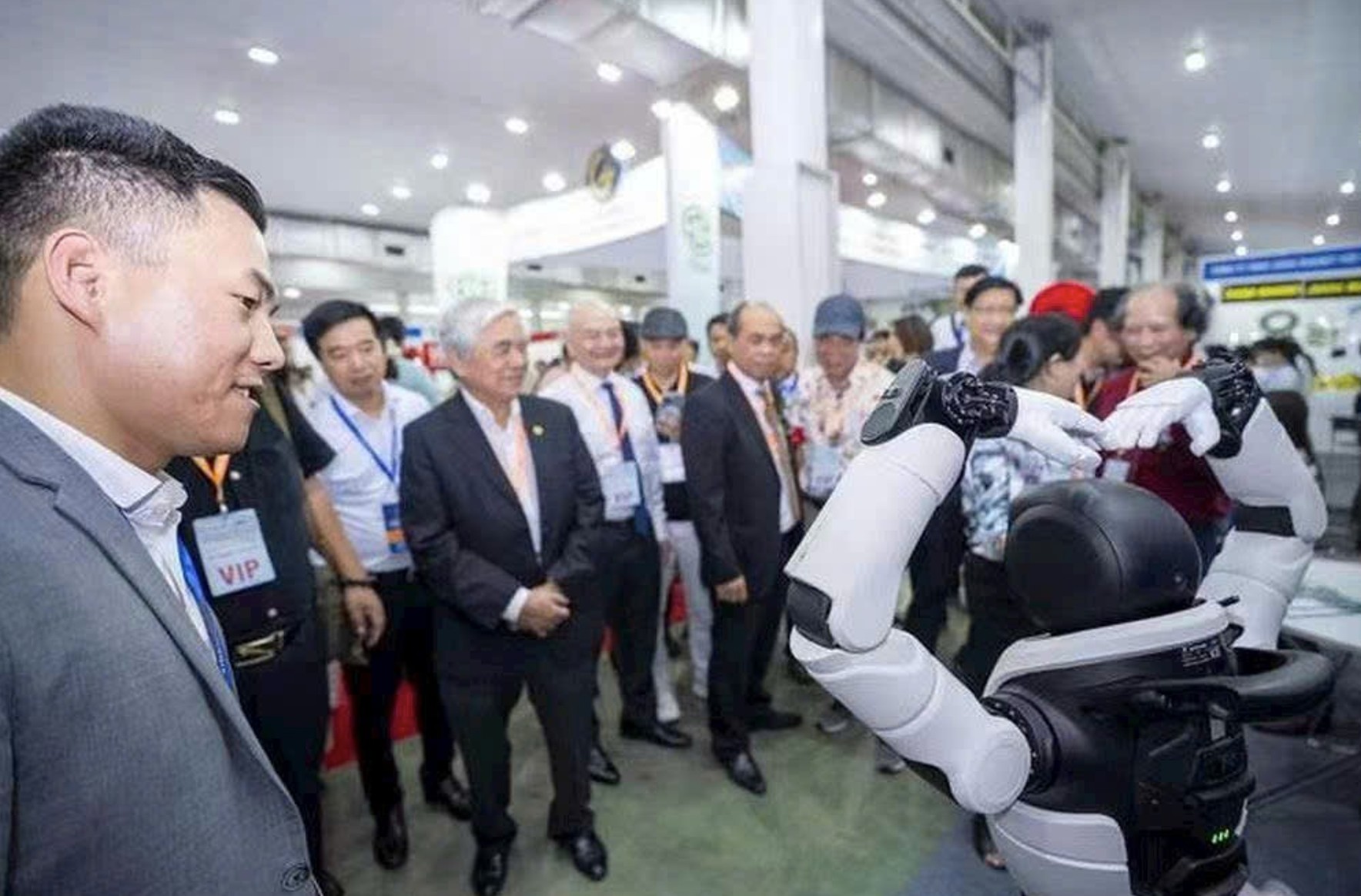 |
| Robot interacting with delegates at the Forum. |
Few people know that, to make possible those few seconds of emotional interaction between Vietnamese veteran scientists and the robot in Ha Noi, I spent three months in constant anxiety. Bringing a new technology across a border is not as simple as transporting a shipment. It involves a series of procedures, differences in technical regulations, and barriers arising from the two countries' approaches to technology.
Throughout those three months, while the product remained at the border gate as each piece of paperwork was completed, I was extremely anxious. The plan had been made, international experts had been invited, and the opening date had been set. If the robot failed to arrive in time, a year's worth of effort would once again be left unfinished. However, with the coordination of my Vietnamese colleagues, the robot was eventually brought to the exhibition area in Ha Noi. I was truly relieved.
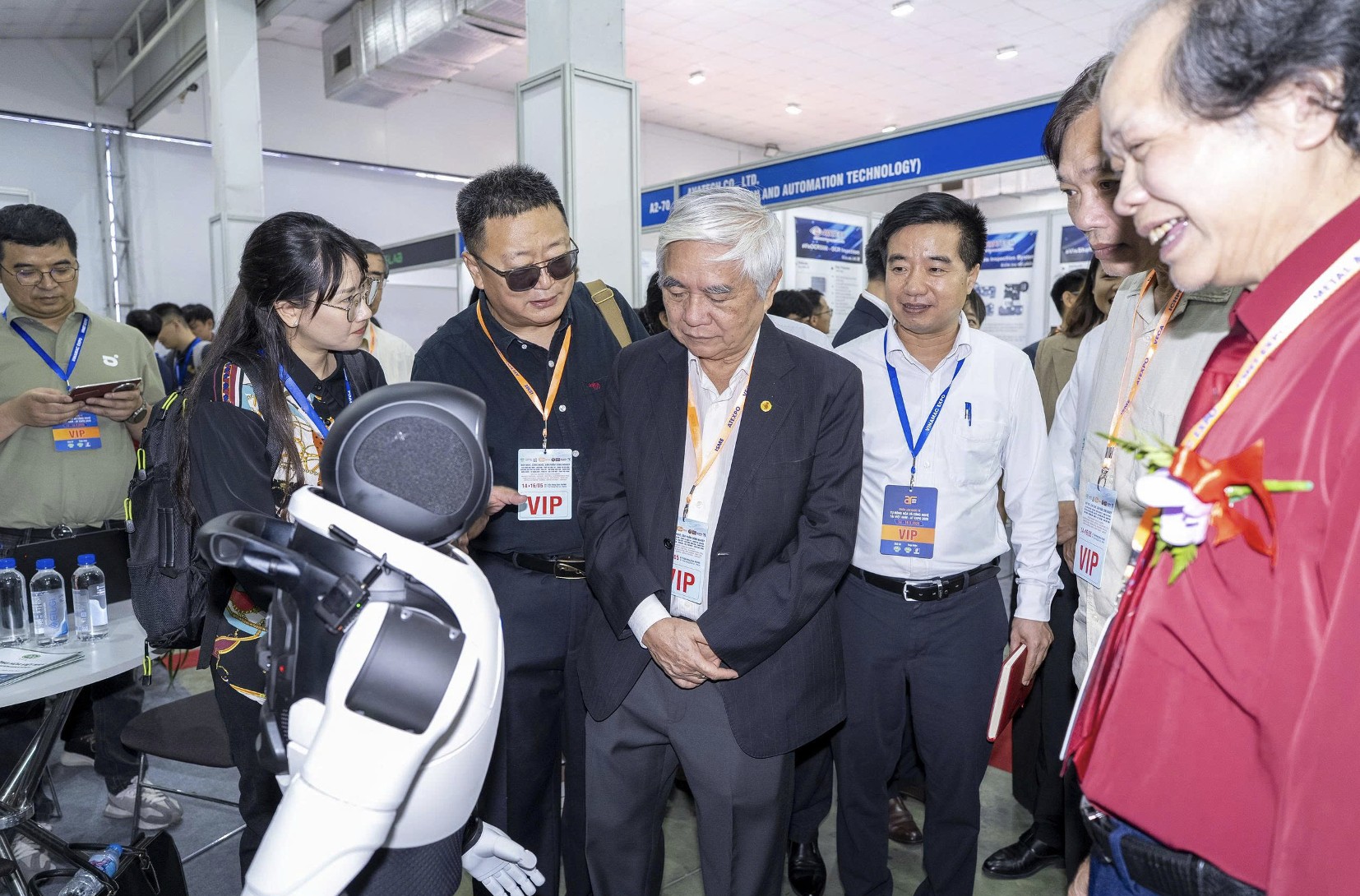 |
| Nguyen Quan (fourth from left), former Minister of Science and Technology and Chairman of the Viet Nam Automation Association, interacting with the AI robot. (Photo provided by the character) |
When Nguyen Quan smiled and shook hands with the robot, I felt a lump in my throat. It was no longer a lifeless machine, but a “witness” to my perseverance and the cooperation of my Vietnamese colleagues. That handshake was like a bridge connecting the experience of the previous generation with the aspirations of future technology.
“Just message me on Zalo, anytime”
After two decades of traveling between the two countries, I have realized that Vietnamese people are highly responsible and dedicated to their work. Normally, after working hours, they devote themselves to their families and personal interests. But when needed, they are ready to work “around the clock.”
I will always remember something said by the Deputy Secretary General of the Vietnam Automation Association, the organization that coordinated the Forum: “Whenever there is a problem, just message me in the Zalo group. If it is something I can handle, I will respond immediately. If it is not yet resolved, I will coordinate with others so that we have an answer by tomorrow morning.”
That was not merely a polite remark. There were nights when it was 1 or 2 a.m. and I was still struggling with piles of documents, while my phone continued to vibrate with Zalo notifications. He and his Vietnamese colleagues stayed up with me, reviewing every sensitive phrase and every coordination procedure.
That “24/7” dedication broke down every rule about cultural differences that I had previously known. I realized that my success was not entirely because I had good ideas, but because I had Vietnamese friends who were willing to accompany me along the way.
Writing the bond of friendship with technology
After many years of working in Viet Nam, I now have another “dream”: I want to work with Viet Nam to build a truly “digital generation.”
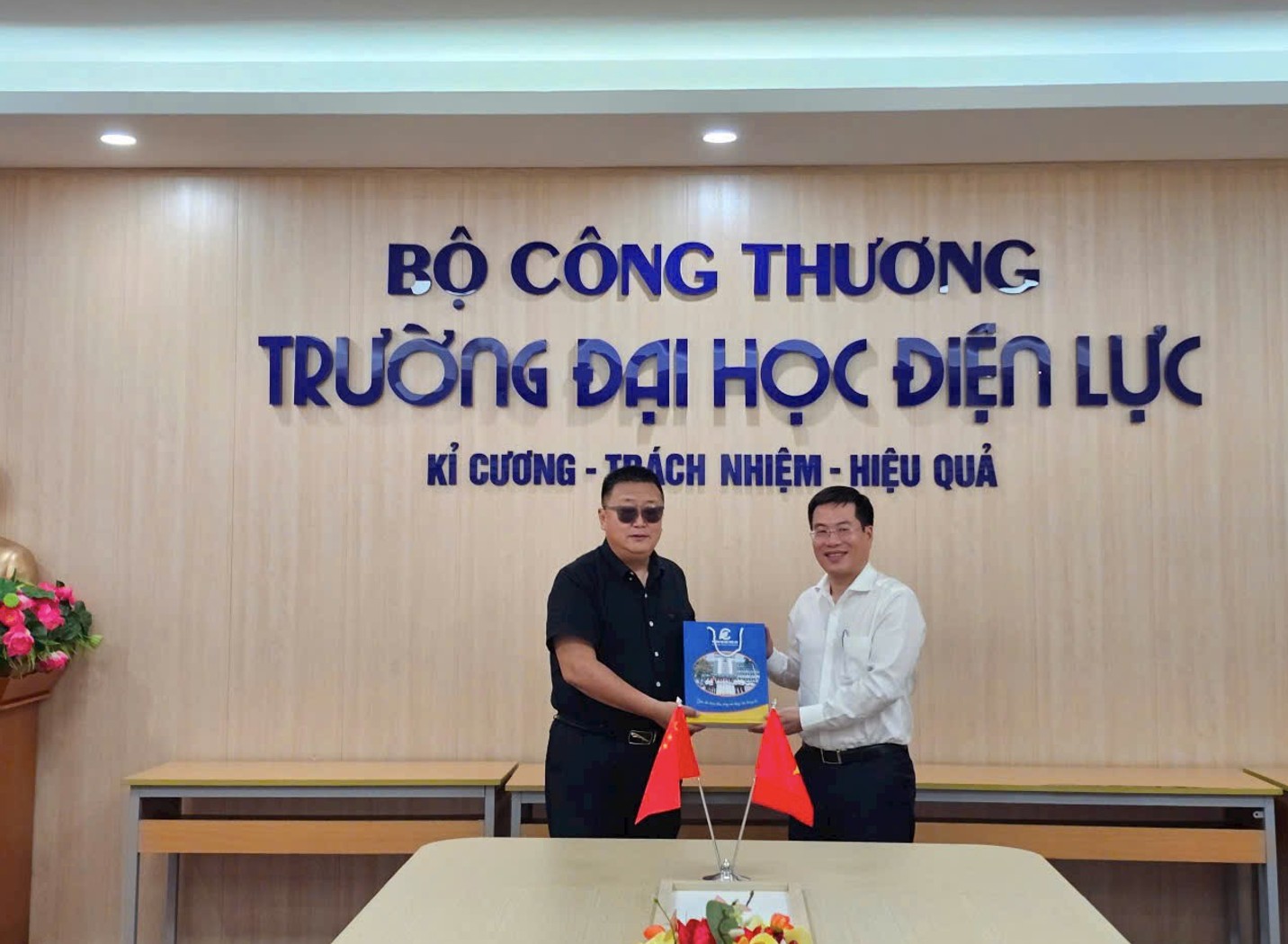 |
| Cheng Yi during a working session with Electric Power University. (Photo provided by the character) |
I am nurturing an even bigger “dream”: to establish a specialized AI training academy in Viet Nam. I do not want AI to consist merely of robots brought over for a few days of demonstrations before being packed up and taken back home. I want to transfer knowledge, from internationally standardized curricula to a team of experienced Chinese lecturers, to Vietnamese students.
There will be modern laboratories in Ha Noi or Ho Chi Minh City, where young Vietnamese engineers will not only learn how to operate the technology, but will also take apart, assemble and program robots themselves, breathing life into them so that they can speak Vietnamese, understand Vietnamese culture and solve the very problems facing their own country. AI must be nurtured by local spirit and intelligence to truly come alive.
Looking back on the past two decades, I feel that I have “received” so much. I have earned the trust of senior figures, the wholehearted support of close colleagues, and above all, the sincere treatment one would receive from family. That “affection” is the greatest asset that has kept me here. In the future, I hope to become a steadfast connector, bringing the finest achievements of technology to contribute to this land, which I have long regarded as my second home.
| For more than 20 years, Chinese director Cheng Yi has been deeply involved in cultural and economic exchange activities between the two countries. He also holds several positions in prestigious film and fine arts associations in China, including Member of the China Children's Film Association, Deputy Head of the Children's Film Committee under the National Film Promotion Association, Deputy Director of the Fine Arts Committee under the Guangxi Chinese Culture Promotion Association, and Founder of Marshal Director Studio.
His work goes beyond the arts, as he has also been a persistent connector in trade and technology. As Founding Vice Chairman of the General Association of Chinese Commerce in Viet Nam and Director of the Liaison Office of the Nanning International Communication Center in Viet Nam, he has promoted numerous important trade and communications activities. In particular, as a Visiting Professor at the Artificial Intelligence Academy of Guangxi Minzu University, he is devoting himself to connecting digital education, working to bring advanced AI applications into everyday life and classrooms in Viet Nam and contributing to the realization of cross-border digital transformation aspirations. |
 AI, Semiconductors, Quantum Technology: New Areas of Vietnam-Singapore Cooperation AI, Semiconductors, Quantum Technology: New Areas of Vietnam-Singapore Cooperation |
 Viet Nam’s Push Toward Technology-Driven Growth Viet Nam’s Push Toward Technology-Driven Growth |


Most read


Related Stories
 National
Viet Nam News Today (Oct. 13): EU-Vietnam Partnership Set for Deeper Cooperation and Tangible Results
 National
Viet Nam News Today (Oct. 12): Viet Nam Pledges to Advance Rule of Law at Home, Uphold Law-based Global Order at UN
 Handbook
Science and Technology Key to Viet Nam’s Sustainable Growth
 National
Vietnam News Today (Sep. 27): Viet Nam, US Step Up Investment, Financial Cooperation
In topics
 Expats in Vietnam
Returning to Viet Nam Is Like Coming Home
 Friendship
A Misfortune Turned into Happiness
 Friendship
I Was Never Just Passing Through Viet Nam
 Friendship
Some Volunteers Cannot Hold Back Their Tears When Saying Goodbye to Viet Nam
Recommended
 Friendship
DAFO Launches Activities to Promote Responsible Business Practices
 Friendship
Seoul (Republic of Korea) Expands Employment Support for Vietnamese International Students
 Friendship
NA President Meets with Chinese Friendship Figures in Beijing
 Friendship
Hai Phong: Vietnamese and International Melodies Foster Friendship
Popular article
Friendship
A Misfortune Turned into Happiness
Friendship
I Was Never Just Passing Through Viet Nam
 Friendship
Strengthening People-to-People Exchanges, Nurturing Viet Nam-RoK Friendship
 Friendship