
PCI 2.0: When Reform Is Measured by Business Growth
 Tan Hiep Phat and the 30–Year Journey: When Learning Becomes the DNA of Pioneers Tan Hiep Phat and the 30–Year Journey: When Learning Becomes the DNA of Pioneers |
 The Learning Culture at Tan Hiep Phat: Leaders Are Mentors, Colleagues are Partners in Sharing The Learning Culture at Tan Hiep Phat: Leaders Are Mentors, Colleagues are Partners in Sharing |
 |
| VCCI releases the Vietnam Private Sector Report and the Provincial Competitiveness Index (PCI) for 2025. |
From Rankings to a Diagnostic Tool
On May 15, 2026, exactly one year after the Politburo issued Resolution No. 68-NQ/TW on developing the private sector, the Vietnam Chamber of Commerce and Industry (VCCI) released the Vietnam Private Sector Economy Report and PCI 2025.
The report reflects the views of 5,128 businesses and business households across 34 provinces and centrally governed cities. Notably, for the first time, 1,001 individual business households were officially included in the survey.
The expanded survey base reflects a changing approach to the business environment. The question is no longer simply whether government agencies process administrative procedures quickly or slowly, but a broader one: Does the governance environment enable businesses to enter the market, invest, innovate, scale up and improve their competitiveness?
According to Associate Professor Dr. Ho Sy Hung, Chairman of VCCI, this represents a methodological step forward. The PCI is no longer simply a tool for determining “who performs better than whom”; it is becoming a diagnostic instrument that helps each locality identify bottlenecks and determine appropriate areas for improvement.
Reform Takes Time to Deliver Results
The PCI 2025 report identifies five localities in the “Good” governance-quality group: Bac Ninh, Da Nang, Hai Phong, Phu Tho and Quang Ninh.
These localities do not rely on a single advantage. Bac Ninh leads in Enabling Policies and Administrative Procedures Compliance Costs; Da Nang ranks first in Market Entry; while Hai Phong has seven of the nine sub-indices among the 10 highest-ranked localities nationwide.
These results show that effective reform requires governments to improve multiple stages of the business operating process simultaneously.
 |
| Localities in the “Good” governance quality group do not score well thanks to a single advantage, but rather due to their ability to improve relatively consistently across multiple dimensions. |
According to the Vietnam Private Sector Economy Report 2025, the quality of PCI governance in 2022 is closely associated with private-sector economic performance as measured by the Business Performance Index (BPI) in 2025. The three leading localities in the BPI are Ho Chi Minh City, Hanoi and Quang Ninh.
This relationship suggests that institutional reforms may take years to translate into businesses’ actual competitive capabilities. Dau Anh Tuan, VCCI Deputy Secretary General, describes this as a “policy lag.”
According to Tuan, the ultimate outcome of reform is not simply the number of procedures eliminated, but whether the private sector actually becomes stronger. As a result, the focus of reform is shifting from a mindset of “managing businesses” to “nurturing business growth.”
When Businesses Turn Reform into Internal Strength
A favorable business environment can create opportunities, but those opportunities become competitive capabilities only when businesses turn them into investment, technology, management capacity and innovation.
Tan Hiep Phat provides an example of this accumulation process over more than three decades. The company was established in 1994, at a time when the Company Law and the Law on Private Enterprises were opening up new opportunities for the private sector.
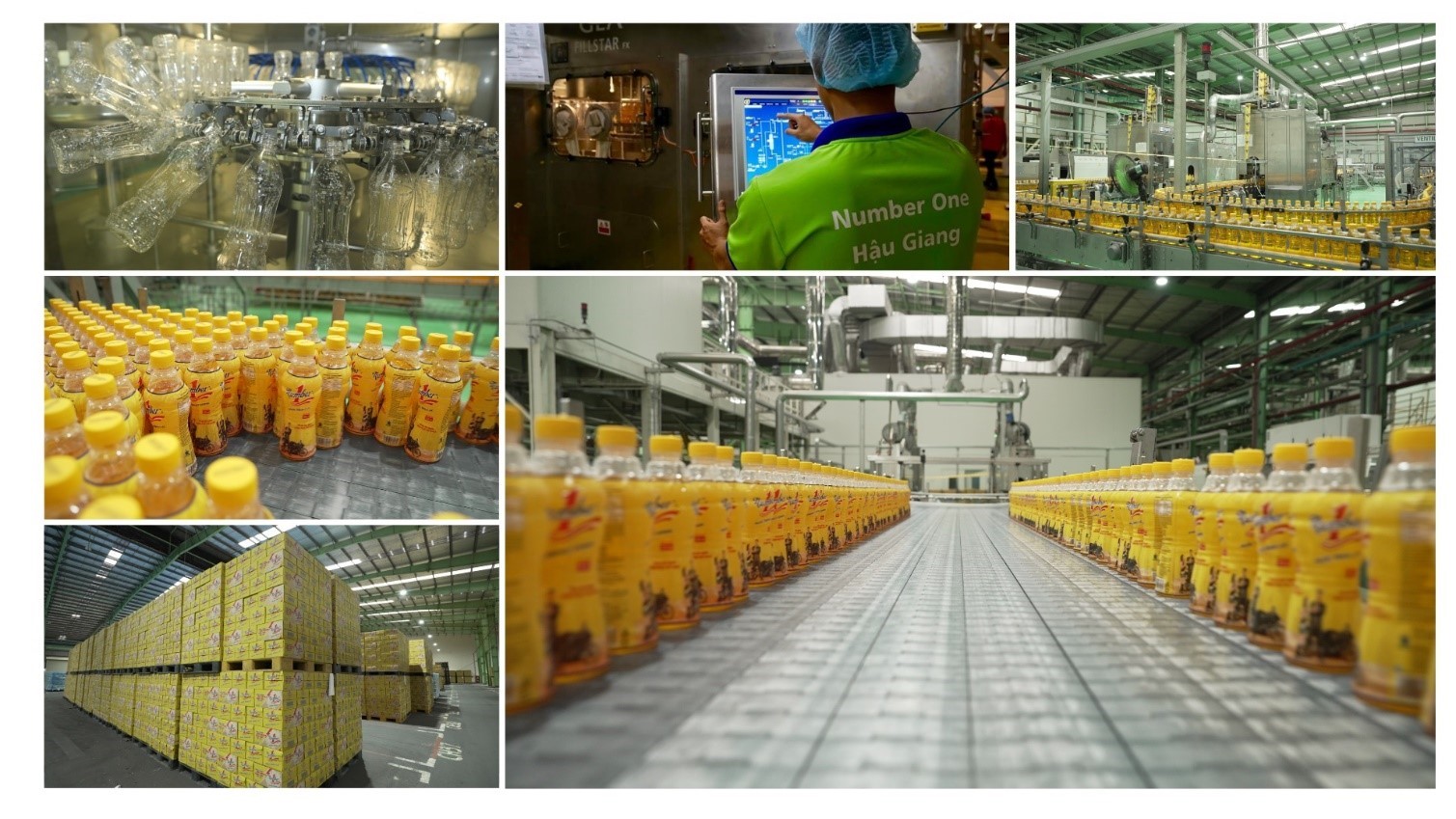 |
| Aseptic cold-filling production line at the Tan Hiep Phat factory. |
From its earliest steps, the company pursued a development strategy based on long-term investment, the adoption of modern technology, innovation, digitalization and the development of quality management systems in accordance with international standards.
After 32 years, Tan Hiep Phat has grown from a small beverage production facility into one of Vietnam’s leading beverage companies. It currently operates four manufacturing clusters with 12 Aseptic sterile filling lines in key economic regions.
The technological, management and quality capabilities accumulated over many years have also enabled the company’s products to meet the requirements of markets including France, the Netherlands, Australia and Canada, with standards and certifications such as FDA, Halal, ISO and HACCP.
Behind the expansion in scale is a transformation from experience-based production to management driven by technology, data and quality systems; and from competing on cost to competing on quality, innovation and operational capabilities.
“Starting with the opportunities created by institutional reforms, the company has transformed those opportunities into competitive capabilities through sustained investment in technology, innovation, quality and people,” said Nguyen Duy Hung, a member of Tan Hiep Phat’s Board of Directors.
According to Hung, data from the Vietnam Private Sector Economy Report is useful not only to policymakers seeking to improve the institutional framework, but also to businesses themselves, helping them reassess their own performance, strengthen management quality and gain greater confidence in making long-term investment decisions.
This story shows that the relationship between institutional reform and business capabilities is not one-way. Institutions create the space and confidence for investment, but for that space to become economic strength, businesses themselves must accumulate capabilities.
Therefore, the value of PCI 2.0 lies not only in identifying which localities are performing well or poorly, but also in helping governments and businesses see the connection between the quality of governance today and competitiveness in the years ahead.
After more than two decades, the business community’s voice is going beyond simply “grading” government performance. It is becoming part of the process of determining where Vietnam needs to reform so that businesses can make long-term investments, grow in scale and compete more effectively.




Related Stories
 Economy
Strengthening Domestic Capabilities, Expanding Growth Opportunities for Vietnamese Businesses
 Vietnamese Culture
Steadfast Care Behind the Journey of Children Growing Up
 Make in Vietnam
Measuring 'Institutional Inputs', Examining 'Market Outputs': The New Step Forward of PCI 2025
 Women in Business
The Learning Culture at Tan Hiep Phat: Leaders Are Mentors, Colleagues are Partners in Sharing
Popular article
 Make in Vietnam
A Historic Turning Point for CT Group
 Make in Vietnam
Vinamilk’s Journey to Build a Better Future for Vietnamese Children
 Make in Vietnam
From Business Performance to Brand Power: Vinamilk Maintains Its Leading Position
 Make in Vietnam