
Viet Nam, in Stories I Take Back to Japan
| Viet Nam Welcomes More Than 17.7 Million International Visitors in First Nine Months New Opportunities for Breakthroughs In Viet Nam - Canada Science and Technology Cooperation |
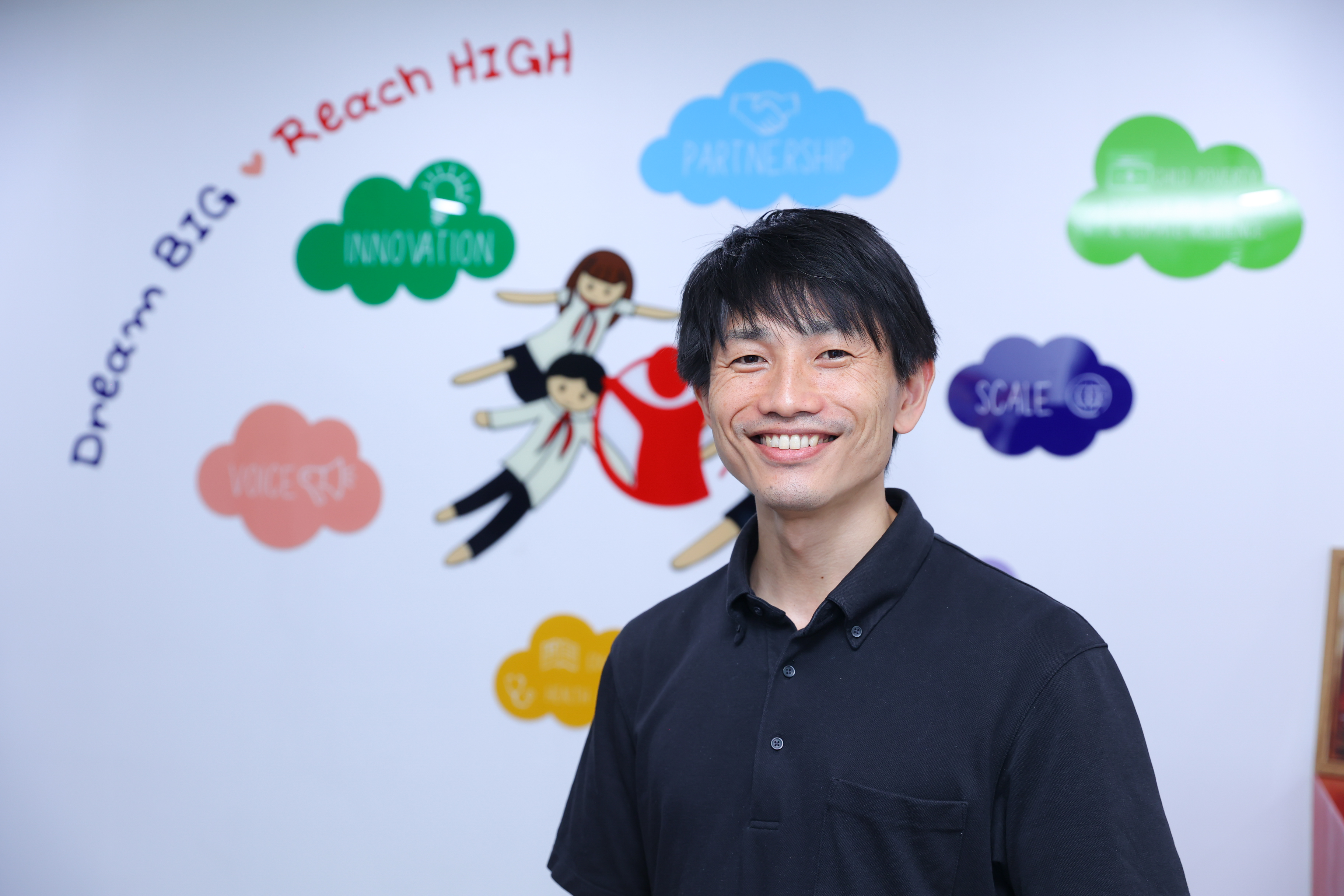 |
| Nagino Kosuke, Japanese Grants and Partnership Manager at Save the Children Japan. (Photo: Dinh Hoa) |
As Japanese Grants and Partnership Manager at Save the Children Japan, he spent three years working on the project “Improving the livelihoods of ethnic minority people in Son La Province through agriculture and nutrition improvement”, funded by the Japan Ministry of Foreign Affairs (JMOFA). The project has now come to an end, but the stories from that journey seem to remain vivid in his memory.
In the final days before returning home, Nagino Kosuke told us about Son La, the work he carried out alongside his colleagues, and the simple things in Viet Nam that left a lasting impression on him. It was also a story of three years that were about more than work - three years in which he lived, experienced and gradually formed a bond with a country thousands of kilometres from his homeland.
Nagino Kosuke recalls:
The first time I came to Viet Nam was in 2012. At that time, I was only here for a short business trip. For work, I travelled to Ca Mau Province. Then, in 2023, I officially took up a long-term secondment at Save the Children Viet Nam to participate in the project “Improving the livelihoods of ethnic minority people in Son La Province through agriculture and nutrition improvement.” From a short business trip more than 10 years ago, I had the opportunity to return to Viet Nam and live and work here for three years.
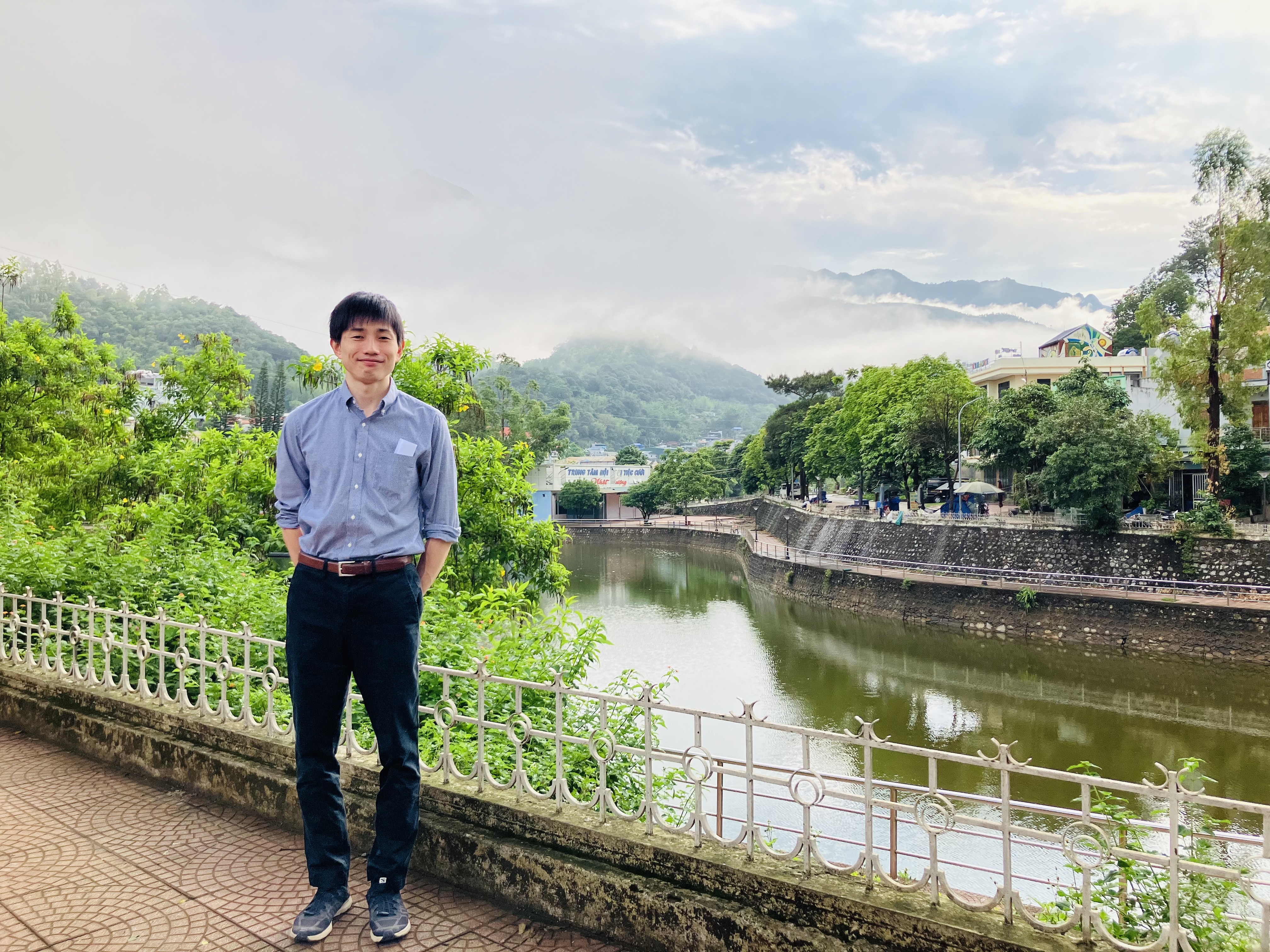 |
| Nagino Kosuke during a work trip to Bac Yen Commune, Son La Province. (Photo: Courtesy of the interviewee) |
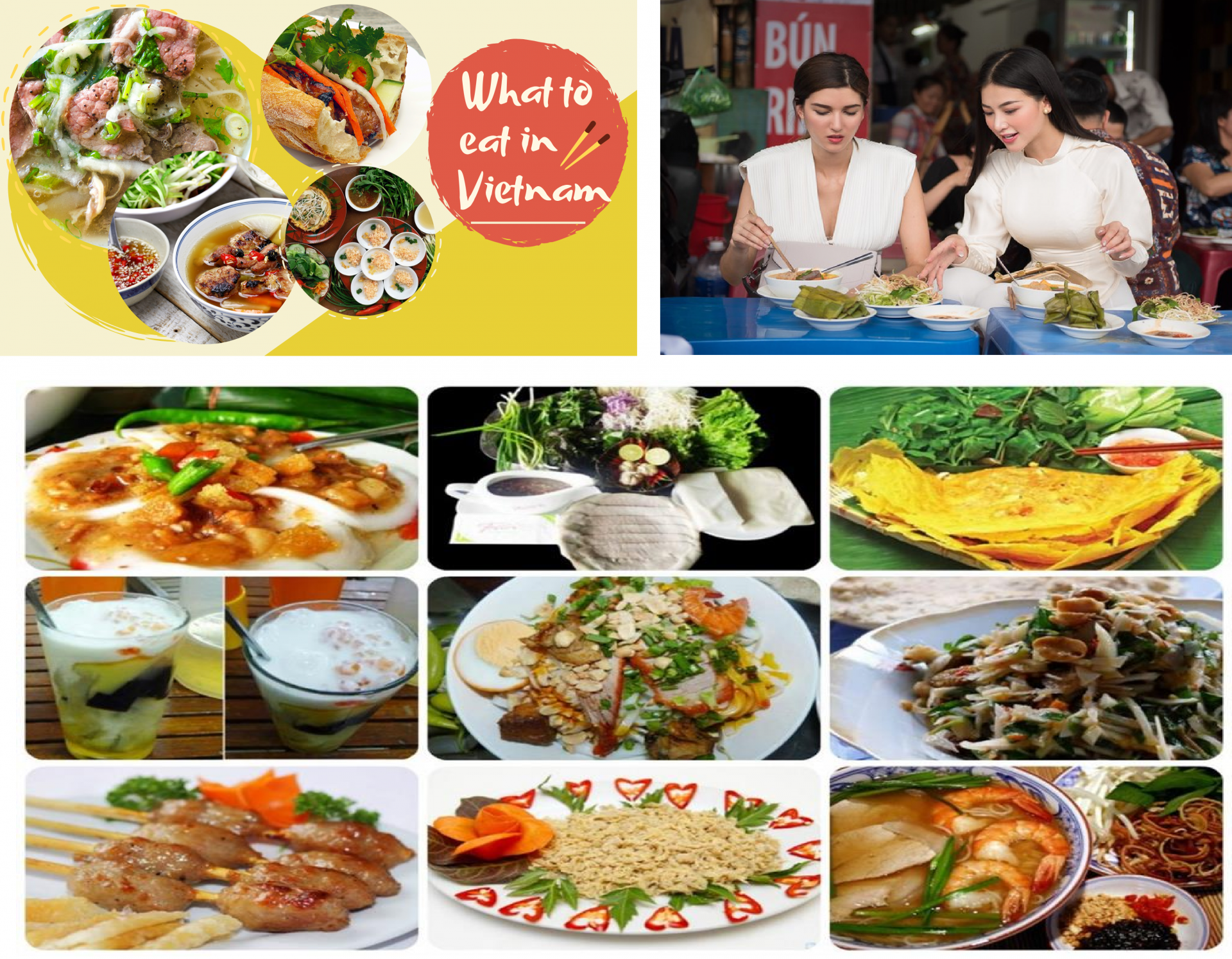
What impressed me first and foremost was Vietnamese cuisine. Before coming to Viet Nam, pho and banh mi were, for Japanese people in general, the best-known and most popular Vietnamese dishes. But after living in Viet Nam for an extended period, I had the opportunity to enjoy countless other dishes. Vietnamese cuisine is rich and diverse, so it is difficult to name just one favourite dish. It could be bun cha, or the many different varieties of bun, noodles and pho. Every time I discover a new dish, I feel that there are still so many interesting things to experience in Vietnamese cuisine.
But if you ask me what has left the deepest impression on me about Viet Nam, I think it is the people, especially the way people treat children. Vietnamese people are very loving towards young children. I have felt that warmth in many different places and circumstances.
The diversity of Vietnamese culture is another thing that has left a deep impression on me. When I went to Son La, I had the opportunity to interact with many ethnic minority communities, each with its own distinctive cultural characteristics. The way people live and go about their daily lives there is also very different from life in Hanoi. That cultural diversity was truly overwhelming and impressive to me. Japan also has some ethnic communities with their own distinctive cultures, but the diversity and richness that I experienced in Viet Nam are something very special.
Alongside these differences, I also noticed some interesting similarities between Viet Nam and Japan. For example, people here are very punctual when attending meetings. The ability to work at a high intensity, as well as the meticulous and detail-oriented approach to work, are also things I noticed very clearly. I think these similarities are very important because they help us coordinate smoothly and carry out activities here effectively.
Stories from Son La
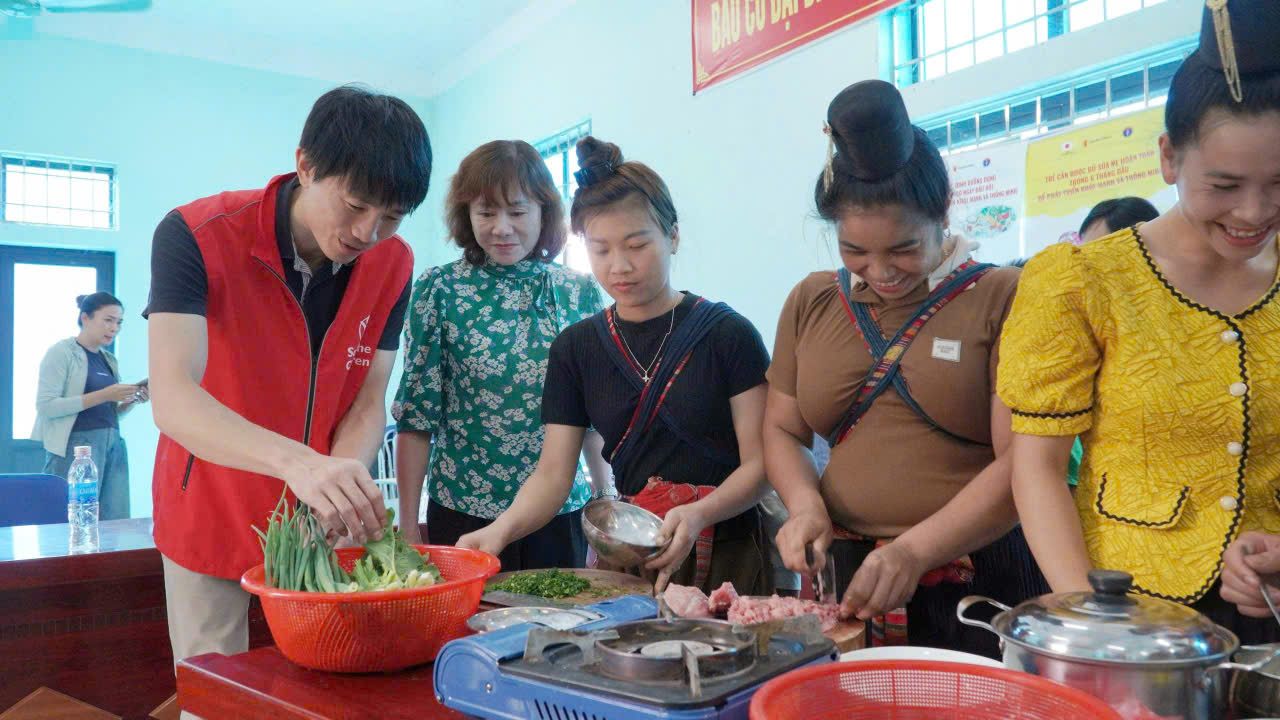 |
| Kosuke Nagino monitors a cooking practice session on preparing complementary foods for infants. (Photo: Courtesy of the interviewee) |
During my three years in Viet Nam, I spent most of my time in Son La. The project “Improving the livelihoods of ethnic minority people in Son La Province through agriculture and nutrition improvement” had two main components. The first was agricultural development support aimed at ensuring food security and improving sustainable livelihoods for local people. The second focused on nutrition care for mothers and children. Through these two components, our goal was to reduce the rate of stunting among children and improve the nutritional status of mothers.
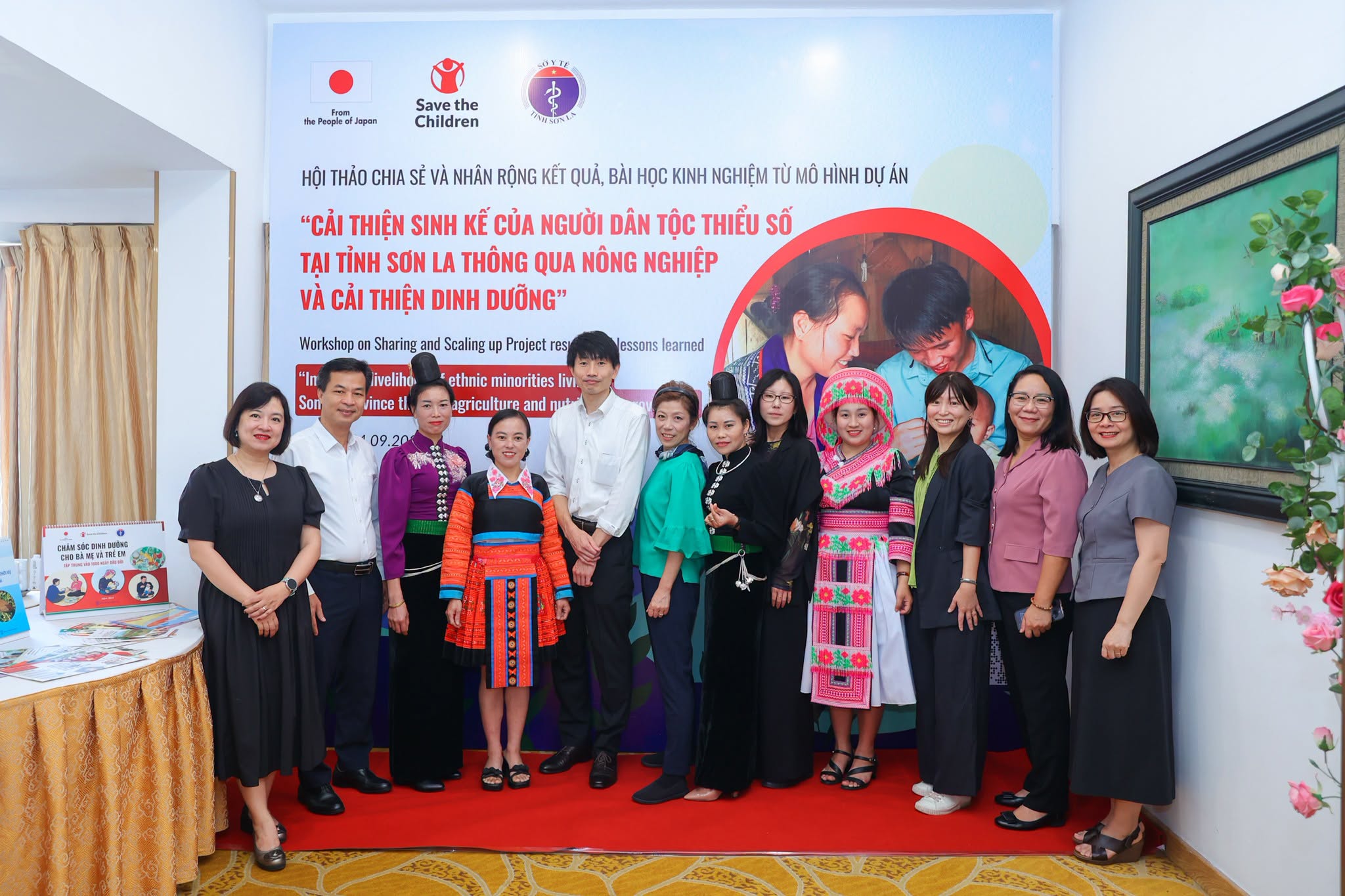 |
| Nagino Kosuke (fifth from left) with delegates at the closing workshop of the project “Improving the Livelihoods of Ethnic Minority People in Son La Province through Agriculture and Nutrition Improvement.” (Photo: Save the Children Viet Nam) |
For this project, I think its core success truly lay in the close cooperation we established with local people and authorities. Without the commitment and support of grassroots officials, staff at commune health stations, the Women’s Union, the Youth Union and the people in the communities themselves, I do not think we could have achieved so many results. This was an interdisciplinary approach combining agriculture and healthcare, so we needed the coordination of agricultural extension officers, commune health stations, the Son La Provincial Center for Disease Control and local health agencies. I truly appreciate the support of everyone involved.
There is one memory from the final stage of the project that I will always remember. At that time, we were conducting an endline evaluation survey. Normally, during such surveys, we would meet and conduct interviews to understand the project’s outcomes. But just before the meeting began, a member of the local Women’s Union came up to me and started a conversation. I had not asked her anything, but she voluntarily thanked us and shared some very specific stories. She told me that, thanks to the project’s support, mothers in the village had changed the way they fed their children during the weaning period, learned how to diversify their children’s meals and ensure that their children received adequate nutrition.
Her sharing was sincere and came just before a formal meeting. In community development projects, we often have to look at figures, survey results or indicators established at the beginning of a project. But simple accounts like hers showed me very clearly the real changes taking place in people’s lives. It was one of the moments that made me truly feel the significance of the work we had carried out together.
After the project, I realised that material support alone is not enough. A tarpaulin, seedlings or an infrastructure project will be unlikely to deliver lasting results if people do not know how to use them and make the most of the value they provide. Therefore, building people’s capacity is fundamental. Practical training sessions, continued engagement and regular support can help them take greater ownership of using and sustaining the project’s results.
What I take with me
Although the project in Son La has come to an end, I do not think our connection with Viet Nam will end there. We currently have a project being implemented in Ca Mau and provide the necessary follow-up technical support for the completed project. We have also established a network for regular connection and exchange with the Save the Children office in Viet Nam. We are also developing ideas for exchange programmes between students from the two countries, through which we can jointly find initiatives to respond to climate change as well as address common issues related to children.
In the coming period, we want to continue supporting households in improving their livelihoods and adapting to climate change, for example through models of shrimp farming under mangrove forests. When a family’s economic situation improves, children are also among those who benefit. We also want to pay greater attention to healthcare, health and the prevention of diseases associated with natural disasters and climate change. Looking further ahead, we hope to promote exchanges and the sharing of ideas between the two countries and strengthen child protection activities.
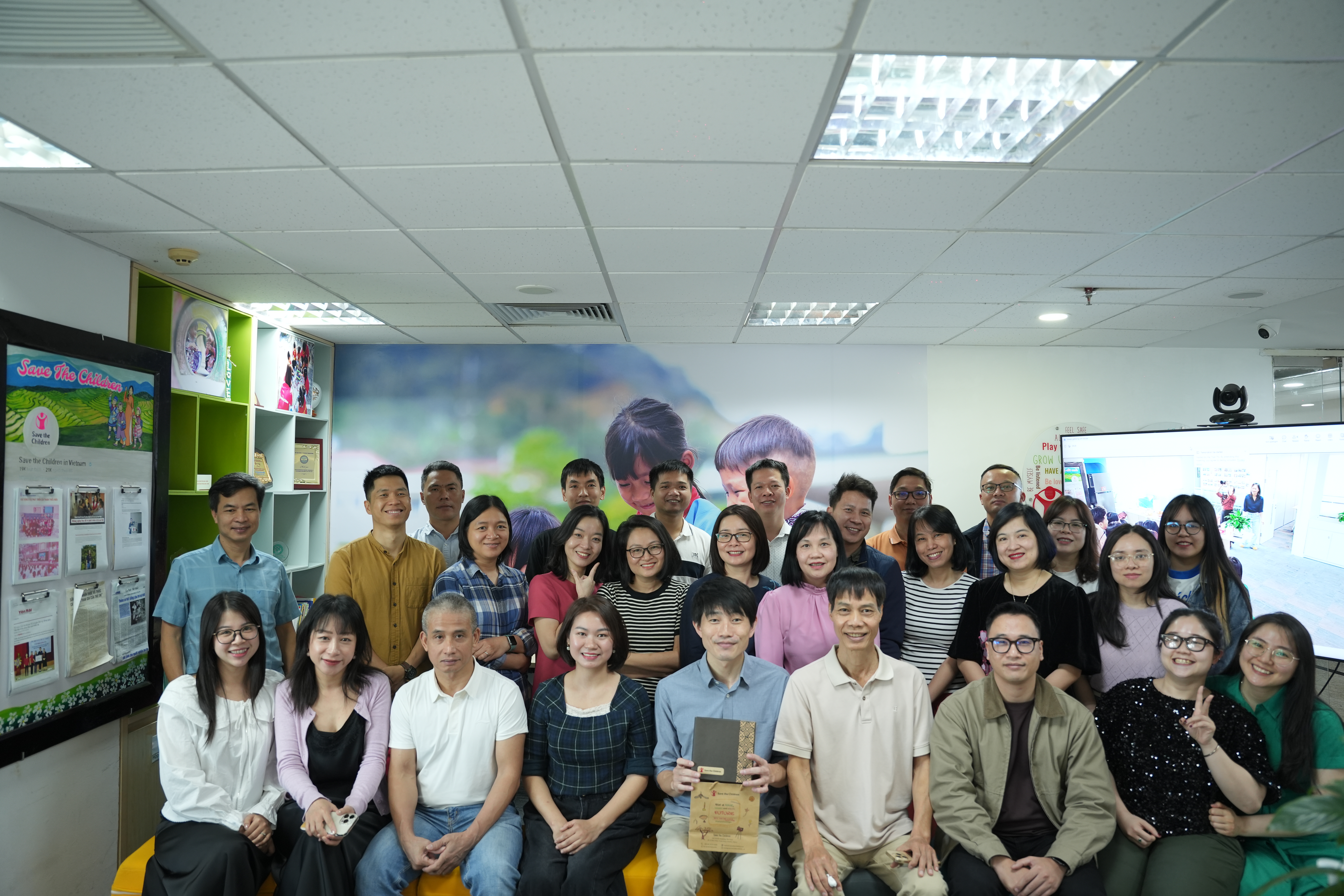 |
| Nagino Kosuke with colleagues at Save the Children Viet Nam. (Photo: Courtesy of the interviewee) |
Returning to Japan, I will take with me many stories about Viet Nam. I will tell people about the wonderful colleagues at the Save the Children Viet Nam office. We have countless memories and memorable moments together at the office, so first and foremost, I will tell them about my colleagues.
My colleagues at Save the Children Japan will certainly enjoy hearing these stories. They are also very curious to learn about the interesting cultural differences between the two countries. We all know that there are cultural differences between the two countries, and exploring those differences is always an exciting topic. It will be a wonderful point of connection for me to share with everyone at the Tokyo office.
After three years in Viet Nam, I think I will take with me stories about my work, the places I have visited, the people I have met and, in particular, the Vietnamese colleagues I have had the opportunity to work with. Perhaps when I return to Japan, Viet Nam will no longer be simply a place I once visited or a project I once worked on. Viet Nam will be the people, memories and experiences that I will continue to share with people back home.
 Son La Project Strengthens Ethnic Minority Livelihoods Son La Project Strengthens Ethnic Minority Livelihoods After three years of implementation, the project “Improving the Livelihoods of Ethnic Minority Communities in Son La Province through Agriculture and Nutrition Improvement” has delivered positive results in improving livelihoods and nutrition while strengthening women’s roles within their families. At its closing workshop in Hanoi on September 24, stakeholders reviewed key achievements and lessons learned and discussed ways to sustain and scale up effective models. |
 Japan to Continue Supporting Viet Nam in Poverty Reduction and Narrowing Development Gaps Japan to Continue Supporting Viet Nam in Poverty Reduction and Narrowing Development Gaps Japan will continue to support Viet Nam in its efforts to reduce poverty and narrow development gaps, said Masafumi Saito, First Secretary at the Embassy of Japan in Viet Nam, in an interview with Viet Nam Times Magazine at the Workshop on sharing and scaling up results and Lessons learned from the project model “Improving the livelihoods of ethnic minority people in Son La province through agriculture and nutrition improvement.” |
Most read


Related Stories
 Vietnamese Culture
Bringing Disaster Preparedness Skills into Schools
 Vietnamese Culture
International Resources Support Climate Education and Forest Restoration in Thanh Hoa
 Multimedia
Students Sharpen Skills for Climate Action
 Friendship
Japan to Continue Supporting Viet Nam in Poverty Reduction and Narrowing Development Gaps
In topics
 Expats in Vietnam
I Chose to Stay Because There Is Still So Much I Don’t Know About Viet Nam
 Expats in Vietnam
Returning to Viet Nam Is Like Coming Home
 Friendship
A Misfortune Turned into Happiness
 Friendship
I Was Never Just Passing Through Viet Nam
Recommended
 Friendship
Students Who Brought Me to Viet Nam
 Friendship
More Than 900 Students in Tuyen Quang Learn About Green Living
 Friendship
Deputy Minister Ho An Phong Elected President of Viet Nam-Belarus Friendship Association for 2026-2031
 Friendship
First Congress of the Dong Thap Union of Friendship Organizations for the 2026-2031 Term
Popular article
 Friendship
Promoting People-to-People Diplomacy to Build a Solid Foundation Rooted in “the People’s Hearts”
 Friendship
American Friends Help Ease the Pain of Agent Orange
 Friendship
65 Years of the Agent Orange Disaster: Dialogue to Spur Action
 Friendship