
Bringing Disaster Preparedness Skills into Schools
| Cao Bang Receives Over VND 64 Billion in Donations for Social Welfare Programs In Disaster, We Held Your Hands |
 |
| Large numbers of students take part in a communications event marking the International Day for Disaster Risk Reduction. (Photo: Dinh Hoa) |
In his opening remarks, Colonel Nguyen Son Ha, Chief of Office of the Civil Defence Command under the Ministry of Education and Training, said that for the education sector, natural disasters not only threaten the lives and property of students and teachers but also risk disrupting the learning process and affecting children's right to continuous education and development.
As natural disasters become increasingly complex and unpredictable, disaster prevention and response in the education sector must go beyond responding when storms and floods occur. Instead, greater emphasis must be placed on proactive prevention, preparedness and early action. One of the key priorities for the sector is to develop and scale up the “Smart Schools - Safe from Natural Disasters and Adapted to Climate Change” model.
Speaking highly of Hong Duc University's establishment of the Climate Change Education Centre, Colonel Nguyen Son Ha said the centre was a meaningful model for disseminating knowledge, fostering awareness of disaster prevention and strengthening students' practical skills.
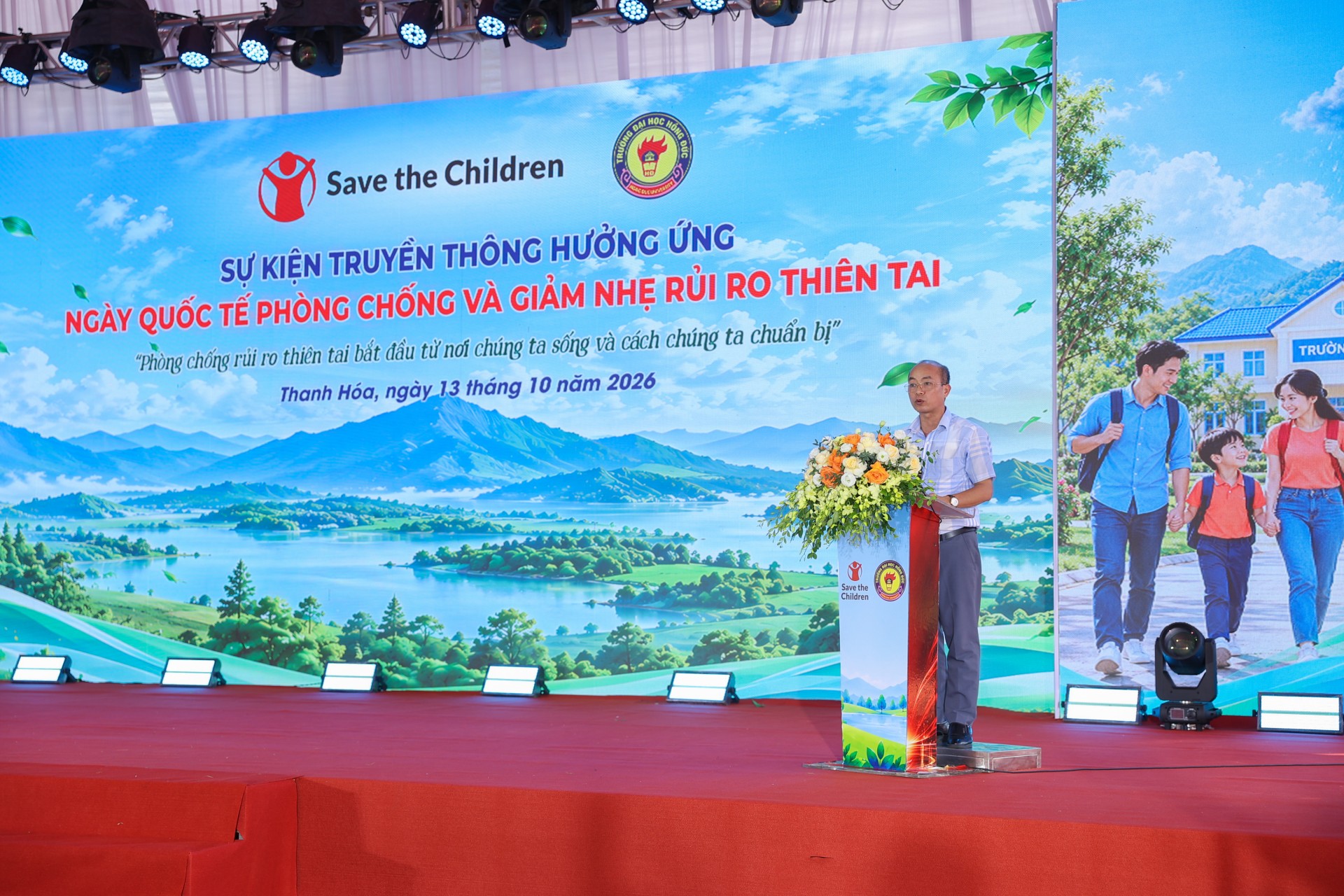 |
| Colonel Nguyen Son Ha, Chief of Office of the Civil Defence Command under the Ministry of Education and Training. (Photo: Dinh Hoa) |
He also urged students to proactively equip themselves with knowledge, develop survival skills and become messengers of disaster safety within their families and communities. Schools, meanwhile, should regularly update their plans and response measures and take early action to maintain a safe learning environment and minimise disruptions to educational activities.
One of the programme's highlights was the introduction of the Climate Change Education Centre, established under the project “Enhancing Children's and Communities' Resilience to Climate Change through Climate Education at Hong Duc University”. The project is implemented by Save the Children International with support from Hyundai Motor Group, Hyundai Engineering and the Community Chest of Korea.
The centre has a floor area of nearly 500 square metres and is organised into nine interconnected functional zones, combining scientific knowledge, interactive experiences, hands-on activities and the development of climate action initiatives.
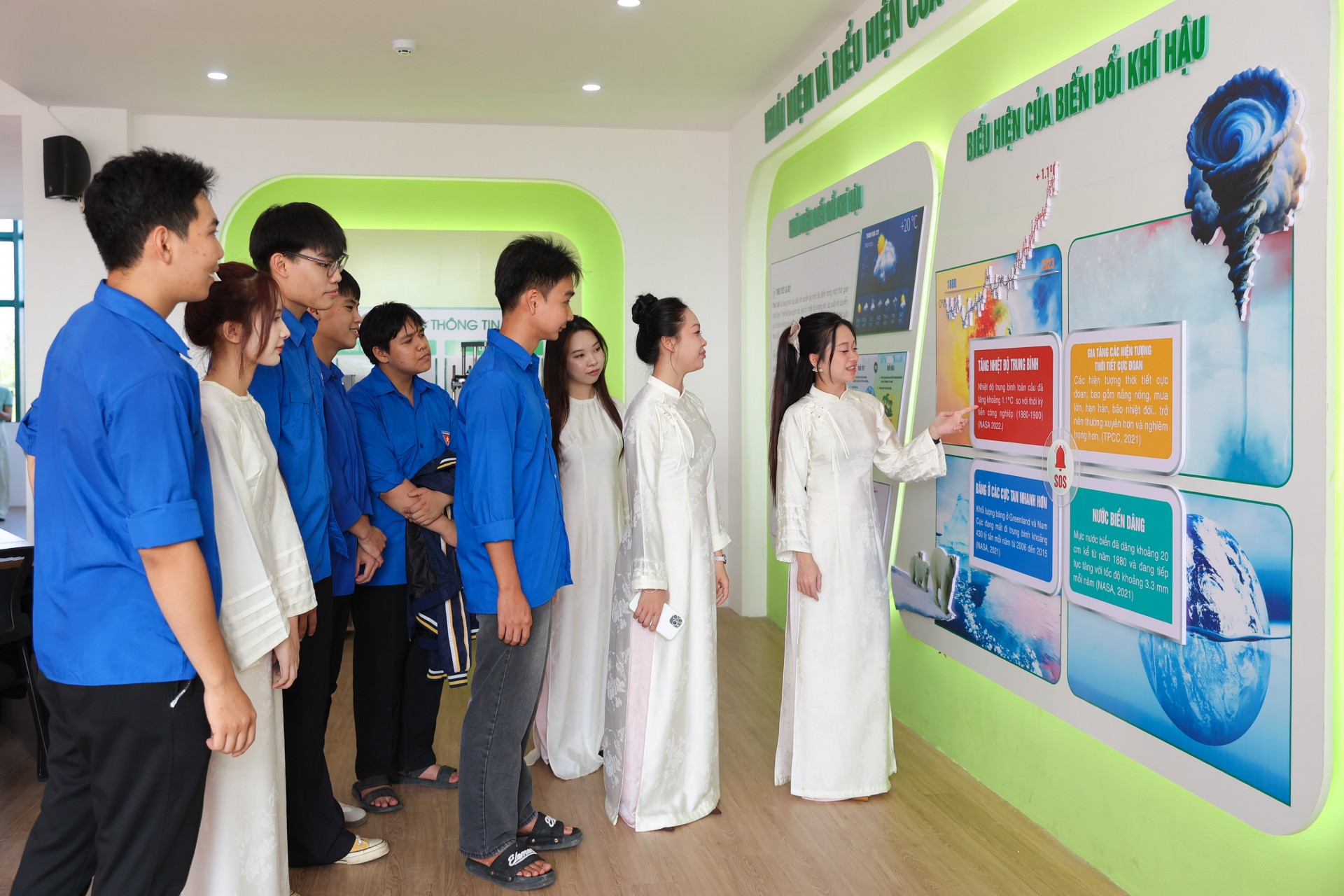 |
| Students explore information at the Climate Change Education Centre at Hong Duc University. (Photo: Dinh Hoa) |
In the first zones, students are introduced to fundamental concepts such as the greenhouse effect, solar radiation, the carbon cycle and changes in the Earth's temperature over different periods. Scientific content is presented visually through information panels, images and interactive tools, helping learners understand the causes, mechanisms and impacts of climate change.
The following zones present climate scenarios for Vietnam and Thanh Hoa Province, analyse hazards such as droughts, flash floods and saltwater intrusion, and provide appropriate adaptation solutions.
The centre also features an open training space for group discussions and policy debates, a climate film screening room and a hands-on practice area equipped with wind energy models, solar panels and a plastic waste recycling machine, as well as soil erosion experiments and greenhouse effect simulations.
The final zone is dedicated to showcasing initiatives, recycled products, climate action projects developed by students and their commitments to environmental protection.
According to Dr. Le Van Cuong, Head of the Faculty of Agriculture and Environment at Hong Duc University, the centre's educational model follows a four-stage process: “Awareness - Empathy - Choice - Action”.
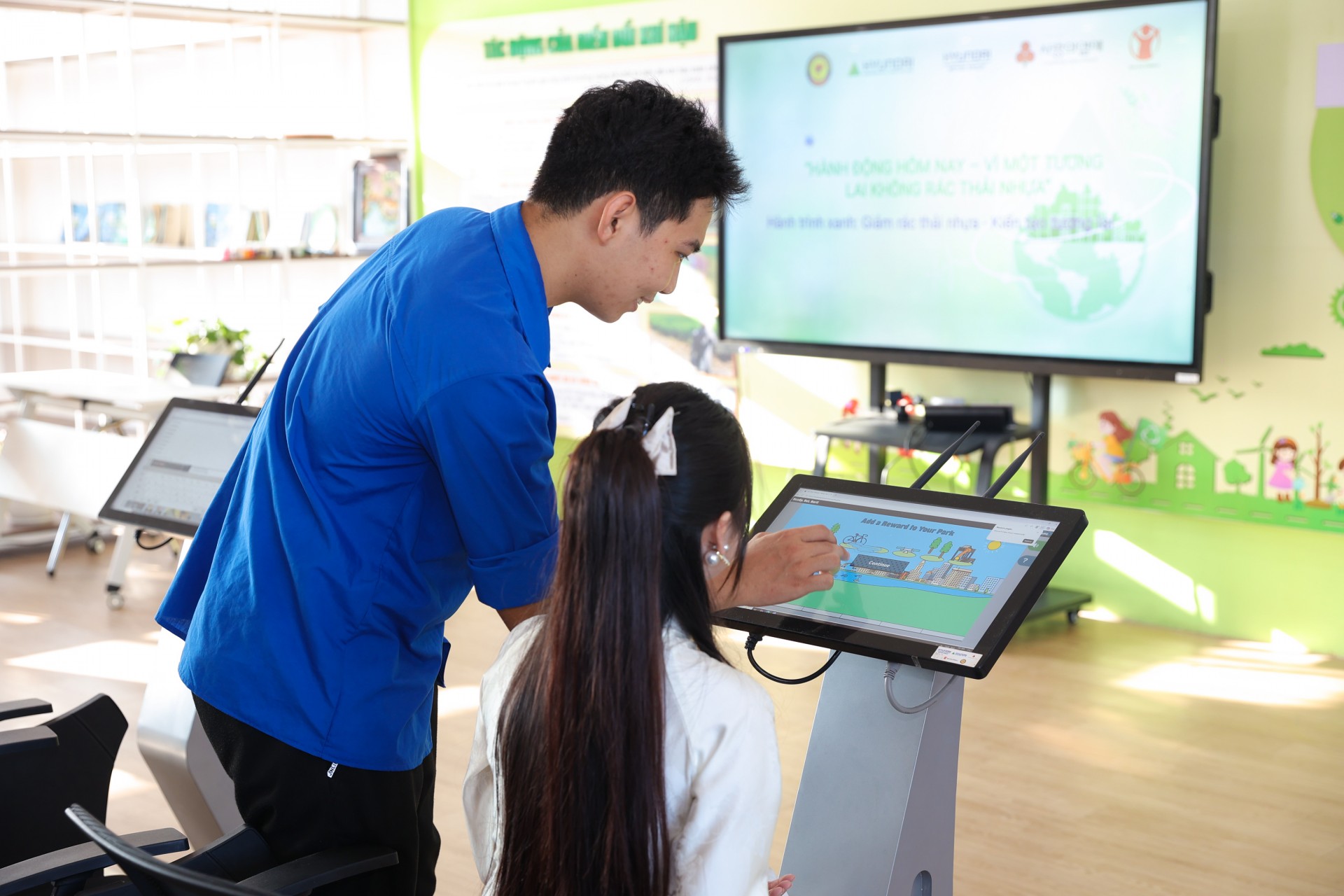 |
| Students play themed games to improve their knowledge of climate change and environmental protection. (Photo: Dinh Hoa) |
At the awareness stage, learners acquire scientific knowledge to distinguish between weather and climate and understand emission sources and the impacts of climate change. The empathy stage helps students recognise that natural disasters do not affect all population groups equally. Poor coastal families, children in mountainous areas and older people living alone may be more vulnerable.
Students then move to the choice stage, exploring how to assess the effectiveness, feasibility and fairness of response measures, as well as the potential risks they may entail. Finally, this knowledge is translated into concrete action projects in classrooms, schools and communities.
Pham Xuan Nam, a representative of Save the Children International, said the organisation identified disaster prevention and response in schools as a key priority for ensuring the safety of students, teachers, school staff and facilities, thereby enabling children to continue accessing quality education.
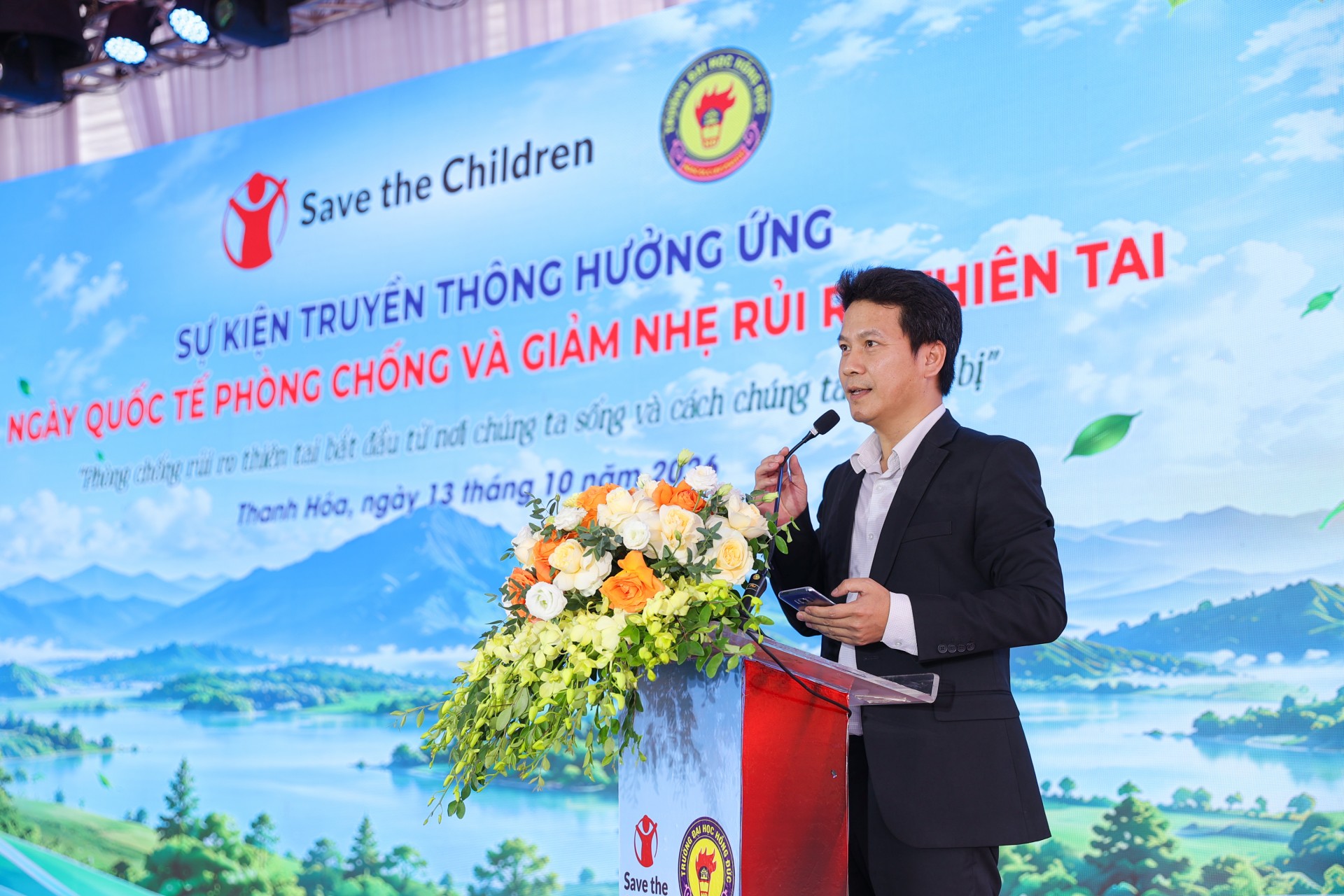 |
| Pham Xuan Nam, representative of Save the Children International, speaks at the event. (Photo: Dinh Hoa) |
Save the Children International's activities are implemented in line with the safe school model promoted by the Ministry of Education and Training, focusing on two main areas: strengthening preparedness through early warning, early action and the timely provision of emergency relief to meet the needs of affected communities.
In particular, Save the Children focuses on promoting meaningful child participation, strengthening schools' proactive role in disaster prevention and response, and connecting with family support programmes to ensure that children can access healthcare, education and opportunities for development.
Pham Xuan Nam affirmed that Save the Children International would continue to work alongside the Ministry of Education and Training, management agencies, local authorities, educational institutions and communities in efforts to build a safe and sustainable learning environment resilient to natural disasters.
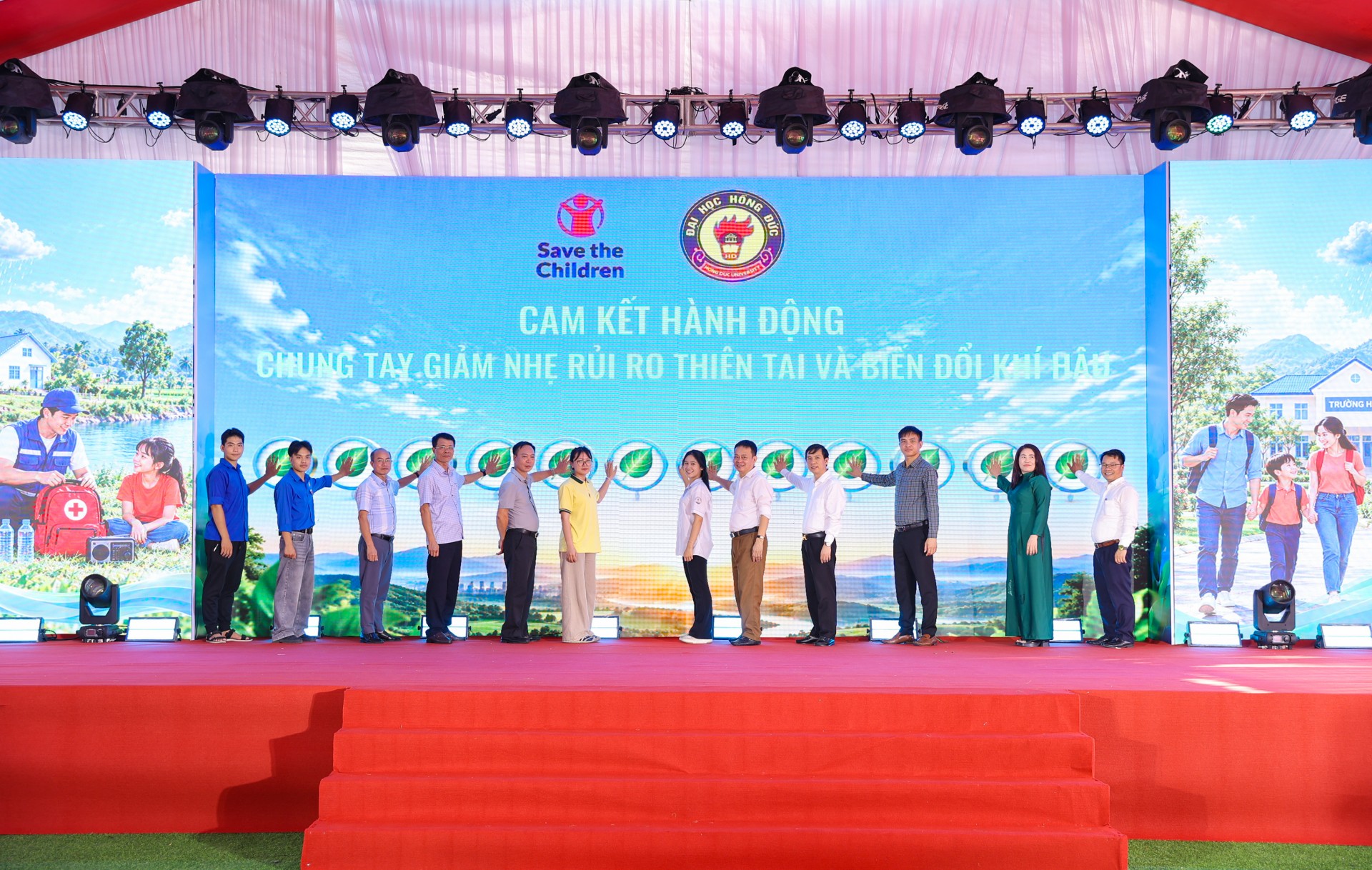 |
| Delegates and students take part in a pledge ceremony, committing to joint action to reduce disaster risks and address climate change. (Photo: Dinh Hoa) |
On this occasion, Save the Children International and Hong Duc University presented symbolic gifts to 30 students from Hong Duc Primary, Lower Secondary and Upper Secondary School whose families had been affected by natural disasters. Each family received VND 1 million in assistance, transferred directly to the students' parents to help them recover from losses, stabilise their lives and enable their children to continue attending school.
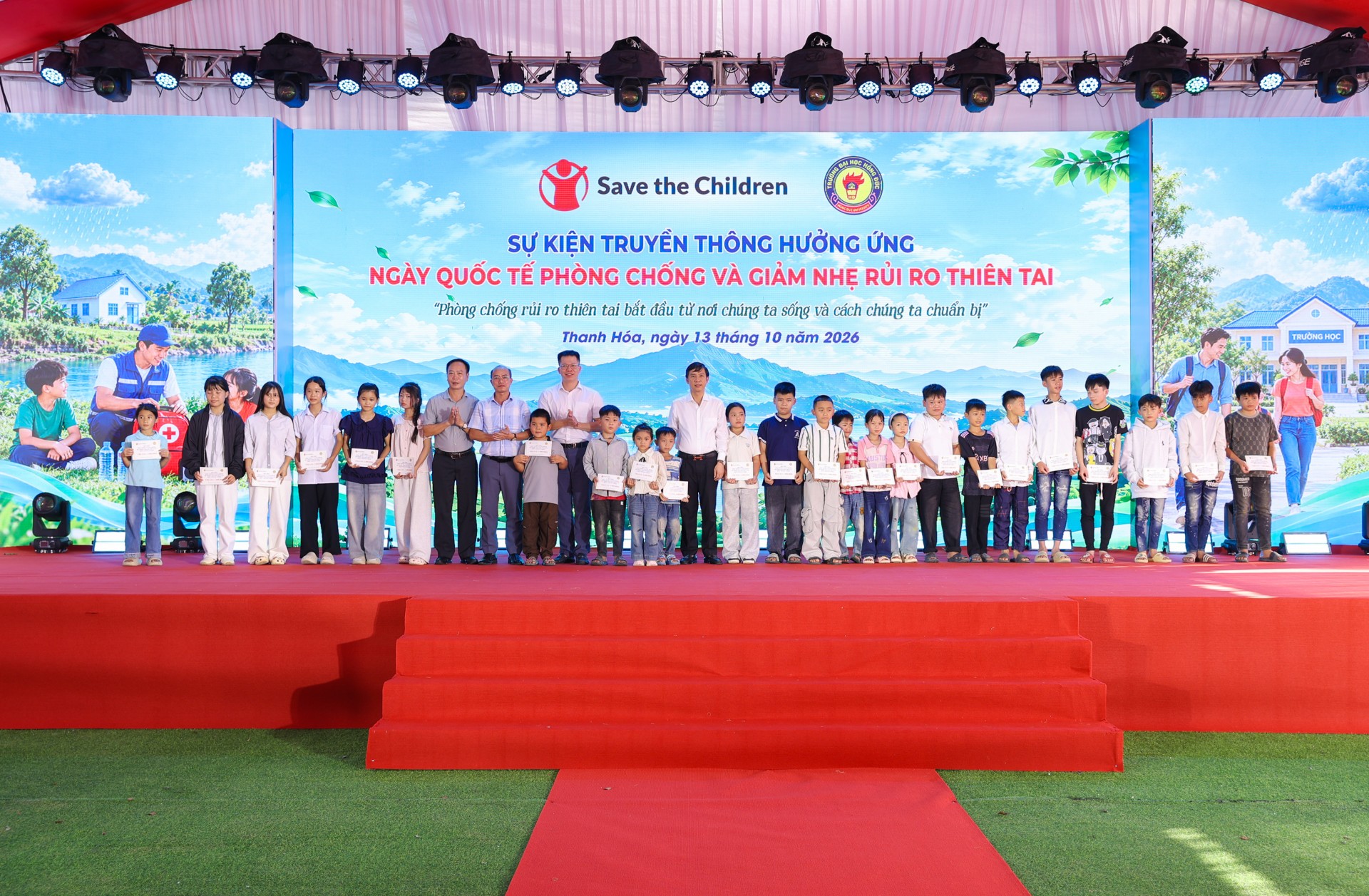 |
| Save the Children International and Hong Duc University present symbolic gifts to students whose families have been affected by natural disasters. (Photo: Dinh Hoa) |
In her closing remarks, Associate Professor Dr. Nguyen Thi Thuc, Vice Rector of Hong Duc University, praised the support provided by Save the Children International and its international partners. She noted that assistance in terms of resources, technical expertise and facilities had helped advance education, disaster prevention and disaster risk reduction activities.
Referring to support for the families of students affected by the storms and floods in September, Nguyen Thi Thuc expressed her hope that the gifts would encourage the students to overcome difficulties, continue their studies and contribute to protecting their homeland and the environment.
 Vietnam, Austria Strengthen Cooperation In Fire Prevention, Firefighting, Rescue, And Disaster Response Vietnam, Austria Strengthen Cooperation In Fire Prevention, Firefighting, Rescue, And Disaster Response According to the Vietnam News Agency correspondent in Europe, on June 17th in Upper Austria, a meeting between Vietnamese Ambassador to Austria Vu Le Thai Hoang, Standing Vice President of the Vietnam-Austria Friendship Association Nguyen Do Tung Cuong and Rosenbauer Group representatives was held. Rosenbauer Group is currently the world's largest enterprise in the field of research and production of equipment, devices, and technological solutions for fire prevention, firefighting, rescue, and emergency response. Receiving the delegation was Rosenbauer Group Chairman Robert Ottel, and Vice President for the Asia-Pacific region Herbert Poellinger. |
 More Than VND 3.74 Billion Supports Da Nang Residents' Recovery After Typhoons Fengshen and Kalmaegi More Than VND 3.74 Billion Supports Da Nang Residents' Recovery After Typhoons Fengshen and Kalmaegi With a total budget of more than VND 3.74 billion, a project funded by the German Relief Alliance (ADH) through World Vision is supporting 376 households in Nam Tra My and Tra Van communes (Da Nang City) to repair homes, restore clean water systems and sanitation facilities, and rebuild livelihoods after the disasters. |


Most read


Related Stories
 Viets Home
International Resources Support Climate Education and Forest Restoration in Thanh Hoa
 Friendship
Viet Nam, in Stories I Take Back to Japan
 Multimedia
Students Sharpen Skills for Climate Action
 Friendship
Japan to Continue Supporting Viet Nam in Poverty Reduction and Narrowing Development Gaps
Popular article
 Viets Home
Eight More Sets of Martyrs’ Remains Found at Le Thi Rieng Park
 Viets Home
Vietnamese and RoK Doctors Provide Free Surgery for Children with Birth Defects in HCMC
 Viets Home
Inspired by Her Father’s Words, Do Thi Hue Has Spent 15 Years Empowering People with Disabilities
 Expats in Vietnam