
People-to-People Exchanges, Culture and Tourism Drive Vietnam-India Ties Forward
 | Preserving and Strengthening Friendship Between Peoples of Viet Nam and India |
| AI and High Tech Open New Cooperation Opportunities for Vietnam, India |
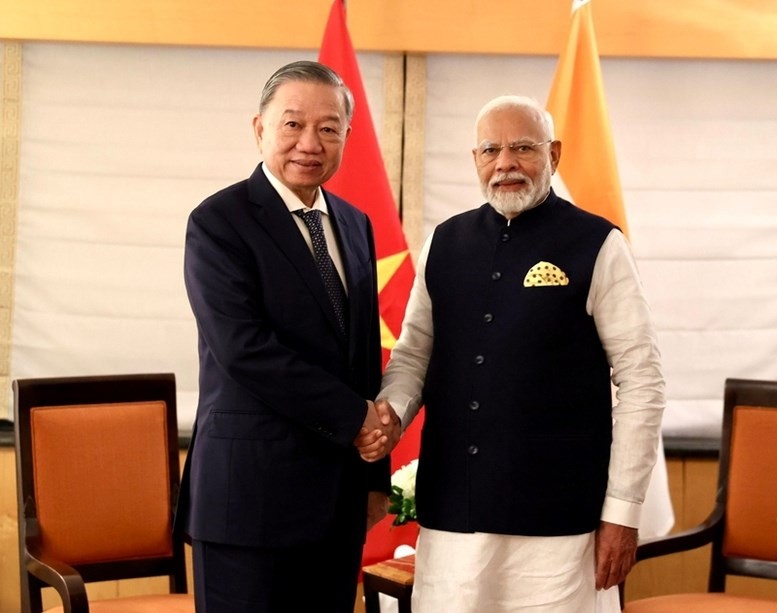 |
| General Secretary and President To Lam met with Indian Prime Minister Narendra Modi on the sidelines of the Summit of the Future and the high-level general debate of the United Nations General Assembly in New York (USA) in September 2024. |
On the occasion of General Secretary and President To Lam’s state visit to India from May 5-7, Ambassador Extraordinary and Plenipotentiary of Vietnam to India, concurrently accredited to Nepal and Bhutan Nguyen Thanh Hai affirmed in an interview with the press:
First, the visit carries historic significance as it marks the first time a General Secretary and President of Vietnam has paid a state visit to India.
Notably, the visit takes place shortly after the successful conclusion of the 14th National Party Congress and the consolidation of key leadership positions by Vietnam’s National Assembly, demonstrating Vietnam’s high regard for India - a close friend and comprehensive strategic partner.
The visit also clearly reflects the foreign policy outlined at the 14th National Party Congress: independence, self-reliance, resilience, peace, friendship, cooperation and development, along with the multilateralization and diversification of external relations.
Second, the visit coincides with the 10th anniversary of the establishment of the Comprehensive Strategic Partnership between the two countries (2016-2026). India is among the first three countries with which Vietnam established such a partnership. Over the past decade, bilateral relations have grown increasingly substantive and far-reaching, though significant potential remains untapped.
As both India and Vietnam continue their strong rise, and amid profound changes in the global and regional landscape, the visit provides an opportunity for leaders of both countries not only to review bilateral relations over the past decade but also to shape cooperation in a new phase.
Third, the visit offers an opportunity to further strengthen ties between the two countries’ leaders and ruling parties. It is also an excellent occasion to enhance comprehensive connectivity among ministries, sectors, and localities of both countries, as well as among businesses across various fields, including technology firms, startups, and innovation centers.
| “I believe both sides should continue to prioritize promoting people-to-people exchanges, culture, education, and tourism to help consolidate the social foundation, foster long-term and sustainable bonds between the two nations, and directly support economic and political cooperation.
The two countries share many cultural and historical similarities and intersections, particularly through Buddhism and cultural heritage, providing favorable conditions for advancing academic exchanges, artistic collaboration, and conservation efforts. Both countries should promote a wide range of activities such as cultural festivals, film weeks, artistic exchanges, and educational cooperation, thereby helping to promote each nation’s image, people, and identity. At the same time, both sides should increase the number of direct flights. It is encouraging that airlines from both Vietnam and India are keen to expand flight frequencies…” Ambassador Extraordinary and Plenipotentiary of Vietnam to India, concurrently accredited to Nepal and Bhutan, Nguyen Thanh Hai |
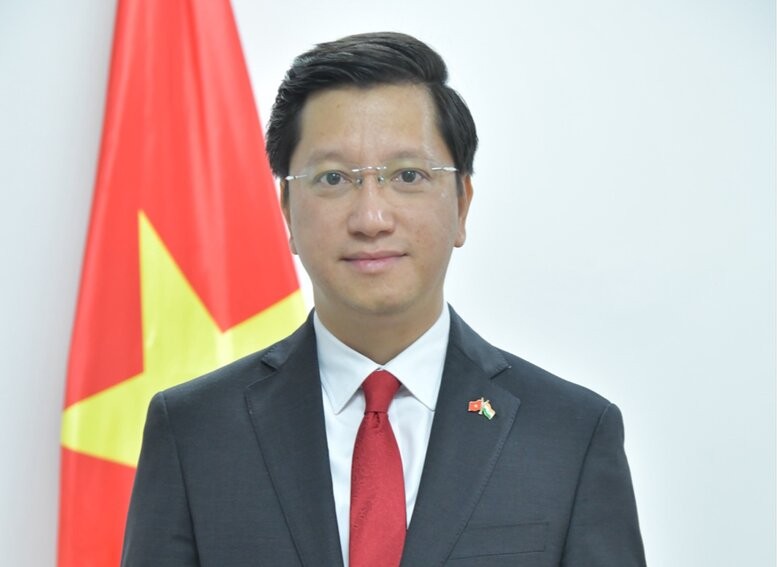
“It can be said that this state visit to India by General Secretary and President To Lam is expected to create new momentum, open up broader avenues for cooperation, and elevate the Vietnam-India Comprehensive Strategic Partnership to a new height in the new era, commensurate with the potential and standing of both countries in the region and the world. It will bring tangible benefits to people, localities, and businesses, contribute to realizing each country’s development goals, and make positive contributions to peace, stability, cooperation, and development in the region and beyond,” Ambassador Nguyen Thanh Hai emphasized.
According to Ambassador Nguyen Thanh Hai, India was among the first partners with which Vietnam established a Comprehensive Strategic Partnership. After 10 years, bilateral relations have developed comprehensively and substantively, with increasing depth, becoming one of the most dynamic and effective frameworks of cooperation in the region.
Political cooperation between the two countries has been continuously strengthened, with growing mutual trust. Leaders of both nations frequently exchange visits and meet on the sidelines of international conferences, demonstrating strong political commitment to bilateral relations. At the same time, there has been an increasing number of reciprocal visits by leaders of ministries, sectors, and localities of both countries.
More than 20 bilateral cooperation mechanisms are contributing to the effective implementation of cooperation. In addition, many important agreements have been signed and put into action, notably the Joint Vision Statement on Peace, Prosperity and People (December 2020), as well as action programs to implement the Comprehensive Strategic Partnership.
In the field of multilateral cooperation, the two sides share many similar viewpoints on regional and international issues, and closely coordinate at multilateral forums such as the United Nations, the Association of Southeast Asian Nations (ASEAN), and other regional cooperation mechanisms.
Defense and security cooperation has continued to expand and develop in diverse and substantive ways. The two sides have signed a Joint Vision Statement on Vietnam-India Defense Partnership toward 2030.
Cooperation in areas such as training, capacity building, service-to-service collaboration, joint exercises, and United Nations peacekeeping operations has been effectively implemented.
In the areas of economy, trade, and investment, bilateral cooperation has become increasingly dynamic. Bilateral trade turnover reached a record high of USD 16.46 billion in 2025, up 10.5% compared to 2024 and approximately 2.5 times higher than at the time the Comprehensive Strategic Partnership was established in 2016.
Regarding investment, as of the end of 2025, India had 473 valid projects in Vietnam with total registered capital of about USD 1.1 billion. Conversely, Vietnamese enterprises have begun expanding their presence in India with large-scale projects, notably an electric vehicle manufacturing project in Tamil Nadu with planned investment of up to billions of USD.
In addition, cooperation in areas such as science and technology, innovation, digital transformation, energy, and education and training continues to be promoted. Recently, many Vietnamese technology companies and startups have traveled to India to explore cooperation opportunities.
While an increasing number of Vietnamese students are studying in India, more Indian students are also coming to study in Vietnam, especially at medical universities.
A bright spot in recent years has been the strong development of people-to-people exchanges, culture, and tourism. Vietnam has become an attractive destination for Indian tourists. In 2025 alone, the number of Indian visitors to Vietnam reached 746,000, an increase of about 50% compared to 2024 and nearly four times higher than in 2019.
Direct air connectivity between the two countries has increased significantly, from just a few flights per week after the COVID-19 pandemic to nearly 90 flights per week at present, providing a major boost to tourism and people-to-people exchanges.
Overall, these achievements have created a solid foundation, making Vietnam-India relations one of the most substantive, effective, and complementary comprehensive strategic partnerships in the region.
Ambassador Nguyễn Thanh Hải noted that the foundations built over 10 years of the Comprehensive Strategic Partnership have created favorable conditions for the two countries to further strengthen their relations in the coming period.
In particular, India’s strong rise as a major power, Vietnam’s rapid development in recent years, and the two countries’ shared development visions and perspectives on many regional and international issues are creating numerous opportunities to enhance cooperation.
In addition to consolidating established areas of cooperation, both sides need to strongly promote new areas of cooperation that meet each country’s development needs.
Both sides should step up cooperation in innovation to seize opportunities created by technological revolution and digital transformation, thereby generating strong drivers for development and contributing to the goal of making Vietnam a developed country by 2045 and India a developed country by 2047.
The two countries should establish frameworks and forums on innovation to enable relevant ministries, sectors, businesses, technology associations, and startups of both countries to strengthen cooperation in new breakthrough areas such as high technology, digital transformation, digital economy, green economy, renewable energy, semiconductors, and artificial intelligence.
In addition, both sides should continue to strengthen the pillar of economic, trade, and investment cooperation. In particular, strong measures are needed to expand market access for each other and further increase bilateral trade turnover in line with the size of each country’s market and economy.
At the same time, both sides have significant investment opportunities, as Vietnamese enterprises are on the rise and many Indian businesses are showing growing interest in Vietnam.
“I believe both sides should continue to prioritize promoting people-to-people exchanges, culture, education, and tourism in order to help consolidate the social foundation, foster long-term and sustainable bonds between the two nations, and directly support economic and political cooperation.
The two countries share many cultural and historical similarities and intersections, particularly through Buddhism and cultural heritage, providing favorable conditions for advancing academic exchanges, artistic collaboration, and conservation efforts.
Both countries should promote a wide range of activities such as cultural festivals, film weeks, artistic exchanges, and educational cooperation, thereby helping to promote each nation’s image, people, and identity.
At the same time, both sides should increase the number of direct flights. It is encouraging that airlines from both Vietnam and India are keen to expand flight frequencies…,” emphasized Ambassador Extraordinary and Plenipotentiary of Vietnam to India, concurrently accredited to Nepal and Bhutan Nguyen Thanh Hai.
 | Planting Friendship Trees in Can Tho Nam Can Tho University, the Can Tho Union of Friendship Organizations, in coordination with the Consulate General of India in Ho Chi Minh City and ... |
 | Elevating Traditional Vietnam-India Friendship At the invitation of Indian Prime Minister Narendra Modi, General Secretary of the Communist Party of Vietnam Central Committee and President of the Socialist Republic ... |
Related Stories
 National
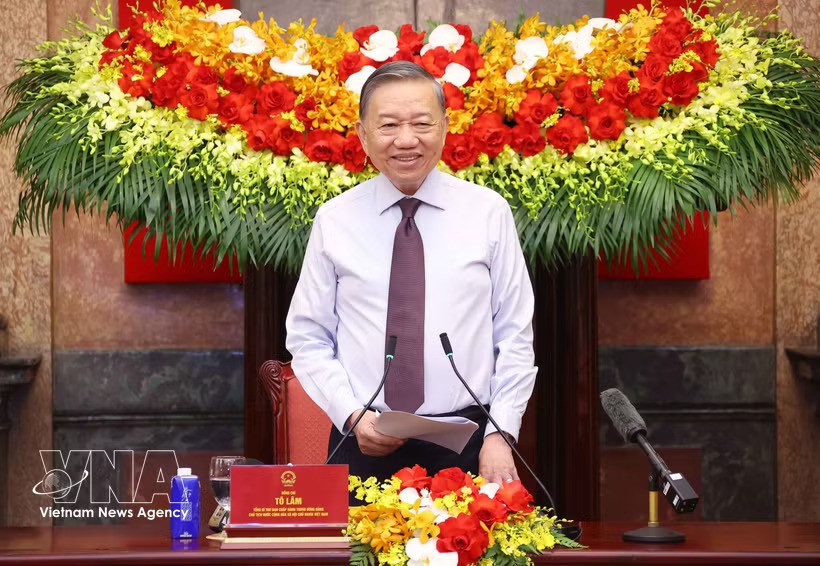
Top Leader’s Letter Honours Vietnamese Family Values
 National
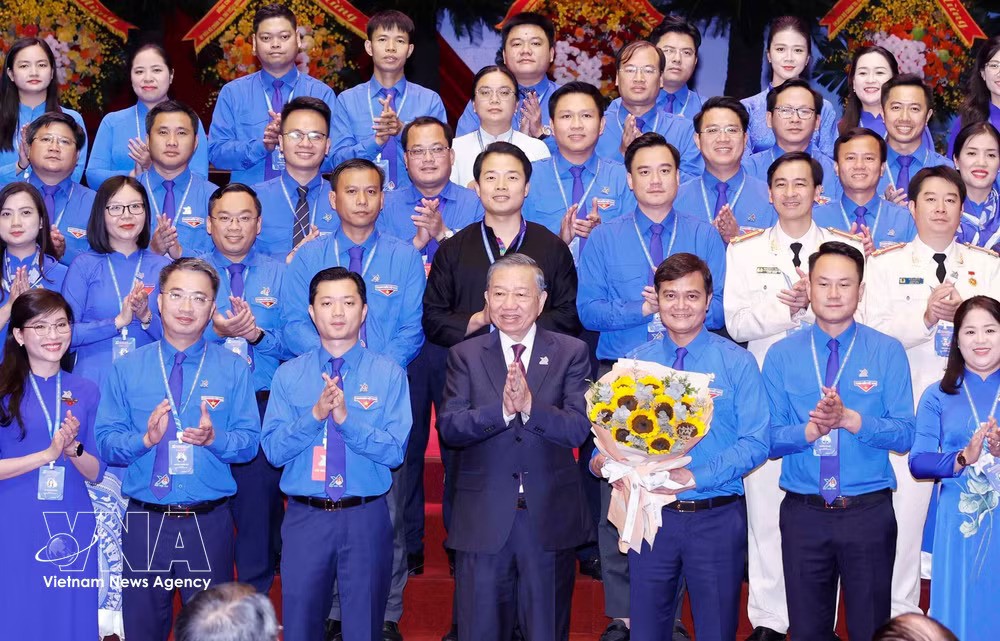
Top Leader Calls on Youth to Think Bigger, Learn Faster, Make More Contributions
Recommended
 National
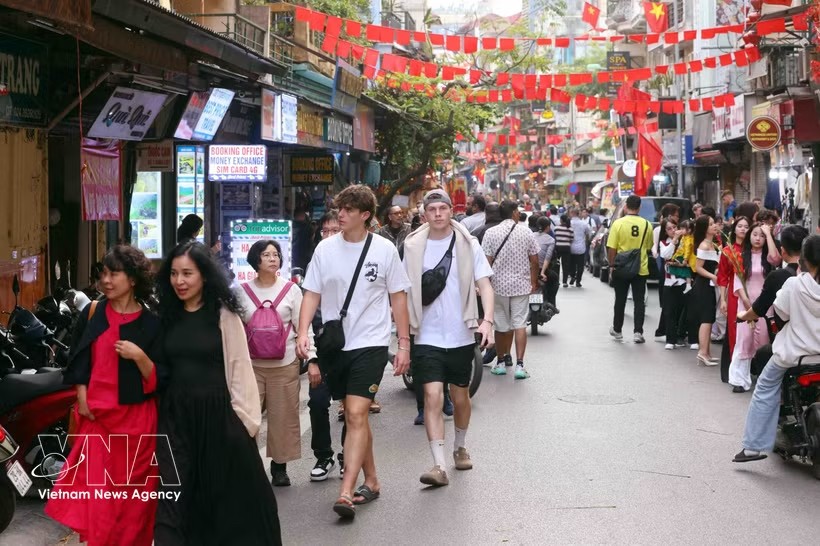
Vietnam News Today (July 4): International Tourist Arrivals to Vietnam Rise Nearly 15% in First Half of 2026
 National
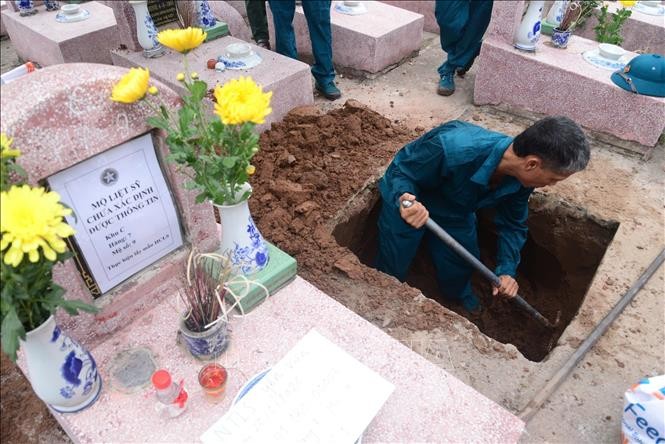
500-Day Campaign: Hope of Reunion Through DNA Evidence
 National
Ho Chi Minh City Marks 50 Years with 3D Mapping Light Show
 National
Full Remarks by General Secretary, President To Lam at 50th Anniversary of Sai Gon-Gia Dinh Named After President Ho Chi Minh
 National
New Advances in DNA Technology for Identifying Fallen Soldiers
 National
Foreign Affairs Should Better Serve National Development: Top Leader
 National
Vietnam News Today (July 1): Vietnam and UAE Sign Defense Industry Cooperation Memorandum
 National