
US President Donald Trump: Reciprocal Tariffs Will Target All Countries
 | Understanding Trump's Tariffs in Five Charts |
| Negotiation Over Confrontation: Countries Taking Cautious Approach to US Tariffs |
Previously, White House economic advisor Kevin Hassett had told Fox Business that the administration’s focus would be on the 10 to 15 countries with the most severe trade deficits. However, President Trump has now clarified that the tariffs will not be limited to this group.
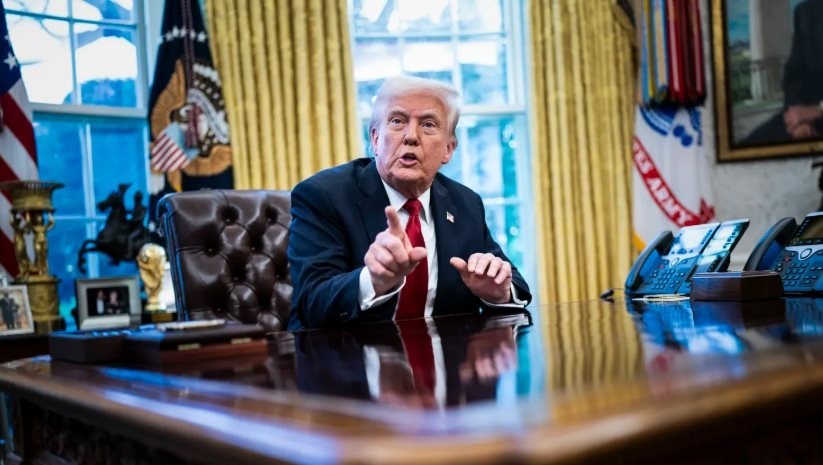 |
| US President Donald Trump. (Photo: Reuters) |
President Trump has pledged to unveil a major tariff plan on April 2, viewing tariffs as a means to protect the domestic economy from unfair global competition. He also sees tariffs as a tool to gain leverage in negotiations to secure better terms for the US.
In February 2025, President Trump directed US trade officials to develop a comprehensive plan to address trade deficits. This plan primarily involves increasing tariffs in response to taxes, fees, regulatory measures, and subsidies that Washington views as unfair.
| The concept of reciprocal tariffs is not new to President Trump. A report in The Wall Street Journal cited sources familiar with the matter, revealing that Peter Navarro, Trump’s assistant and senior advisor on trade and manufacturing, has been a leading advocate of the tariff policy. During Trump’s previous term in office, Navarro supported the idea and encouraged lawmakers to back a reciprocal tariff bill initiated by Sean Duffy, who is now serving as the Secretary of Transportation in Trump’s second administration and was instrumental in promoting this legislation. |
 | Timeline of Trump 2.0 Trade Policy At the beginning of his second term, President Donald Trump implemented a series of new trade policies to adjust the economic balance and serve the ... |
 | US Businesses Struggle Amid Trump's Unpredictable Tariff Policies Amid continuous shifts in the tariff policies of President Donald Trump's administration, some US businesses have reduced their orders or put investment plans on hold. |


Most read


Related Stories
 National
Party General Secretary To Lam Meets US President Donald Trump at White House
 National
State President Meets with US President, World Leaders in RoK
 World
World
Easing of US-China Tariffs: Markets React Positively, Experts Remain Cautious
 World
World
US, China Conclude Trade Talks with Positive Outcome
In topics
World
US, China Conclude Trade Talks with Positive Outcome
World
Easing of US-China Tariffs: Markets React Positively, Experts Remain Cautious
 World
World
Trump’s Tariff Pause: A Strategic Move from “The Art of the Deal”?
 World
World
ASEAN and US Tariff Dilemma: Hybrid Approach to Global Trade Tensions
Recommended
 World
World
US Officials Praise Viet Nam’s Growth, Bilateral Ties
 World
World
India and Russia push to expand ties with more joint production including defense
 World
World
India has become Russia's trade lifeline to a more diversified economic relationship
 World
World
BRICS+ enters a new phase
Popular article
 World
World
Pakistan Praises Viet Nam’s Development Achievements
 World
World
China's Xi likely to visit India for first time in seven years
 World
World
Vietnam’s Rise Draws Praise from Venezuelan Scholars
 World
World