
Viet Nam-Brazil: Turning Cooperation Commitments into Reality
| Spreading Ho Chi Minh’s Legacy in Brazil Vietnam-Brazil: Strengthening Cooperation in Renewable Energy |
Translating cooperation agreements into action
Brazilian President Luiz Inácio Lula da Silva was re-elected on October 25, 2026, securing 51.79% of valid votes in the second round of the presidential election. The result could help ensure continuity in Brazil's cooperation policies toward Viet Nam. However, bilateral relations are built on shared interests and commitments between the two countries, rather than depending on any single presidential term.
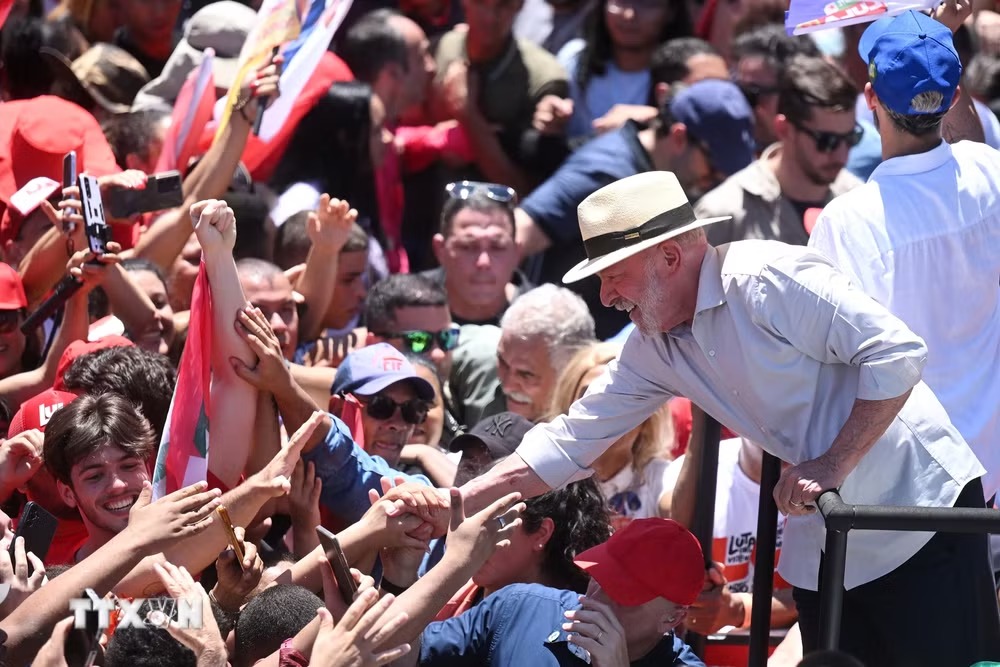 |
| Brazilian President Luiz Inácio Lula da Silva during his election campaign in Brasília, Brazil, on October 9, 2026. (Photo: Xinhua/VNA) |
Viet Nam and Brazil established diplomatic relations on May 8, 1989, upgraded their ties to a Comprehensive Partnership in 2007, and elevated them to a Strategic Partnership in November 2024. Over more than 37 years, bilateral cooperation has expanded across politics, economics, trade, science and technology, and people-to-people exchanges.
During President Lula's previous term, the two countries made notable progress in their relations. In November 2024, Viet Nam and Brazil upgraded their relationship to a Strategic Partnership. In March 2025, during President Lula's state visit to Viet Nam, the two sides signed an Action Plan for the implementation of the Strategic Partnership for 2025-2030, identifying priority areas for cooperation.
Economic and trade cooperation has been one of the areas showing the most tangible results. Bilateral trade between Viet Nam and Brazil increased from approximately US$534 million in 2008 to nearly US$8 billion in 2025. Brazil is currently Viet Nam's largest trading partner in Latin America, while Viet Nam is an important trading partner of Brazil in Southeast Asia.
The two countries offer a range of products that complement each other's needs. Viet Nam exports electronics, machinery, footwear, textiles, garments, and seafood to Brazil, while importing agricultural products, industrial raw materials, and other goods used in production. Opening their markets to agricultural and food products has also created additional opportunities for goods from both countries to reach consumers.
The leaders of Viet Nam and Brazil have set a target of raising bilateral trade turnover to US$15 billion by 2030. To achieve this goal, both sides need to continue removing trade barriers, expanding market access, and strengthening business connections. The announcement in December 2025 that Viet Nam and the Southern Common Market (MERCOSUR) would launch negotiations on a Preferential Trade Agreement marked a significant step toward expanding economic cooperation with the region.
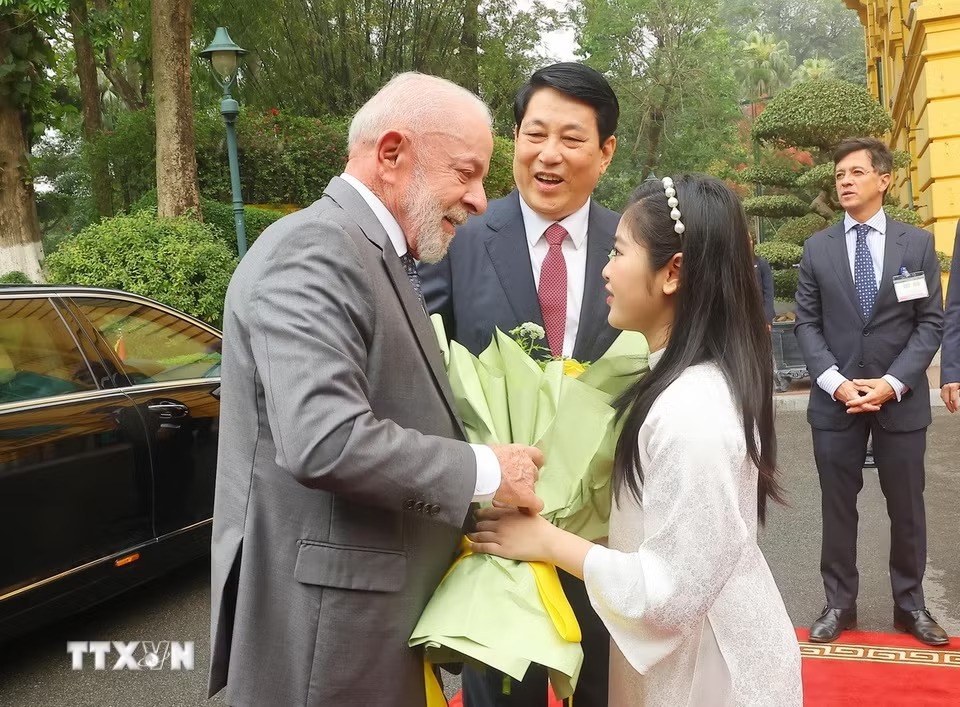 |
| President Luiz Inácio Lula da Silva during his state visit to Viet Nam in March 2025. (Photo: VNA) |
Beyond trade, Viet Nam and Brazil have other areas of cooperation that align with their respective development needs, including renewable energy, biofuels, digital transformation, environmental protection, and climate change response. These areas have been addressed in bilateral agreements and cooperation priorities.
The frameworks for cooperation have already been established. The task now is to implement these agreements effectively, resolve specific obstacles, and translate cooperation objectives into tangible outcomes that serve the development needs of both countries.
Strengthening the bridging role of friendship associations
People-to-people exchanges are among the key priorities in Viet Nam-Brazil relations. The Action Plan for 2025–2030 identifies education, culture, sports, tourism, and people-to-people diplomacy as one of the six pillars of cooperation. This provides a foundation for friendship organizations in both countries to further expand their activities and strengthen connections between communities and social organizations.
Viet Nam and Brazil are geographically distant and differ in language and certain cultural characteristics. As a result, opportunities for direct contact and mutual understanding between their peoples remain limited. Exchange activities and initiatives introducing each country's land and people can help bridge this gap.
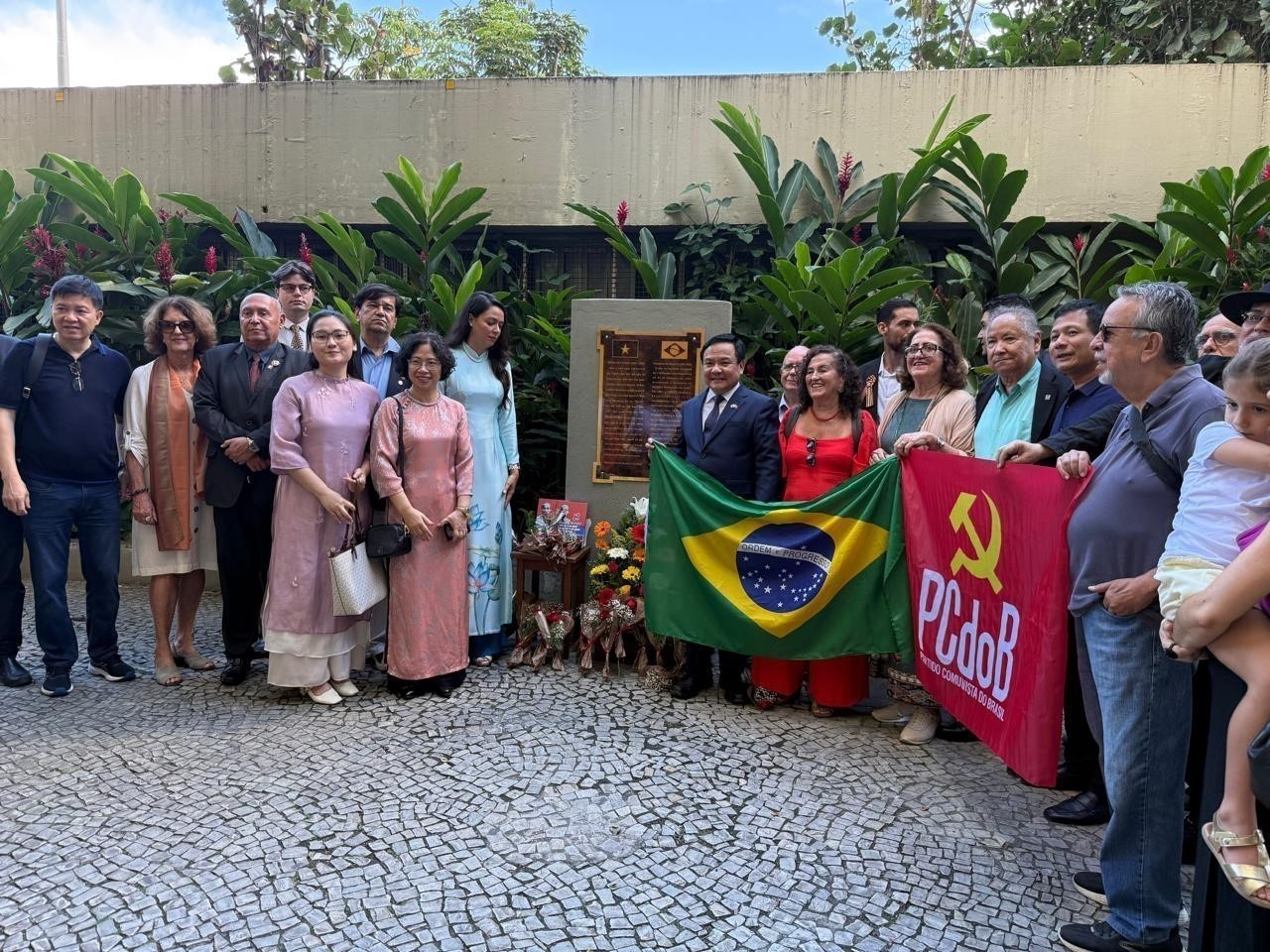 |
| A flower-laying ceremony at a commemorative plaque honoring President Ho Chi Minh in Santa Teresa, Rio de Janeiro state, Brazil, jointly organized by the Vietnamese Embassy in Brazil and the Brazil-Viet Nam Friendship Association in May 2026. (Photo: VNA) |
In recent years, the Viet Nam-Brazil Friendship and Cooperation Association and the Brazil-Viet Nam Friendship Association have participated in activities aimed at strengthening connections and fostering friendship between the peoples of the two countries. In the coming period, the two associations should maintain their coordination and identify exchange programs that reflect practical conditions and needs.
Culture is an area in which both countries can build on their respective strengths. Book promotion events, exhibitions, artistic exchanges, music, football, and culinary activities can help bring the public closer to each other's ways of life. These activities can also be combined with tourism promotion and product showcases, creating further opportunities for connections among organizations and businesses.
In education and youth engagement, the two friendship associations could focus on connecting educational institutions and facilitating exchanges of students, scholars, lecturers, and youth delegations. Direct interactions would enable younger generations to gain a deeper understanding of each other's countries and peoples, while fostering relationships that can be sustained over the long term.
Another issue requiring attention is the lack of information available to the public in both countries about each other. Cooperation among media agencies, educational institutions, and cultural organizations, particularly in providing information in Vietnamese and Portuguese, would make it easier for the public to access information about developments and issues concerning each country.
Having served in Brazil and followed bilateral relations for many years, I believe that the friendship associations can play a more active role in connecting organizations and communities in both countries. In the immediate future, priority should be given to programs that can be sustained on a regular basis and encourage direct public participation, particularly among younger generations. This would also enable people-to-people exchanges to make tangible contributions to fulfilling the commitments under the Viet Nam-Brazil Strategic Partnership.
 Vietnam, Brazil Review Economic and Trade Cooperation in First Half of 2026 The Embassy of Vietnam in Brazil held the seminar "Sharing Information on Vietnam-Brazil Economic, Trade and Investment in the First Six Months of 2026” on July 9, 2026, in Brasília, in both in-person and online formats. The event aimed to provide updates on bilateral economic cooperation, exchange information on market opportunities, and discuss challenges, obstacles, and directions for promoting cooperation in the coming period. |
 Vietnam Marks 81st National Day in Brazil Recently, at the Brasília Naval Club, the Embassy of Vietnam in Brazil solemnly held a ceremony marking the 81st anniversary of the success of the August Revolution and the National Day of the Socialist Republic of Vietnam (September 2, 1945 - September 2, 2026). |
Most read


Related Stories
 Friendship
Expanding Opportunities for Viet Nam-Saudi Arabia Cooperation
 Friendship
People-to-People Diplomacy to Strengthen the Hegemony of Internationalism: The Practical Example of the Solidarity Between Viet Nam and Cuba
 Friendship
Deputy Minister Ho An Phong Elected President of Viet Nam-Belarus Friendship Association for 2026-2031
 Friendship
First Congress of the Dong Thap Union of Friendship Organizations for the 2026-2031 Term
Recommended
 Friendship
Italian Ambassador Highlights Role of Youth in Strengthening Viet Nam-Italy Ties
Popular article
 Friendship
International Friendship Volleyball Exchange Held in Khanh Hoa
 Friendship
Students Who Brought Me to Viet Nam
 Friendship
More Than 900 Students in Tuyen Quang Learn About Green Living
 Friendship