Vietnam urges stronger nuclear disarmament ahead of NPT review conference
Vietnam has called for stronger nuclear disarmament efforts and greater transparency ahead of the 11th Review Conference of the Treaty on the Non-Proliferation of Nuclear Weapons (NPT), set to open in New York on April 27.
At a press briefing recently held in New York, Ambassador Do Hung Viet, head of Vietnam’s mission to the United Nations and president-designate of the conference, said the meeting comes at a time of rising geopolitical tensions and growing strain on global arms control mechanisms.
He stressed the need for “substantive” disarmament measures, enhanced transparency, trust-building and reduced nuclear risks.
The ambassador reaffirmed that countries’ rights to access nuclear technology for peaceful purposes must be guaranteed, in line with safety and non-proliferation standards, while highlighting the role of verification mechanisms.
He also thanked the UN Secretariat for its support and expressed hope for continued backing from Secretary-General Antonio Guterres to help deliver a balanced and consensus-based outcome.
The United Nations Office for Disarmament Affairs said the current global context makes this review cycle particularly critical for reinforcing the nuclear non-proliferation regime, according to VOV.
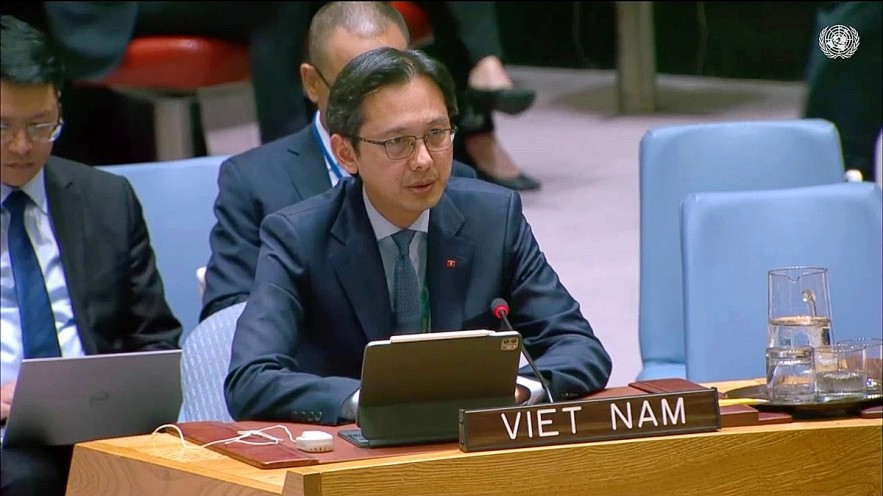 |
| Ambassador Do Hung Viet, head of Vietnam’s mission to the United Nations. |
At the press briefing hosted by the United Nations Correspondents Association, Acting Secretary-General of the conference Christopher King called for continued constructive dialogue among member states.
He also praised Vietnam’s contributions to non-proliferation and disarmament, saying its role as conference president reflects international confidence in its leadership and diplomatic approach.
The NPT, signed in 1968 and in force since 1970, has 191 members and is built on three pillars: non-proliferation, disarmament and peaceful use of nuclear energy.
Review conferences are held every five years to assess implementation and strengthen commitments. Vietnam will chair the 11th review conference following a nomination by the Non-Aligned Movement and consensus among member states.
Can Tho seeks to deepen cooperation with Korean businesses
At a working session with a delegation from the Vietnam–Korea Business and Investment Association (VKBIA) led by its Chairman Tran Hai Linh on April 25, Nam praised the association’s role as a vital bridge linking the city with Korean partners. He reaffirmed the city’s readiness to facilitate VKBIA member enterprises in exploring and expanding investment.
Can Tho considers the Republic of Korea (RoK) a top-priority partner and is committed to creating the most favourable conditions for Korean investors, Vice Chairman of the municipal People’s Committee Vuong Quoc Nam said.
At a working session with a delegation from the Vietnam–Korea Business and Investment Association (VKBIA) led by its Chairman Tran Hai Linh on April 25, Nam praised the association’s role as a vital bridge linking the city with Korean partners. He reaffirmed the city’s readiness to facilitate VKBIA member enterprises in exploring and expanding investment.
The official noted that Can Tho’s expanded development space, incorporating areas of the former provinces of Can Tho, Soc Trang and Hau Giang, now has a population exceeding 4.2 million. This transformation positions the city as a key growth engine of the Mekong Delta, benefiting from strategic access to major river mouths and a 72-kilometre coastline.
The new development space offers strong advantages in high-quality agriculture and logistics. Brackish-water shrimp exports reach an estimated 1.3 billion USD annually, accounting for about 25% of the country’s total, while premium rice varieties such as ST25 rice and a one-million-hectare rice zone further enhance competitiveness. Notably, the Tran De deep-water port project has been designated as a special port and regional maritime gateway, opening up significant opportunities for Korean investors in port infrastructure and logistics.
Can Tho is also positioning itself as a regional hub for healthcare and education, focusing on workforce development to meet the needs of industrial parks and high-tech zones. The city has recorded positive outcomes from projects supported by the Korean Government through the Korea International Cooperation Agency (KOICA), including an industrial technology incubator and agricultural mechanisation initiatives, which are seen as models for further expansion.
In tourism, the city’s expanded geography offers a richer mix of river-based floating market experiences and cultural, spiritual and culinary tourism. Authorities are seeking cooperation with the VKBIA to restore direct air routes and develop tourism products to attract Korean visitors and investors.
Nam expressed confidence that the VKBIA’s extensive network will help translate discussions into concrete projects, contributing to Can Tho’s sustainable growth in the coming period. The city pledged continued support and timely resolution of challenges to ensure long-term investment confidence among Korean businesses, reported VNA.
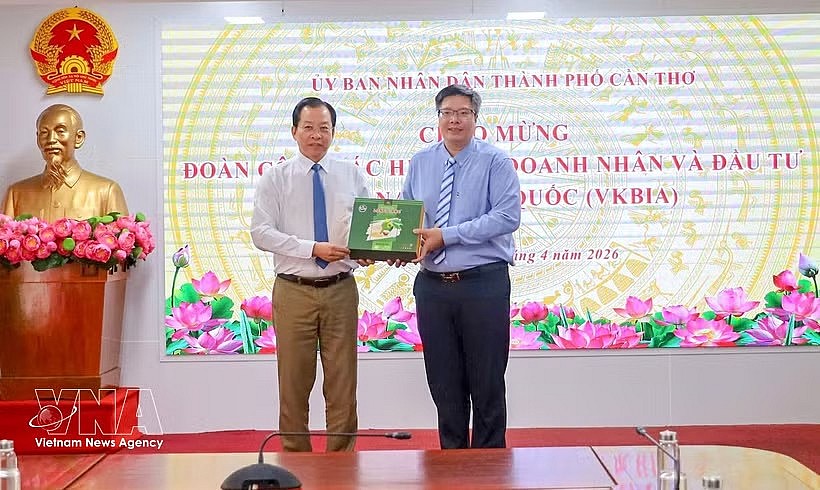 |
| Vice Chairman of the municipal People’s Committee Vuong Quoc Nam and Chairman of the Vietnam–Korea Business and Investment Association Tran Hai Linh pose for a commemorative photo. (Photo: VNA) |
For his part, Linh said that since its establishment in 2019, the VKBIA has brought together not only Vietnamese enterprises in the RoK but also major Korean corporations, international investment funds, and a strong network of experts and intellectuals. One of its key achievements was launching the first direct flight between Incheon and Can Tho, facilitating trade and tourism.
The association has also worked closely with the Can Tho Investment, Trade and Exhibition Promotion Centre to promote business connectivity and support Mekong Delta localities in showcasing products at international fairs in the RoK.
Highlighting its strengths, Linh noted that the VKBIA can mobilise a network of nearly 1,000 professors and PhDs from the Vietnamese intellectual community in Korea to support high-quality human resource training, seen as a key factor in attracting major technology investors.
He proposed expanding cooperation in strategic sectors such as semiconductor manufacturing, artificial intelligence, digital transformation, and green and renewable energy, while seeking to renew and upgrade cooperation agreements with the city to a more comprehensive and sustainable strategic level.
Reviving Vietnam’s cultural heritage through digital innovation
As digital transformation reshapes the world, Vietnam is breathing new life into its cultural heritage, turning centuries-old traditions into immersive, accessible experiences for a global audience.
As digital transformation accelerates across sectors, Vietnam’s cultural heritage, often described as the nation’s “living memory”, is entering a new phase: digitisation. No longer confined to static displays behind glass, heritage is increasingly being “brought to life” through technology, becoming more interactive, immersive and accessible to the public.
When heritage enters the digital space
Vietnam is home to a vast cultural treasure, with tens of thousands of historical sites and intangible cultural heritage elements already documented. However, traditional approaches are showing limitations in modern life, particularly in engaging younger audiences.
Digital technology is emerging as an inevitable solution. Applications such as virtual reality (VR), augmented reality (AR), 3D projection and artificial intelligence (AI) allow historical spaces to be recreated in vivid and engaging ways. Heritage is no longer static, it can tell stories, interact with audiences and expand its reach across digital platforms.
Voices from within
According to Nguyen Thi Ngoc Hoa, director of the Hanoi Creative Activities Coordination Centre, the use of technology has significantly enhanced the appeal of exhibitions. She notes that the flexibility of digital tools makes historical content more accessible to diverse audiences.
Rather than one-way communication, modern exhibition spaces now enable visitors, especially younger generations, to engage with heritage in a more visual and dynamic manner.
This trend, she says, aligns well with contemporary heritage education, where experiential learning is placed at the centre. With digital applications, knowledge absorption becomes more natural and engaging for visitors.
From a museum management perspective, To Thi Thu Trang, director of the Vietnam Museum of Cultures of Ethnic Groups, said digital transformation is not merely about equipment, but about changing operational mindsets.
Many museum professionals, while strong in expertise, still face challenges in adapting to new technologies. However, once these barriers are overcome, museums are gradually building digital ecosystems that allow heritage to be presented more compellingly in the online space, cited VOV.
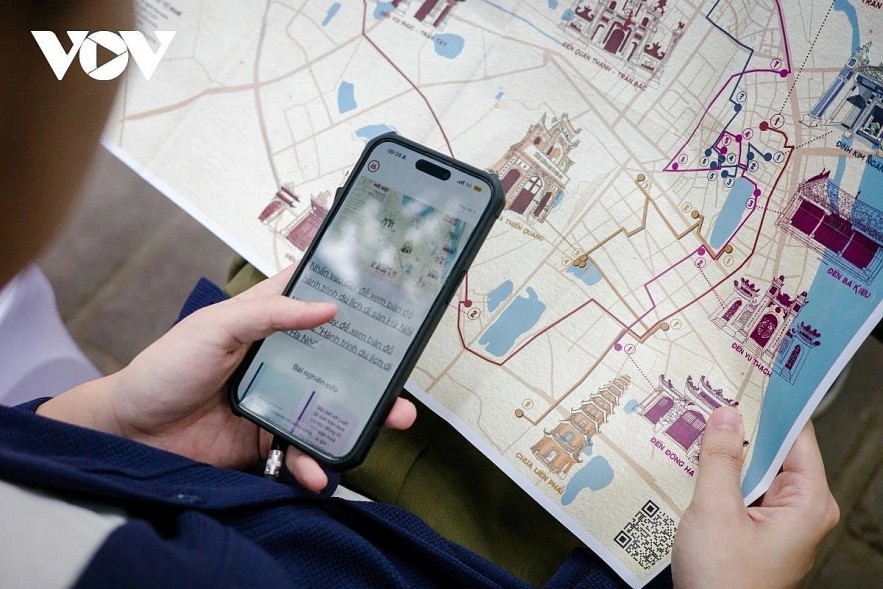 |
| The Thang Long Four Sacred Temples journey connects four historic temples that once guarded the four directions of the ancient capital. |
From the visitor’s perspective, Hoang Huu Minh, a tourist at the Da Nang Museum of Cham Sculpture, shared, “I’m really impressed by how Da Nang has digitised Cham cultural values and made them more accessible to visitors.”
Positive feedback like this suggests that technology not only supports preservation but also enhances emotional engagement between audiences and heritage.
Toward a new creative ecosystem
Today, digital art is no longer just a supporting tool, it has become part of a new creative language. Technologies such as 3D mapping, VR and AR create powerful visual effects, blurring the line between the viewer and the artwork.
Audiences are no longer passive observers but active participants in the heritage space. Multi-sensory experiences, combining visuals, sound and interaction, offer entirely new ways of engaging with culture, shaping what can be described as a new “creative ecosystem.”
From a tourism perspective, the Vietnam National Authority of Tourism notes that applying technology to heritage is becoming a key trend to enhance destination competitiveness. Digital tourism products, virtual tours and interactive experiences not only attract visitors but also extend their stay and increase overall value.
Opportunities and challenges go hand in hand
Despite its potential, heritage digitisation also presents challenges. Converting cultural values, especially intangible heritage, into digital data requires careful handling to preserve authenticity.
Limited resources, infrastructure and digital skills remain significant barriers, particularly for localities with fewer capabilities.
More importantly, technology cannot fully replace real-life experiences. Overuse risks turning heritage into mere spectacle, diminishing its cultural depth. Striking this balance is key to ensuring that technology enhances, rather than dilutes, cultural authenticity.
Keeping heritage alive in the digital age
In practice, technology is only a tool. The core value lies in how people tell the story of heritage. Digitisation should aim to help audiences better understand, feel and connect with history.
“Reviving” heritage through digital technology is therefore not just a trend but an inevitable direction. When balanced effectively between preservation and innovation, cultural heritage will continue to live, evolve and resonate not only within Vietnam, but with audiences around the world.
U17 Vietnam eyes World Cup after impressive regional run
The Southeast Asian title has opened up great expectations for U17 Vietnam, but the journey toward the U17 World Cup will ultimately define the ambition of coach Roland and his players.
From Southeast Asian glory
The U17 Southeast Asian championship did not come to Vietnam in dramatic fashion, but was built on consistency and strong organization throughout the tournament. It was a campaign in which coach Roland’s team clearly expressed its identity: disciplined in defense, coherent in build-up play, and increasingly composed with each match.
U17 Vietnam demonstrated a mature footballing mindset, knowing how to control the tempo of games. Their victories were shaped by patience, efficient use of chances, and a well-functioning system rather than flashes of individual brilliance. In youth tournaments, where emotion often outweighs reason, such composure became their greatest advantage.
The title, therefore, is more than just a trophy. It affirms that Vietnam’s youth football is moving in the right direction, with a new generation forming on stronger foundations and a more modern approach to the game, VNN reported.
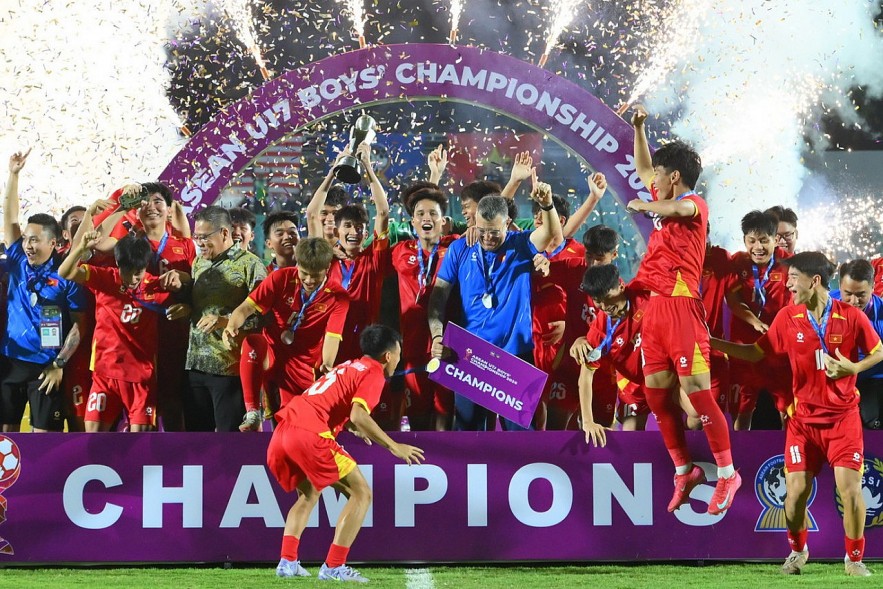 |
| U17 Vietnam celebrate their Southeast Asian championship victory. Photo: VFF |
Yet, like many previous generations, this success is only a starting point. Greater challenges lie ahead, far more demanding than what they faced at the regional level.
Toward the World Cup stage
From their Southeast Asian triumph, the dream of qualifying for the World Cup is no longer distant, but neither is it fully within reach.
The opportunity arises as the Asian tournament format allows eight teams to qualify for the U17 World Cup, meaning that advancing past the group stage would be enough. On paper, this appears achievable.
Reality, however, is often more complex. In 2025, U17 Vietnam also performed strongly at the continental level but fell short of progressing, missing out on a World Cup berth.
At this year’s AFC U17 finals, coach Roland’s side has been placed in what appears to be a relatively manageable group alongside South Korea, Yemen, and the UAE. But that does not guarantee smooth passage, as all teams share the same ambition and are competing not merely for experience but for advancement.
The path from Southeast Asian champions to a World Cup ticket is therefore both near and far - near in terms of opportunity, yet distant in the challenge of seizing it.
For U17 Vietnam, the greatest test is not just qualification, but proving they can stand alongside Asia’s top youth teams. If they can cross that threshold, the World Cup will no longer be a distant dream, but a realistic destination for coach Roland and his players.
 | Vietnam News Today (Apr. 24): Vietnam and RoK Advance Value Chain, Innovation-Driven Partnership Vietnam News Today (Apr. 24): Vietnam and RoK advance value chain, innovation-driven partnership; Vietnam, China demonstrate high-level political trust: spokesperson; Vietnam–EFTA FTA seen as increasingly ... |
 | Vietnam News Today (Apr. 25): Party chief, State President To Lam holds phone talks with Australian PM; UN Secretary-General backs Vietnam’s presidency of NPT Review ... |