
Vietnamese Deputy FM: UAE a leading economic partner of Vietnam
The 54th anniversary of the UAE’s National Day themed “United “was solemnly celebrated on December 2 by the Embassy of the United Arab Emirates (UAE) in Hanoi.
This year’s theme reflects the cohesion of UAE society and the values of cooperation and joint efforts that have contributed to shaping the nation.
Those in attendance at the event included Deputy Minister of Foreign Affairs Nguyen Minh Hang, ambassadors, chargés d’affaires, representatives of foreign embassies in Vietnam, alongside representatives from UAE businesses, Vietnamese ministries, sectors, and localities.
In his opening remarks, UAE Ambassador to Vietnam Bader Almatrooshi said that over recent decades the UAE has undergone a profound transformation across multiple fields, from economic diversification and sustainable development to space exploration, clean energy and artificial intelligence, positioning the country among those at the forefront of shaping the future.
He reaffirmed that his nation pursues a balanced and open foreign policy, with dialogue and mutual understanding at the center of its global cooperation efforts. The country’s participation in G20 meetings, its membership in BRICS, and the expansion of Comprehensive Economic Partnership Agreements worldwide, including with Vietnam, show the UAE’s positive and constructive presence in the international arena, according to VOV.
 |
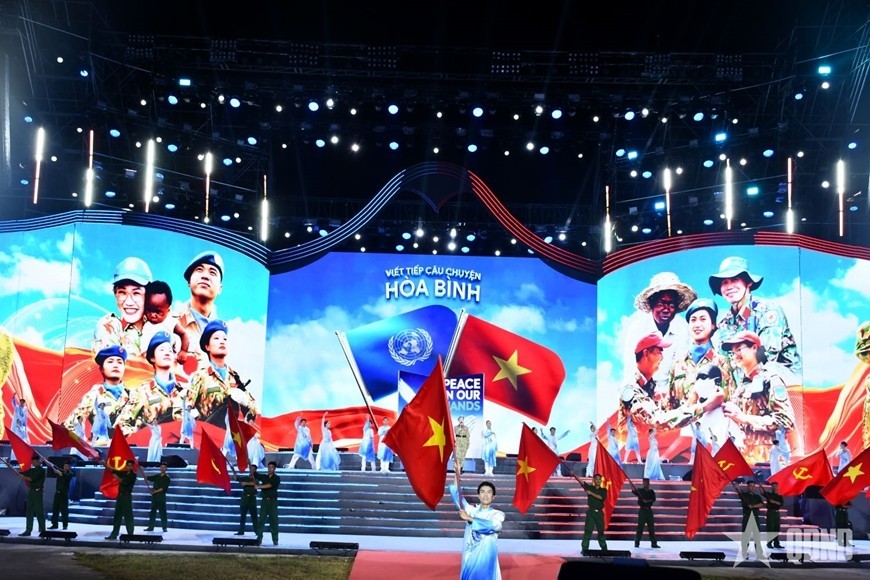
| Vietnamese students perform the UAE’s Al-Ayyala folk art. |
According to the ambassador, relations between the UAE and Vietnam represent a strong, mutually beneficial relationship founded on respect and shared interests. Ties have developed rapidly in recent years with the strong backing of both governments and the private sector to help realize the vision of both nations’ leaders.
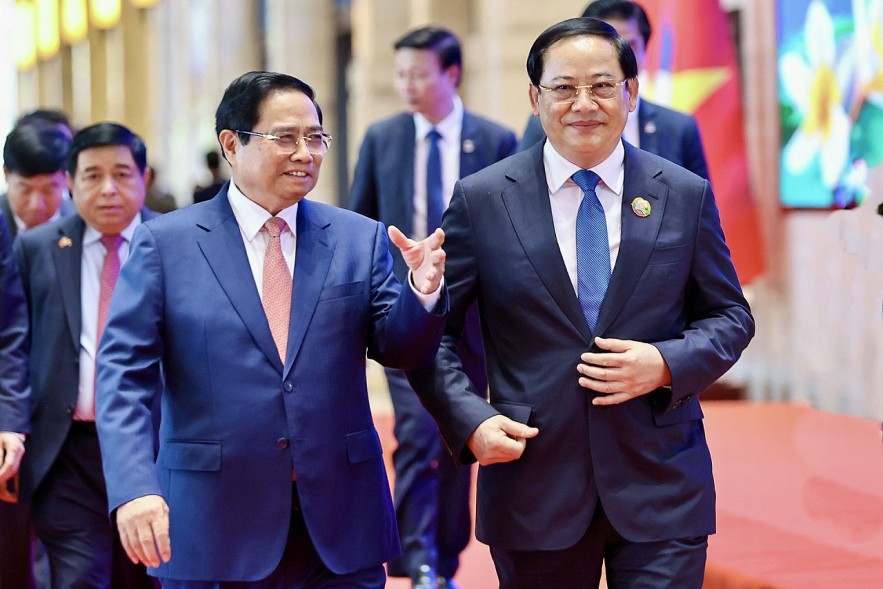
High-level exchanges have continued to underline the importance of this partnership, exemplified by the meeting between Crown Prince of Abu Dhabi Sheikh Khalid bin Mohammed Al Nahyan and Prime Minister Pham Minh Chinh on the sidelines of the G20 Summit.
Bilateral trade rose by 50% during the 2023-2024 period to reach US$12 billion. Vietnam’s fruit and vegetable exports to the UAE soared by 49% by the end of the third quarter of 2025 compared with the same period in 2024.
In 2025, cooperation in tourism, culture and people-to-people exchanges also made notable progress. Emirates Airlines expanded its services to four routes connecting Hanoi, Ho Chi Minh City and the central city of Da Nang, while Etihad Airways launched a new direct air route between Abu Dhabi and Hanoi.
In August, the UAE Embassy and the Vietnam Ministry of Foreign Affairs co-organized a conference in Tay Ninh province focusing on the UAE’s strategic role in linking agricultural supply chains in the Mekong Delta with markets in the Middle East and Africa.
A wide range of investment promotion forums were also held in both Vietnam and the UAE, jointly organized by the Ministry of Industry and Trade, Dubai Multi Commodities Centre (DMCC), the Free Zones Authority of Ajman, and the Jebel Ali Free Zone (Jafza).
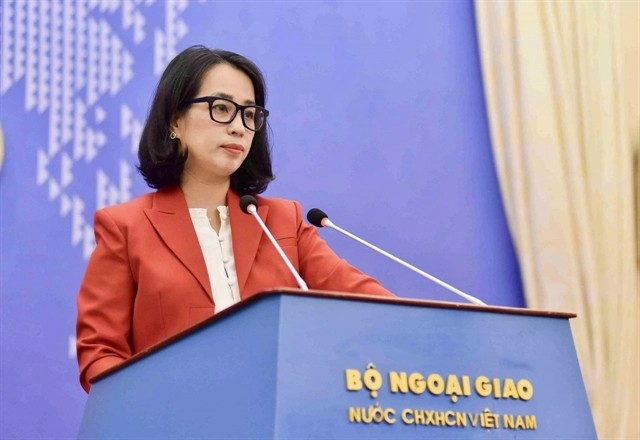
On behalf of the Government and people of Vietnam, Deputy Minister of Foreign Affairs Nguyen Minh Hang extended warm congratulations to Ambassador Bader Almatrooshi and to all UAE nationals living and working in Vietnam on the occasion of the country’s National Day anniversary.
She highlighted that the UAE’s remarkable achievements over the past 54 years under the leadership of President Mohammed bin Zayed Al Nahyan, alongside its pioneering efforts in economic diversification, innovation, artificial intelligence, clean energy and sustainable development, have not only driven the nation’s strong transformation but also provided inspiration for countries such as Vietnam in the current era of transition and development.
The Vietnamese diplomat noted that the UAE is Vietnam’s leading economic partner in the Middle East and its largest export market in the region, with emerging opportunities across logistics, renewable energy, innovation, digital transformation and people-to-people exchanges.
She emphasized that beyond economic ties, the UAE remains a sincere and reliable friend of Vietnam, sharing common aspirations for peace, cooperation and prosperity, and reaffirmed Vietnam’s commitment to working closely with the UAE to realize the shared vision of shaping a more strategic, more innovative and more future-oriented era of cooperation that fully unlocks the potential of the bilateral partnership.
Vietnam, EU explore new paths for stronger cooperation
The Institute for European and American Studies (IEAS) under the Vietnam Academy of Social Sciences (VASS) and the EU Delegation to Vietnam on December 3 jointly held a seminar reviewing 35 years of Vietnam–EU relations, discussing achievements, challenges, and future cooperation prospects.
In his remarks, VASS President Prof. Dr Le Van Loi noted that the world is changing rapidly, with intertwined challenges in security, economy, technology, and the environment, placing increasingly high requirements on Vietnam–EU relations.
According to Loi, everything from trade, labor and environmental standards to requirements on carbon emissions, data governance, digital transformation and the green transition demands flexibility, proactivity and creativity in policymaking.
However, he said that despite challenges, opportunities remain—particularly cooperation in energy transition, circular economy, innovation, digital economy, sustainable agriculture, and high-quality education, offering new prospects if the two sides embrace them in a spirit of trusted partnership and shared development.
He stressed that over the 35 years of Vietnam–EU relations, social sciences and humanities have played a key role in transforming collaborative experiences into knowledge and policy recommendations to foster mutual understanding and better decision-making.
The VASS provides an open space for scholars, policymakers, and businesses to engage in frank and substantive dialogue, he said, adding that this seminar will help assess and better orient bilateral relations, providing a scientific and practical basis for future decisions, VNA reported.
 |
| Illustrative image (Photo: VNA) |
Deputy Head of the EU Delegation to Vietnam, Rafael de Bustamante Tello, highlighted the deepening bilateral relationship between Vietnam and the EU over the decades, particularly in trade.
According to the IEAS Director, Assoc. Prof. Dr Nguyen Chien Thang, the Vietnam–EU relations have continuously evolved over the past 35 years, from aid cooperation to a comprehensive economic partnership, and are now gradually forming a strategic cooperation framework based on shared values of sustainable development, fair trade, innovation, and international integration.
Trade and investment, political dialogue, green transition, and advances in science and technology have served as the main engines of the relationship, providing a strong foundation for bilateral ties, he said.
Thang emphasized that trade is the key driver of Vietnam–EU relations, with bilateral exchanges steadily growing, especially since the Vietnam–EU Free Trade Agreement (EVFTA) came into effect, making the EU one of Vietnam’s top export markets.
At the same time, political and diplomatic cooperation has been expanded through the EU–Vietnam Partnership and Cooperation Agreement (PCA) and regular dialogue mechanisms, thus strengthening trust and creating favourable conditions for deeper collaboration in key sectors.
Scientists, scholars, and representatives from the business community, State management agencies, and international organisations engaged in frank discussions on key issues in the Vietnam–EU relations, including enhancing people-to-people dialogue in the new context. They also discussed mobilizing finance for Vietnam’s green growth strategy, promoting science, technology and innovation cooperation, and improving the EU’s role in Asia–Pacific, and offering valuable insights for policymakers in the future.
Vietnam’s economy set to maintain solid recovery through 2026–2027: OECD
The Organisation for Economic Co-operation and Development (OECD) has revised upward its medium-term outlook for Vietnam, projecting GDP growth of 6.2% for 2026 and 5.8% for 2027, according to its latest global economic outlook released on December 2.
The report signals continued macroeconomic stability in Vietnam despite persistent global trade uncertainties.
OECD notes that 2025 has been a year of strong momentum for Vietnam’s recovery. GDP expanded by 8.2% in the third quarter of 2025, driven by robust final consumption, firm growth in fixed capital formation and buoyant exports of goods and services. Labour market conditions remain resilient, with unemployment at 2.2% since the third quarter 2024—its lowest level on record—while labour force participation continues to rise, reflecting a stable and improving employment environment.
However, OECD highlights that external demand is expected to soften in 2026, weighing on exports—one of the economy’s key growth pillars. As a highly open, trade-dependent economy, Vietnam remains highly vulnerable to global policy developments.
On the domestic front, private consumption is projected to stay firm, supported by rising real wages and employment. However, OECD cautions that the planned VAT adjustment in 2027 could temporarily dampen consumer spending. Inflation is expected to edge up, driven by solid domestic demand, higher administrative prices and a one-off impact from the VAT hike.
In contrast, public investment is set to play a critical role in sustaining growth. After earlier delays in disbursement, public investment is accelerating and is expected to provide a strong anchor for aggregate demand. OECD has accordingly upgraded Vietnam’s 2026 growth forecast by 0.2 percentage points compared with its June 2025 projections.
Exports and FDI remain key engines of growth
Despite the volatile global environment, Vietnam’s exports of goods and services have remained remarkably resilient. In the first nine months of 2025, export turnover rose 15.5%, up from 14.2% in the first half of the year. Shipments to the US – Vietnam’s largest export market, accounting for around 30% of total exports – surged 27.7%, even as risks of US import tariffs persist.
Foreign direct investment (FDI) has also continued to expand steadily since mid-2023. OECD underscores that FDI not only provides essential capital for Vietnam’s development but also promotes technology diffusion and productivity gains, reinforcing its role as a critical engine of long-term growth.
Fiscal policy is expected to remain expansionary in the near term as the Government seeks to accelerate public investment to meet its ambitious 2025 growth target of around 8%. However, OECD recommends a gradual shift toward a more neutral fiscal stance over the medium term, particularly as inflationary pressures build. The temporary VAT reduction from 10% to 8% is scheduled to end in late 2026, adding to upward pressure on prices alongside planned hikes in pensions, the minimum wage and public service fees, reported VNA.
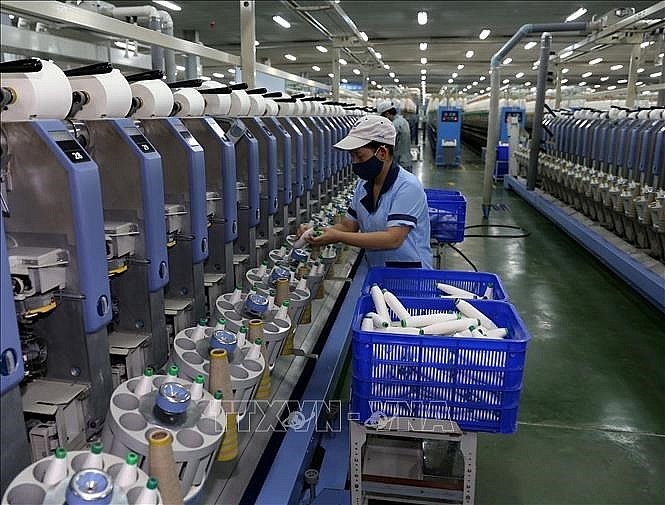 |
| 2025 has been a year of strong momentum for Vietnam’s recovery, according to OECD. (Illustrative photo: VNA) |
The monetary policy stance has been accommodative since June 2023, using both interest rate cuts and direct credit growth targets for banks. The increases in pensions, the minimum wage, administrative prices and the VAT increase will add to price pressures in 2026 and 2027. As domestic demand remains solid, the central bank should closely monitor inflation risks and stand ready to withdraw support.
OECD identifies several downside risks to Vietnam’s outlook, including a potential slowdown in global trade from 2026, tighter international investment conditions and policy shifts in major economies that could affect Vietnam’s export competitiveness or expose it to transshipment-related tariffs.
According to OECD, reforms to the macroeconomic and structural policy frameworks could lead to stronger economic performance. Moving towards a more price-based monetary policy would improve macroeconomic resilience and facilitate stronger competition in financial markets, potentially improving the allocation of capital and raising productivity. Informality affects around two-thirds of employees, limiting social protection coverage and holding back productivity growth. Stronger incentives for formal job creation could result from efforts to reduce the lower labour tax wedge while enhancing the role of non-contributory social protection benefits.
Regulatory reforms hold significant potential to boost productivity. Opening up services markets to competition and foreign direct investment can facilitate the move into higher-value ladders of global value chains, as competitive service inputs can have significant productivity benefits for downstream manufacturing companies. Reducing the weight of state-owned enterprises and levelling the playing field with private firms could allow additional labour and capital to move to more productive firms.
Although growth is projected to ease moderately in 2026–2027, OECD affirms that Vietnam remains among Asia’s fastest-growing economies – a view echoed by other major international institutions. HSBC recently upgraded Vietnam’s 2025 and 2026 growth forecasts to 7.9% and 6.7%, the highest in ASEAN. UOB expects growth of 7.7% in 2025, while Standard Chartered forecasts 7.5% for 2025 and 7.2% for 2026.
 | Vietnam News Today (Nov. 30): Vietnam, Cambodia deepen traditional friendship, comprehensive cooperation; Party leader’s visit to further deepen Vietnam-Laos special ties; Sultan’s state visit underlines ... |
 | Vietnam News Today (Dec. 1): Leaders of Vietnam and Brunei wish to expand cooperation across key sectors; Vietnam-Cuba exemplary, loyal, rare relationship - most valuable ... |