Canada affirms importance of ties with Viet Nam
Ahead of the State visit by General Secretary of the Communist Party of Viet Nam Central Committee and President To Lam, Canada has affirmed that Viet Nam is a key partner in the Indo-Pacific region, while laying stress on the prospects for strengthening bilateral and multilateral cooperation across multiple fields.
In a statement on September 17 by the Office of the Governor General, Governor General Louise Arbour emphasized that General Secretary and President To Lam will pay a State visit to Canada on September 24, with activities in the capital Ottawa aimed at further boosting bilateral relations. The statement affirmed that Viet Nam is an important partner for Canada in the Indo-Pacific and a valued partner within the framework of the Asia-Pacific Economic Cooperation (APEC) forum as well as the Organisation internationale de la Francophonie (OIF).
Canada assessed that bilateral relations share a broad and long-standing cooperative foundation, demonstrated by close coordination at both bilateral and multilateral levels, extensive people-to-people exchanges, growing economic and trade cooperation, and collaboration in energy security and climate change response, reported VOV.
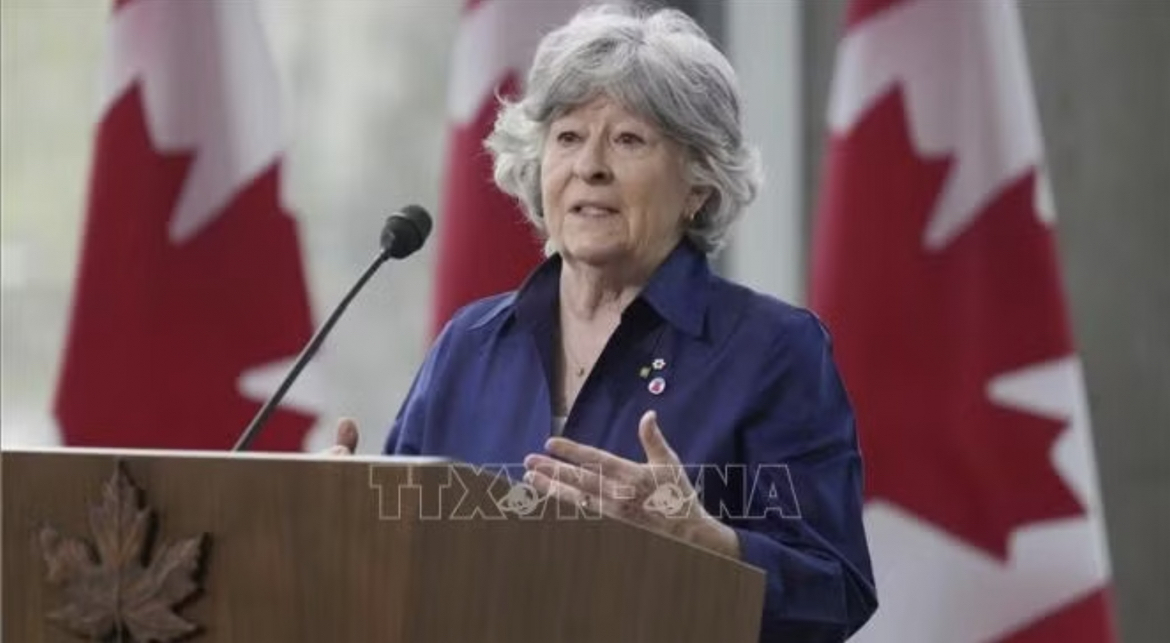 |
| Governor General of Canada Louise Arbour (Photo: The Canadian Press/VNA) |
Meanwhile, Canadian media on September 20 also began covering the visit in bulletins on the government's foreign affairs agenda. In an announcement regarding notable issues as the Canadian Parliament returns from summer recess, The Canadian Press included the Vietnamese leader's visit among bilateral engagement activities with international leaders by Prime Minister Mark Carney.
The news agency emphasized these diplomatic activities in the context of the Canadian Government promoting the diversification of trade relations and expanding cooperation with partners beyond the US market. The report by The Canadian Press was subsequently published by numerous local media outlets, including CityNews Ottawa, CityNews Toronto, and Winnipeg Free Press.
Viet Nam gains first-ever seat on UN tribunal for law of the sea
Viet Nam's first-ever election of a judge to the International Tribunal for the Law of the Sea marks growing recognition of the country's role in shaping and upholding international maritime law.
The 15th Ocean Dialogue, themed “From Agreement to Action: Implementing BBNJ for Equitable and Effective Ocean Governance,” was held on the morning of Sept. 18, jointly organized by the Diplomatic Academy of Viet Nam, the Foundation for East Sea Studies (FESS), the Konrad-Adenauer-Stiftung (KAS) and the Australian Embassy in Viet Nam.
The dialogue focused on solutions to translate commitments under the Agreement on the Conservation and Sustainable Use of Marine Biological Diversity of Areas beyond National Jurisdiction, known as the BBNJ Agreement, into concrete mechanisms, institutions and actions at the national, regional and global levels.
Associate Professor Nguyen Thi Lan Anh, Vice President of the Diplomatic Academy of Viet Nam, said the BBNJ Agreement has helped establish a comprehensive framework for protecting marine biodiversity in international waters.
As an implementing agreement under the 1982 United Nations Convention on the Law of the Sea (UNCLOS), the BBNJ Agreement must be implemented consistently with UNCLOS and existing global, regional and sectoral cooperation mechanisms, she said.
Effective implementation of the agreement needs to begin at the national level, underpinned by international cooperation, science and technology, according to Lan Anh.
Resolution No. 20, issued by the 14th Party Central Committee on July 28, sets the goal of developing Viet Nam into a strong maritime nation, emphasizing modern ocean governance, the role of marine science and technology, and the need to ensure a healthy and sustainable marine environment.
The goal is consistent with implementation of the BBNJ Agreement and reaffirms Viet Nam's commitment to international law, including UNCLOS, according to VNN.
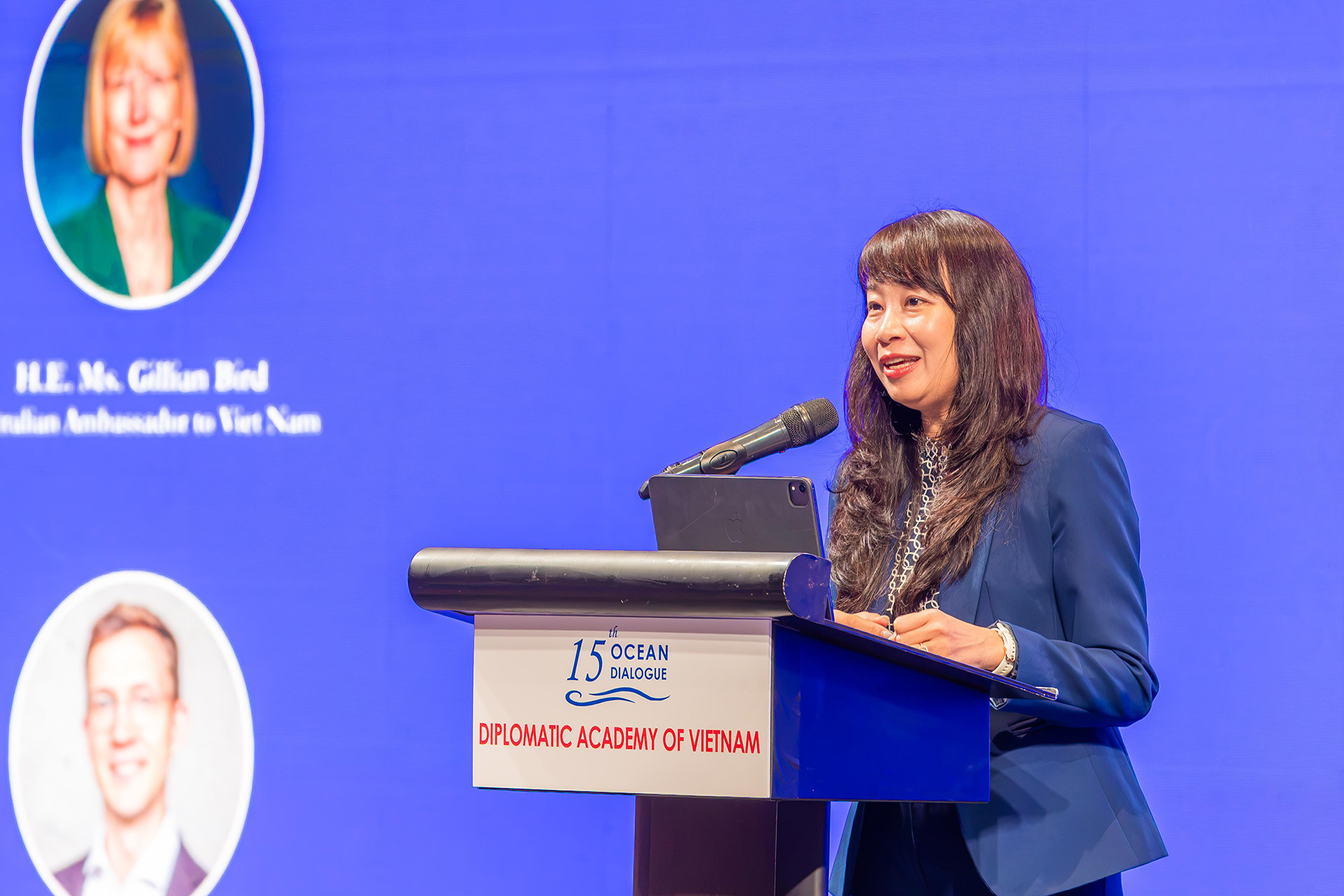 |
| Associate Professor Nguyen Thi Lan Anh, Vice President of the Diplomatic Academy of Viet Nam. Photo: Phong Son |
Lan Anh said Viet Nam, a maritime nation with a coastline of more than 3,000 kilometers, was among the first countries to sign the BBNJ Agreement and has been at the forefront of its ratification.
“No country can protect marine biodiversity alone,” she said, adding that regional cooperation in Southeast Asia based on international law and UNCLOS also requires the sharing of expertise and data.
Australia pledges A$160 million to strengthen maritime capacity
Australian Ambassador to Viet Nam Gillian Bird praised the Ocean Dialogue for addressing a timely issue, noting that seas and oceans are increasingly affected by climate change, biodiversity loss and pollution.
Australia considers healthy, safe and sustainable oceans essential to national prosperity and security.
Bird said Australia was ready to ratify the BBNJ Agreement and participate in the meeting of parties in January 2027 as a state party.
Australia is committed to helping countries in the region prepare to implement the BBNJ Agreement and to sharing expertise on marine protected areas, environmental impact assessments and ocean governance.
One Australian initiative is the A$160 million Southeast Asia Maritime Partnerships program, designed to help Viet Nam and other regional partners strengthen maritime cooperation, governance and capacity.
Lewe Paul, country representative of the Konrad-Adenauer-Stiftung in Viet Nam, said Germany considers marine biodiversity protection, ocean conservation and the maintenance of a rules-based international order important elements of international cooperation.
Germany actively supported negotiations on the BBNJ Agreement and continues to promote its effective implementation through concrete action. Bonn has developed into an international center for environmental governance and biodiversity.
Paul described the Ocean Dialogue as an important forum for sharing perspectives and connecting law with policy, international commitments with national implementation, and science with policymaking.
He also congratulated Nguyen Thi Lan Anh on her recent election as a judge of the International Tribunal for the Law of the Sea.
According to Paul, her nomination and election represented a significant achievement and recognition of Viet Nam's growing contribution to the development and implementation of international maritime law.
The 15th Ocean Dialogue featured three discussion sessions focusing on aligning the BBNJ Agreement with national laws and institutions; implementing international cooperation under the agreement; and developing supporting mechanisms, institutions and frameworks for its effective implementation.
Discussions covered practical issues including reviews of domestic legislation, interagency coordination, cooperation on marine genetic resources, area-based management tools, environmental impact assessments and marine scientific research.
The Ocean Dialogue is an initiative of the Diplomatic Academy of Viet Nam aimed at promoting dialogue and cooperation on maritime legal, policy and scientific issues and advancing sustainable governance of the seas and oceans.
Across its 15 editions, the dialogue has continued to provide a forum connecting policymakers, legal experts, scientists and international partners, facilitating the exchange of experience and the search for practical solutions to emerging challenges in ocean governance.
Viet Nam emerges as attractive destination for Italian investment
Italian corporate law and international economics expert Nunzio Bevilacqua has expressed positive views on Vietnam’s business environment after attending the Viet Industry Hanoi 2026, an event focusing on industrial infrastructure, construction and public utilities.
Italian news agency ANSA said Bevilacqua has described Viet Nam as a “miracle of ASEAN” that has demonstrated resilience through the pandemic and is now pursuing a more ambitious growth strategy.
According to Bevilacqua, Viet Nam is implementing a dynamic economic strategy, with a number of near-term opportunities already emerging and requiring Italian businesses to act promptly to capture them.
He said the opportunities should attract not only globally oriented small and medium-sized enterprises (SMEs), but also Italian State-owned and State-linked companies seeking to expand their international presence, reported VNA.
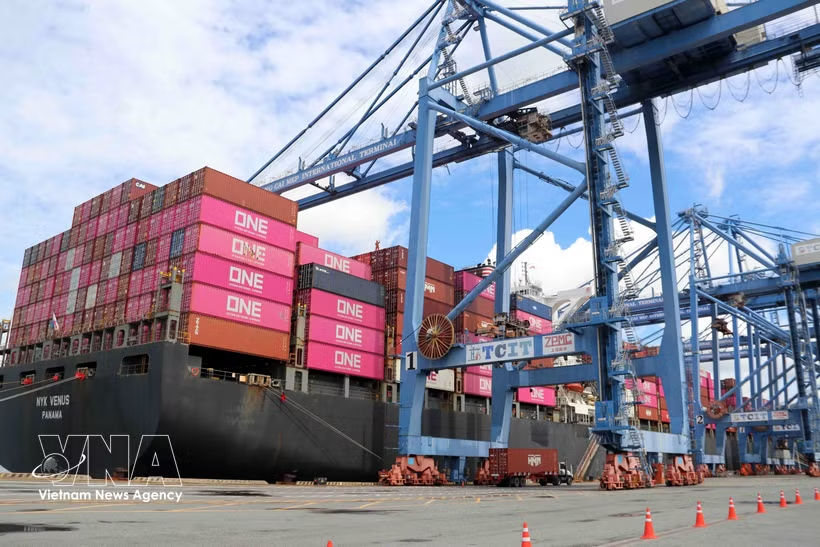 |
| Vietnam’s seaport logistics system is creating strong opportunities to further boost bilateral cooperation between Italy and Viet Nam. (Photo: VNA) |
Vietnam’s major infrastructure development plans, particularly in expressways, railways and underground transport, are generating strong demand for advanced technologies and equipment, with leading European companies already contributing to these projects.
German tunnelling technology company Herrenknecht AG, along with Italian companies De Cardenas and Boldrocchi, are among the businesses involved in areas such as tunnelling technology, industrial ventilation and air filtration.
The development of high-speed railways, smart transport systems and integrated logistics networks connecting roads, railways, seaports and inland waterways is also creating significant opportunities for further Italy-Vietnam cooperation, Bevilacqua said.
Ho Chi Minh City named among five Asia-Pacific cities to watch
Ho Chi Minh City ranked 205th among the world's 1,000 largest cities in the 2026 Global Cities Index by Oxford Economics, climbing 81 places from 286th in the 2025 edition.
Along with Kuala Lumpur, Bengaluru, Shenzhen and Tashkent, the southern metropolis of Viet Nam was named one of the five “Cities to Watch” in the Asia-Pacific region.
The index uses 27 indicators spread across five categories: economics, human capital, quality of life, environment, and governance.
In these rankings, Ho Chi Minh City placed 142nd in economics, 71st in human capital, 342nd in quality of life, 555th in environment, and 625th in governance. These standings are based on a GDP of 128 billion USD, a GDP per capita of 9,000 USD, and a projected population of 14.2 million in 2025.
The report highlighted its three specific strengths: rapid GDP growth, relatively high income equality and economic stability. The economic hub of Viet Nam is projected to be among the world's 50 fastest-growing cities over the next five years, VNA reported.
 |
| A corner of Ho Chi Minh City (Photo: VNA) |
Compared with the 2025 edition, Ho Chi Minh City improved in four of the five pillars, rising 194 places in governance, 106 places in human capital and 69 places in economics. The two pillars where it fell were quality of life, down 17 places, and environment, down 100 places – precisely the two areas the city has identified as priorities for the 2026–2030 period.
While Ho Chi Minh City ranked behind Hanoi in 2025, it became the top-ranked Vietnamese city in 2026, ahead of Hanoi (243rd), Da Nang (375th) and Hai Phong (667th).
Within ASEAN, Ho Chi Minh City ranked fifth, after Singapore (29th), Kuala Lumpur (65th), Bangkok (122nd) and Jakarta (140th), and ahead of Manila (174th). Across Asia, it ranked below Seoul (38th) and Shenzhen (93rd), but above Shanghai (216th), Delhi (268th) and Mumbai (330th).
A comparison with Kuala Lumpur shows that the gap lies not in growth rates but in urban quality, with Ho Chi Minh City ranking 342nd versus 283rd in quality of life and 555th versus 318th in environment.
Oxford Economics forecasts that by 2050, Ho Chi Minh City's GDP will be nearly on a par with Berlin's while its per-capita income – currently outside the top 500 cities – is projected to exceed the European average by 2045.