| Vietnam News Today (Sep. 3) notable headlines Vietnam proposes five priorities for ASEAN-Russia cooperation Vietnamese in Laos, Singapore honor President Ho Chi Minh on National Day From 1945 to 2045, the people power Vietnam’s journey forwardVietnam plans at least five internationally competitive cities by 2045 Vietnam plans at least five internationally competitive cities by 2045 Vietnamese food businesses make strong impression at Fine Food Australia 2026 National Day celebrations highlight cultural heritage and livelihoods in many localities Vietnam's development model renewal puts enterprises on new playing field Everlasting value of Declaration of Independence stands firm against hostile distortions Vietnam gains market share as China’s third-largest fruit and vegetable supplier |
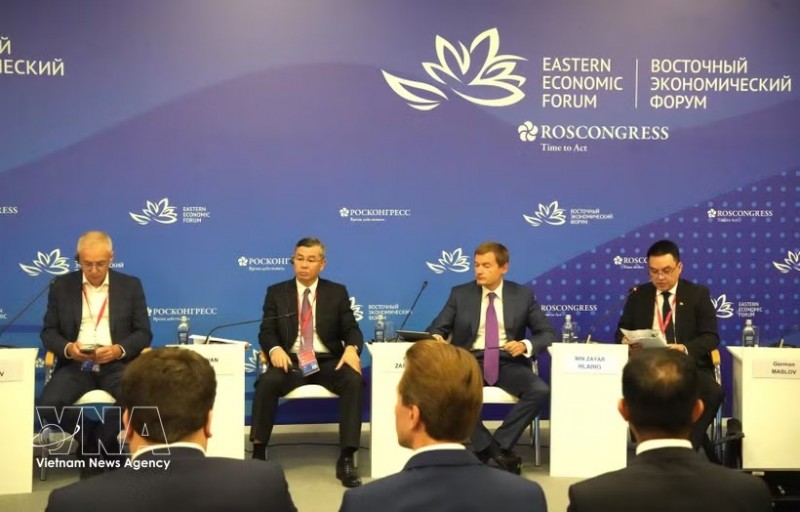 |
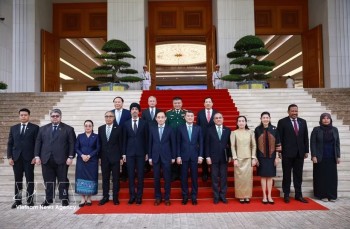
| Finance Minister Ngo Van Tuan ( second, from left) at the Russia-ASEAN Business Dialogue held on September 2 as part of the 11th Eastern Economic Forum in Vladivostok, Russia. (Photo: VNA) |
Vietnam proposes five priorities for ASEAN-Russia cooperation
Vietnam has proposed five key areas for ASEAN-Russia cooperation, focusing on supply chains, logistics, technology, green growth, and finance and people-to-people ties, at the Russia-ASEAN Business Dialogue held on September 2 as part of the 11th Eastern Economic Forum in Vladivostok, Russia.
Finance Minister Ngo Van Tuan attended and addressed the dialogue, which brought together Sergey Katyrin, President of the Russian Chamber of Commerce and Industry, officials and business representatives from Russia and ASEAN countries.
Tuan highlighted Vladivostok's important role as a gateway connecting Russia with the Asia-Pacific region, including Vietnam. He noted that 2026 marks the 35th anniversary of ASEAN-Russia relations.
The recent ASEAN-Russia Summit in Kazan, Russia, adopted the ASEAN-Russia Comprehensive Plan of Action for 2026-2030, providing an important basis for deepening the strategic partnership, cited VNA.
Trade between Russia and ASEAN has increased by nearly 58% over the past decade, reaching about 21 billion USD in 2025. Tuan said the figure was positive but there remained significant room for growth, stressing the need to turn cooperation orientations into concrete projects, stronger trade and investment flows, and measurable results.
Vietnam is entering a new development period, targeting annual economic growth of at least 10% during 2026-2030 and aiming to become a developed, high-income country by 2045, he said.
Vietnam is promoting science and technology, innovation, digital transformation, artificial intelligence (AI), high-quality human resources and the private sector, while investing heavily in strategic infrastructure and improving the investment and business environment.
With an economy worth about 514 billion USD and total goods trade exceeding 930 billion USD in 2025, Vietnam is becoming increasingly integrated into regional production and supply chains, he said.
Tuan underlined Vietnam's special role in ASEAN-Russia relations. Bilateral trade reached about 4.77 billion USD in 2025, accounting for roughly one-quarter of Russia-ASEAN trade. Vietnam was also the first ASEAN member to sign a free trade agreement with the Eurasian Economic Union (EAEU).
With its extensive network of free trade agreements, Vietnam can serve as a bridge for Russian businesses to access ASEAN and other international markets, while Russia's Far East can help Vietnamese and ASEAN businesses access the Russian and wider Eurasian markets.
Vietnamese in Laos, Singapore honor President Ho Chi Minh on National Day
An exhibition titled “Ho Chi Minh – Portrait of a Man” attracted numerous Lao officials and people, Vietnamese community and international friends in Vientiane from August 27-31.
The display features 50 paintings by the late overseas Vietnamese artist Dao Trong Ly created between 2018 and 2024. Co-hosted by the Vietnamese Embassy in Laos, the Vietnam Cultural Center in Laos and the Vietnam Fine Arts Museum, it serves as both a cultural highlight for Vietnam’s 81st National Day (September 2) and a bridge for Vietnam-Laos special solidarity.
Lao Minister of Culture and Tourism Suonsavan Vinhaket praised the works’ ideological depth, saying that they depict President Ho Chi Minh’s arduous struggle to liberate Vietnam and oppressed peoples across the Indochinese Peninsula, according to VNA.
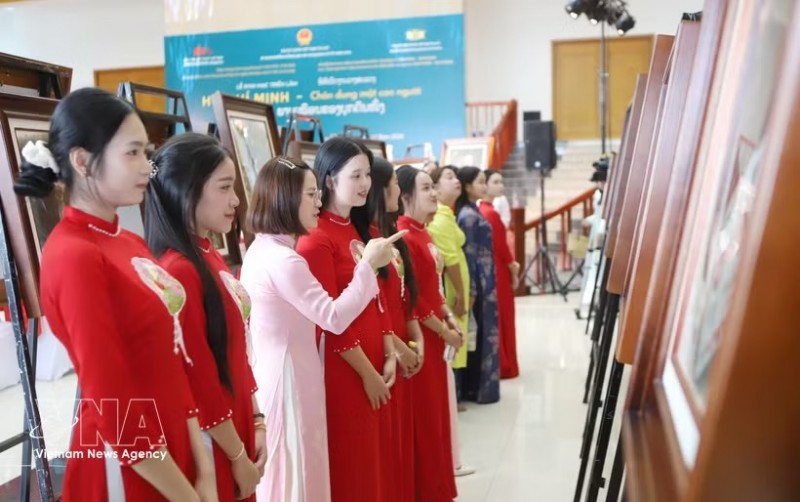 |
| Students contemplate paintings at the exhibition (Photo: VNA) |
On September 2, officials and staff of the Vietnamese Embassy and Vietnamese representative agencies in Singapore paid floral tribute to President Ho Chi Minh before his statue at the Asian Civilisations Museum.
Earlier, a large number of Vietnamese people living, working and studying in Singapore offered 81 lotus flowers to Ho Chi Minh, one for each year of independence, in tribute to his contributions to the Party and nation.
The embassy held a ceremony marking the occasion on August 24.
From 1945 to 2045, the people power Vietnam’s journey forward
From the August Revolution and the struggles for national independence to Đổi mới (Renewal) and the vision for 2030 and 2045, the Vietnamese people have shaped the country’s historic achievements and continue to provide the driving force for its next stage of development.
The people behind historic victories
Over 81 years since September 2, 1945, Vietnam has travelled a remarkable path, from a newly independent nation facing immense challenges to a developing country deeply integrated into the global economy and increasingly active on the international stage.
From the August 1945 Revolution and the 1954 Dien Bien Phu Victory to the 1975 Spring General Offensive and Uprising and the Renewal process, one thread runs through Vietnam’s modern history: the people have been the central actors and a driving force behind the country’s major achievements.
According to Assoc. Prof. Dr. Bui Dinh Phong, senior lecturer at the Ho Chi Minh National Academy of Politics, the major ideas championed by President Ho Chi Minh from the early days of the nation, including independence, freedom, democracy and national unity, continue to hold significance today.
The August Revolution brought together patriotism, the aspiration for independence and the strength of national solidarity. That strength helped sustain the struggles for national liberation and defence, leading to historic victories and ushering Vietnam into an era of independence and reunification.
Immediately after independence, alongside the fight against hunger and illiteracy, President Ho Chi Minh placed particular emphasis on practicing democracy, building and consolidating national unity, and mobilising the people’s aggregate strength for national development and defence.
He encapsulated this philosophy in the words: “In the sky, nothing is more precious than the people. In the world, nothing is stronger than the united strength of the people.”
Assoc. Prof. Dr. Phong said this strength extended beyond wartime victories and became a foundation for national development in peacetime.
The orientations of the 14th National Party Congress, from reaffirming that “the people are the root” to emphasising the role of officials in all areas of work, continue to inherit and develop President Ho Chi Minh’s thought under new conditions, aiming to strengthen public trust, promote people’s right to participate and unleash their creativity.
Four decades of Renewal build a new foundation for growth
The strength of the people has also been reflected in the profound changes Vietnam has undergone after nearly four decades of implementing the Renewal process.
In 2025, Vietnam’s GDP grew 8.02%, while growth reached 8.18% in the first six months of 2026. Total trade surpassed US$930 billion in 2025, with a trade surplus of US$20.03 billion, marking the 10th consecutive year of a trade surplus. In the first half of 2026, trade hit US$549.69 billion, up 27% year on year.
Vietnam has also increasingly become a destination for international investment. By the end of 2025, the country had more than 45,400 active FDI projects, with total registered capital of around US$529.6 billion. In the first six months of 2026, newly registered and additional FDI reached US$34.65 billion, up 61%, with greater attention being paid to technology, innovation and stronger links with domestic businesses.
Strategic infrastructure has continued to expand the country’s development space. By the end of 2025, Vietnam had completed and put into operation 3,345 km of expressways and 1,711 km of coastal roads, gradually establishing a network linking regions and giving people and businesses better access to markets.
Vietnam has also restructured its provincial-level administrative units, reducing the country to 34 provinces and centrally run cities. The two-tier local government model is designed to streamline the administrative apparatus, expand development space, strengthen decentralization and promote regional connectivity.
Yet the ultimate measure of development is people’s living standards. By the end of 2025, the multidimensional poverty rate had fallen to 2.95%, while health insurance coverage exceeded 95.2% of the population. Programmes to eliminate temporary and dilapidated housing were implemented nationwide. A policy providing free tuition for preschool and general education students at public schools from the 2025-2026 academic year has further expanded access to education.
Science, technology, innovation and digital transformation have also become increasingly important drivers of the economy. The Politburo’s Resolution 57 identifies these areas as a major breakthrough and a top priority. Vietnam is gradually developing fields such as artificial intelligence, semiconductors, big data and biotechnology. The country ranked 44th out of 139 economies in the 2025 Global Innovation Index.
Vietnam’s economy in 2023 was 96 times larger than in 1986. The country is now among the world’s 40 largest economies and the top 20 in terms of trade and FDI attraction. It has diplomatic relations with all 193 UN member states and participates in more than 70 international organizations and forums.
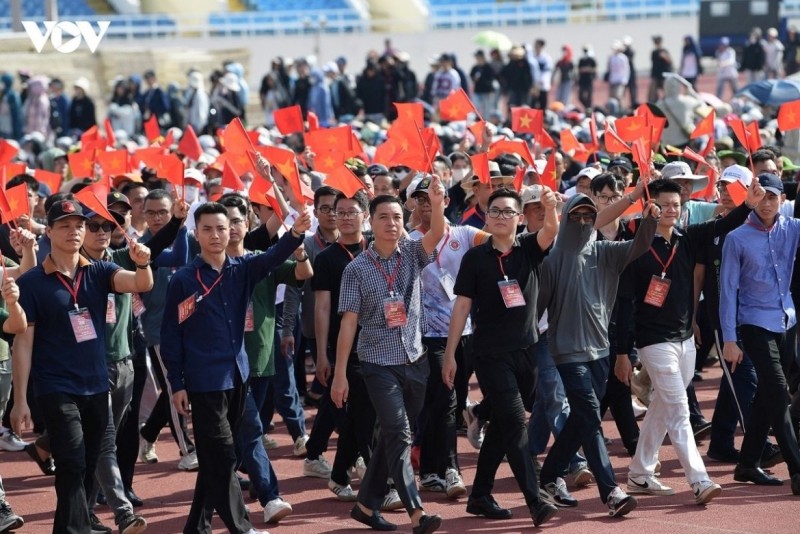 |
| A mass participation block representing the Vietnamese people marches in Hanoi during the grand celebration marking the 80th anniversary of Vietnam’s National Day in 2025. |
These figures illustrate the profound transformation Vietnam has undergone through Renewal. Behind that progress are the labour, intellect, aspirations and shared commitment of millions of Vietnamese people.
A new era of development, with people at the center
Across different historical periods, the ways of mobilizing people’s strength have evolved, but the fundamental principle has remained consistent: the people are both the agents of development and the beneficiaries of its achievements.
General Secretary of the Communist Party of Vietnam Central Committee and State President To Lam has emphasised that under the Party’s leadership, Vietnam has drawn on the people’s aspirations for self-reliance, confidence, resilience and national pride, combining these strengths with those of the times to achieve historic milestones.
“The revolutionary cause belongs to the people, is carried out by the people and is for the people. The people have both made historic victories possible and served as an endless source of strength for the Party to exist and develop,” he said.
In the new era, the challenge is not simply to mobilise the people’s strength to safeguard past achievements, but to turn that strength into a force for shaping the future.
Vietnam is pursuing two strategic goals of becoming a developing country with modern industry and upper-middle income by 2030, and a developed, high-income country by 2045.
To achieve double-digit economic growth, the challenge is not limited to capital, technology or infrastructure. People are at the heart of that ambition.
According to Dr. Chu Duc Tinh, former director of the Ho Chi Minh Museum, President Ho Chi Minh’s thoughts should be applied by viewing people as both the objective and the driving force of development. This means unleashing individual intelligence, responsibility and creativity while creating an environment where officials can take initiative, entrepreneurs can innovate and young people can contribute.
Institutions also need to create conditions for social resources to be fully mobilised, giving people opportunities to contribute to and benefit from national development.
History shows that when the Party’s aspirations are aligned with the people’s aspirations, the country’s material and spiritual resources can be multiplied.
This lesson carries particular significance as Vietnam enters a new stage of development. The goal now goes beyond rapid growth to encompass sustainability, self-reliance, innovation and inclusiveness.
From the autumn of 1945 to the vision of 2045, the strength of the people remains a common thread running through Vietnam’s development journey. If that strength helped secure independence and reunification in wartime, it will continue to determine the country’s ability to turn its aspiration for prosperity and happiness into reality in the new era.
Vietnam plans at least five internationally competitive cities by 2045
Vietnam plans to create new regional growth poles and encourage selected localities to become centrally governed cities as part of a sweeping strategy to reshape the country’s development map.
On behalf of the Politburo, General Secretary and State President To Lam has signed Resolution 27 on regional development and the organization of Vietnam’s national development space in the new period.
The Politburo stressed that regional development should serve as a way to organize national growth, restructure development space, allocate resources and strengthen Vietnam’s competitiveness in the new context.
It called for sweeping changes to development and growth models, shifting from reliance largely on existing resources toward creating, leading, unlocking and activating all available resources. Domestic strengths should remain the fundamental, strategic, long-term and decisive foundation, combined effectively with external resources to ensure rapid and sustainable development and build an independent, self-reliant and highly resilient economy.
The Politburo called for Vietnam’s national development space to be reorganized as a unified whole, with the role, position, functions, advantages, identity and development mission of each region clearly defined within the country’s broader sustainable development strategy.
It set specific targets for 2030 and 2045 across Vietnam’s six socio-economic regions, alongside groups of tasks and solutions to achieve them.
The first group of tasks focuses on organizing regional development space and effectively implementing regional planning.
The Politburo called for a shift away from organizing development primarily around the administrative boundaries of provinces and cities. Instead, development should be based on functions, potential, comparative advantages, natural resources and environmental conditions, together with regional, sectoral, subregional and local linkages as defined in planning.
This group of tasks also includes forming and developing economic corridors that effectively connect key economic regions and national growth poles, making better use of new development space created following the reorganization of administrative units. Regional development space, including subregions and individual localities, should be arranged in line with the functions, responsibilities and objectives of growth poles.
The second group of tasks is to comprehensively improve institutions for regional development. Intersectoral and interregional projects of national strategic importance must have a unified coordination mechanism and a single body responsible for their implementation.
The third group of tasks involves renewing the growth model and creating and developing new regional economic drivers.
The Politburo called for the development of the data economy, green economy, circular economy and digital economy, with science, technology, innovation and digital transformation serving as the main drivers and a consistent thread running through regional development, reported VNN.
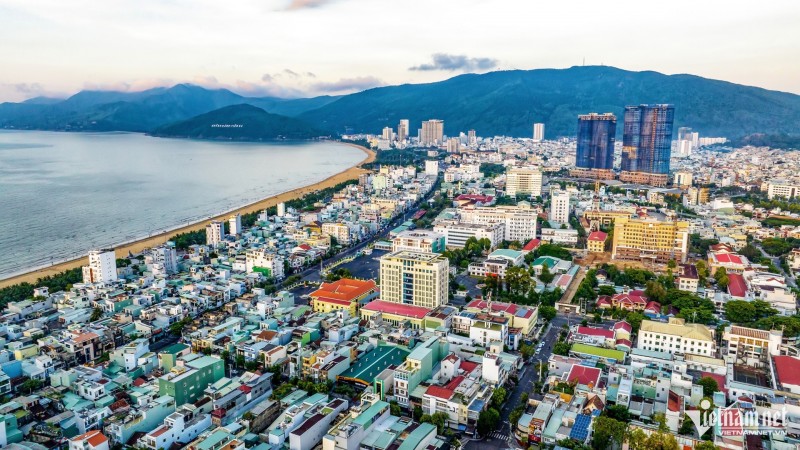 |
| The Politburo calls for Vietnam’s national development space to be reorganized as a unified whole, clearly defining the role, position, functions, advantages, identity and development mission of each region within the country’s broader sustainable development strategy. Photo: Hoang Ha |
Regions should identify new growth engines linked to stronger digital, green and energy transitions, as well as changes in economic structure and improvements in the quality of human resources.
The marine economy should be developed in a modern and highly competitive direction, while marine resources and space should be managed and used efficiently and sustainably in tandem with environmental protection and the conservation of marine ecosystems.
Railways, energy projects, urban infrastructure, seaports and digital infrastructure should be developed alongside domestic industries, including construction, mechanical engineering, metallurgy, new materials, electrical equipment, signaling systems, automation, software, design consulting and operational management.
At least five internationally competitive cities by 2045
The fourth group of tasks focuses on developing modern, coordinated and interregional socio-economic infrastructure.
Different types of infrastructure should be organized in an integrated manner along economic corridors and regional development spaces. The Politburo called for balanced development across economic and social infrastructure, digital and data infrastructure, science, technology and innovation, while ensuring socio-economic infrastructure is climate-resilient and coordinated with healthcare, cultural, educational and sports facilities.
It proposed prioritizing investment in a new generation of backbone North-South infrastructure and East-West corridors.
The North-South axis would integrate roads, railways, energy infrastructure, fiber-optic networks and logistics, connecting them with new urban areas and industrial and service centers. East-West corridors would connect inland regions with seaports, border gates and regional logistics networks.
The Politburo also called for greater investment in railway links to major seaports, international railway connections, urban railways and regional rail networks, particularly the North-South high-speed railway.
The fifth group of tasks focuses on developing a modern urban system and regional growth poles.
The Politburo called for investment in major cities and growth poles so they can play a stronger role in creating, leading and spreading development along urban-industrial-service corridors.
The resolution gives priority to developing the country’s two largest growth poles: the Hanoi metropolitan region and the Ho Chi Minh City metropolitan region.
It also calls for mechanisms and policies to encourage selected localities to become centrally governed cities, enabling them to serve as regional growth poles and strengthen connections within regions, between regions, and with regional and international networks.
The Politburo has set a target of developing at least five cities of international stature by 2045, serving as major hubs connecting Vietnam with regional and global networks.
The subsequent groups of tasks include developing high-quality human resources; accelerating science, technology, innovation and digital transformation; advancing cultural and social development and ensuring comprehensive social welfare; protecting the environment and adapting to climate change; strengthening national defense and security; and expanding foreign relations and international integration.
The final group of tasks focuses on building and rectifying the Party and the political system.
The Politburo called for improvements to the organization and operating model of local governments at all levels to reflect the characteristics of each region and the particular conditions of rural, urban, mountainous and special administrative areas.
Decentralization and delegation of authority should be strengthened under the principle that localities make decisions, carry them out and take responsibility for the results.
The Politburo also stressed the need to ensure that the administrative apparatus operates closer to the people, responds more quickly and efficiently, and better reflects the practical needs of each locality.
It called for the recruitment, training, development and cultivation of officials at all levels who have the necessary integrity, capacity and talent, with particular emphasis on standardization, rejuvenation and professionalization.
Vietnamese food businesses make strong impression at Fine Food Australia 2026
Processed tropical delicacies from Vietnam, including dried mangoes, pineapples, soursops, jackfruits, and chocolate-coated fruits, are capturing international trade attention at the Fine Food Australia 2026, taking place in Melbourne, Victoria, from August 31 to September 3.
Participating under the “FOODS OF VIETNAM” pavilion, nine Vietnamese enterprises present deeply processed products with high added value, demonstrating the export growth potential of the country's agricultural and food sector in a market with demanding standards for quality, food safety, and origin traceability.
Fine Food Australia is considered the southern hemisphere’s premier trade event for the food and beverage industry. The annual four-day exhibition draws over 26,000 trade visitors from more than 50 countries, featuring over 950 exhibitors and 115 experts across roughly 70 specialized industry sessions.
Approved under the 2026 National Trade Promotion Program by the Ministry of Industry and Trade, the Vietnamese delegation was organized by the Agricultural Trade Promotion Center under the Ministry of Agriculture and Environment. The nine participating companies represent Vietnam’s key export strengths, ranging from seafood, fruits, pepper, and spices to cashews, baking ingredients, and processed foods.
Apartfrom static displays, Vietnamese firms actively organized live product tastings right at their booths. This hands-on approach allows visitors and prospective partners to directly experience the flavors and quality before entering commercial negotiations.
Luu Thi Lan Phuong, Import-Export Director of Fancy Foods Trading and Production Co., Ltd., noted that on the opening day alone, her booth welcomed a large volume of Australian buyers inquiring about Vietnamese chocolate. She attributed this attraction to unique tropical flavor pairings rarely found in Australia's domestic market, adding that this offers a strong foundation for developing products tailored to local tastes.
For Tien Thinh Group JSC, this marks its third participation at Fine Food Australia. General Director To Thai Thanh observed a clear breakthrough this year, marked by a surge in visitors interested in Vietnamese goods. Tien Thinh focused on promoting specialty processed fruits from the Mekong Delta, such as soft-dried mango, pineapple, soursop, and jackfruit.
With over a decade of export experience to major markets including the US, Europe, Australia, and Asia, Thanh expects the exhibition to serve as a springboard to expand the company’s distribution network in Australia, reported VOV.
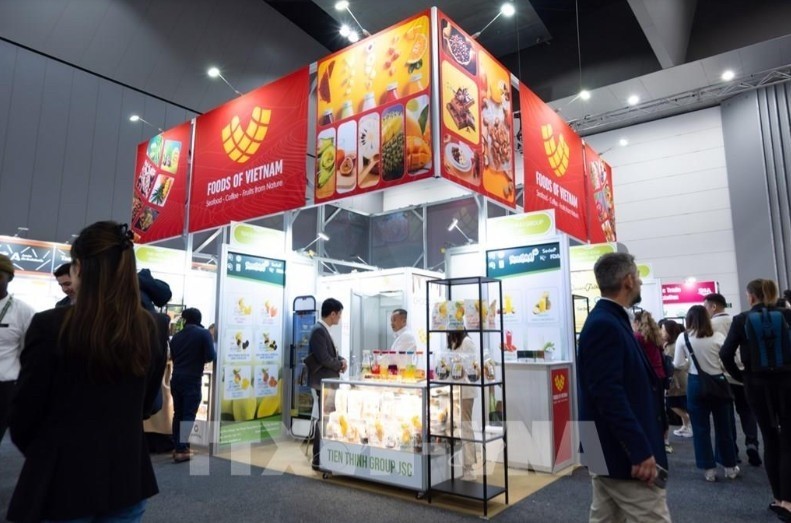 |
| Vietnam’s pavilion at Fine Food Australia 2026. (Photo:VNA) |
Vietnam's processed foods and Individually Quick Frozen (IQF) fruits also drew great interest from local distributors. Henriette de Koning, a veteran Australian food trader, noted high demand for tropical IQF fruits in the market. She is currently reviewing Vietnamese passion fruit, mango, banana, and dragon fruit for potential cooperation, while praising the unique chocolate-coated fruit line.
De Koning added that while Australian consumers like Vietnamese fruits, exporters must satisfy some of the world's strictest technical standards to enter local supply chains. Furthermore, price competitiveness remains a decisive factor amid the escalating global cost of living.
Echoing this view, Australian buyer Linsay Street emphasized that foreign food suppliers must strictly comply with regulations regarding health safety, additives, product quality, and origin traceability. Buyers require full assurance that products contain no banned substances or foreign matter, and that all label information is entirely accurate.
However, despite stringent standards, consumer curiosity and interest still open doors for novel and unique products, Street said.
She expressed particular interest in Vietnamese chocolate-coated fruits, noting that unique flavor combinations offer a distinct appeal. Street affirmed she will readily purchase Vietnamese food products in Australian supermarkets due to their distinct tropical flavors.
Realities from Fine Food Australia 2026 indicate that Vietnamese processed foods face substantial opportunities to penetrate deeper into the Oceanian market. Rich raw material sources combined with improving processing capabilities are creating a clear competitive edge.
Vietnamese enterprises have demonstrated a strategic shift from offering “what they have” to producing “what the market needs.” Luu Thi Lan Phuong of Fancy Foods affirmed that following the fair, her company will step up engagement with partners seeking customized products while expanding its product portfolio for upcoming trade shows.
This shows that trade promotion extends beyond securing orders at exhibitions; it offers an opportunity for businesses to directly grasp buyer requirements, thereby adjusting products, packaging, and market entry strategies.
For Australia, meeting these criteria is essential as enterprises must concurrently satisfy requirements on quality, food safety, traceability, and pricing, while serving both as a market barrier and a drive to elevate product value.