
Young Venezuelans Explore Viet Nam
| Vietnam Rescue Mission Returns Home After Venezuela Earthquake Relief Operations Venezuelan Scholars Celebrate Vietnam’s Journey of National Rise |
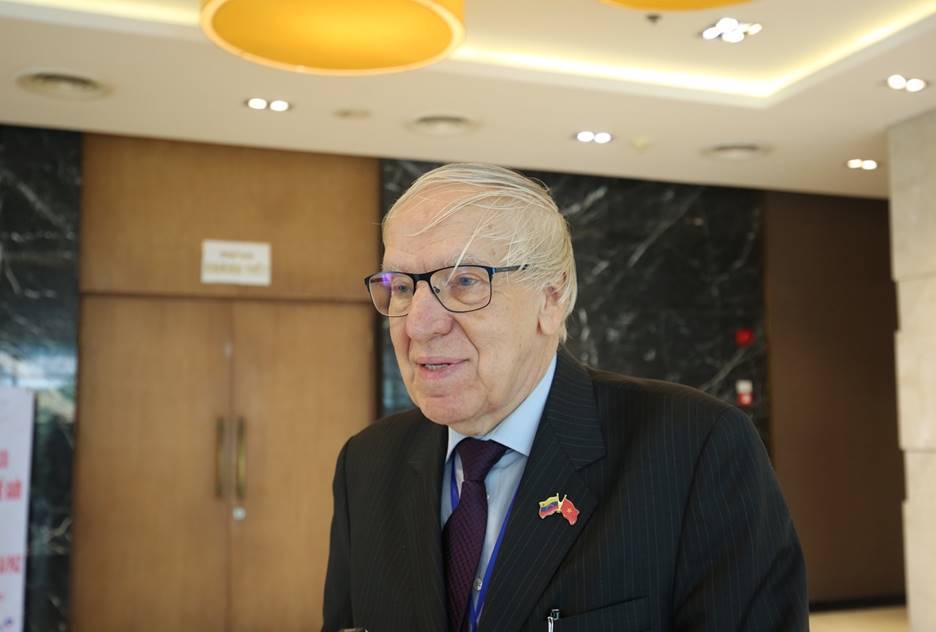 |
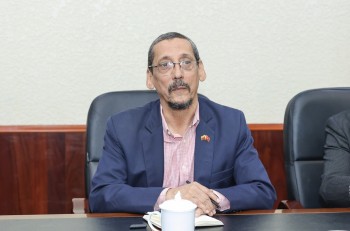
| Dr. Carolus Wimmer, President of the Venezuela-Viet Nam Friendship House. (Photo: Thu Ha) |
He said:
When we discussed organizing Vietnamese language courses, we wondered whether there would be enough interest. We also did not yet have teachers or a suitable venue.
To gauge the actual demand, we announced the course. To our surprise, more than 100 people registered. We organized two classes, with 25 students in each, while the waiting list had more than 100 people. Later, the Embassy of Viet Nam provided teachers, and the first Vietnamese language courses in Venezuela were launched in 2022.
Venezuelans are also very interested in Vietnamese culture, first and foremost in learning the Vietnamese language, traditional dance, cuisine, and more.
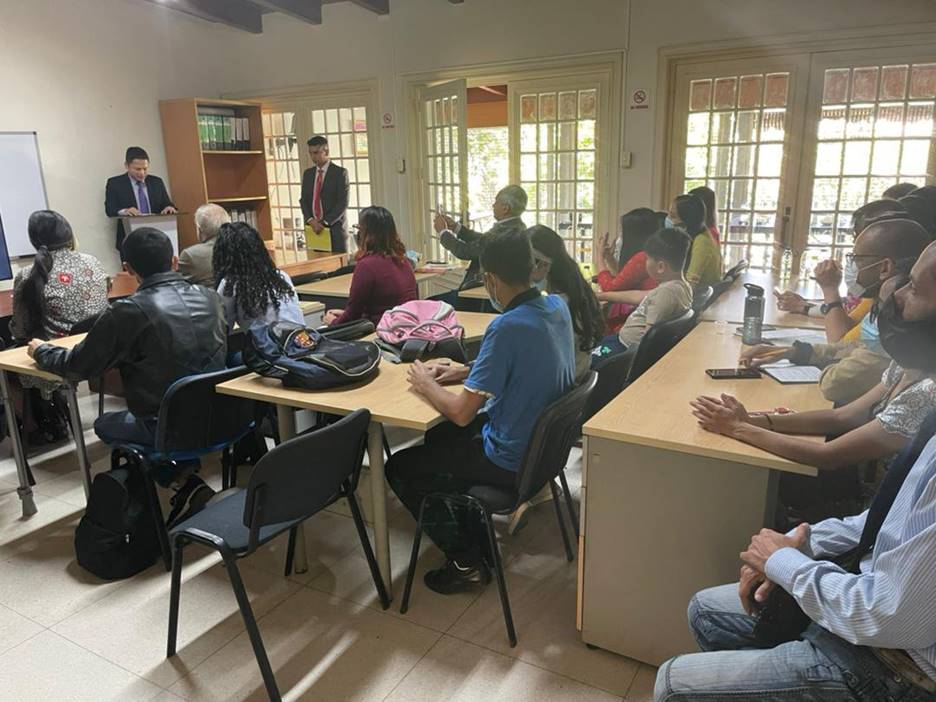 |
| The first Vietnamese language course organized by the Venezuela-Viet Nam Friendship House in March 2022. (Photo: CAVV) |
Learning to dance… out of affection
I will start with the dance group.
In November 2020, the then Ambassador of Viet Nam to Venezuela, Le Viet Duyen, asked us to prepare several Vietnamese dance performances for the Vietnamese Tet holiday in January.
None of us had any experience with Vietnamese dance. Normally, we could have replied that we did not know how and could not do it.
But with a brotherly nation and a close friend like the Ambassador, we could not say “No.”
So we tried to learn the dances through videos and then performed them. Certainly, there were still aspects that were not perfect, but our determination and enduring affection for the Vietnamese people, as well as for our friend, the Ambassador, encouraged us to continue. Eventually, the group grew to 28 young people, both men and women.
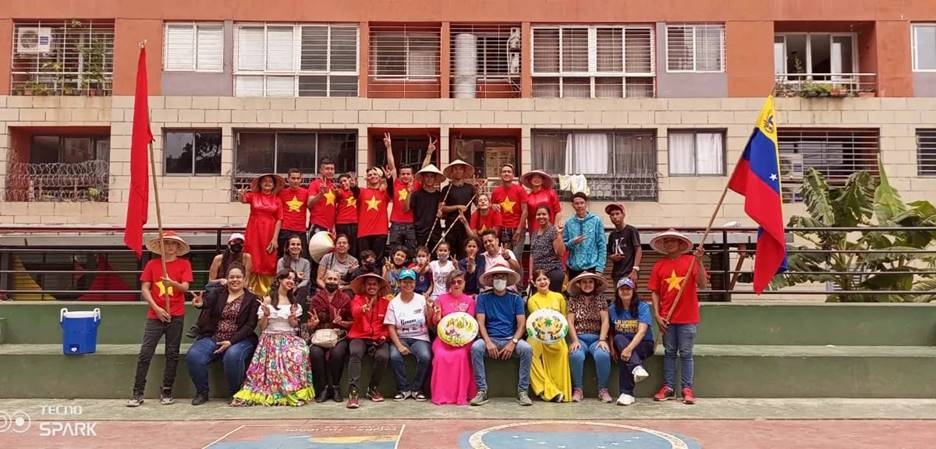 |
| The traditional Vietnamese dance group of the Venezuela-Viet Nam Friendship House. (Photo: CAVV) |
We want to learn dialectically from the struggles and successes of the Vietnamese people, but not to copy them. As José Carlos Mariátegui, founder of the Communist Party of Peru, once said: “Neither imitation nor copying, but heroic creation.”
CAVV has a multidisciplinary team that operates according to the principles of discipline, initiative, innovation, creativity and effectiveness. We direct our activities toward the wider public, particularly young people, women and the Bolivarian Militia.
We have carried out activities at two universities. On May 19, the birthday of President Ho Chi Minh, we established the Ho Chi Minh Student Team. We will soon establish a Women’s Team. Every year, the Ho Chi Minh Cultural and Sports Festival is held in Caracas.
CAVV was established in 2020, with Ambassador Le Viet Duyen playing a decisive role. Since then, promoting the tradition of enduring friendship and solidarity with Viet Nam has become one of our main tasks.
Those who “tell the story of Viet Nam”
The Venezuelan people deeply value the achievements of the Vietnamese people - a nation that, in the last century, defeated various colonial and imperial powers and became an example for nations striving for sovereignty and independence.
When introducing Viet Nam, we emphasize the role of the Communist Party of Viet Nam and historical leaders, including President Ho Chi Minh and General Vo Nguyen Giap.
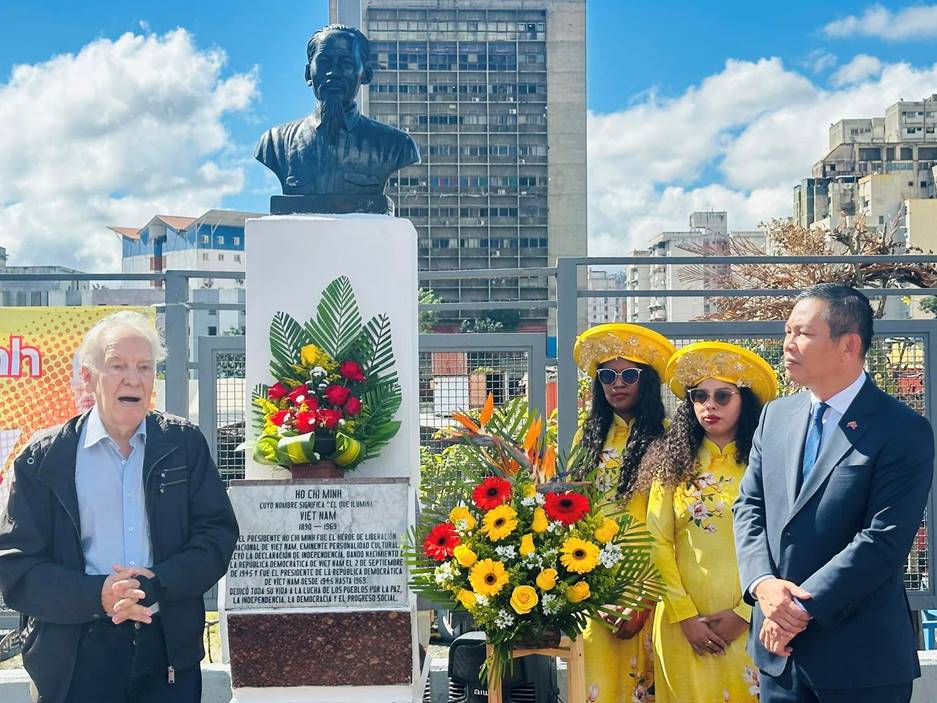 |
| Dr. Carolus Wimmer (left) speaks at a ceremony to lay flowers in tribute to President Ho Chi Minh on Bolívar Avenue in Caracas, the capital of Venezuela, on the occasion of the 35th anniversary of the establishment of Viet Nam-Venezuela diplomatic relations (December 18, 1989-December 18, 2024). (Photo: Embassy of Viet Nam in Venezuela) |
In Venezuela, people still remember President Hugo Chávez’s visit to Hanoi, when he presented General Vo Nguyen Giap with the sword of the liberator Simón Bolívar.
Hero Nguyen Van Troi is also an indispensable figure when we introduce Viet Nam. CAVV often recalls the Van Troi Campaign in October 1964, carried out by the Venezuelan National Liberation Armed Forces (FALN). Through the capture of a US military officer, the campaign demanded that the US release Nguyen Van Troi. For us, this event has become one of the most prominent symbols of the spirit of international solidarity in the 20th century.
The enduring affection between the peoples of the two countries has also been nurtured through ties dating back many decades. We recall that Ho Chi Minh and Venezuela’s Gustavo Machado met in 1920 as founding members of the French Communist Party. Later, at the 7th Congress of the Communist International in 1935, the Indochinese Communist Party and the Communist Party of Venezuela were recognized as sections of the Communist International.
We also recall the meetings between President Ho Chi Minh and comrade Eduardo Gallegos Mancera, former Head of the External Relations Commission of the Communist Party of Venezuela.
When introducing Viet Nam today, we speak about Viet Nam’s political, diplomatic and economic role and achievements in the new era, emphasizing the contributions of comrade Nguyen Phu Trong and comrade To Lam to the Doi Moi process.
These activities have not always proceeded smoothly. Over the past five years, Venezuela has experienced the COVID-19 pandemic, numerous political and economic upheavals, and sanctions that, in our view, have affected the Venezuelan people.
In 2026, CAVV planned a new series of political and cultural activities, including opening the CAVV headquarters and the Ho Chi Minh National Cadre School at the Parque Central complex in Caracas, Venezuela. These plans had to be temporarily suspended following developments early in 2026 and two earthquakes, which have rendered the planned venues unusable for the time being.
Both in our progress and when facing difficulties, the example of the Vietnamese people’s struggle and their spirit of creativity have always been helpful to us.
We wish to maintain contact and exchanges with the Viet Nam-Venezuela Friendship Association and the Viet Nam Union of Friendship Organizations, including receiving their comments and guidance on our activities.
In terms of equipment for our work, a moderate number of laptops and smartphones would be helpful to CAVV.
For the Ho Chi Minh National Cadre School, research materials on Marxism-Leninism and Ho Chi Minh Thought, updated teaching materials, and the resolutions of the 14th National Congress of the Communist Party of Viet Nam are essential.
We also hope to receive more materials and items introducing Viet Nam, such as Ho Chi Minh badges, other types of badges, hats, flags, and so on, for activities with young people and the public.
 Vietnam’s Rise Draws Praise from Venezuelan Scholars Vietnam’s Rise Draws Praise from Venezuelan Scholars To mark the 81st anniversary of the success of the August Revolution (August 19, 1945 - August 19, 2026) and the 81st anniversary of National Day (September 2, 1945 - September 2, 2026), the Embassy of Vietnam in Venezuela organized a series of activities to bring the image of a resilient Vietnam in the past and a dynamic, developing Vietnam today closer to the Venezuelan people. |
 In Disaster, We Held Your Hands In Disaster, We Held Your Hands More than two months have passed since the twin earthquakes struck Caracas, Venezuela, on the evening of June 24, 2026. Yet when recalling those days, Vladimir Castillo Soto of the Simón Bolívar Institute for Peace and Solidarity among Peoples, Venezuela, still cannot hide his emotion. His face lights up when he mentions two words: Viet Nam. “I am not simply telling the story of a relief effort,” he begins in a contemplative voice. “I am telling the story of how a people affirmed to the world what the words ‘comradeship and brotherhood’ truly mean.” |


Related Stories
 Friendship
People-to-People Diplomacy to Strengthen the Hegemony of Internationalism: The Practical Example of the Solidarity Between Viet Nam and Cuba
 Friendship
Deputy Minister Ho An Phong Elected President of Viet Nam-Belarus Friendship Association for 2026-2031
 Friendship
First Congress of the Dong Thap Union of Friendship Organizations for the 2026-2031 Term
 Friendship
Promoting People-to-People Diplomacy to Build a Solid Foundation Rooted in “the People’s Hearts”
Recommended
 Friendship
Students Who Brought Me to Viet Nam
 Friendship
More Than 900 Students in Tuyen Quang Learn About Green Living
 Friendship
American Friends Help Ease the Pain of Agent Orange
 Friendship
65 Years of the Agent Orange Disaster: Dialogue to Spur Action
Popular article
 Friendship
Aris Alip: The Filipino Friend Who Helped Build the TYM Fund
 Friendship
Viet Nam Union of Friendship Organizations Wins Seven Awards in Party Ideological Foundation Protection Contest
 Friendship
Spreading Responsibility for Safeguarding Party’s Ideological Foundation from Viet Nam to International Community
 Friendship